

Quick report
We went back out to a location where we've been tracking these persistent weak layers since the start of the problem to see how they changed. While they are deeper and the overlying snowpack seems stronger, the layers themselves are still weak and reactive in tests. They seem like they would be very hard to trigger today, but they aren't fully put to bed.
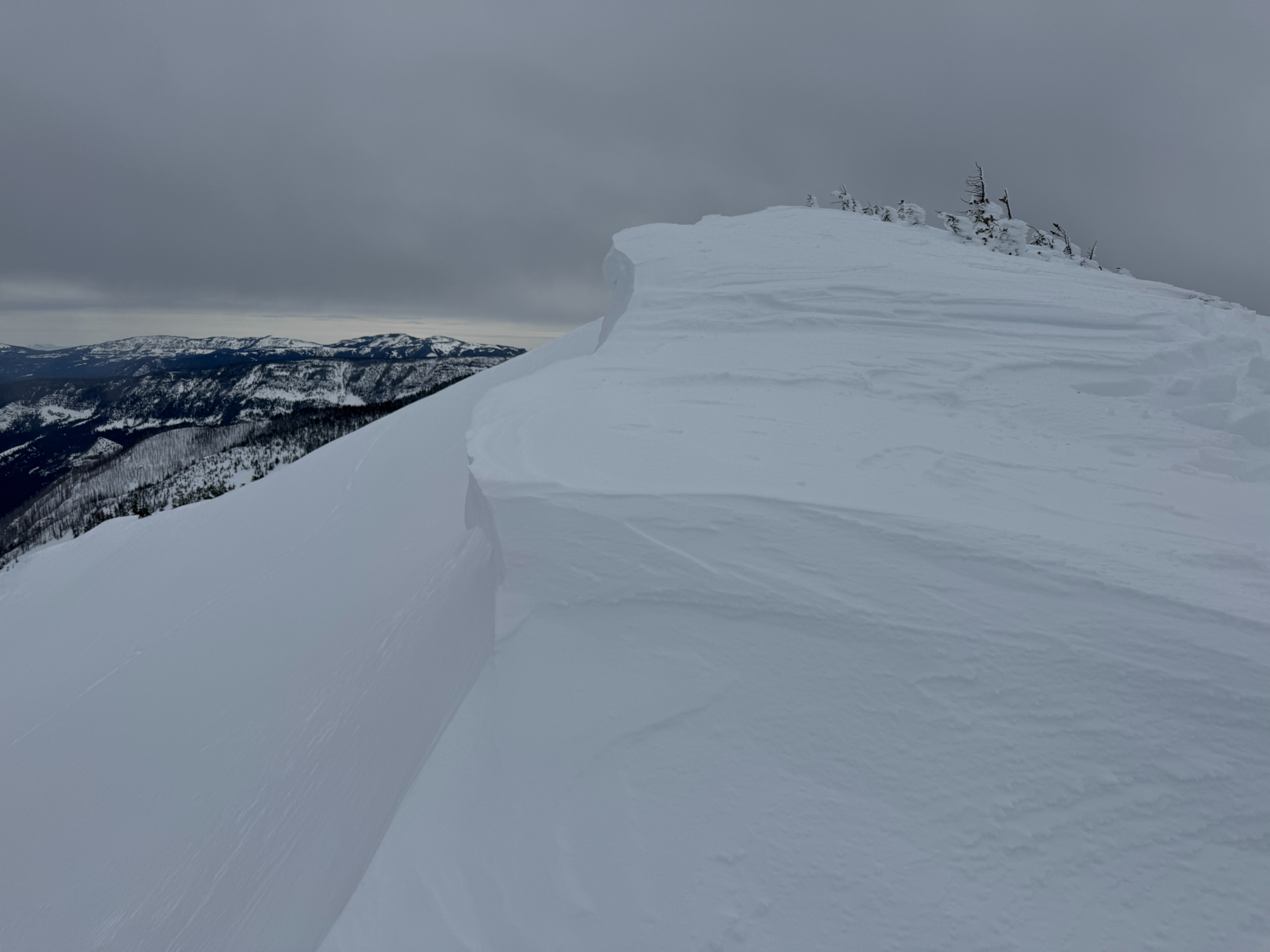
Winds from about every direction imaginable left plenty of clues from the tops of the ridges all the way down into the forest. However, actual wind slabs were localized to ridgelines. Despite my best efforts I couldn't get them to fail.
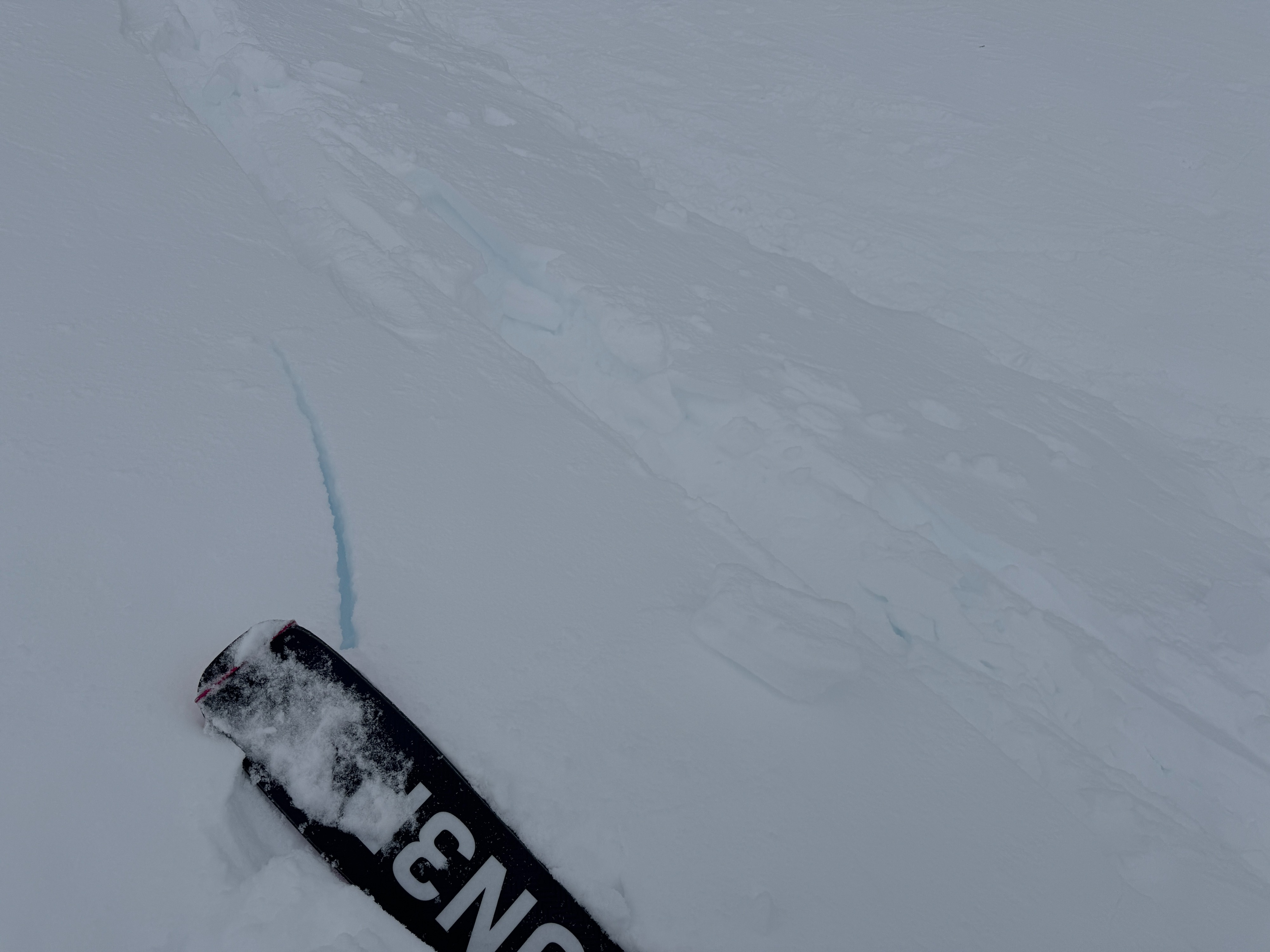
Only very minor cracking in wind loaded pockets.Weather
- Cloud Cover
- scattered
- Wind Loading
- light
- Recent Snowfall
- 0
- Snow Avail For Transport
- small smounts
It was a very quiet weather day. Periods of overcast skies quickly gave way to lightly filtered sunshine. Light to moderate S winds were most notable right at ridgelines, with generally calm conditions below. It was warm, but not hot. Temperatures were near or above freezing.
Snowpack
Wind Loading: There were plenty of signs of wind transported snow not only along the ridges but even way down in the trees. The trick was figuring out where the wind slabs currently were. Wind slab clues showed transport from nearly every single direction. Firm wind loaded pockets were most common on E and N aspects.
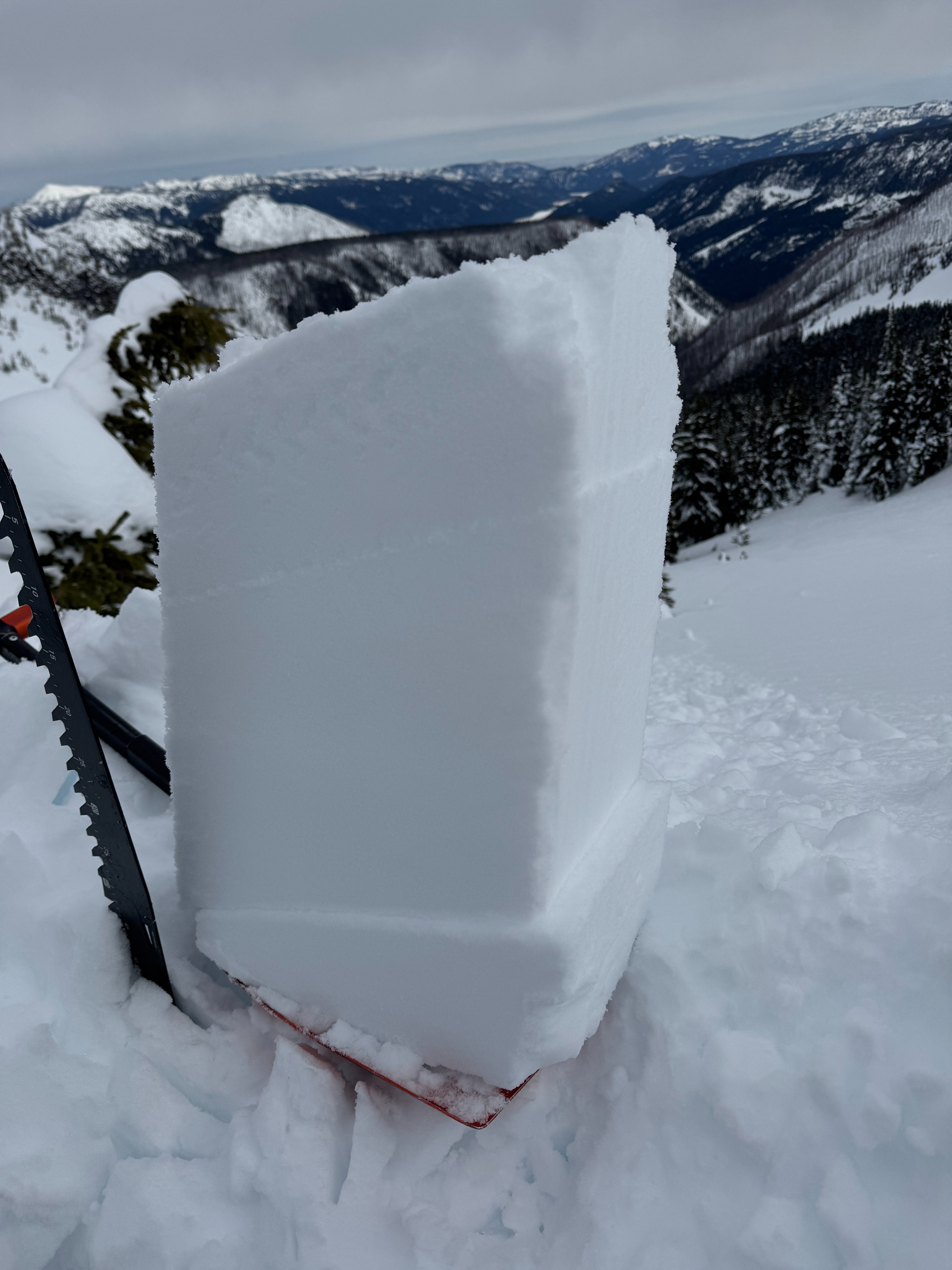
Shaded Aspects: The snowpack looks remarkably similar to 2/4, the last time I dug a snow profile this area. The only difference is the depth to the weak layers. You can see the 2/18, 2/13, JDL, and 1/10 layers. The most concerning still seems to be the JDL or 1/10 facets. PST 35/120 end on 1-2mm facets. Otherwise the snowpack is well settled and stronger (1F).
Sunny Aspects: A snow profile on a sunnier slope still showed the 2/18 and 2/13 interface, but they weren't very reactive in compression or extended column tests. The 1/31 crust capping large facets was pretty impressive. The crust is much weaker and the facets more well developed (~2mm). Deep Tap tests produced sudden collapses (DTM SC x3, 12,15,16), I did not perform a propagation saw test on these layers.
Even though the sun was out the snow surfaces didn't warm too much. It generally stayed dry and col.
Avalanche
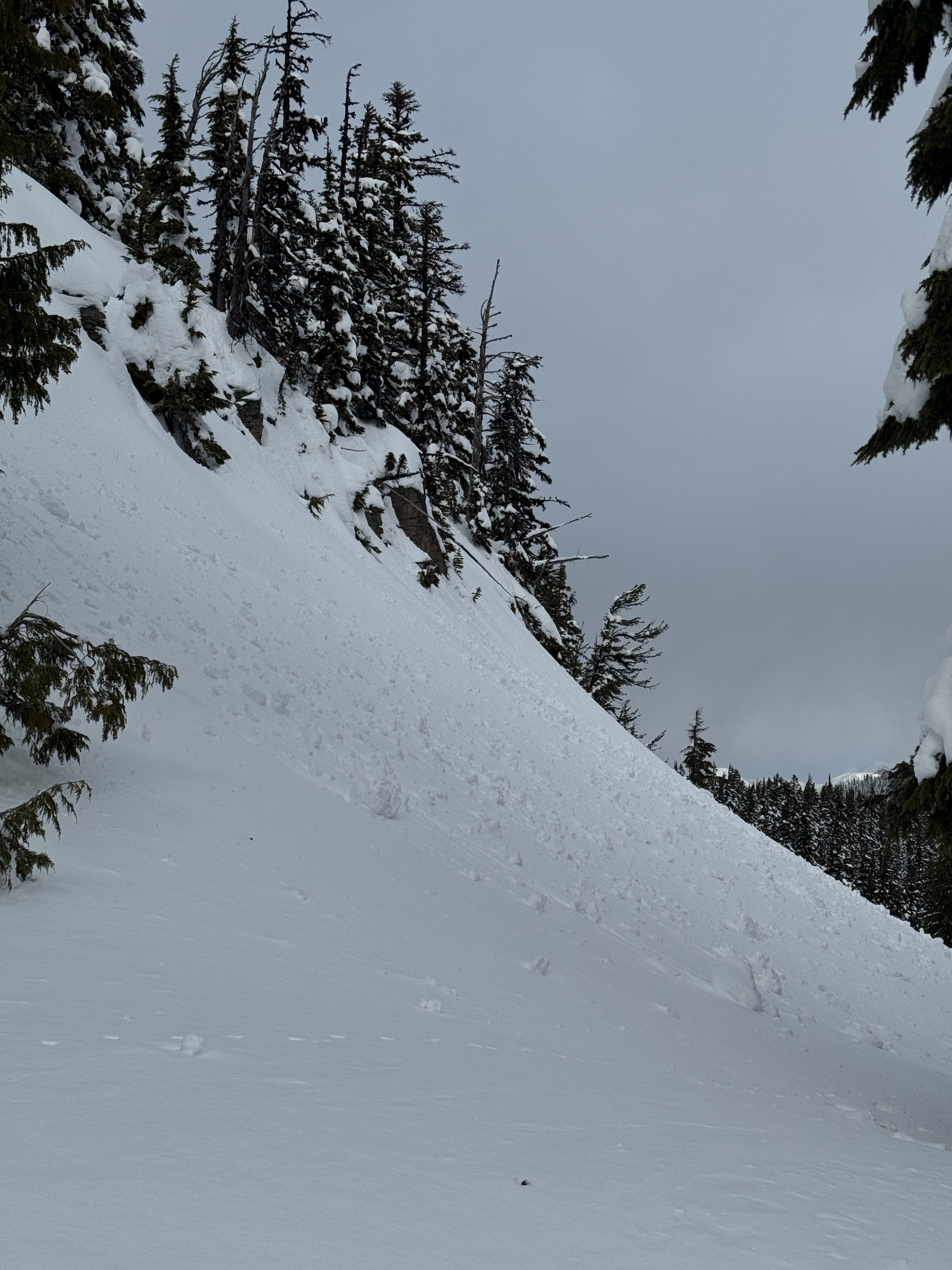
No recent avalanches observed.