
Quick report
Overall, snow conditions were better than expected and the danger of triggering a small slab was greater than expected at mid elevations. Would estimate avalanche danger above treeline is also Moderate. While the current avalanche problem is not widespread - or even specific - in distribution, it's worth following the travel advice of Moderate danger. Surface conditions of soft, dry snow will respond to an increase in wind speeds or more sun and warming.
No signs of instability other than the recently triggered avalanche.Weather
- Cloud Cover
- overcast
- Wind Loading
- previous
- Snow Avail For Transport
- moderate amounts
Cloud base lowering through the morning with filtered sun breaks before 9:30am. No wind observed
Snowpack
Snow depths averaged 200cm with +/-50cm around Autin Pass and Huntoon Point. 20-45cm of F>4F over a 3cm thick rain crust. A few thin, weak melt-freeze crusts are found within recent new snow. The slab above is well bonded to the crust, but CTH-SP just below the crust in a thin layer of very small faceted grains. ECT produced no results. Tilt test with medium taps pulled out an indistinct layer ↓12cm of softer new snow (F) between harder above and below (4F). This may be the weakness that continues to produce small human-triggered avalanches where there is a thicker slab above. Below the thickest crust 1F to K hardness to bottom of pit (145cm above ground). While there is some sun affect on southerly slopes, surface crust did not appear to be widespread.
Avalanche
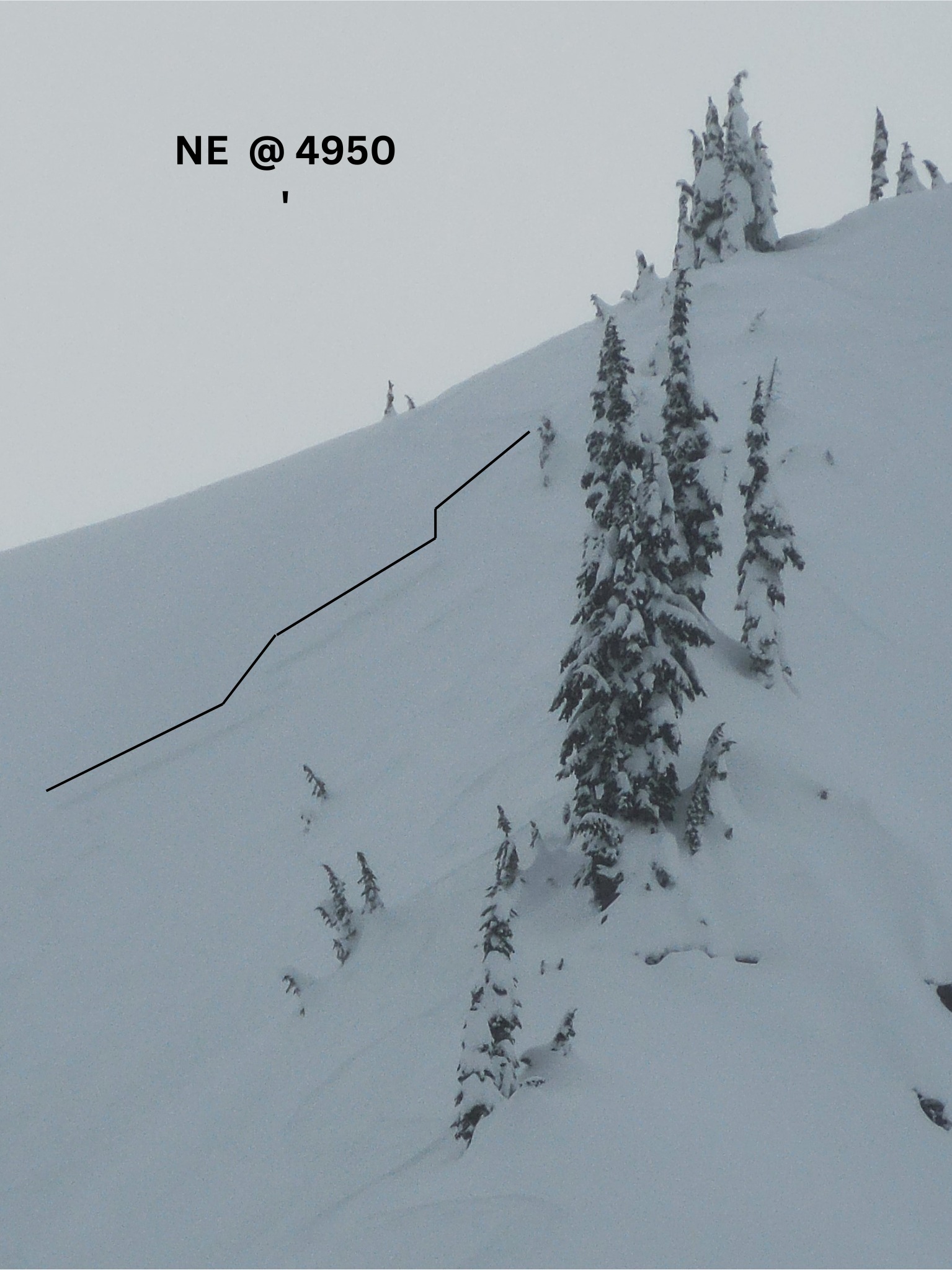
Human triggered D1 on a NE aspect at 4950' just west Austin Pass. Very steep, well over 40deg. While it's likely this slope picked up more new snow due to wind transport (during and/or after snowfall since Nov 22) the slab did not appear to be very stiff like a traditional wind slab. Maybe lingering new snow instability + a bit more slab above due to wind. Similar aspect and elevation to human-triggered slab avalanche on Nov 27. Also observed numerous loose snow avalanches on southerly aspects, mostly D1 but a few to D1.5. All looked to be secondary to snow shedding from cliffs above during periods of warming and sun in the past few days.