
Quick report
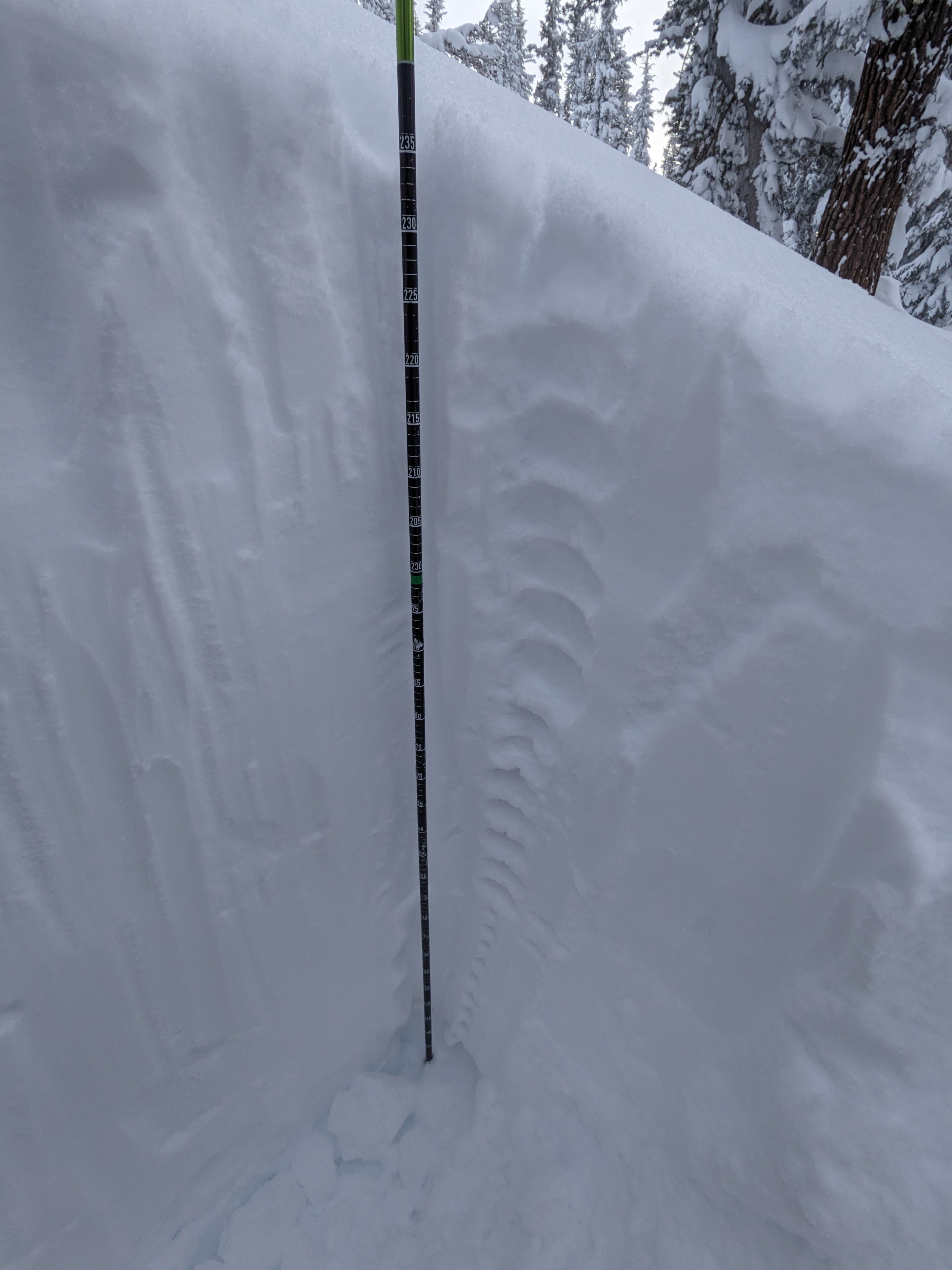
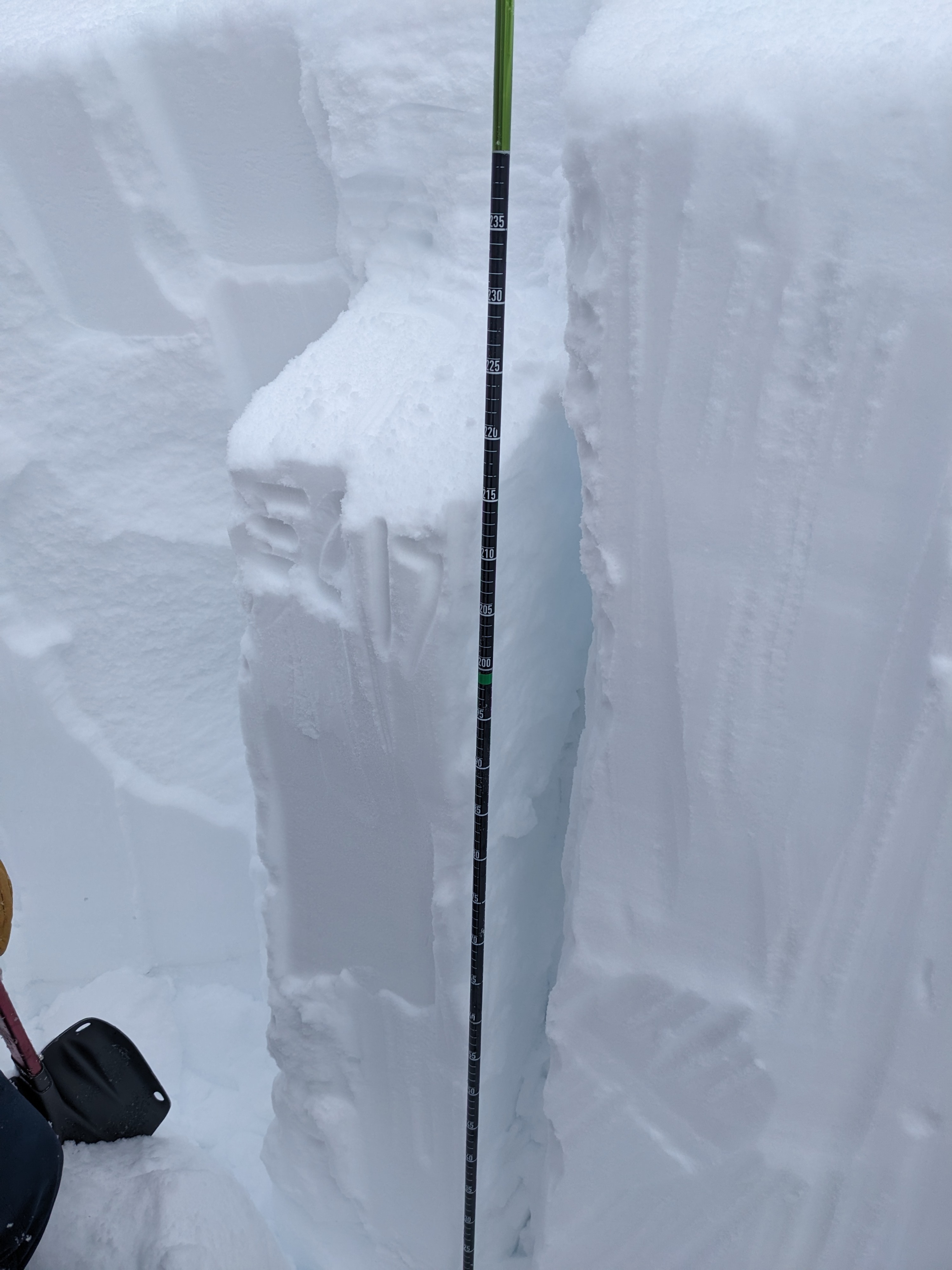
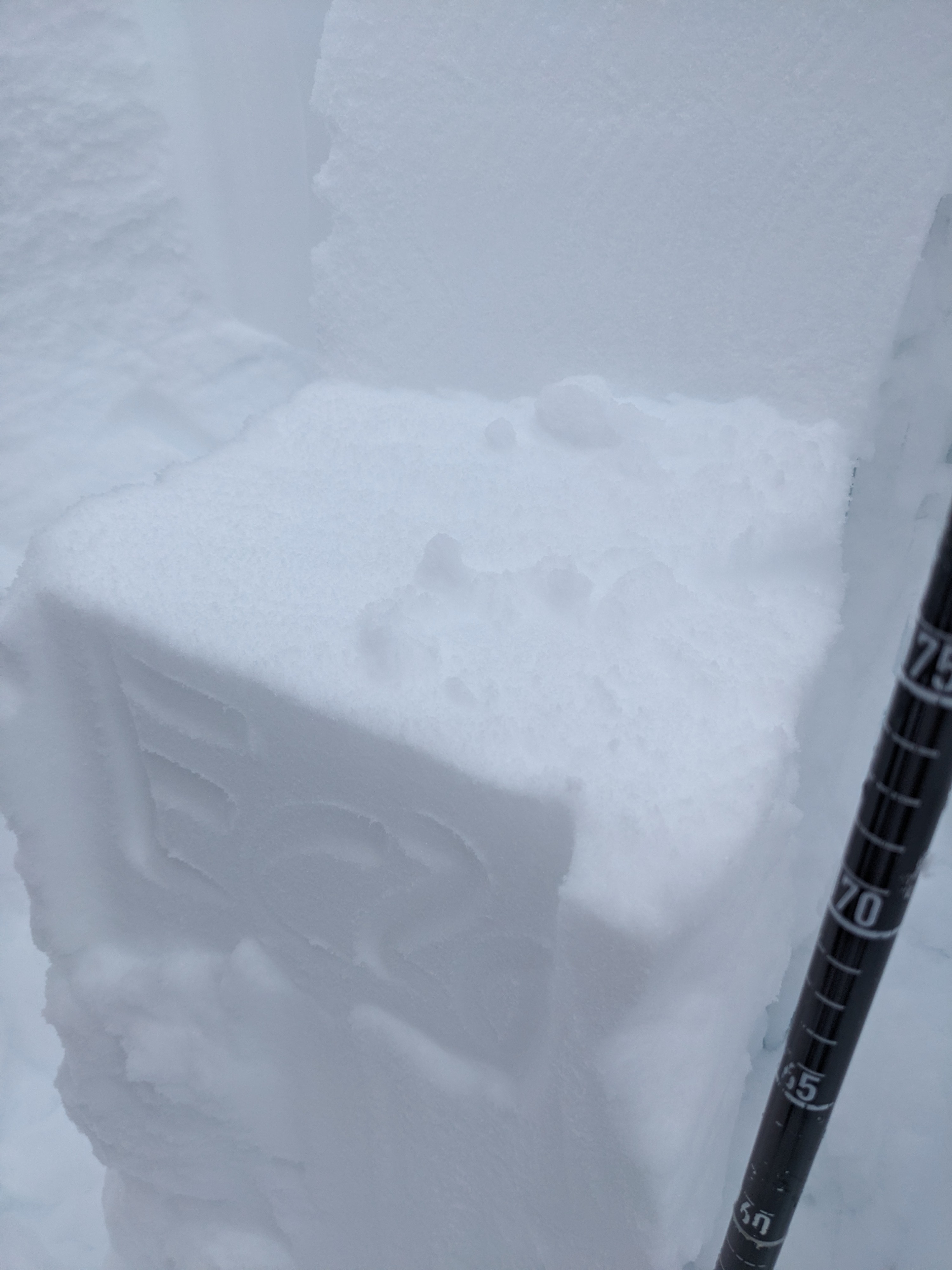
We toured in the Powder House area and dug two snow pits at approximately 8,000 ft and 9,000 ft to assess the structure and reactivity of the February 10 facet layer and recent storm snow interfaces. Both pits were dug in areas without visible signs of significant wind loading. At 8,000 ft, total snow depth was approximately 145 cm. The snowpack was generally right-side-up, transitioning from fist hardness at the surface to 4F, then into a thick, hard (pencil) rain crust. Beneath this crust sat the February 10 facet layer, approximately 90 cm below the surface, measuring 4F in hardness. Compression tests at this elevation did not produce any clean or planar failures. We observed a few non-planar, resistant failures in the upper ~35 cm of the snowpack, likely within recent storm interfaces. We were unable to produce failure on the February 10 facet layer with standard CT loading. ECT results were ECTN, with several non-propagating failures in the recent snow but no propagation and no failures on the February 10 layer. At 9,000 ft, total snow depth was approx 245cm. The upper snowpack consisted of fist hardness from the surface down to ~185 cm, 4F from ~185 to 145 cm, then 1F down to the February 10 facet layer. The February 10 facets were 4F in hardness and located approximately 105 cm above ground (~135 cm below the surface). We did not see the raincrust at the Feb 10 layer at that elevation. Compression tests produced a CT15 with a resistant, non-planar failure approximately 25 cm below the surface. A cleaner and more notable CT20 occurred approximately 75 cm below the surface on a storm interface within the mid-pack. No CT failures occurred on the February 10 facet layer during standard loading; we were only able to produce failure on that layer by pulling the column. Extended column tests were ECTN. Several failures occurred between 10 and 25 taps within the upper ~75 cm, including the mid-pack interface that produced the CT20, but none propagated across the column. The February 10 facet layer did not produce propagating results. Overall, our primary observation at 9,000 ft was a mid-pack storm interface approximately 75 cm below the surface that produced clean CT results but did not propagate in ECT. The February 10 facet layer remains deeply buried and unreactive in our tests at both elevations.