
Quick report
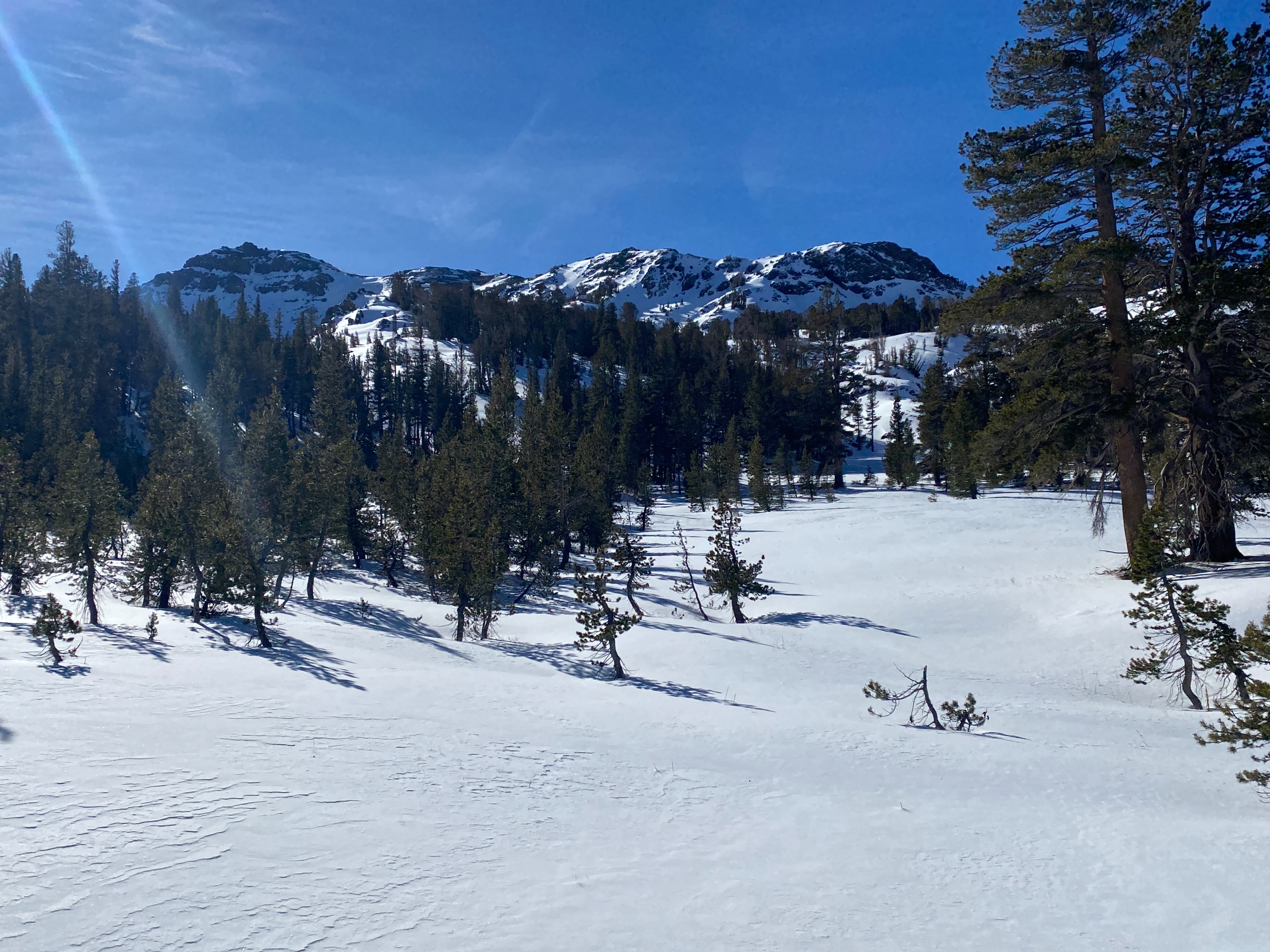
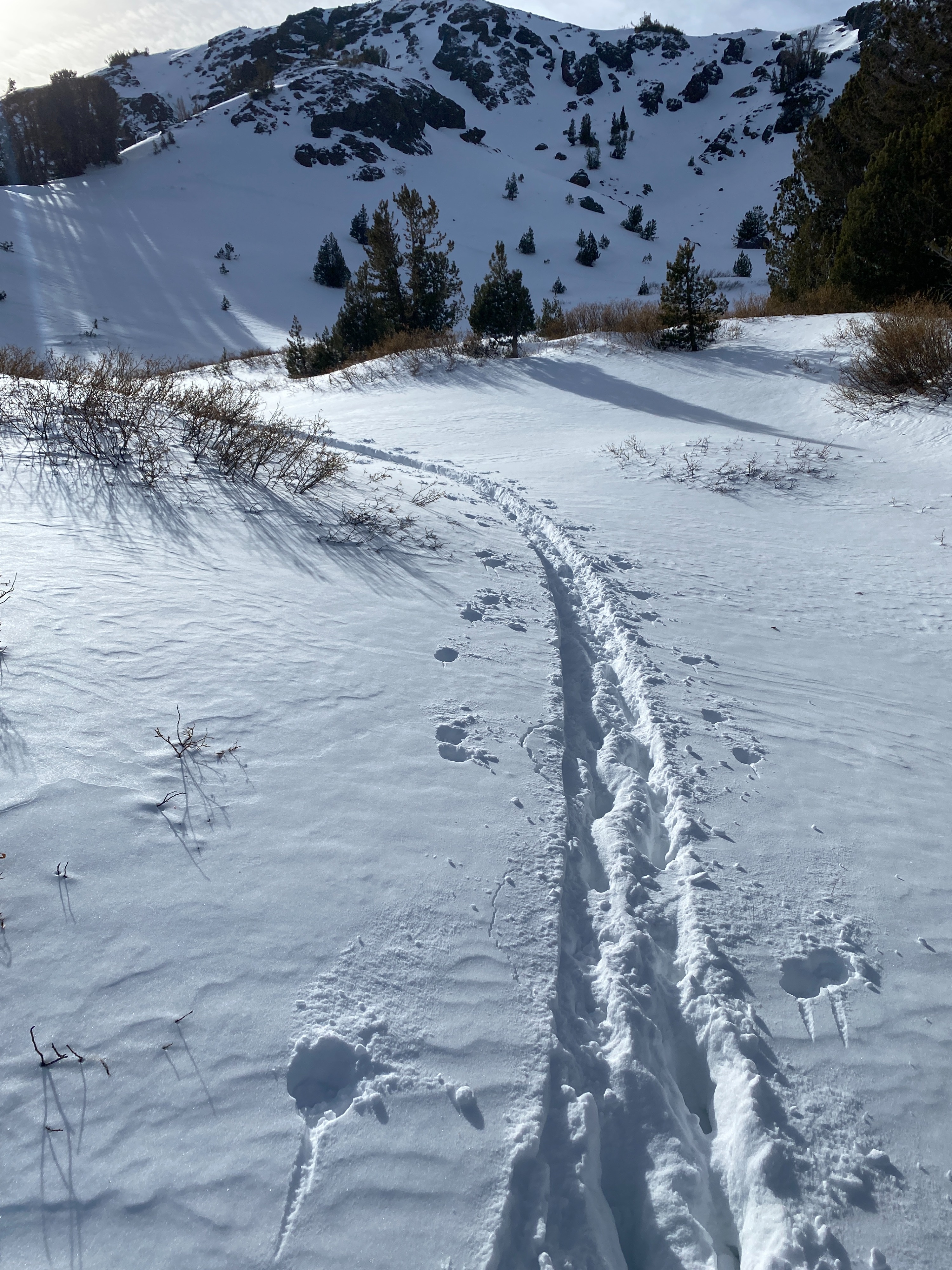
Travel in the area is difficult as HWY 108 is closed in the winter. The highest concentration of snow was up on the Sierra Crest in isolated and protected areas on leeward slopes. Most of the terrain in this area was covered with a dusting of snow on top of bare ground. North-facing slopes in the Sonora Pass area had just enough snow to travel on effectively with skis and splitboards.
Weather
- Cloud Cover
- few
- Wind Loading
- none
- Recent Snowfall
- 0
- Snow Avail For Transport
- small smounts
above freezing temperatures, calm wind, and increasing high clouds throughout the day
Snowpack
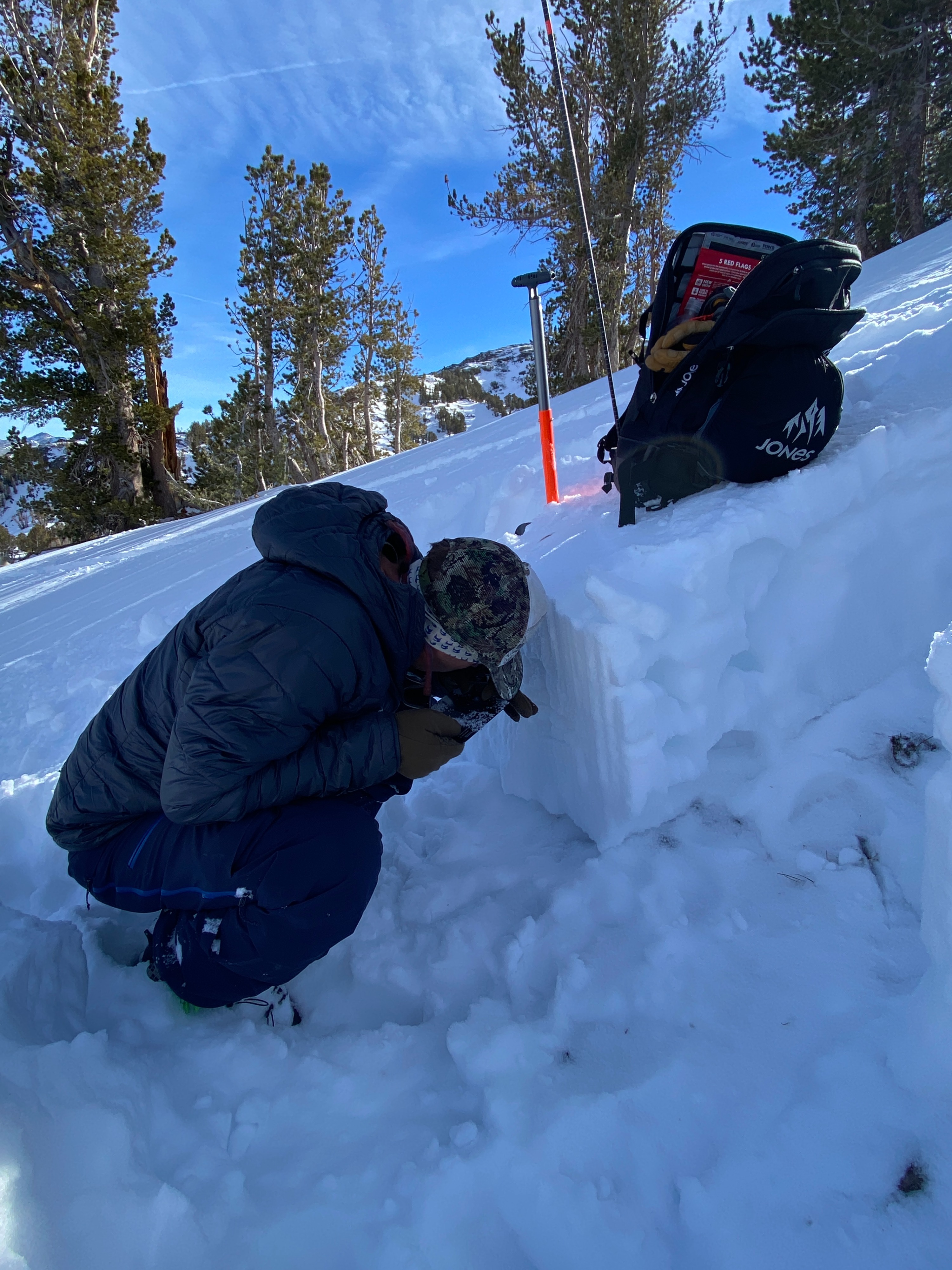
Overall a shallow and thin snowpack. 30-50 cm on average in isolated areas, most of the terrain was bare ground or less than a foot of snow on top of the forest floor. The snow was unconsolidated, faceted, fist on the hardness scale consistently to the ground. A thin surface wind skin was present in some locations. The snowpack structure was poor and the stability was good, how does that work? Let's talk about the snowpack structure. In the area that we observed, we had faceted (sugary) snow. This snow was weak, meaning that it did not stick together. If you looked under a scope, you would find that faceted snow had angles on the corners (square shapes). These square shapes of the snow grains did not bond well with their neighboring snow grains, producing weak, sugary, loose, faceted snow. The snowpack stability was good in the area because the entire snowpack was like this. As soon as we have a change in conditions, such as a wind slab (strong) over our currently weak snowpack, our snow stability will decline and also become poor. Until then the main hazard we found was not hitting rocks and stumps while traveling through the mountains.