

Quick report
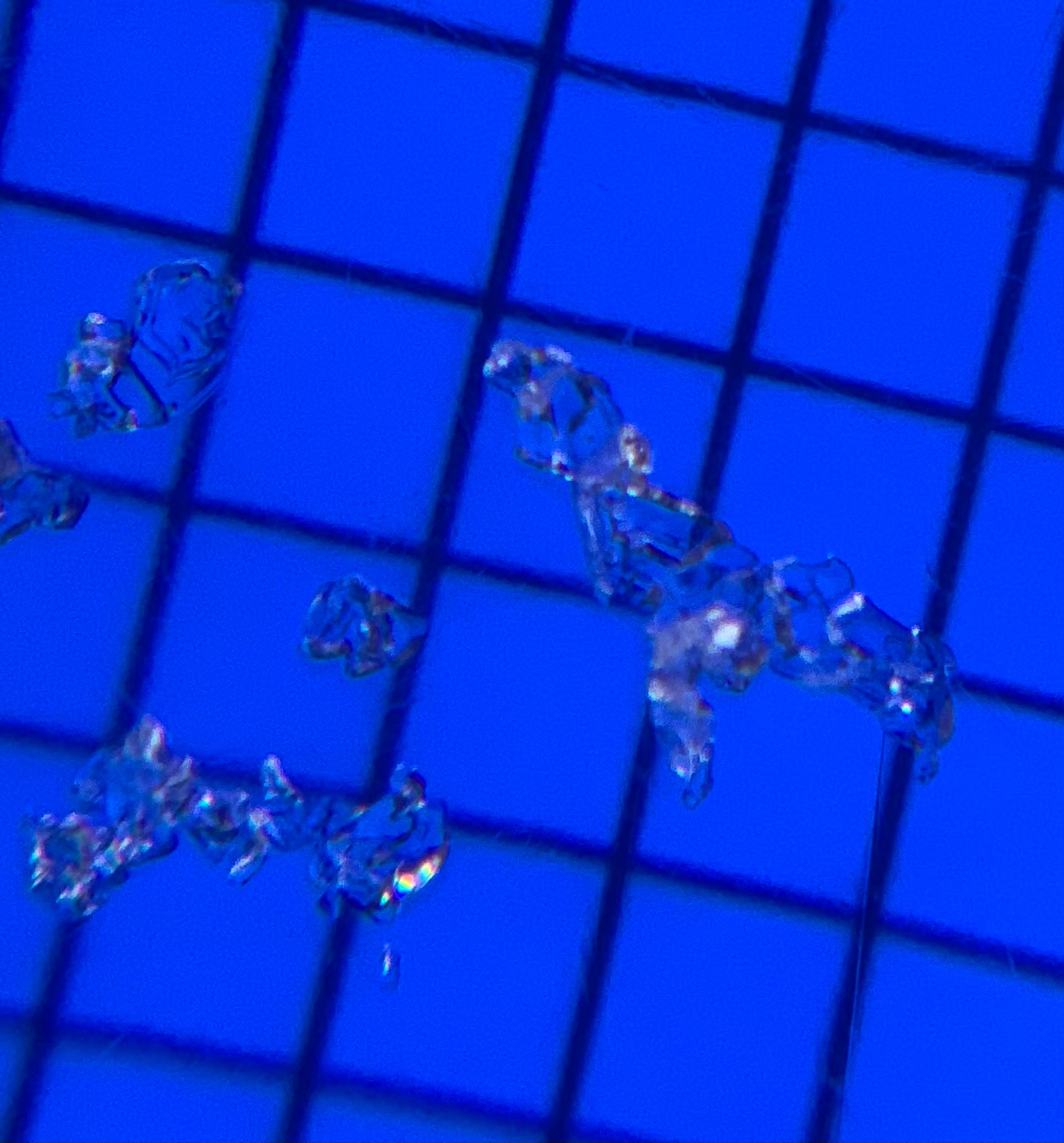
Toured up Crudbusters to see if recently formed windslabs retained any sensitivity in an area that would've had lower wind speeds than Thompson Pass and to check the snowpack structure of a more continental zone. Old wind slabs were observed on the lee side of terrain features that were knife hard and unreactive to human triggers, also showing no signs of instability. Terrain that was not in the lee of recent north wind was scoured down to variable wind affected surfaces with low spots retaining an average snow pack depth of 2 ' in the alpine up to 3000'. Wind exposed terrain had mostly been scoured to the ground on high spots. Depth Hoar at the ground was more developed than what has been recently observed closer to Thompson Pass along with an overall weaker snowpack. This weak snow showed propagation in stability tests, this is a concern not just because of stability results but also due to its shallow depth increasing the odds that a person or machine could affect this layer.
No signs of instabilityWeather
- Cloud Cover
- overcast
- Wind Loading
- previous
- Recent Snowfall
- 0
- Snow Avail For Transport
- none
overcast and calm
Snowpack
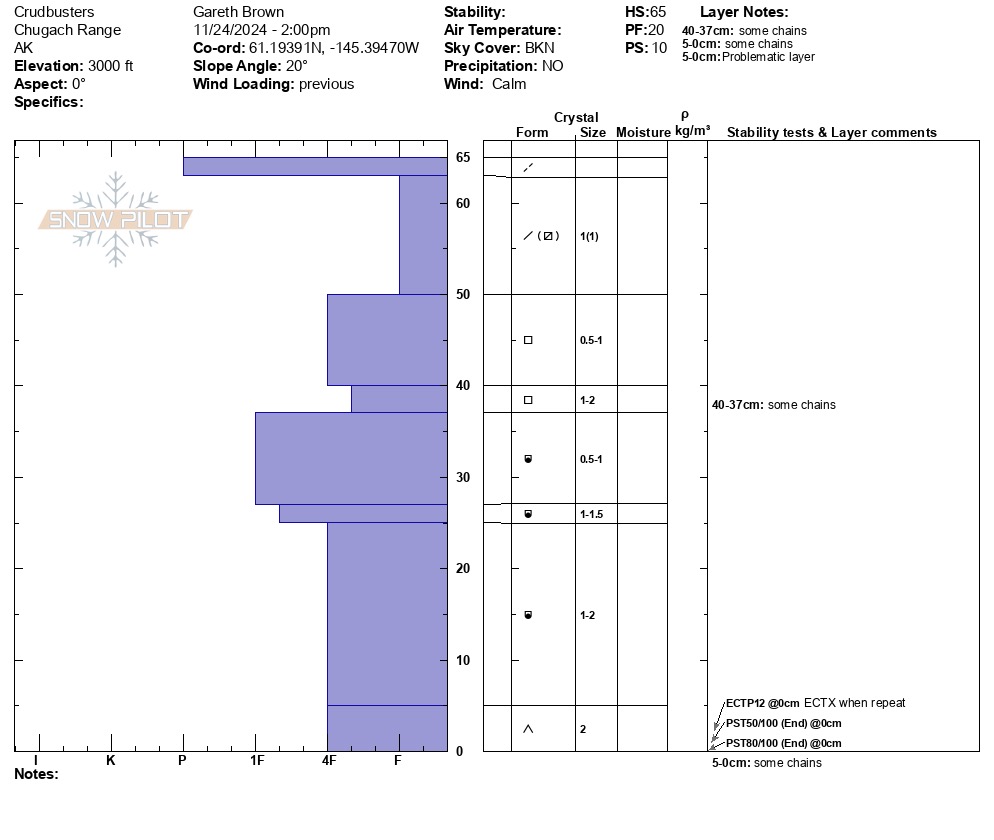
The snowpack is very thin and is becoming weaker due to recent cold temps north of Thompson Pass. In this location, wind affected snow existed near and above brushline with loose faceted snow on the surface below brush line where thick brush protected the surface snow from wind redistribution of the 11/19-21 north wind event. A snow pit at ~3000 on a N aspect showed a snowpack moving toward facets with fair/poor structure and poor strength that was 65 cms in depth. Stability tests produced propagation at the ground( ECTP12) 1 time and ECTX on a repeat. PST results were END(50/100) and END(80/100) down 65 cms. Every layer in this snowpit showed some form of faceted snow grain.