
Quick report
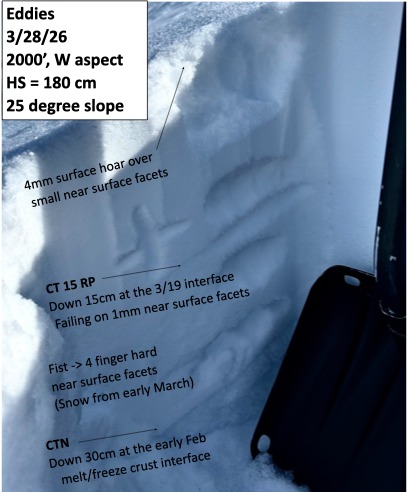
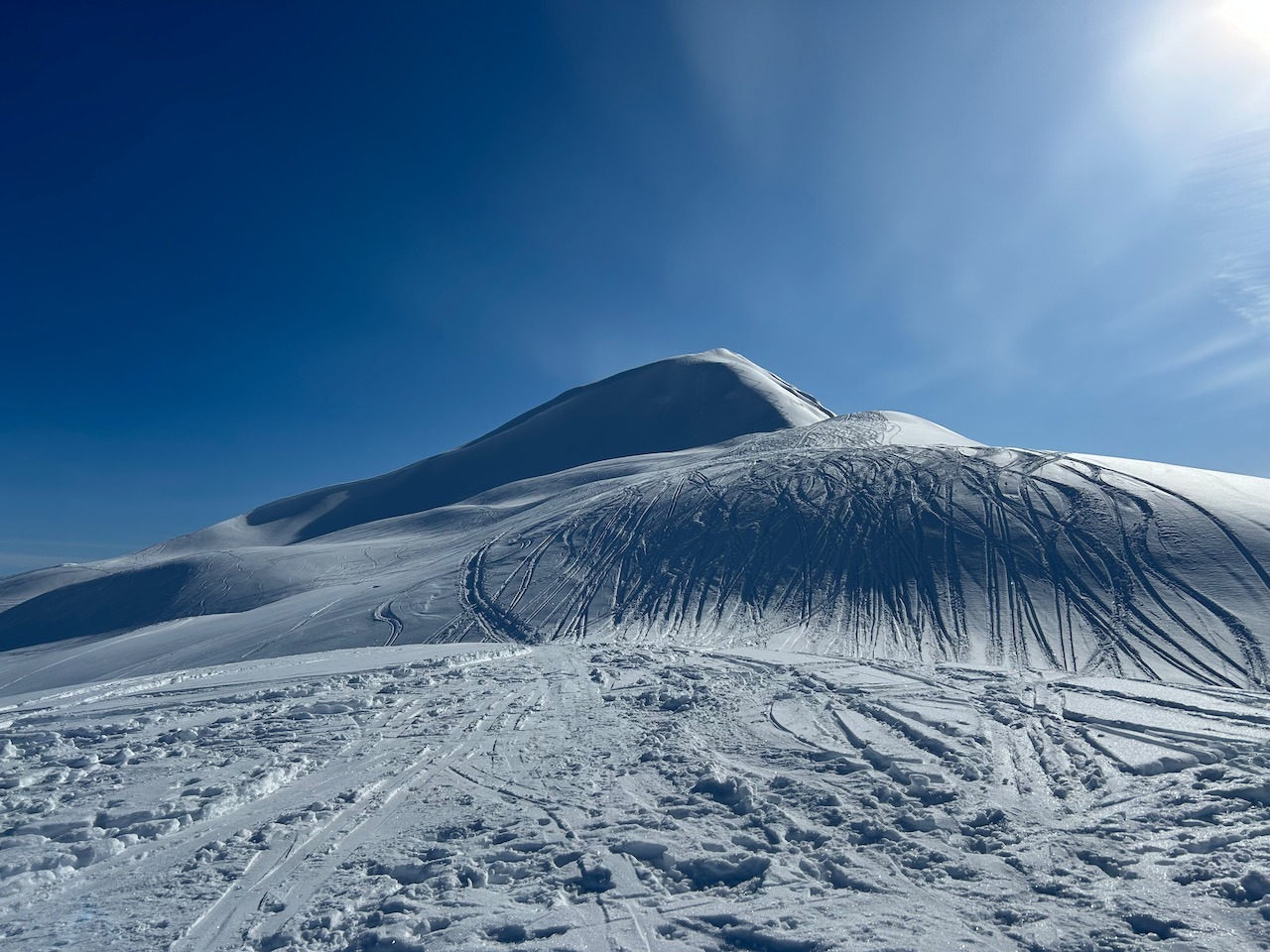
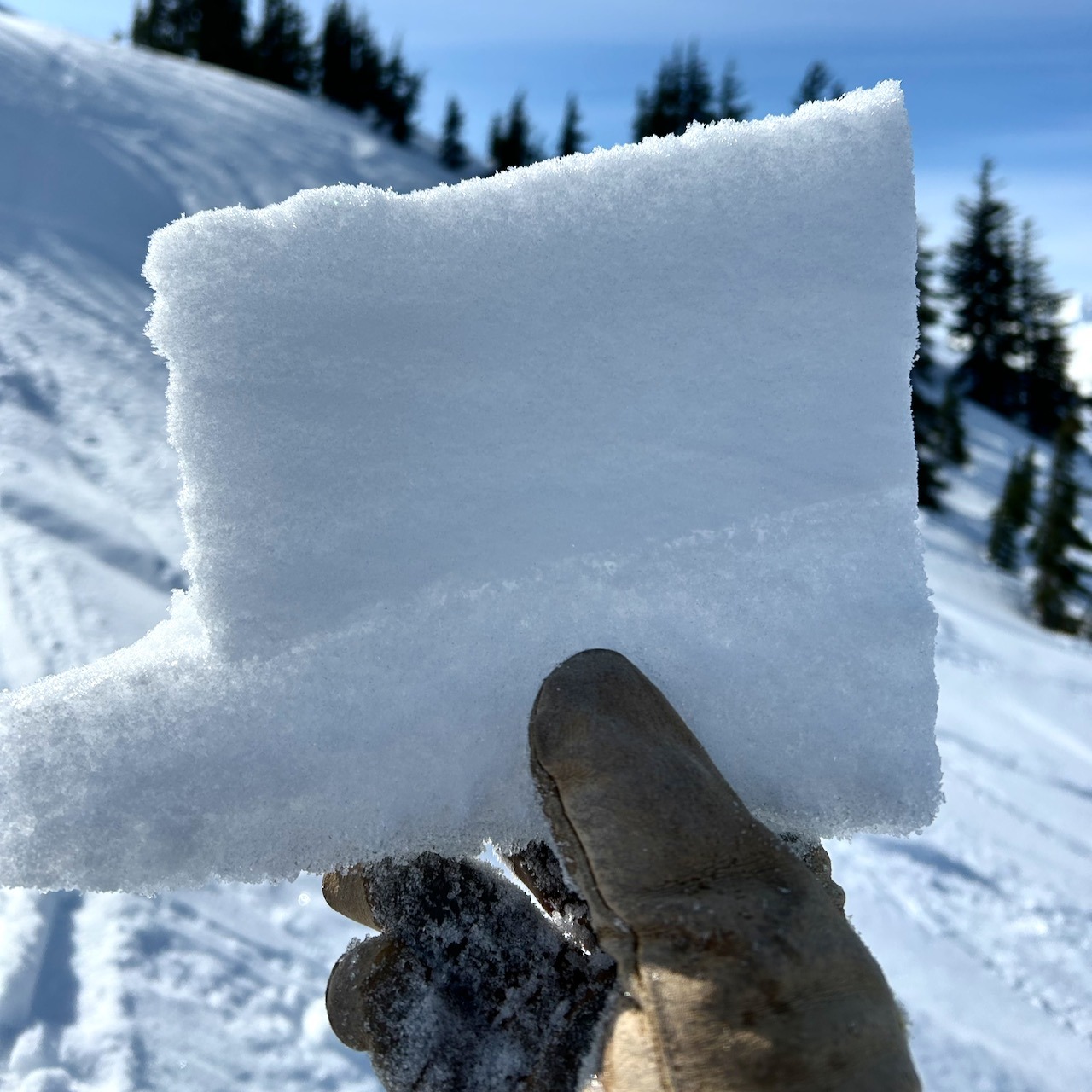
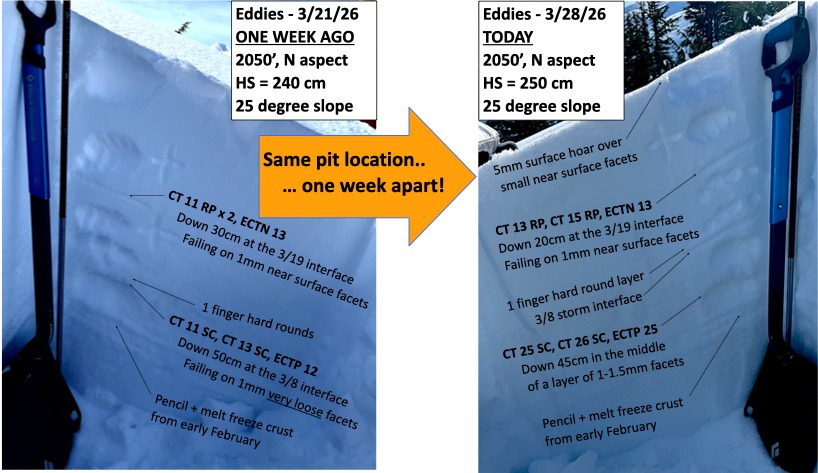
Route: Eddies to 2300' and down the northwest (road facing) aspect from 10:30 AM - 1:45 PM. Signs of Instability: None. Weather: Calm and clear, with some very thin high clouds coming in midday. Temps in the teens in the AM, warming to 20s by early afternoon. Snow Surface: 4-8mm surface hoar sits on top of loose faceting snow from the March 19-20 storm. Winds haven't moved snow in the past week up to my high point of 2300' on Eddies, leaving a soft snow surface on all flat, north facing, or west facing aspects traveled. Steeper, due south terrain features were capped by a breakable melt freeze crust from recent sun, but otherwise a dry, soft snow surface is present on commonly travelled Eddies west -> northerly facing slopes. While some minor rollerball activity could be seen across the way on the southeast steeps of sunnyside, overall it seems like the worst of the sun's antics have yet to come! Snowpack: Twas a nerd day on Eddies, with two questions on my mind: 1) how have the two layers of facets in the top 2' of the snowpack changed in the past week, and 2) is there faceting/a weak layer forming just above the early February melt freeze crust? On the second question, as many reports note, this stout melt freeze crust can be found 1-2' deep to treeline, and in some places that were hammered by winds in February, just one of the two layers of facets are present above it. To get a data point on the first question, I dug a pit right next to my pit last weekend, at a location where two layers of facets can be found. The upper layer of facets were firmer in the pit wall - now 4 finger hard - and once again failed without propagation, with similar but slightly higher scores this week. The lower layer of facets - formed in February, and buried by the early March storm - were still fist hard, but not quite as loose as last week. This lower layer failed in the middle of the facet layer this week, as opposed to the top of the layer (the 3/6 storm interface) last week. While I still got propagation in an ECT and the failure was very pronounced - a 'sudden collapse' - it took many more taps this week versus last week to initiate the failure. On the second question - both at the pit location and at a shallow, previously wind scoured west aspect spot around 2000' - I took a close look at the 2/10 crust interface, and used compression and shovel tilt tests to see if a subtle thin weak layer may be present. In both locations, the crust/snow interface was unremarkable and even somewhat bonded together, with more reactive layers and larger faceted grains at the storm interfaces/in the middle of the facets that formed during February. See photos for full results/structure!