
Quick report
- Cracking
- isolated
- Collapsing
- isolated
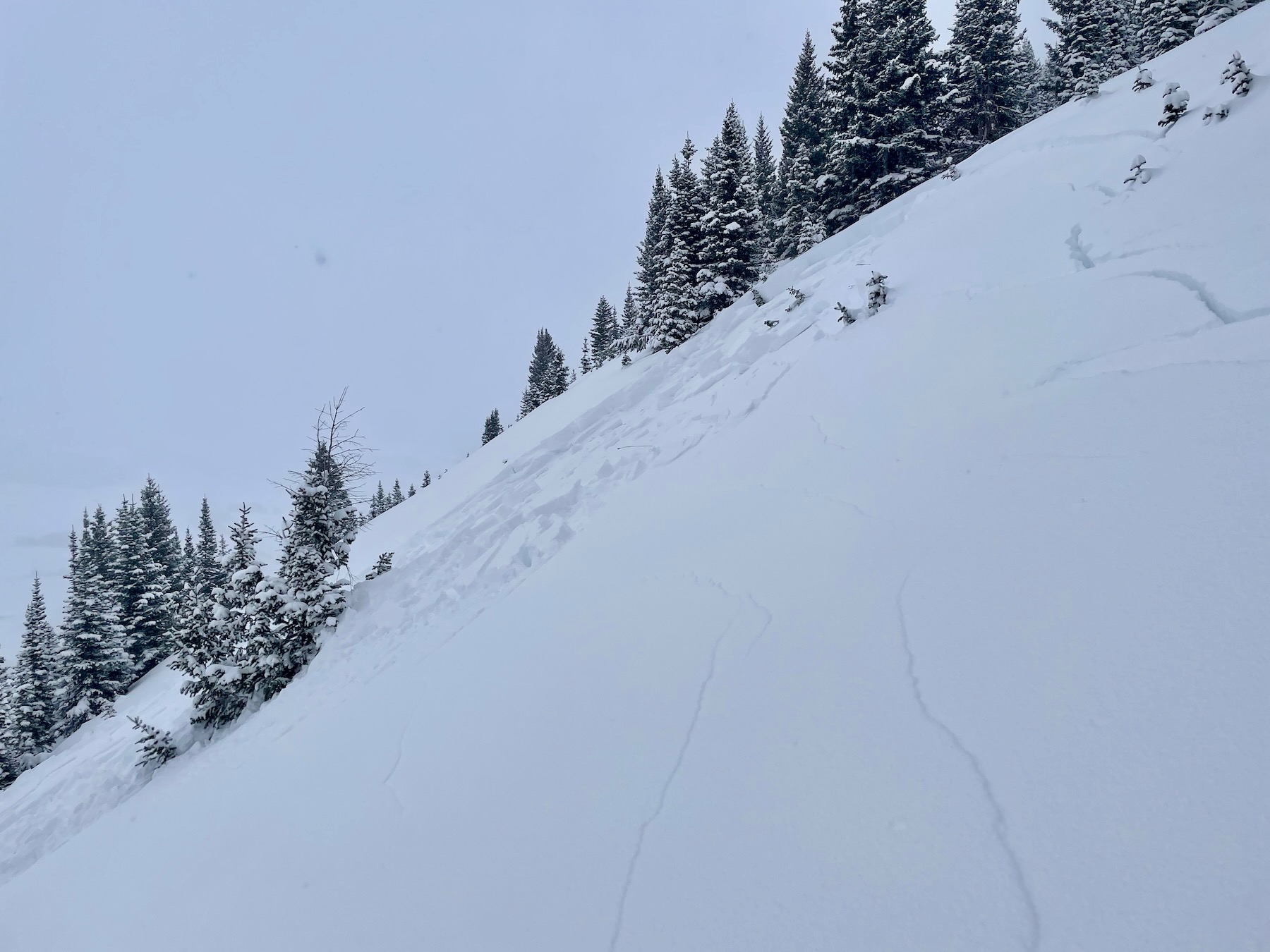
On NE facing slopes the PSa avalanche problem felt reactive and Isolated. In many areas, the mid-pack slab has become soft and isn't producing collapses or shooting cracks anymore. The snowpack structure however is still poor. These obvious signs of instability, and avalanche, didn't occur on other slopes with common characteristics.
Weather
- Cloud Cover
- overcast
- Recent Snowfall
- 20 at 2pm
Mostly cloudy. Calm to light winds. About 10cm of new snow between 11am and 2pm. Then a heavy pulse of snow kicked in for the later afternoon.
Snowpack
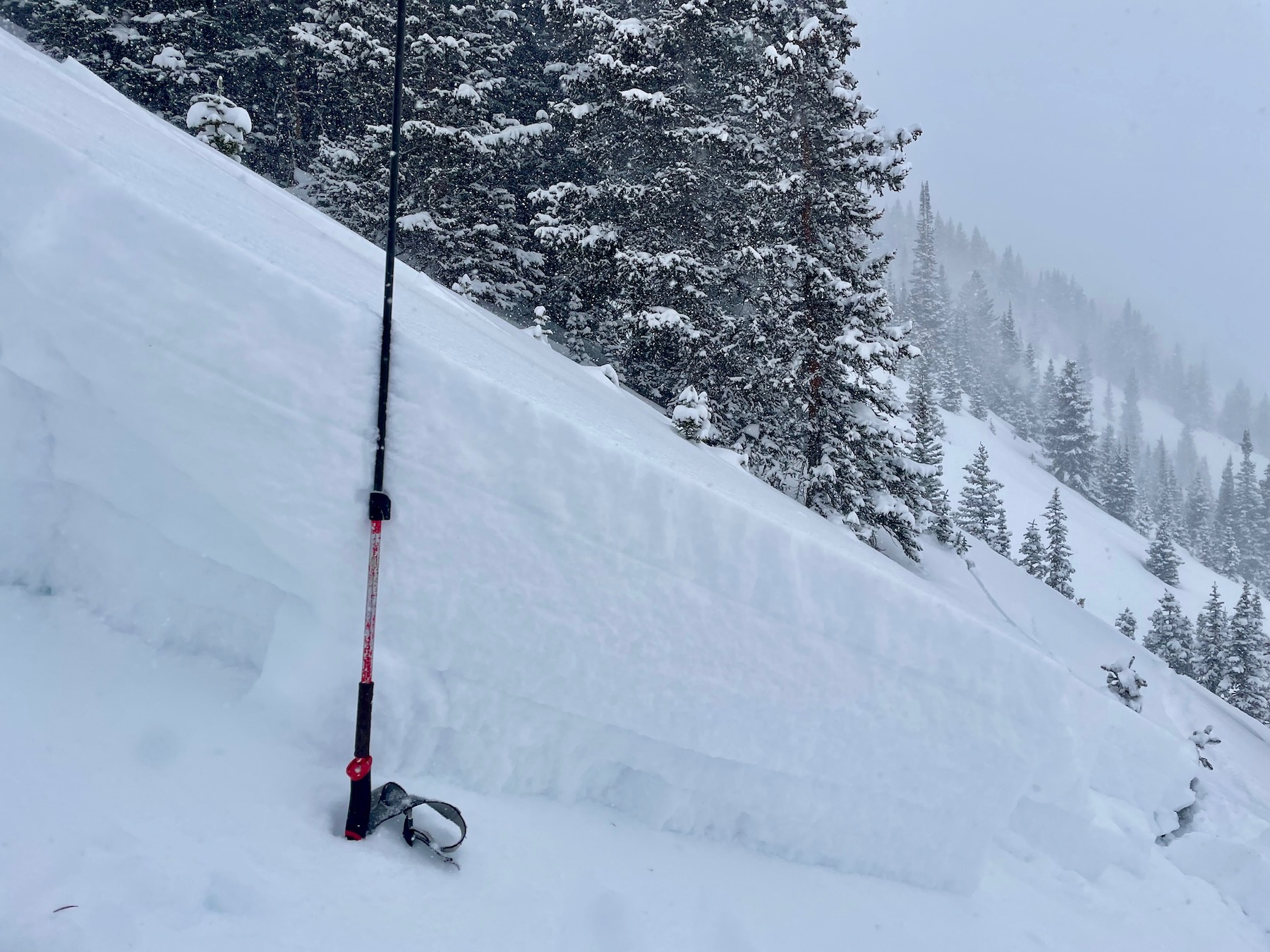
At 2pm there was 20cm of new snow. A heavy period of snow kicked in for the later afternoon and bumped that number up. The skiing quality was great on both north and south aspects.
On northerly facing slopes the new snow was capping a layer of well-preserved 4 to 5mm SH. The mid-pack slab was supportive to skis above 10,000ft, then became more variable and punchy below. The 11/30 to 12/3 storm was acting as the slab. Generally, 4F hard, but variable depending on elevation. In some areas that slab was sitting on SH and others small NSF. The primary weak layer was older F hard facets from the early November dry spell.
Low-angle Southwest aspects in this area had a nice suportable crust with the new snow on top that skied great back into Washington Gulch.
Avalanche
- Size
- D1
- Type
- SS
- Aspect
- NE
- Trigger
- AS
- Elevation
- 10100 ft
This one was cool. Gave a stomp, and heard a muffled collapse run away. Then a short moment later a small avalanche released. As the avalanche debris were coming to a stop, a large freight train collapsed came back to where I was, accompanied by shooting cracks. I can't ever recall experiencing the runaway collapse that then comes back with some thunder and shooting cracks 45 seconds later. I suspect the initial collapse occurred at the 11/30 interface that was small SH here, then the rebounding collapse was on the deeper F hard facets that the avalanche released on.