
Quick report
- Cracking
- specific
- Collapsing
- specific
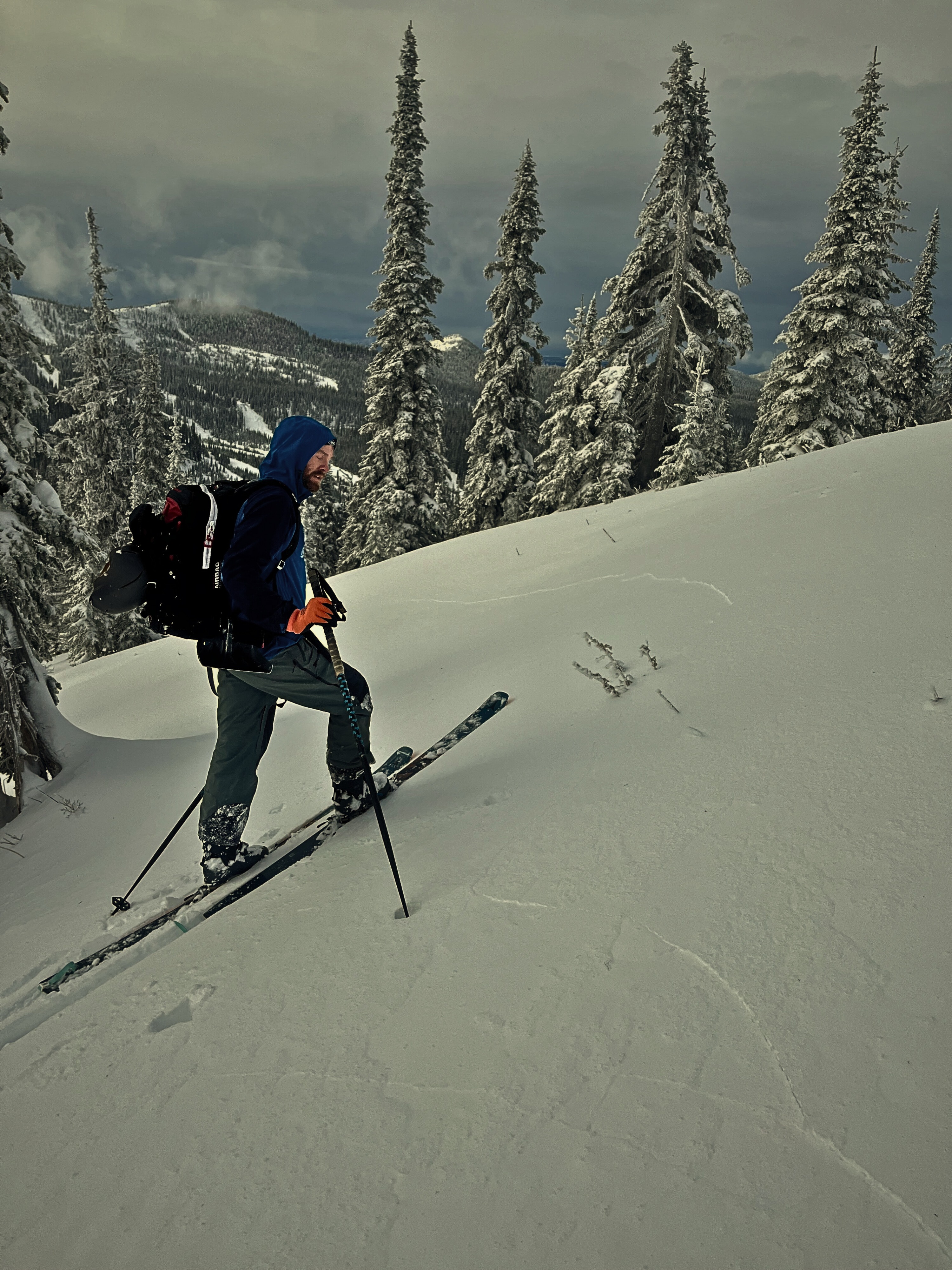
The snowpack is rather talkative these days. Our travel today remained consistent with observations from this past weekend.
- We triggered dozens of shooting cracks and heard many audible collapses while traveling. These occurred on all of the aspects we traveled and above 6500 feet.
- One noteworthy observation was that we initiated a crack next to a wind-loaded ridgeline that propagated approximately 200 feet and into flat terrain on top of the ridge. This is a result of wind drifting snow into a hard slab. This was a clear sign to give start zones a wide berth.
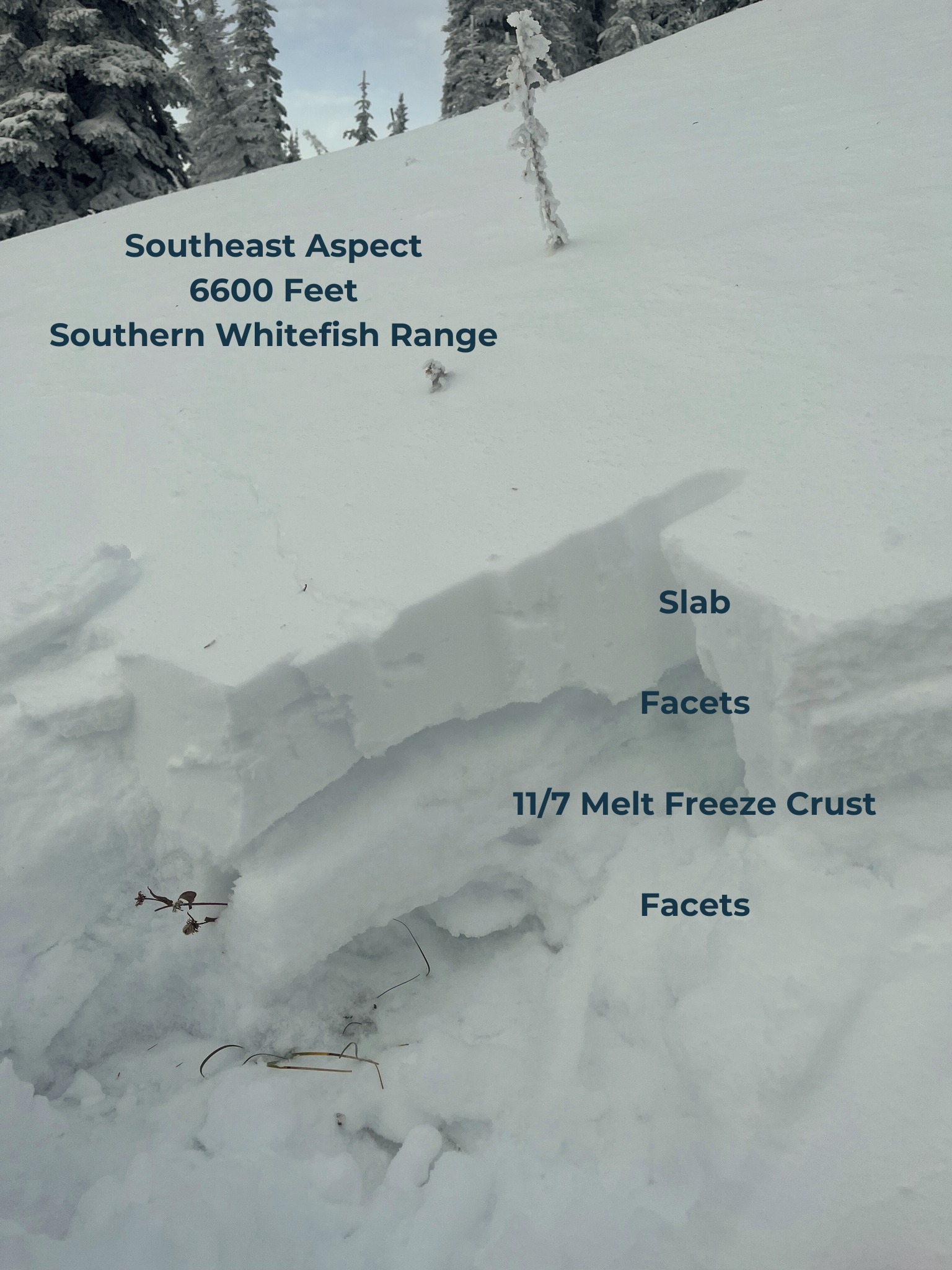
- Recent storm totals left a 4 to 8-inch soft slab in wind-sheltered terrain, and a 10 to 16-inch hard slab in wind-loaded terrain.
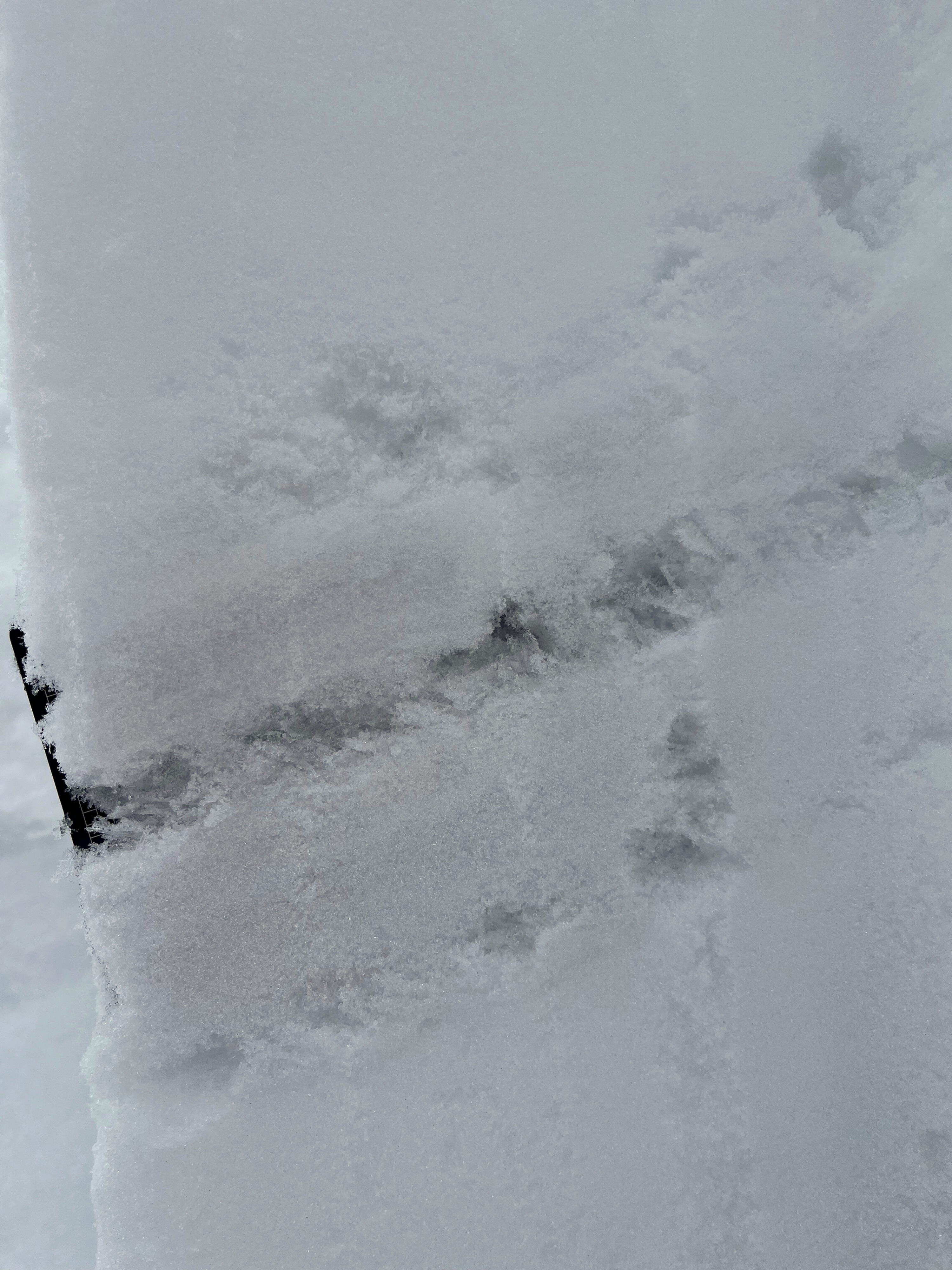
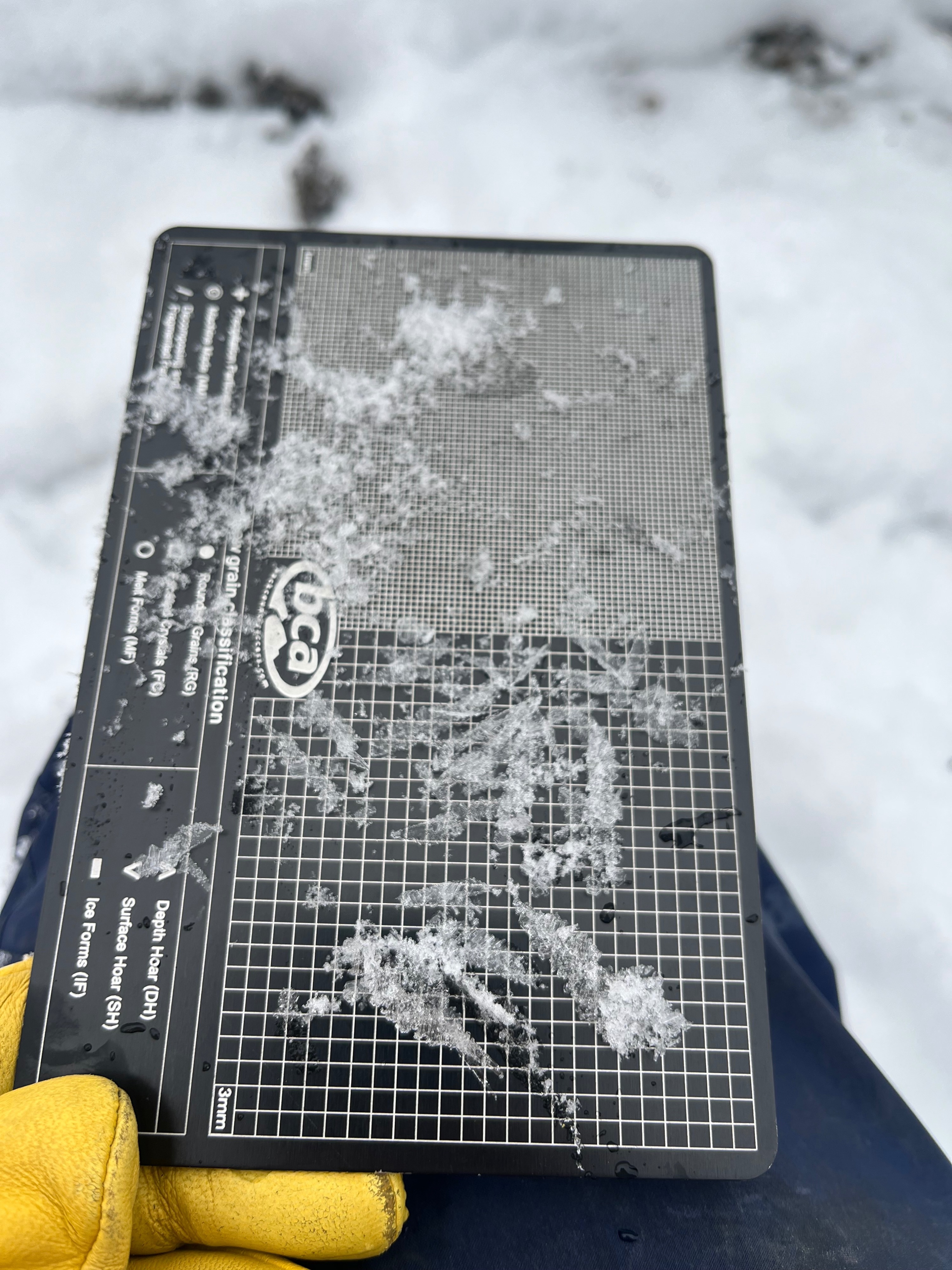
- Slabs are sitting on top of a variety of persistent weak layers. The most impressive weak layer is the buried surface hoar which primarily existed in terrain sheltered from southwest winds.
Weather
- Air Temp
- below freezing
- Cloud Cover
- overcast
- Wind Loading
- previous
- Recent Snowfall
- 4
- Snow Avail For Transport
- small smounts
Snowpack
See the attached snow profile for north aspect snowpit. We observed a shallow, weak snowpack on southerly-facing aspects. The facets above and below the 11/7 melt-freeze crust appeared weaker than on northerly aspects.