
Quick report
No complaints here. Bluebird day and the coverage is excellent for early season.
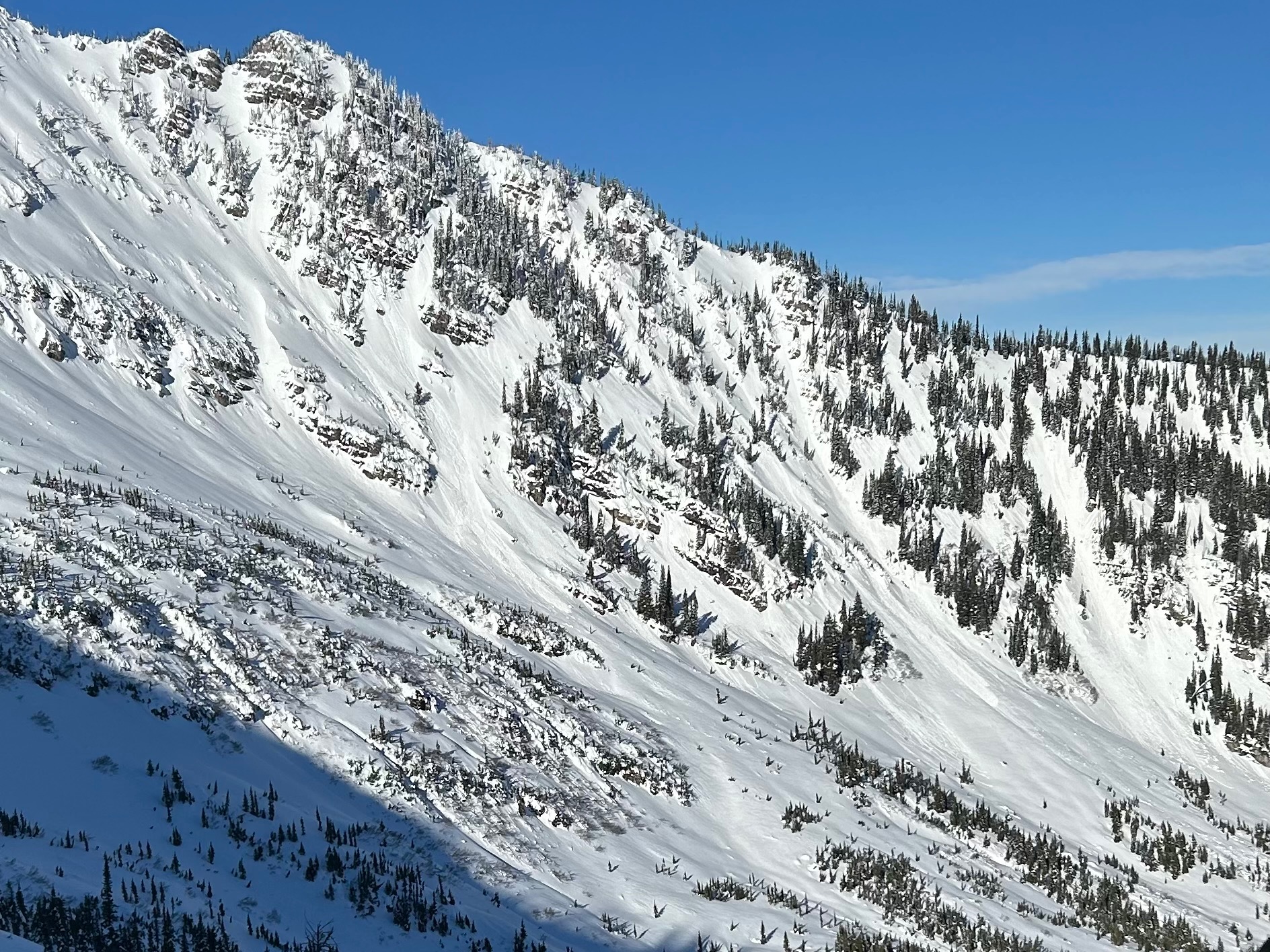
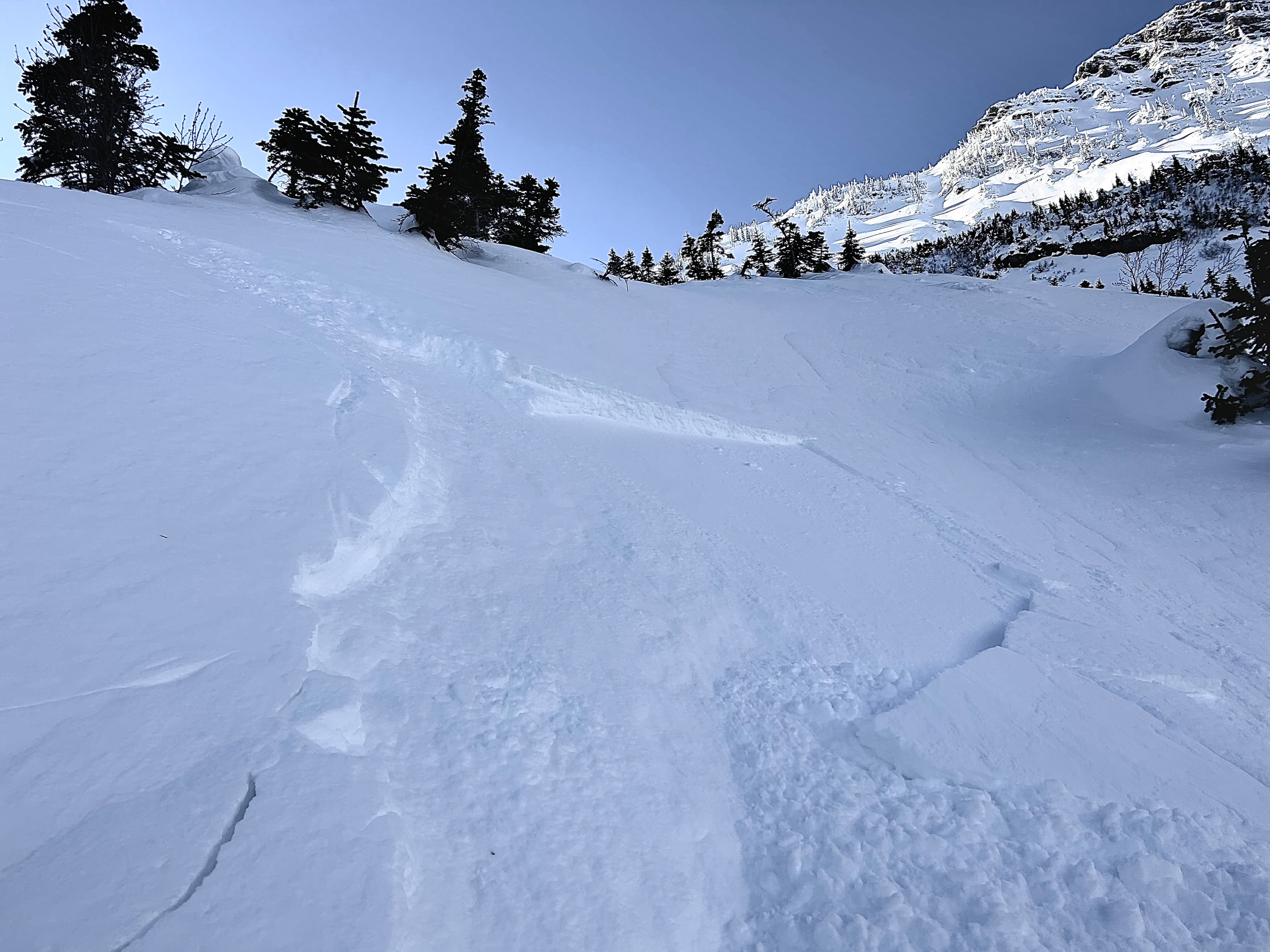
- We observed small natural avalanches and triggered two small wind slab avalanches. See the avalanche tab.
- The wind slabs we triggered failed on near-surface facets that cover shaded aspects. Both of these were very small and failed on convexities mid-slope. Although slabs were reactive to a person's weight, they were very isolated and harmless. I suspect terrain closer to the crest, such as Mt. Adams or Mt. Cameahwait, would be likely candidates for holding larger slabs.
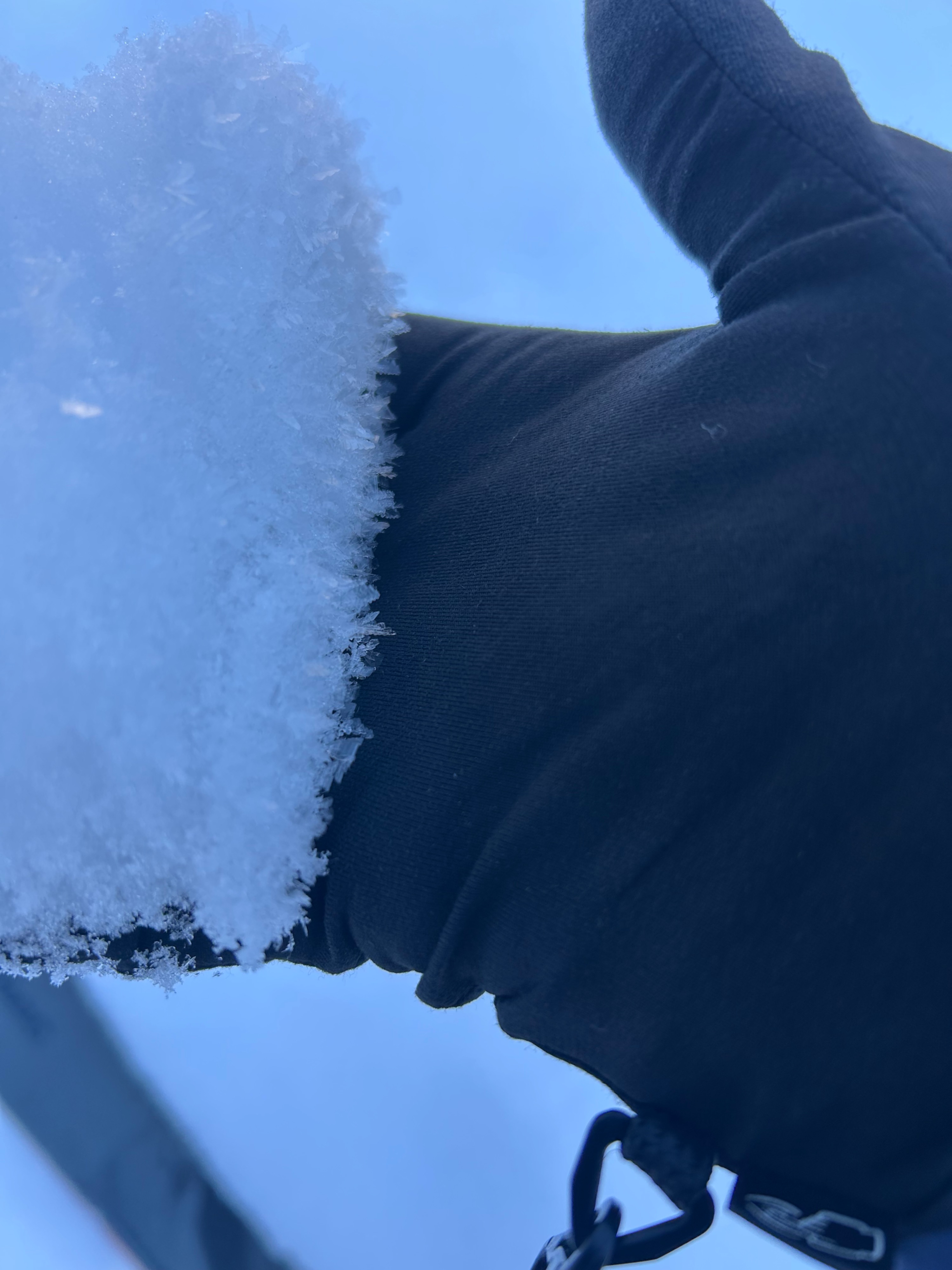
- The current weather pattern (high-pressure) is indeed weakening the snow surface. We observed surface hoar at low and middle elevations and near-surface facets at the upper elevations.
- Observed numerous small rollerballs on southerly aspects. Moving forward, expect a sun crust on solar aspects.
Weather
- Air Temp
- Below Freezing
- Cloud Cover
- clear
- Wind Loading
- light
- Recent Snowfall
- 4
- Snow Avail For Transport
- small smounts
Gorgeous day in the mountains. Light winds with moderate gusts and not a cloud in the sky.
Snowpack
Overall, the impression of the snowpack is good structure and stability. There are a few noteworthy weak layers moving forward once we receive a substantial load. Those are the current snow surface and facets around the AR Crust. We did not observe any buried surface hoar. We dug two snowpits and multiple handpits throughout our tour.
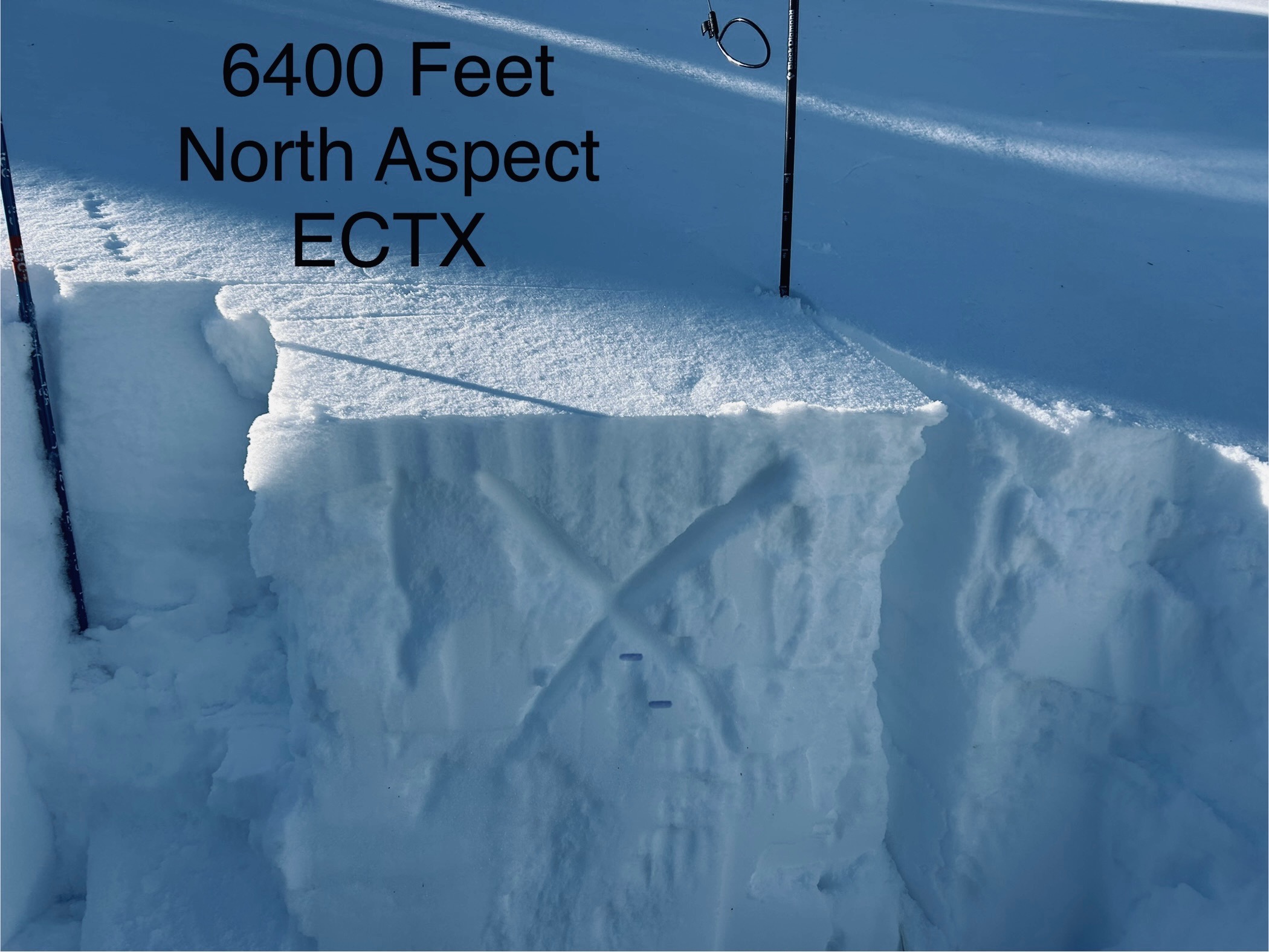
- North aspect at 6400 feet. HS 130 cm. The AR Crust is down 40 cm from the surface. We only saw a few faceted grains below the crust at this location.
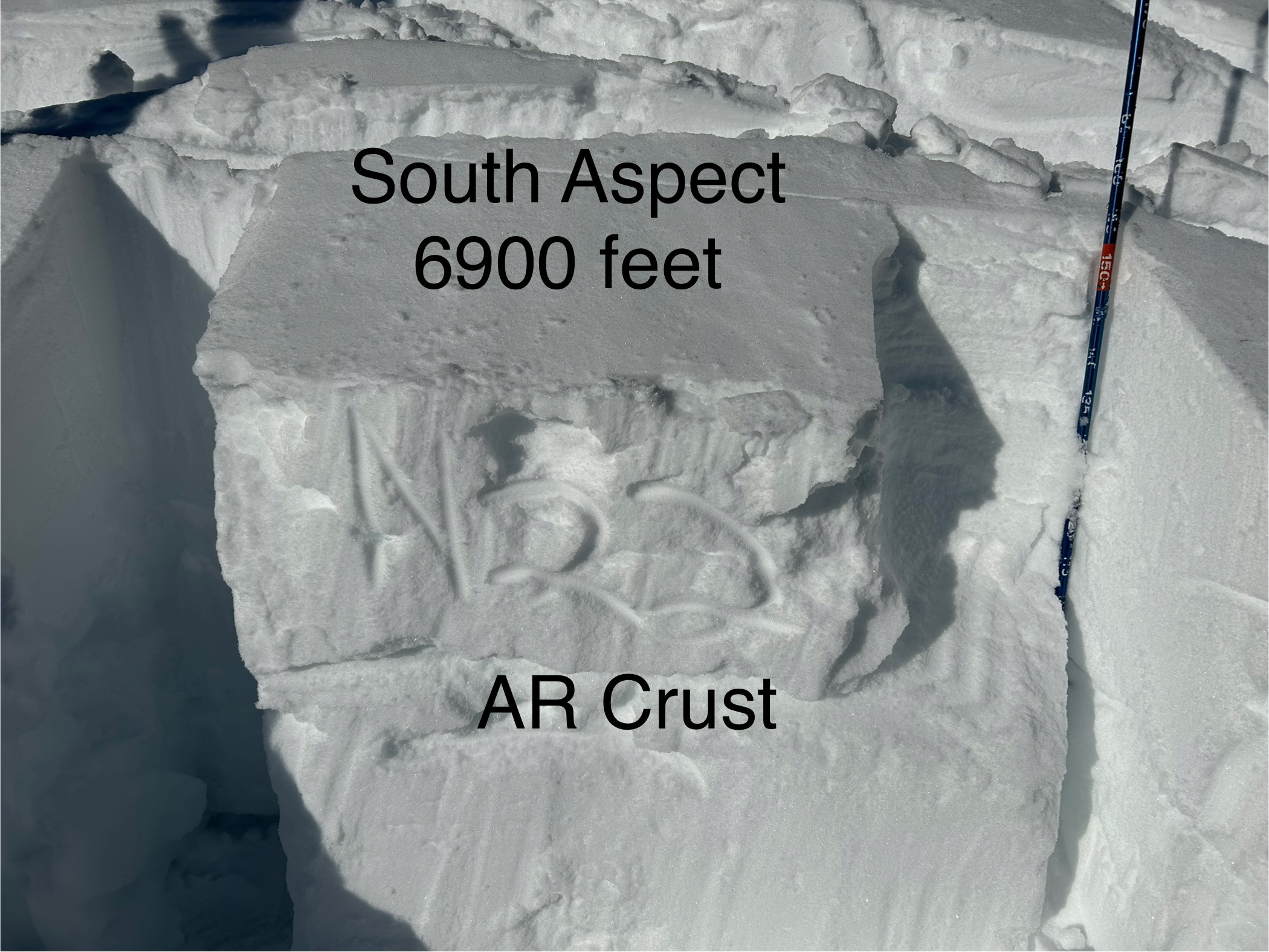
- South aspect at 6900 feet. HS 140 (crossloaded slope). AR Crust is down 45 cm from the surface. Here, we observed obvious faceting above the AR Crust. Extended column test revealed non-propagating results with hard force (ECTN22).
Avalanche
- Size
- D1 R1
- Type
- SS
- Count
- 3
- Aspect
- NE
- Trigger
- AS
- Elevation
- 6400 ft
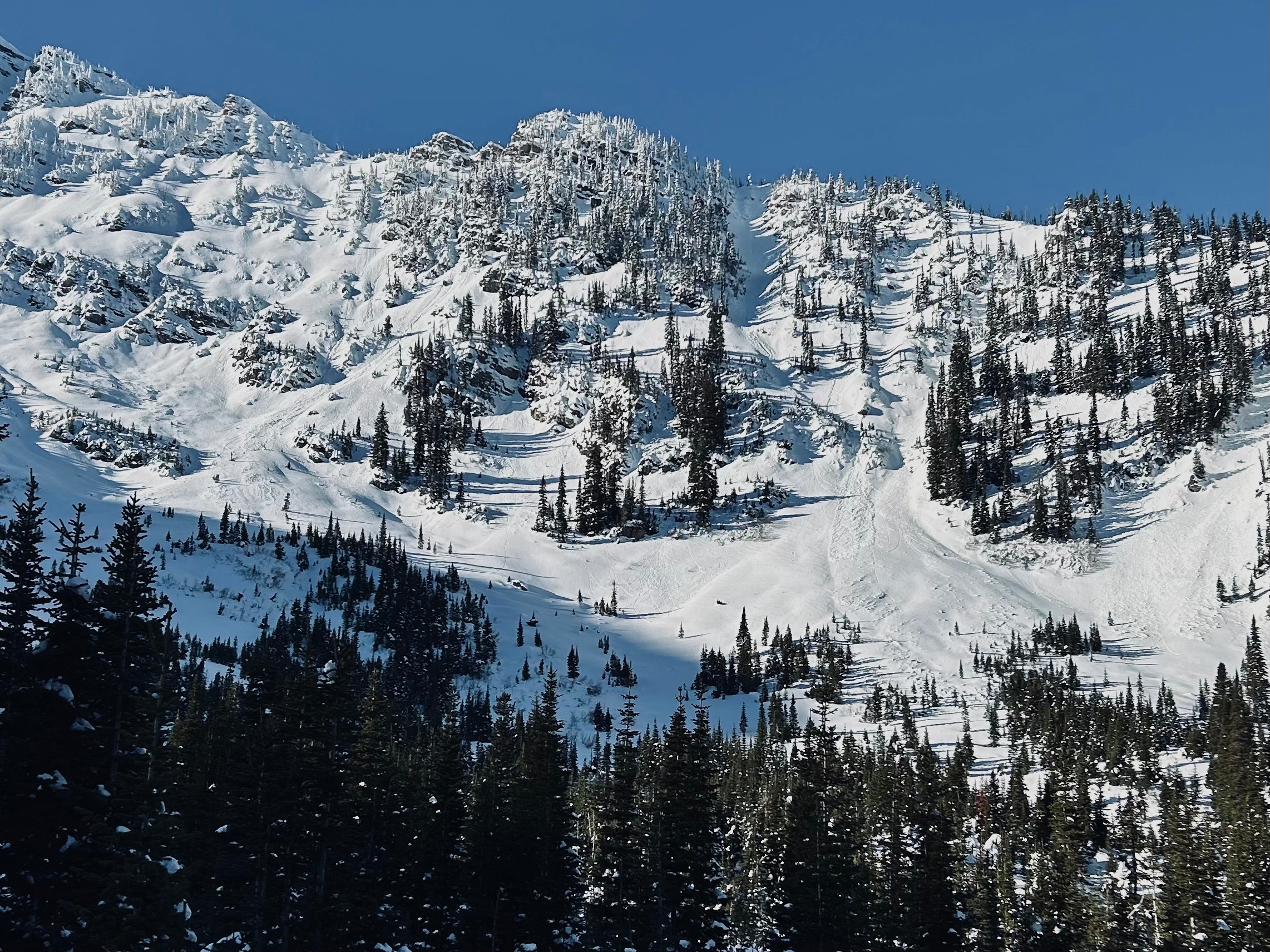
We observed two small loose snow avalanches that failed naturally on southerly aspects as a result of solar input. Both slides ran down to older debris piles from large (D2) avalanches that failed during the atmospheric river event. We triggered two small wind slab avalanches.