
Quick report
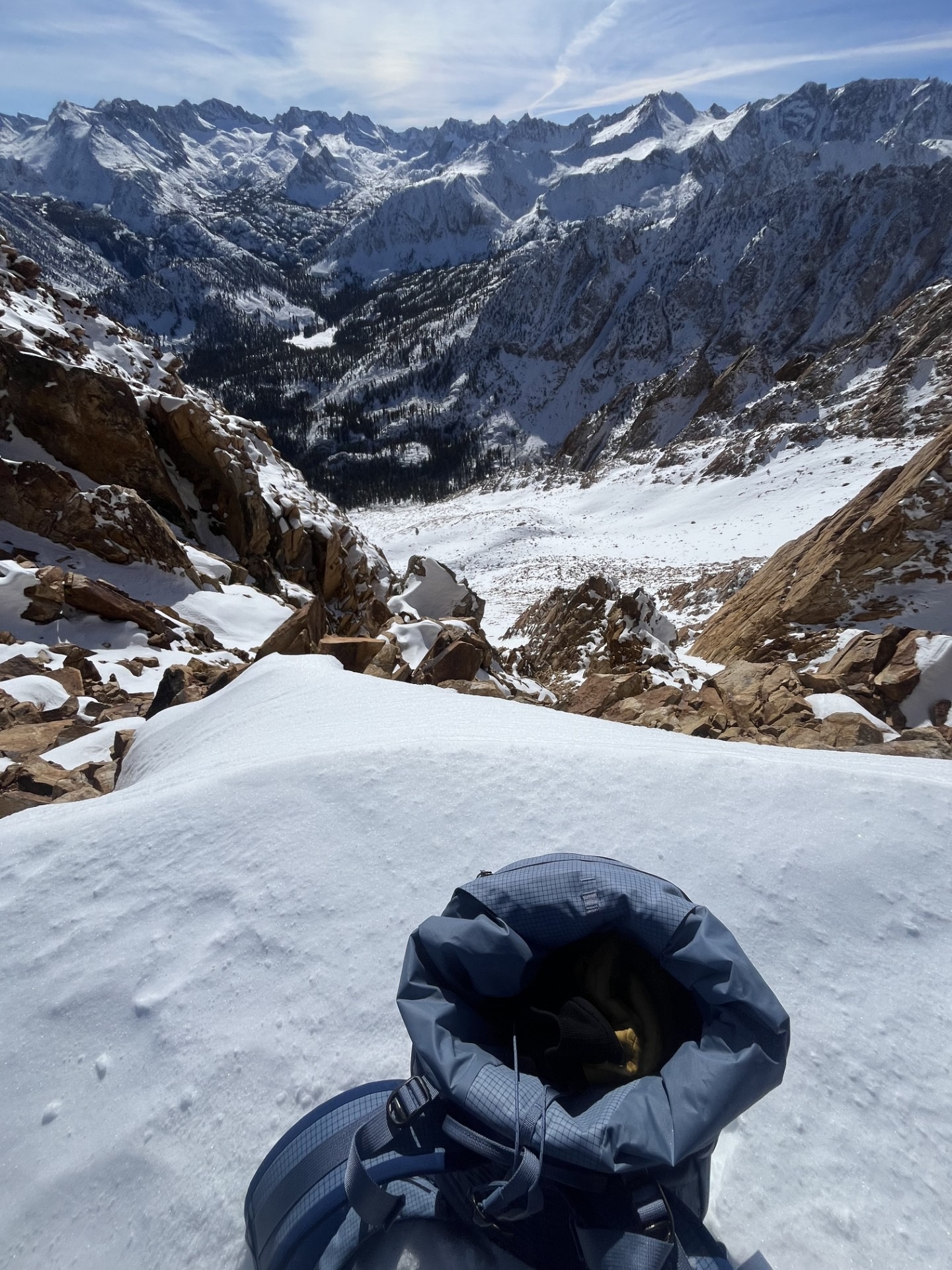
My goals for today were to 1) get baseline coverage and structure in Bishop Creek for the first time this season, 2) get close to 12000 feet and see if I could find the top of the rain/snow line, 3) , observe surface conditions at a range of elevations and aspects, 4) look for any evidence of wind slab or wet snow hazard.
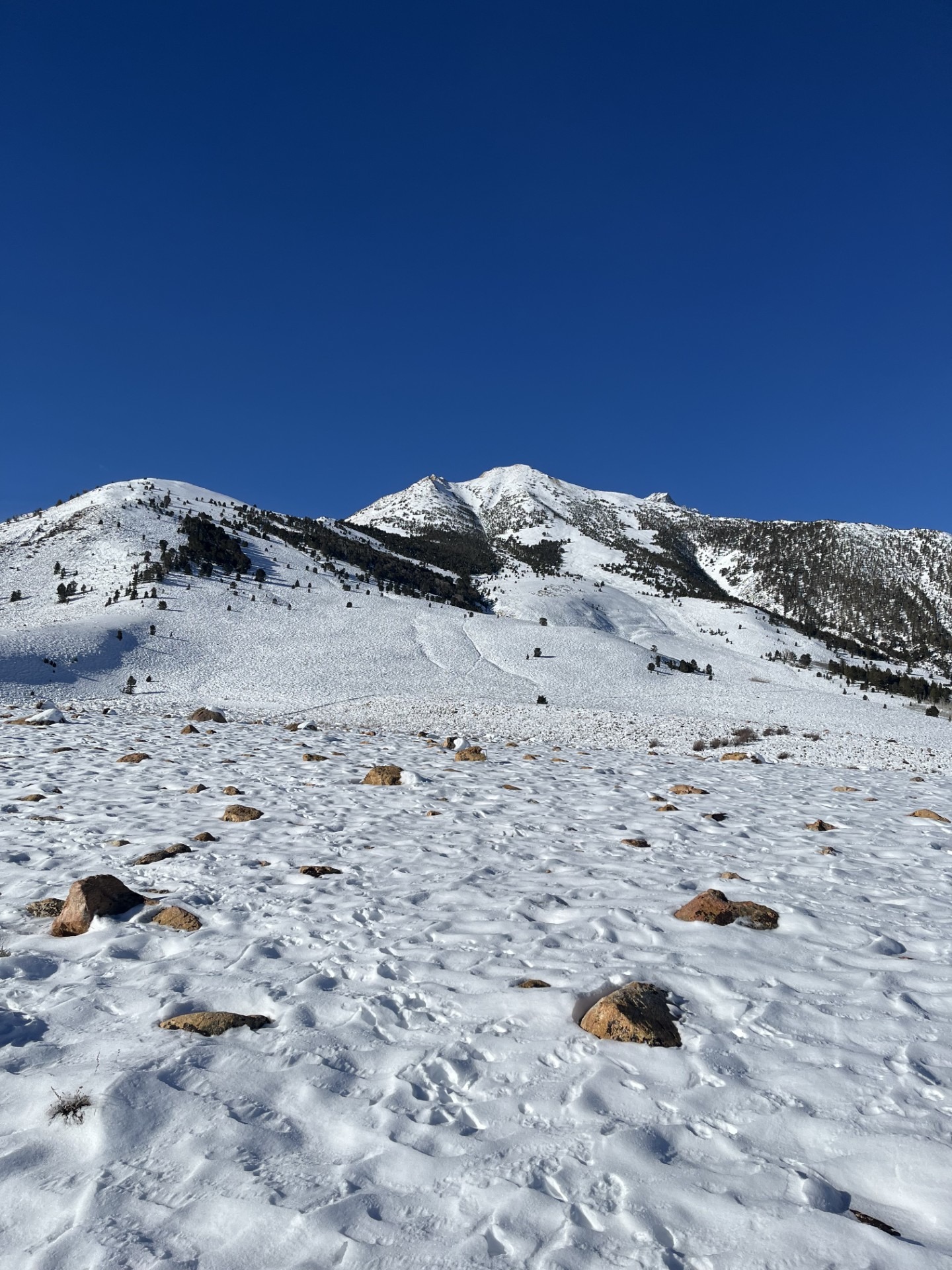
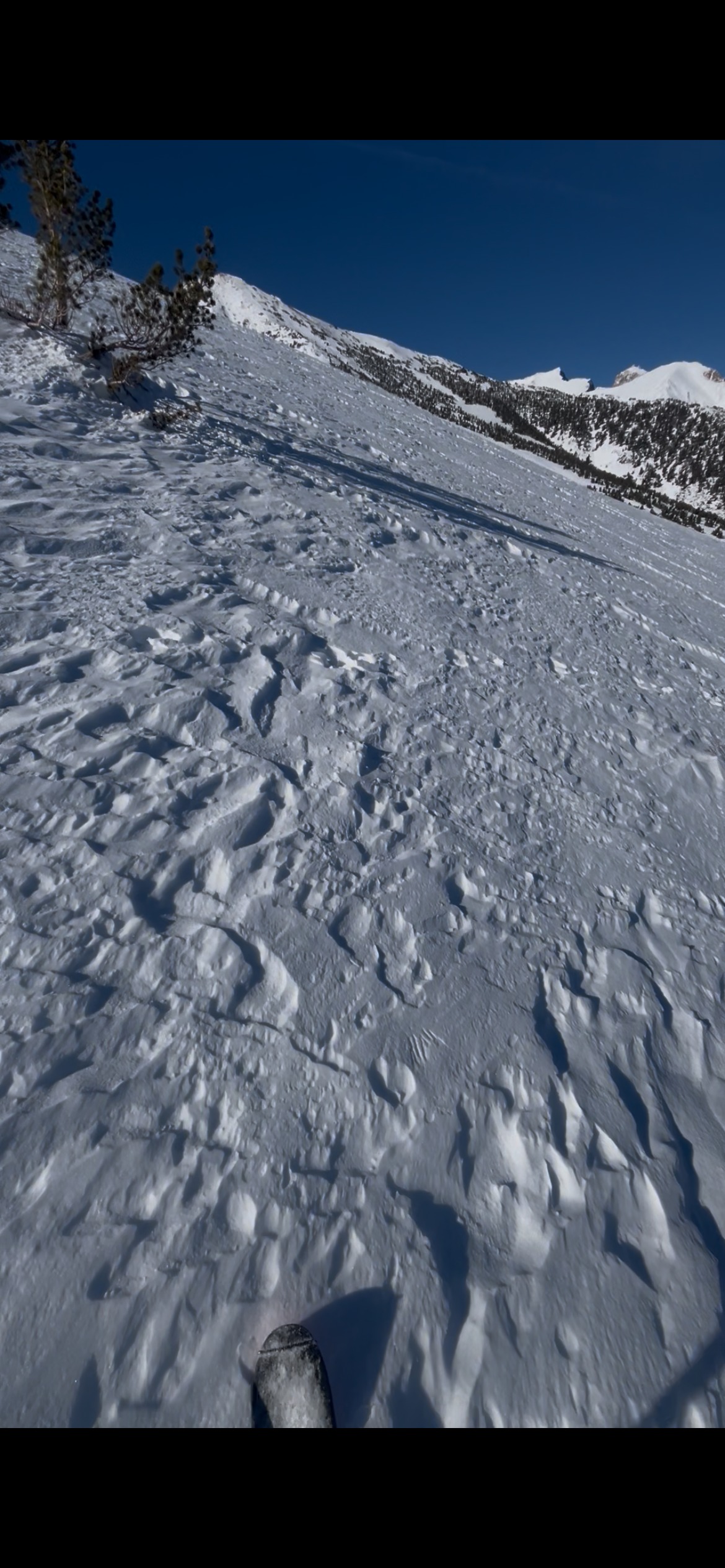
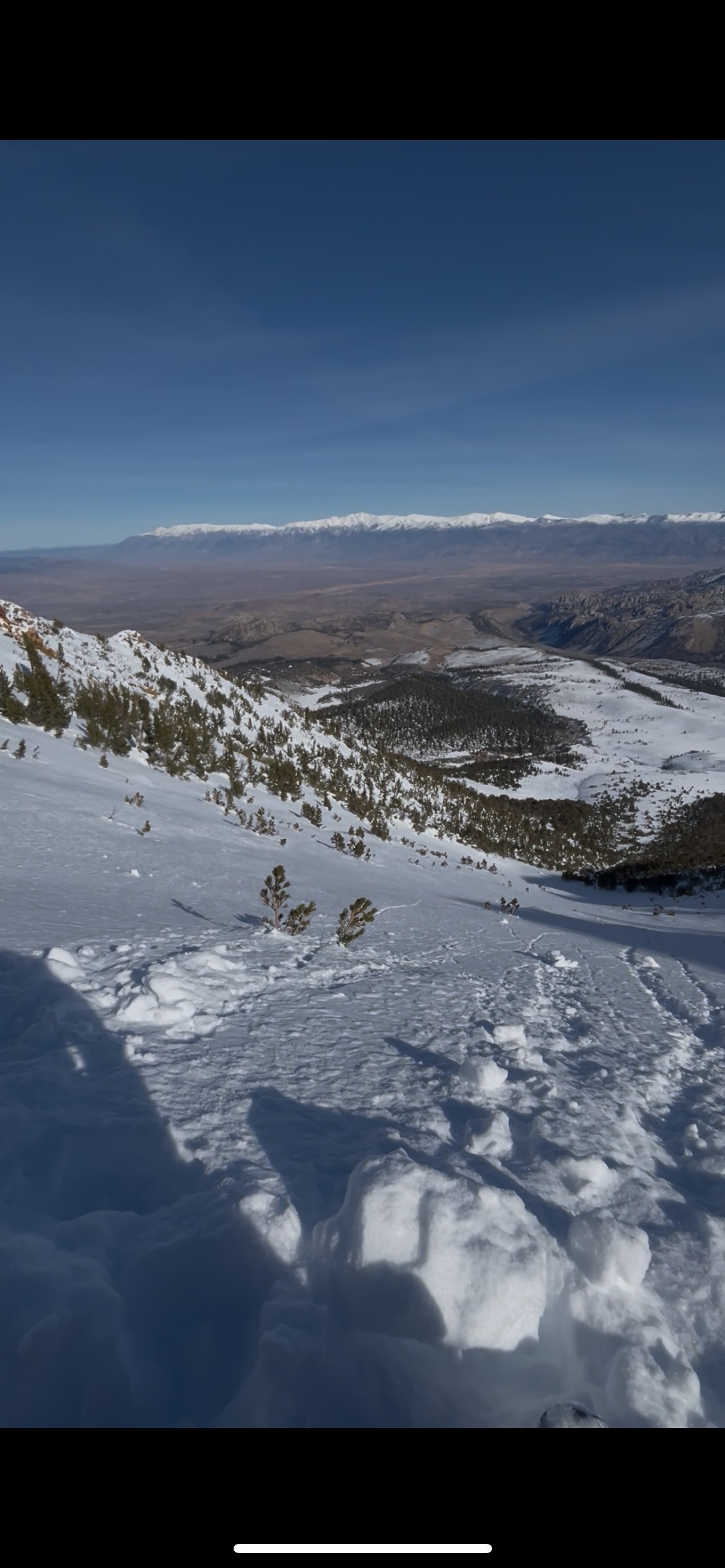
I climbed dry, East facing slopes from 8300 to 9500 feet. Above 9500, I was able to skin up to 11800 feet on NE slopes. Snow depth increased progressivley with elevation, with basically no snow at the car and 20+ inches near the ridge at nearly 12000 feet. Snow surfaces ran the full gammut from loose recystalized snow (NSF), orange peel, brittle breakable wind crust, stiff wind board, and various forms of sun affected snow.
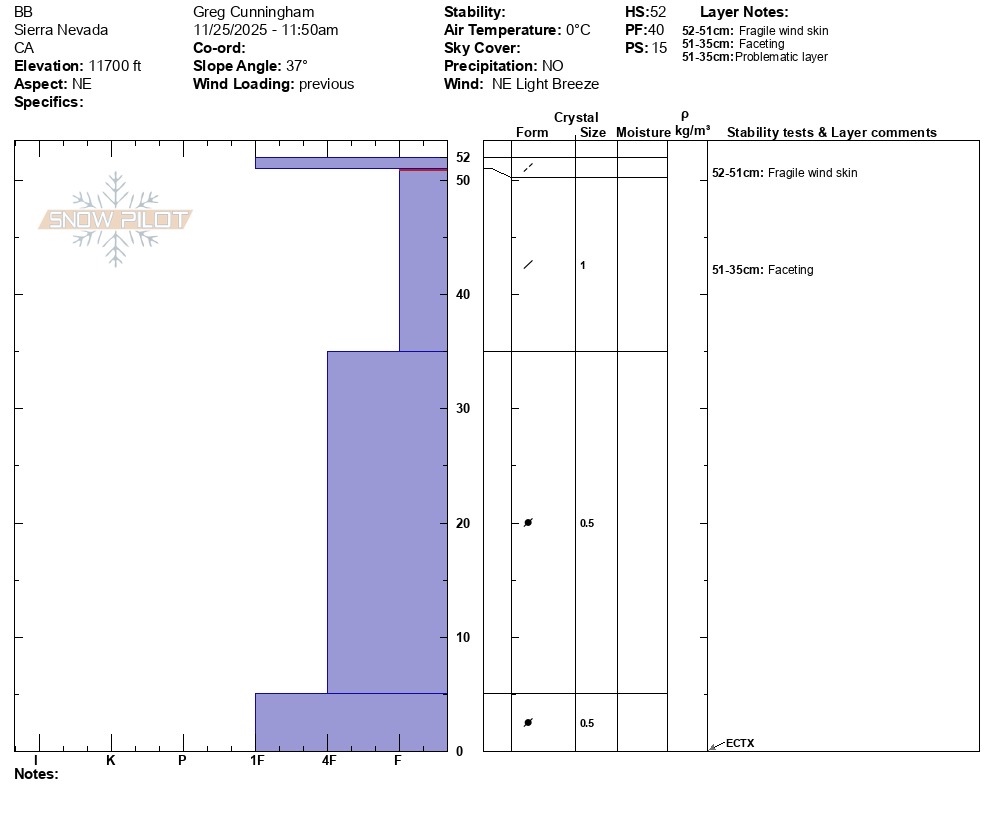
I dug just in below the ridgeline at 11700 feet and found a generally right side up snowpack, above the rain/snow line. The snowpack is weakening from the top down, but currently showed no evidence of avalanche problems.
Coverage was sufficient for consistent skiing back down to 10000 feet, and then careful skiing down to 9500 feet.
Brittle dinner plates cracking off around my skis but nothing moreWeather
- Air Temp
- 32-38
- Cloud Cover
- clear
- Wind Loading
- previous
- Rain Elevation
- NA
- Recent Snowfall
- None
- Snow Avail For Transport
- small smounts
Clear, calm and unseasonably warm
Snowpack
Height of snow (HS) @ 9500 feet: 20-30cm
@10600 feet: 30-40cm
@11700 feet: 50-60cm
Genenerally right side up with dry, loose faceting snow in the upper half and more dense snow near the ground. Between 9500 and 10500 feet, a rain crust exists at the bottom of the pack, but above I observed only more dense snow and no evidence of rain.
A breakable wind skin exists in some more exposed places, and solar snow-covered slopes were both crusty or sticky depending on the time of day
I dug on a Northeast aspect at 11700 feet. See pit attached profile for details