
Quick report
Our goals for today were to observe coverage somewhere outside of the Mammoth zone, obtain a baseline snowpack structure for the Convict zone, and see if forecasted northeast winds were moving snow around.
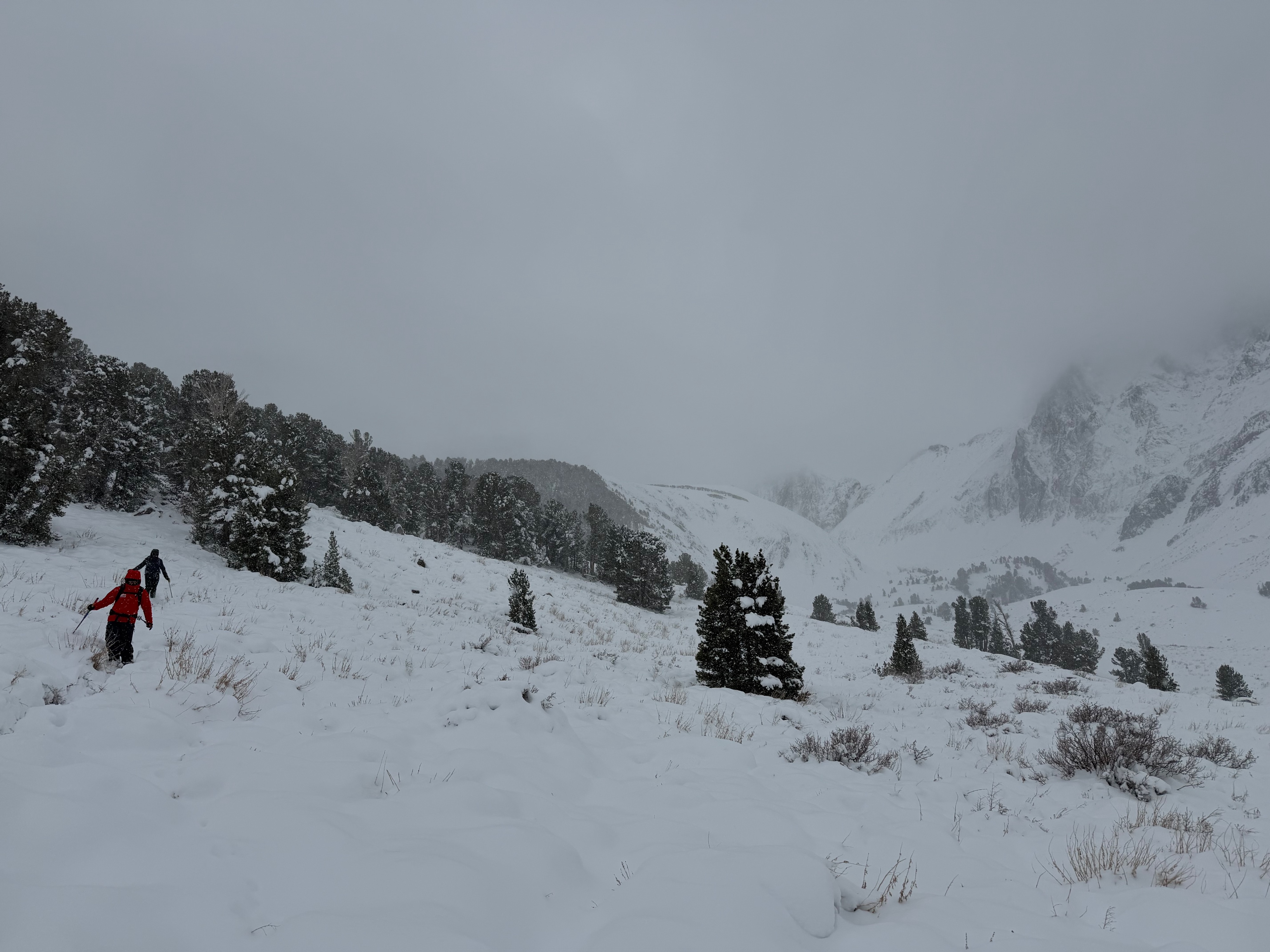
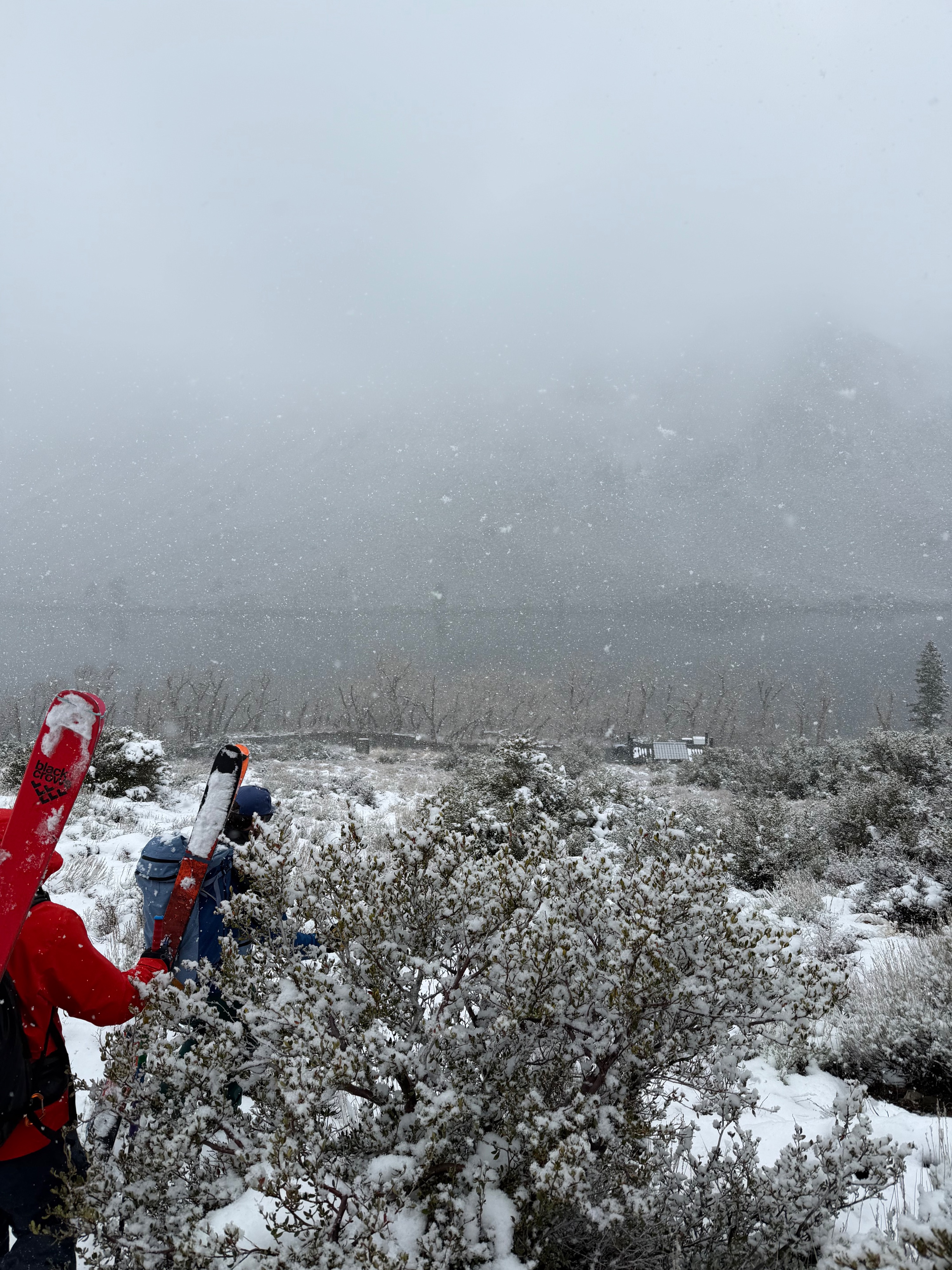
- The snowpack below 10000 feet in this zone is generally unworakble for skiing (see photos) and required a mix of booting, skinning and even downskinning. Past weather data, observations and brief breaks in the clouds today suggest a more skiable pack above 10000 feet in this area but we did not confim.
- Winds were calm to light and were not moving snow around.
- We'll continue to monitor the melt/freeze crust interface near the ground for stability trends
Personally, I will likely not return to this zone until more snow pads the Below Tree Line (BTL) terrain.
We observed no signs of instability throughout our tour other than one sudden collapsing result on a compression test. See the snowpack section for more information on this.Weather
- Air Temp
- 28 - 31 degrees F
- Cloud Cover
- obscured
- Wind Loading
- light
- Rain Elevation
- Below 7500 feet
- Recent Snowfall
- 3.5
- Snow Avail For Transport
- moderate amounts
Throughout our tour, the sky was mostly obscured by low clouds with the cieling around 9000 feet. Light snowfall began around 1030 AM and increased to moderate intensity by 1230 PM, and we measured just over 1 inch of new snow throughout the tour. Winds were light and temperatures were below freezing but high humidity made things feel warmer.
Snowpack
The observed snowpack depth ranged from 0 - 15 inches (0 - 35cm) or so and generally increased proportionally as we ascended between 7600 feet and 9800 feet on north through west aspects.
Below 9000 feet, the latest round of low density storm snow fell on bare ground. Above 9000 feet, there is a variable layer of wet snow on top of the ground with a defined melt-freeze crust that marks the only prominent observed interface.
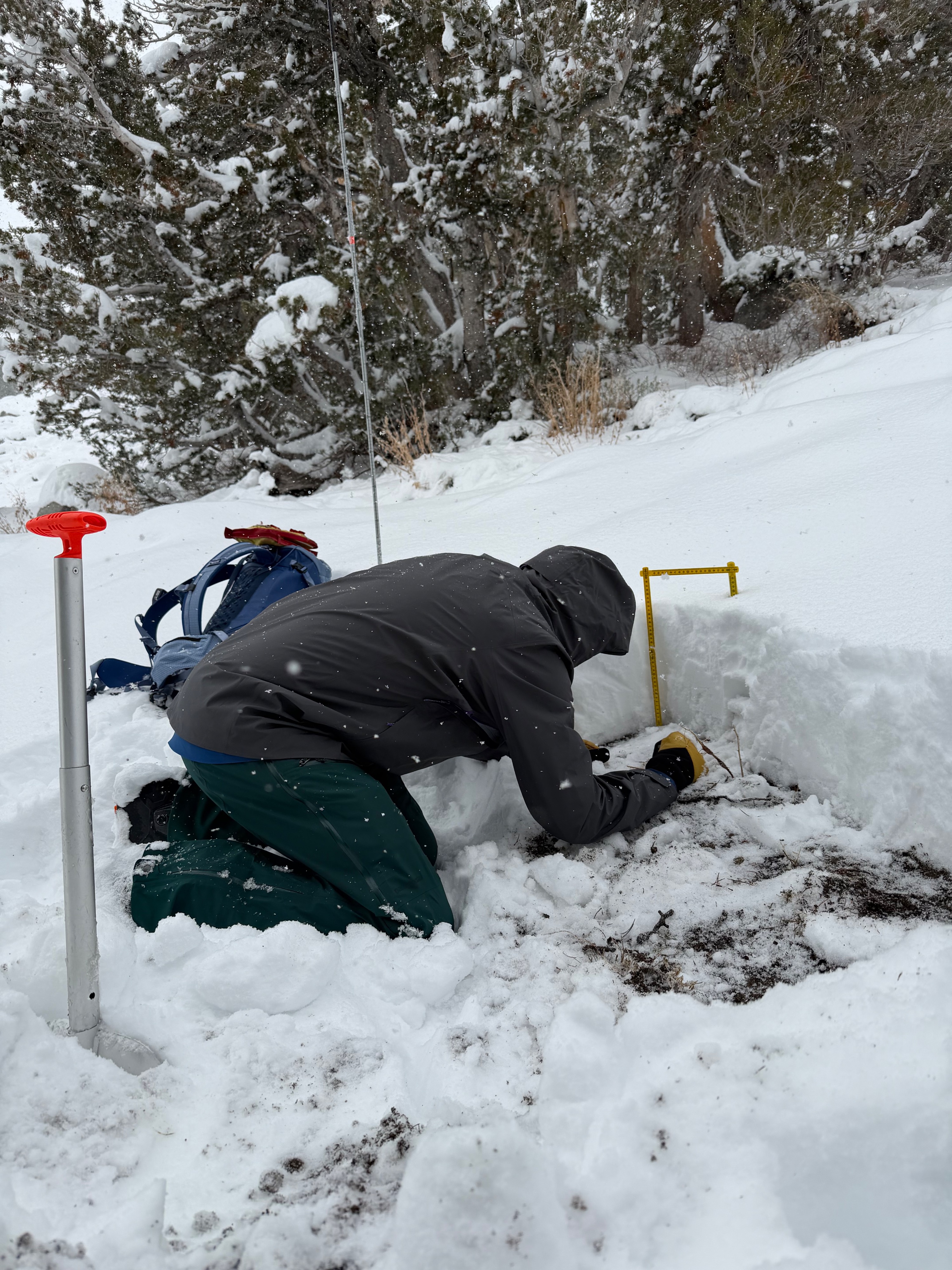
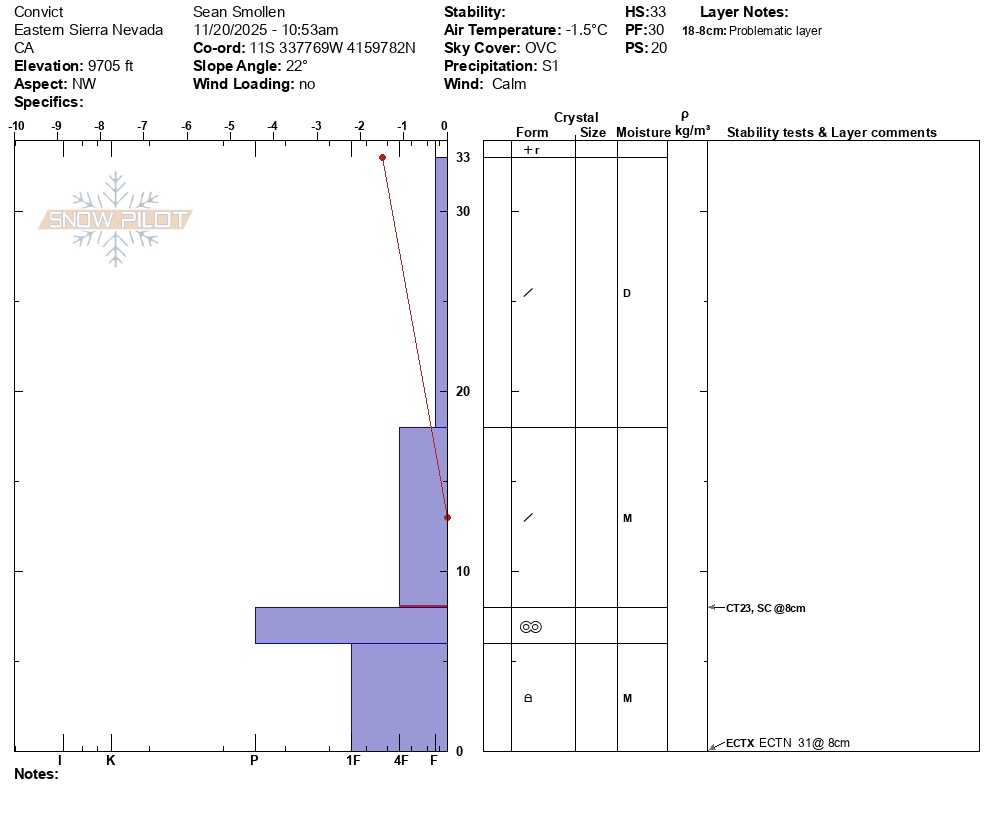
We dug on a northwest aspect at 9700 feet, and measured just over 12" of total snow (HS 33cm). The snowpack was progressively more dense as we measured closer to the ground, and there was an obvious interface on a melt/freeze crust about 2.5" (8cm) up from the ground. Below this crust were a few inches of wet dense grains to the ground.
Our snowpack tests revealed a sudden collapse that was hard to initiate on top of the melt/freeze crust (CT23 SC@8cm) and a longer column test showed no propensity for propagation in this same location (ECTX).