
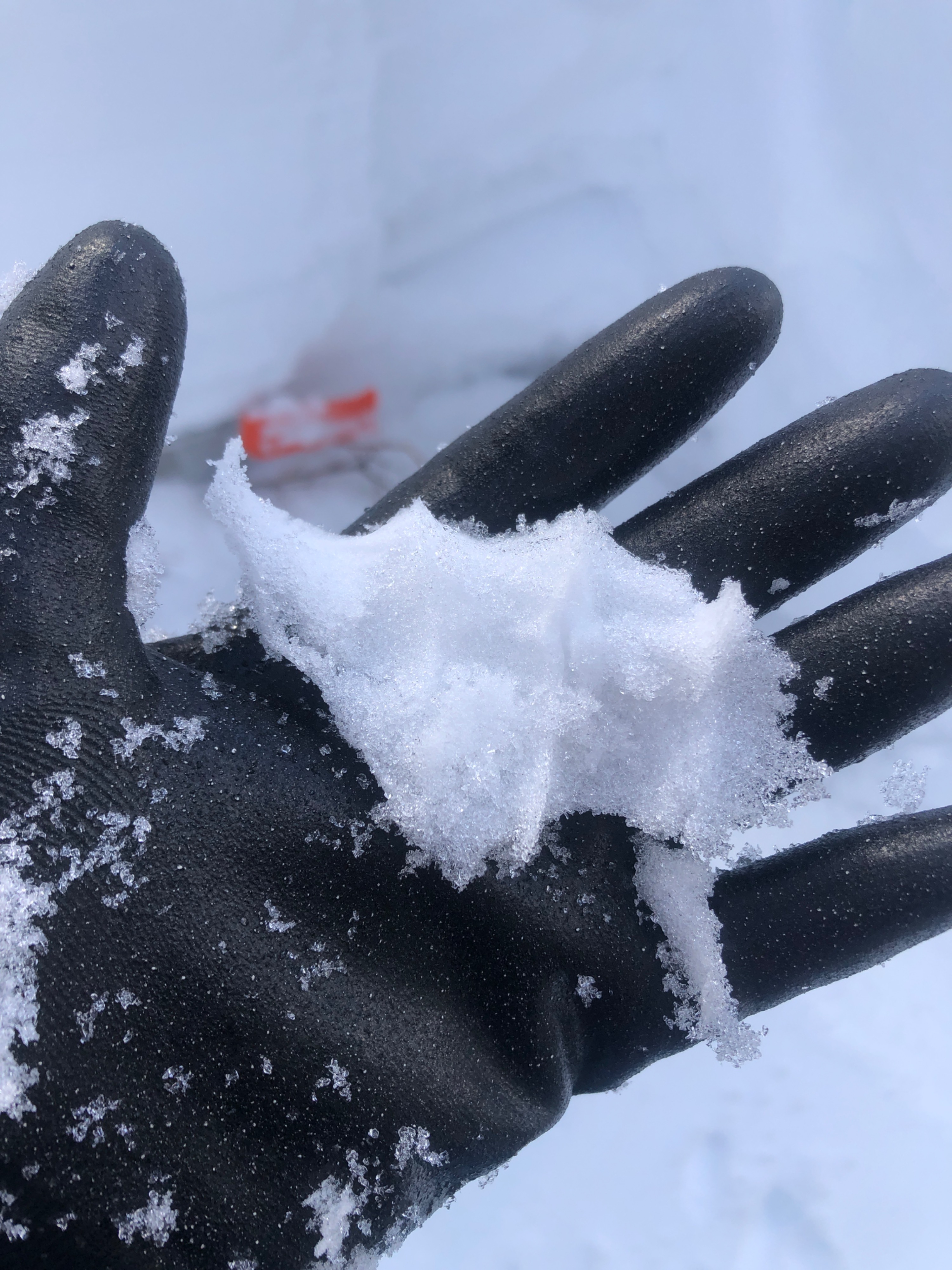
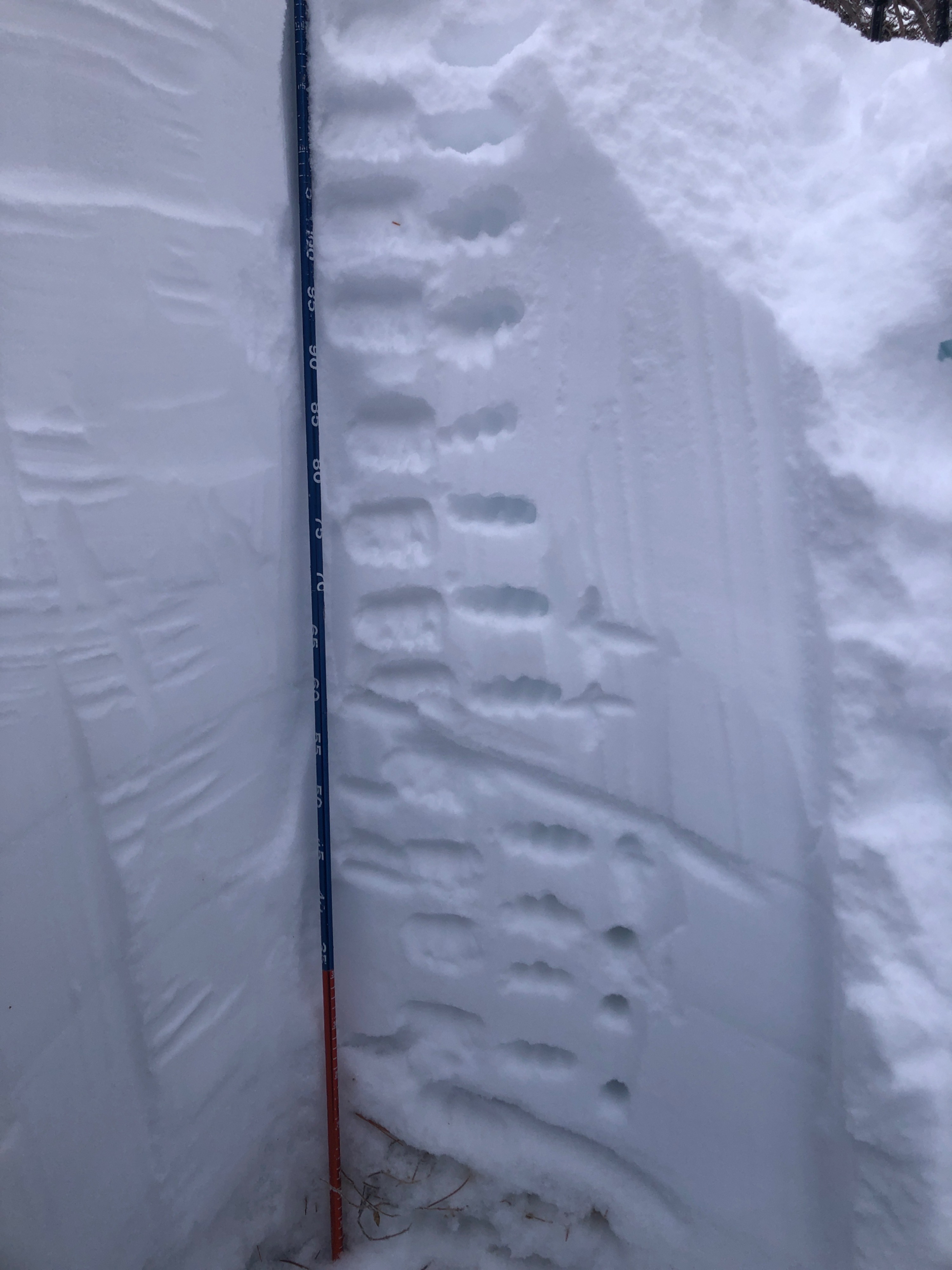
Quick report
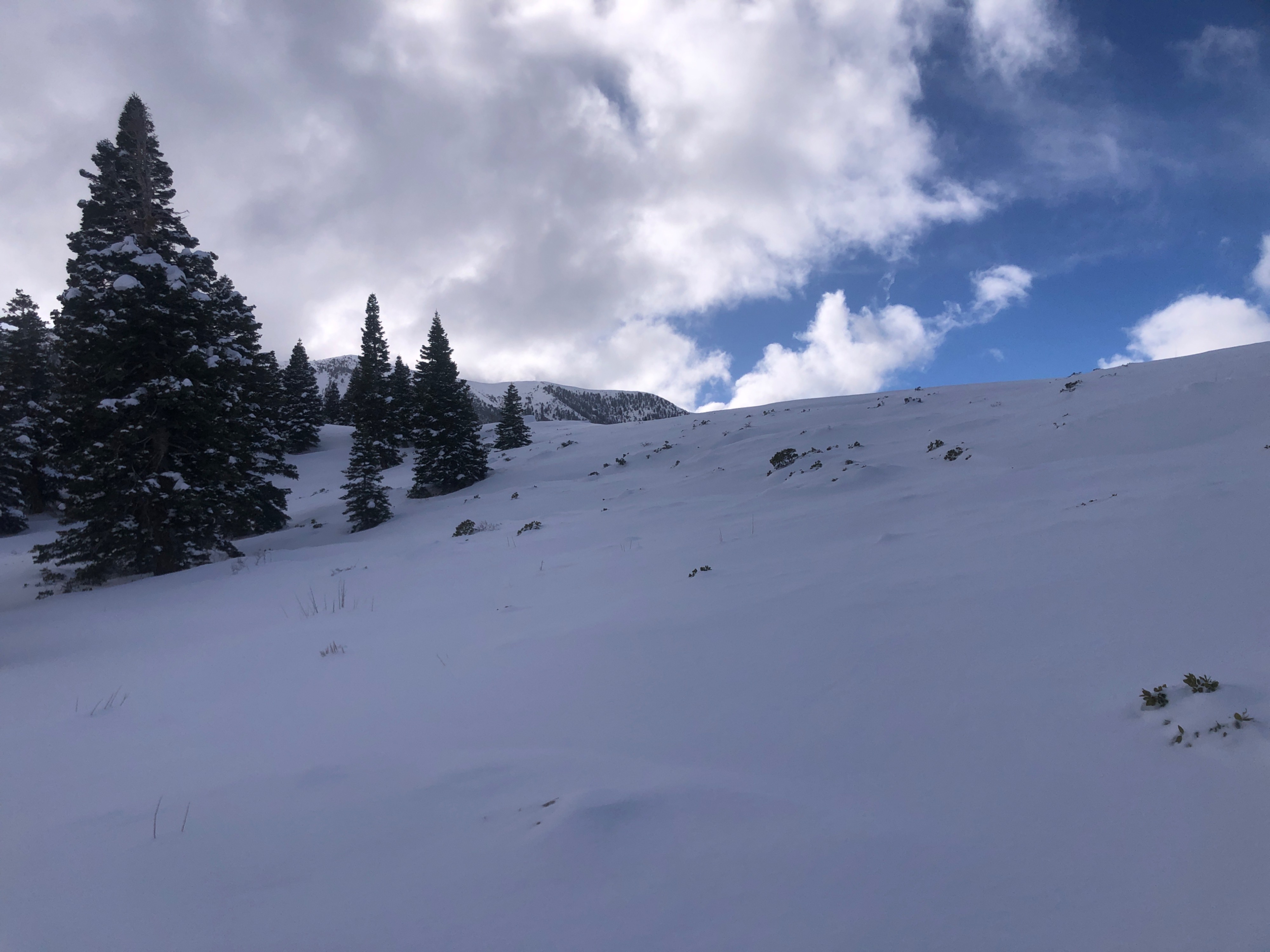
Ventured towards Punta Bardini today, avoiding avalanche terrain and overhead hazard. This required diligent navigation.
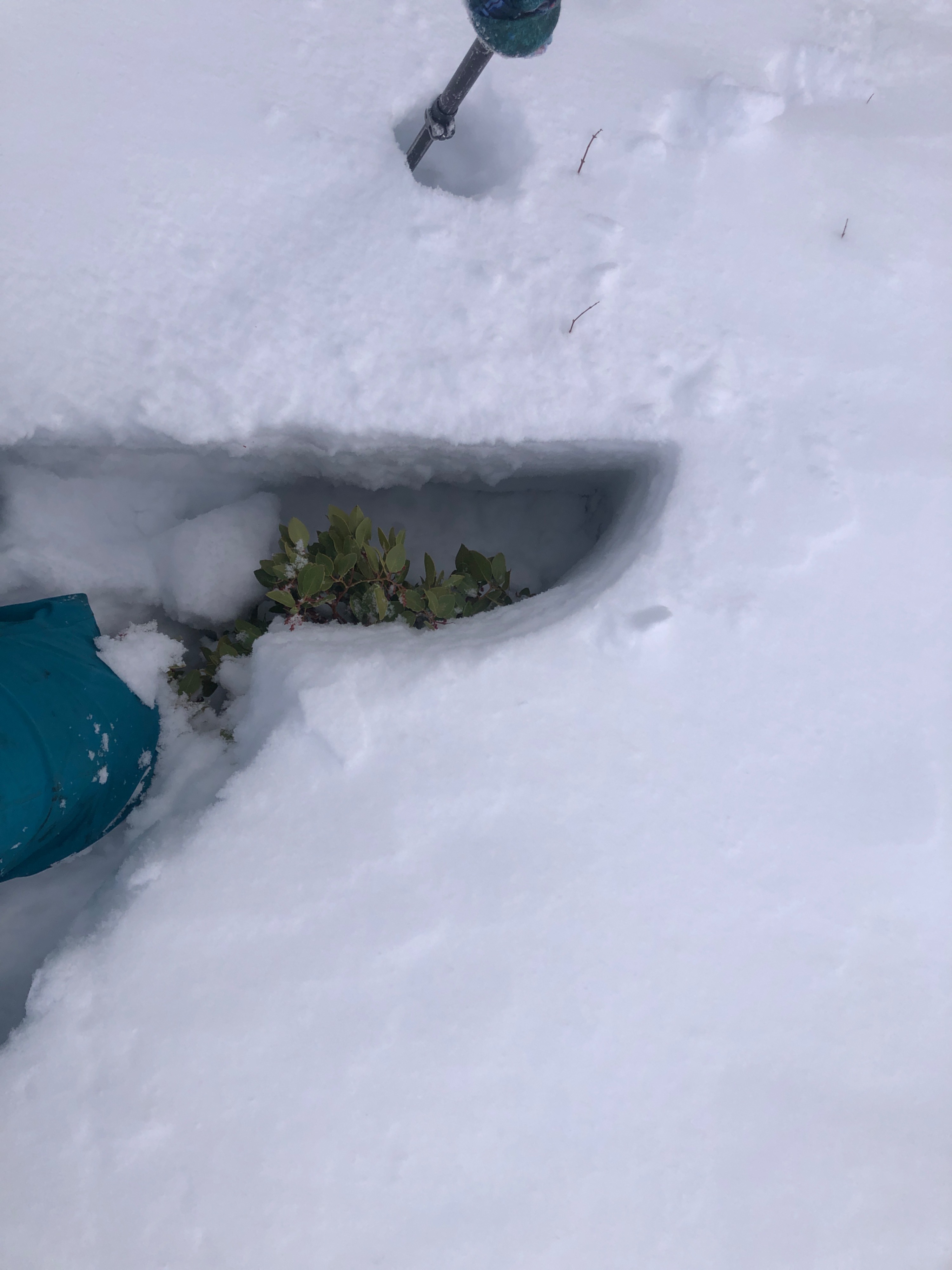
The snowpack is incredibly variable in this area below 9000'. Some areas are supportable, and some will have you sinking into manzanita. The new storm snow has begun to settle, and I did not observe or experience any surface level instabilities whilst traveling.
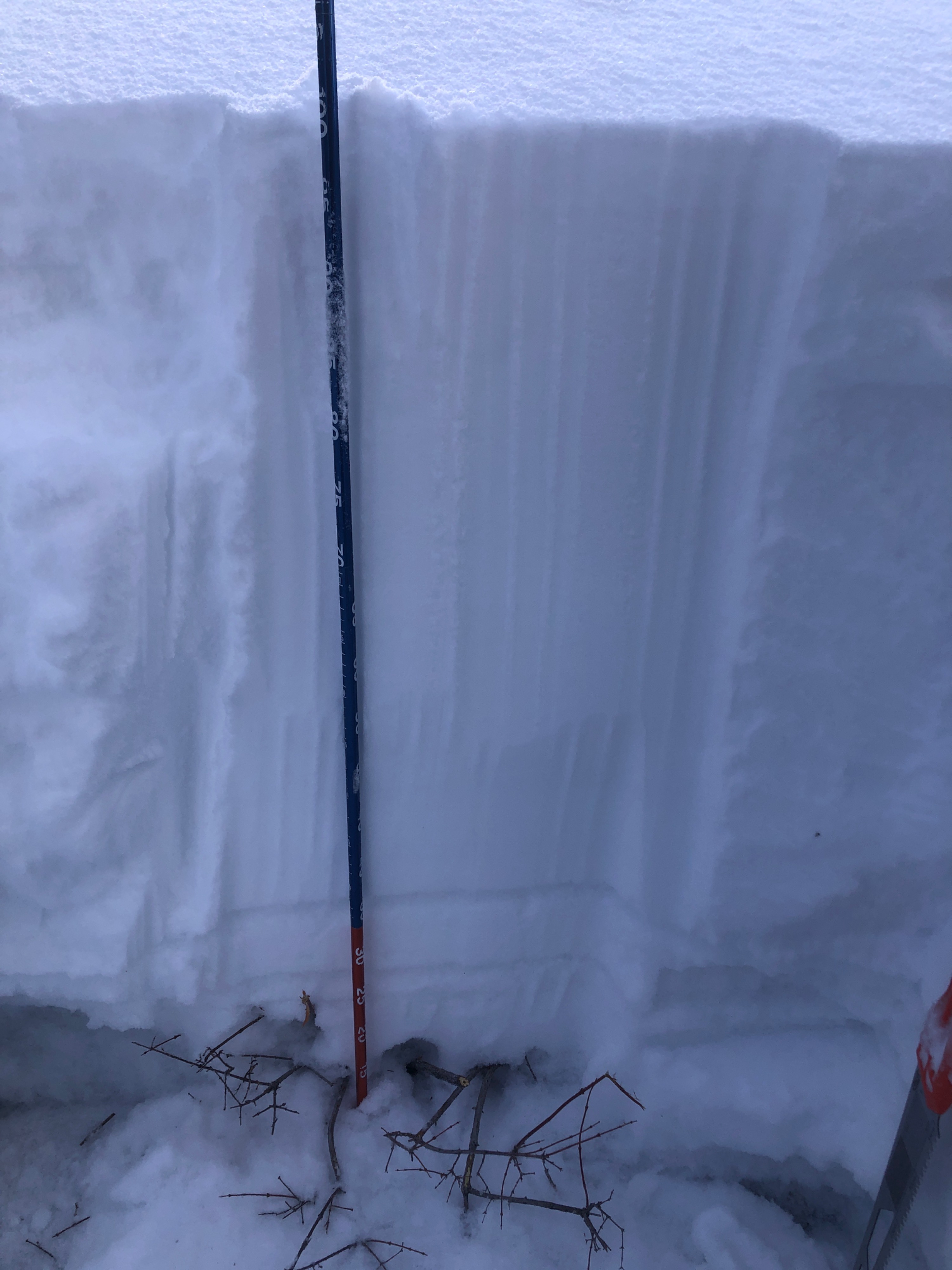
Crusts, the presence of DH, and the frequency of shallowly buried objects is inconsistent. Where crusts and depth hoar do exist, they are still proving very reactive in pit tests. I was able to get CT M and ECTP M results on DH 120 cm down @ 9500' N, beneath a small slab of 1F snow, and then the 4F - F new snow.
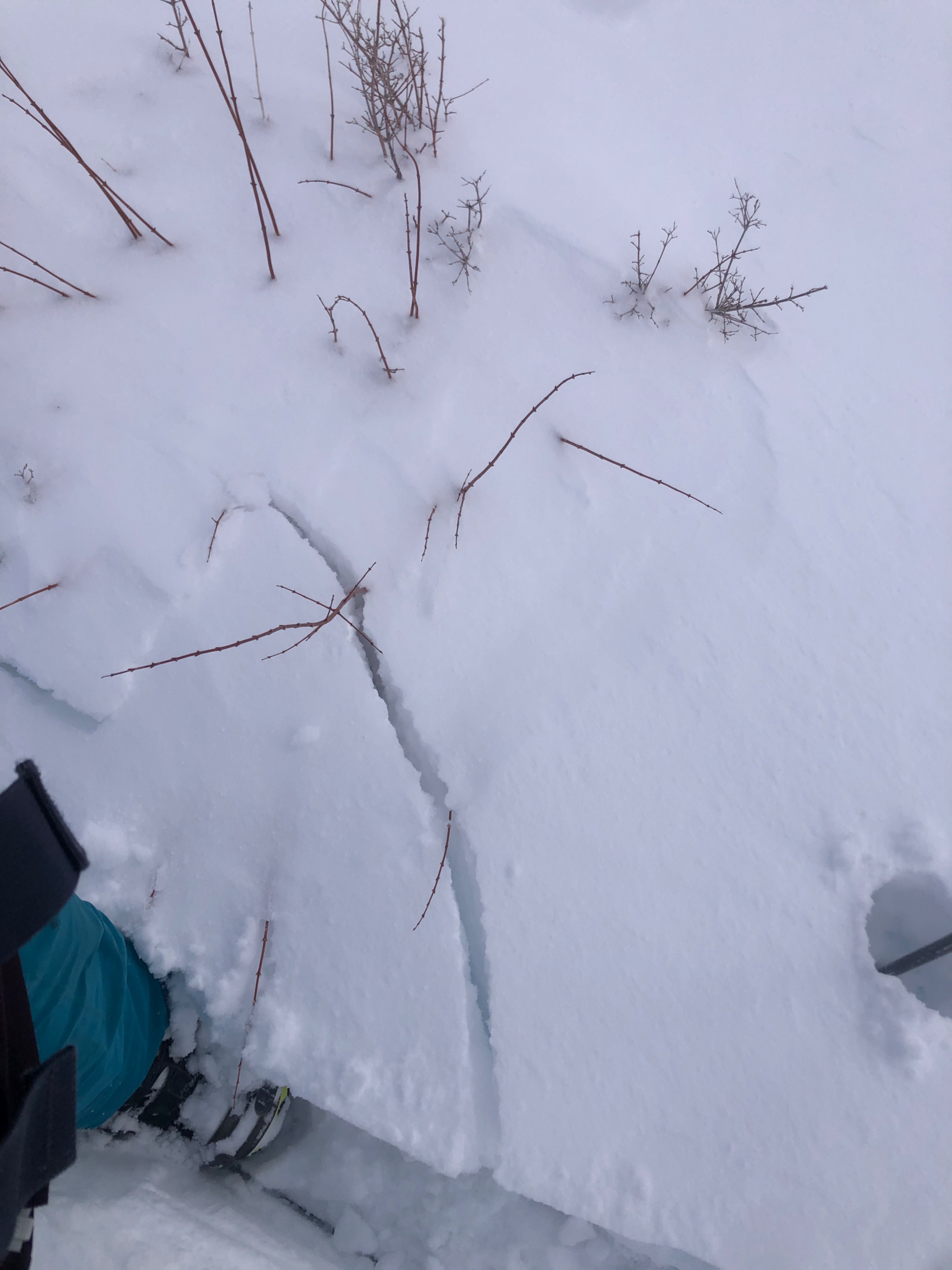
The only collapsing observed was on new snow overlying bushes and manzanita, which is to be expected in areas lacking a substantial base. Otherwise, no signs of instablility were observed whilst traveling today. HOWEVER, test results showed profound instabilities in the snowpack.Weather
- Air Temp
- 30
- Cloud Cover
- broken
- Wind Loading
- light
- Recent Snowfall
- 55 - 75 cm
- Snow Avail For Transport
- small smounts
Broken skies cleared as the afternoon continued, and temps hovered around 30 degrees F. Winds were light from the WSW in open, exposed terrain, and were calm in the trees. Around 4 pm, clouds moved in quickly, winds picked up a bit, and it began snowing.
Snowpack
The snowpack structure is variable in this area. I spent a significant amount of time probing the snow to assess snow depth, search for melt-freeze crusts, and feel for depth hoar at the base. In one 10x10 area, I got no crusts, 3 crusts, rocks, trees, depth hoar, HS 55 and HS 135, to give you an idea of what I mean when I say it's variable. It was hard to find space to do an ECT without rocks or bushes getting in the way, especially below 9000'. CT tests proved reactive, as did ECTs and DT where possible and necessary.
8500 N, CT 2 SC @ DH down 80 cm. HS 95. HNS 55 cm. DH was moist. Multiple melt freeze crusts were decomposing. Failure was at DH below a 4F to 1F melt freeze crust that varied in thickness, from 1 - 5 cm. I could not find a space suitable for an ECT without rocks or bushes at this elevation.
9500 N, CT 11 RP @ DH down 120 cm. ECTP14 @ DH down 120 cm. HS 135. HNS 75 cm. DH was dry to moist. Failure was beneath one of multiple decomposing melt freeze crusts. DT 6 on the same layer.