
Quick report
- Cracking
- isolated
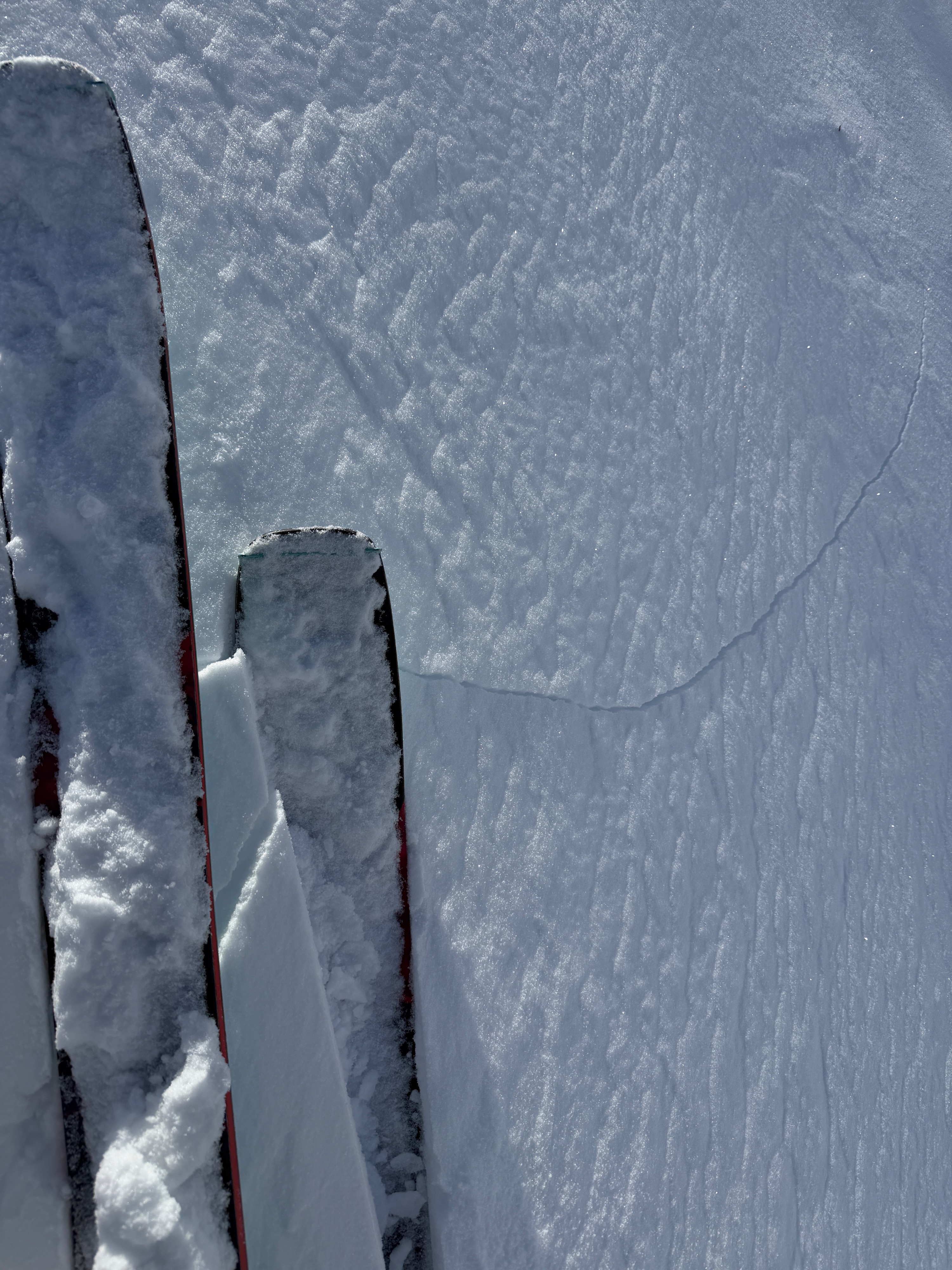
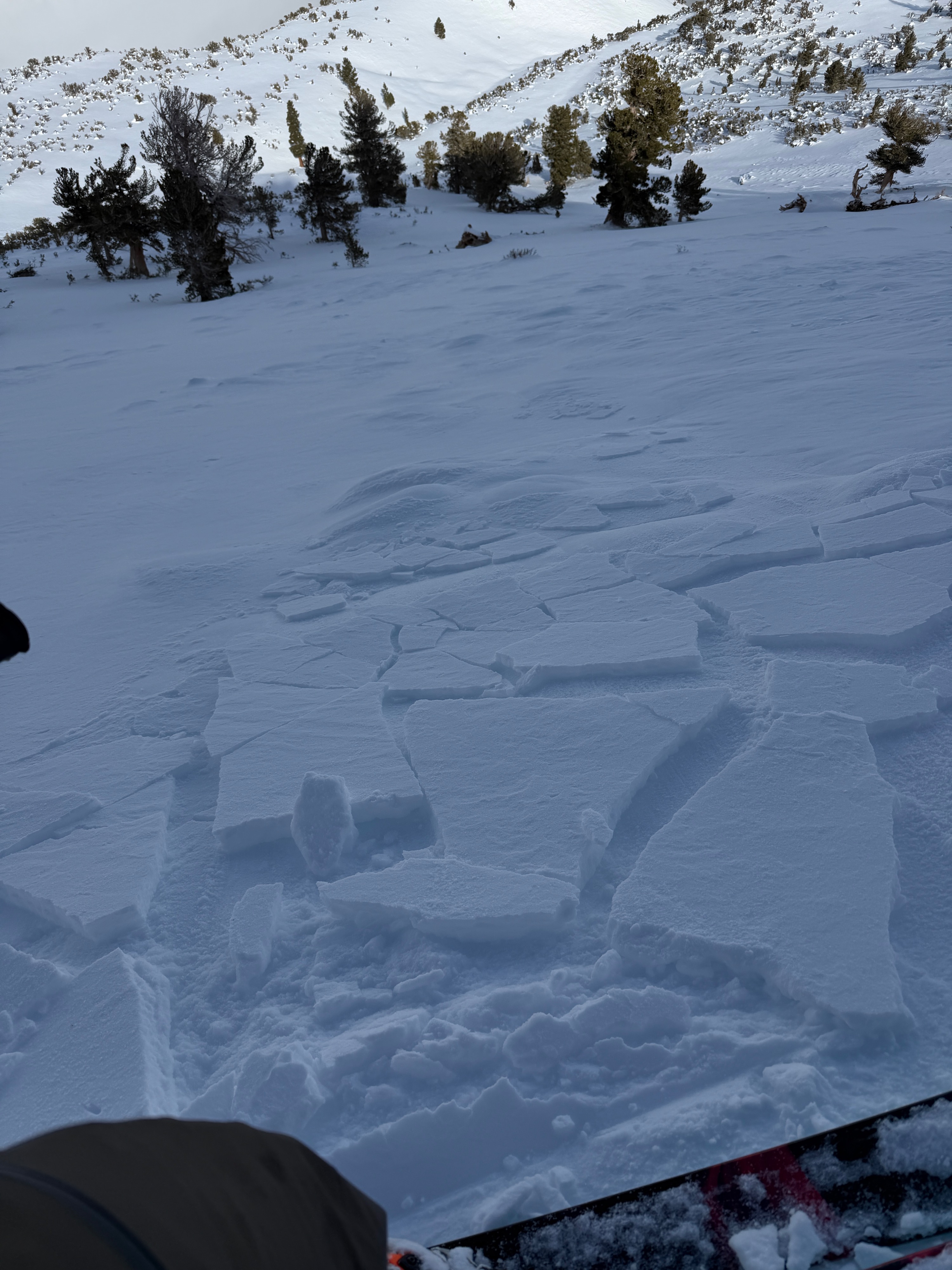
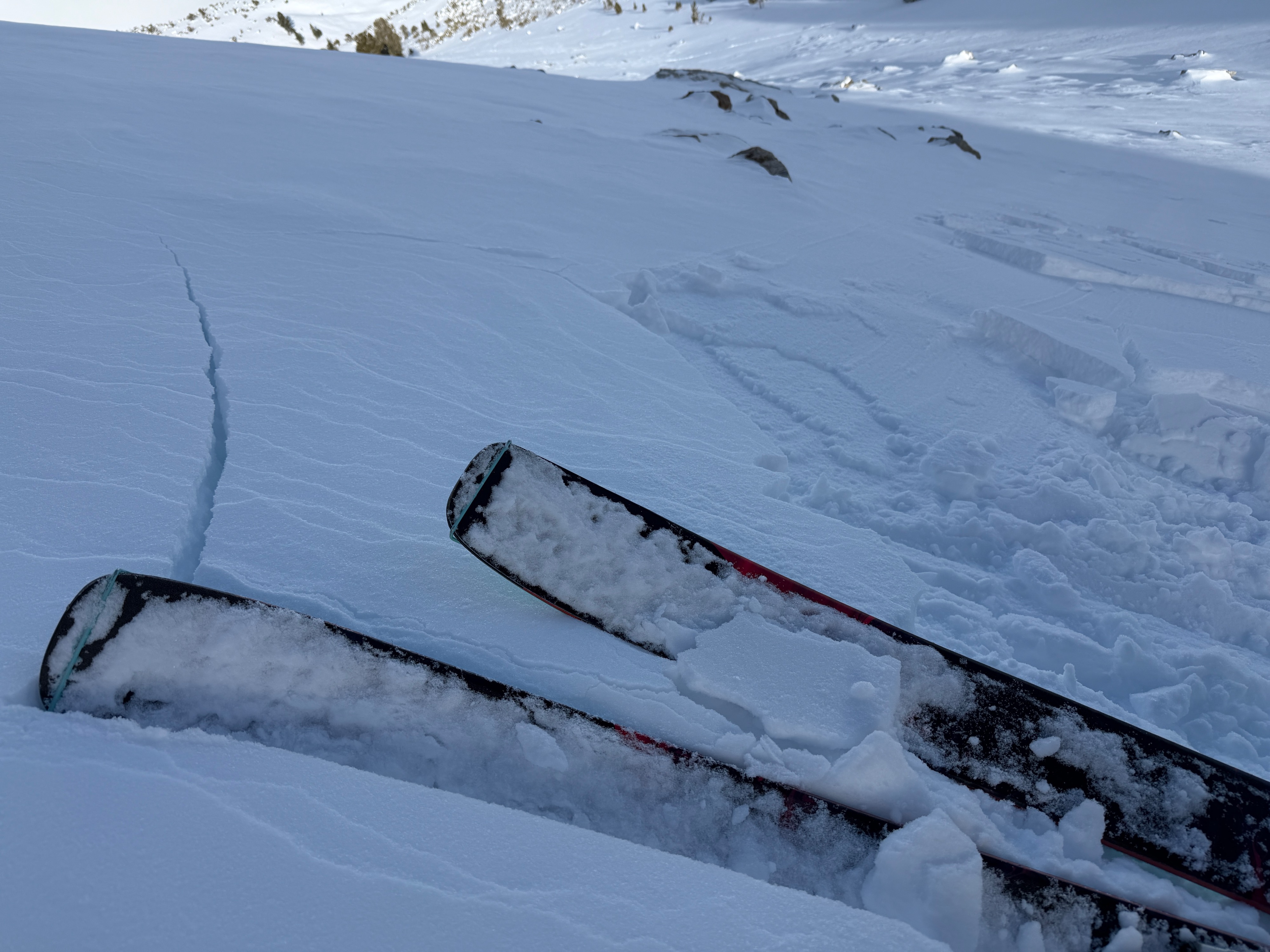
My goals today were to investigate the distribution of wind slab avalanches near and below treeline on terrain facing the northern half of the compass. I was able to initiate cracks and 1 small avalanche in wind-loaded terrain from 7800' to 9500'. I did not easily find pockets of wind-drifted snow below 7800'. I found wind slab avalanches to be reactive to a human trigger and isolated in distribution.
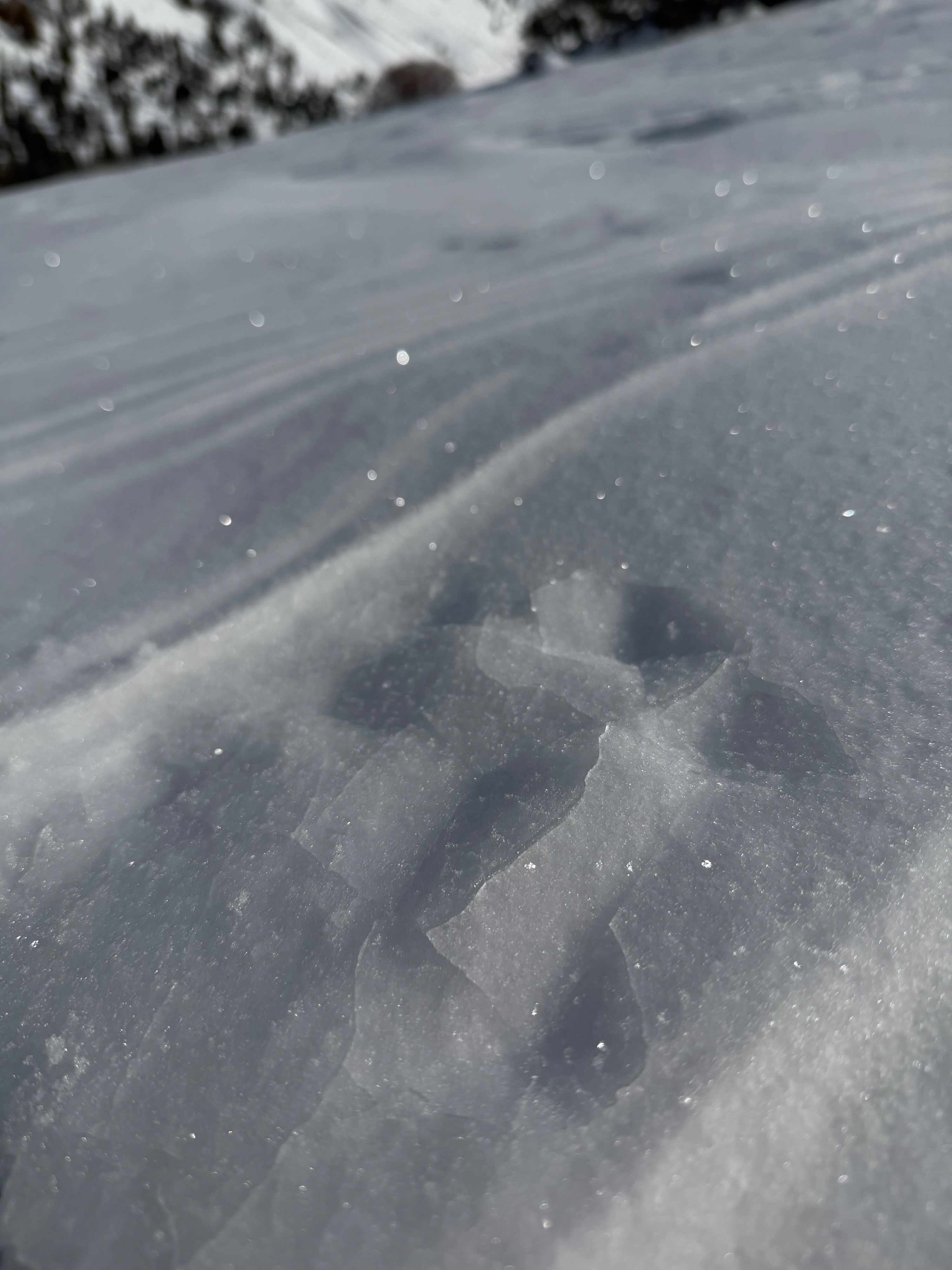
Across all of the terrain I travelled on, a rain crust from New Year's existed on the surface, or immediately below the reactive wind slabs. This crust was mostly supportable to my weight and was very slick. In places where I found instability, this crust acted as a bed surface. This felt like a glimpse into the coming days with new snow and strong winds in the forecast.
Cracking was easily found in isolated pockets both near and below treeline. These pockets were not continuous across start zones, were shallow (20-40cm), and were found to be easily avoided.Weather
- Cloud Cover
- few
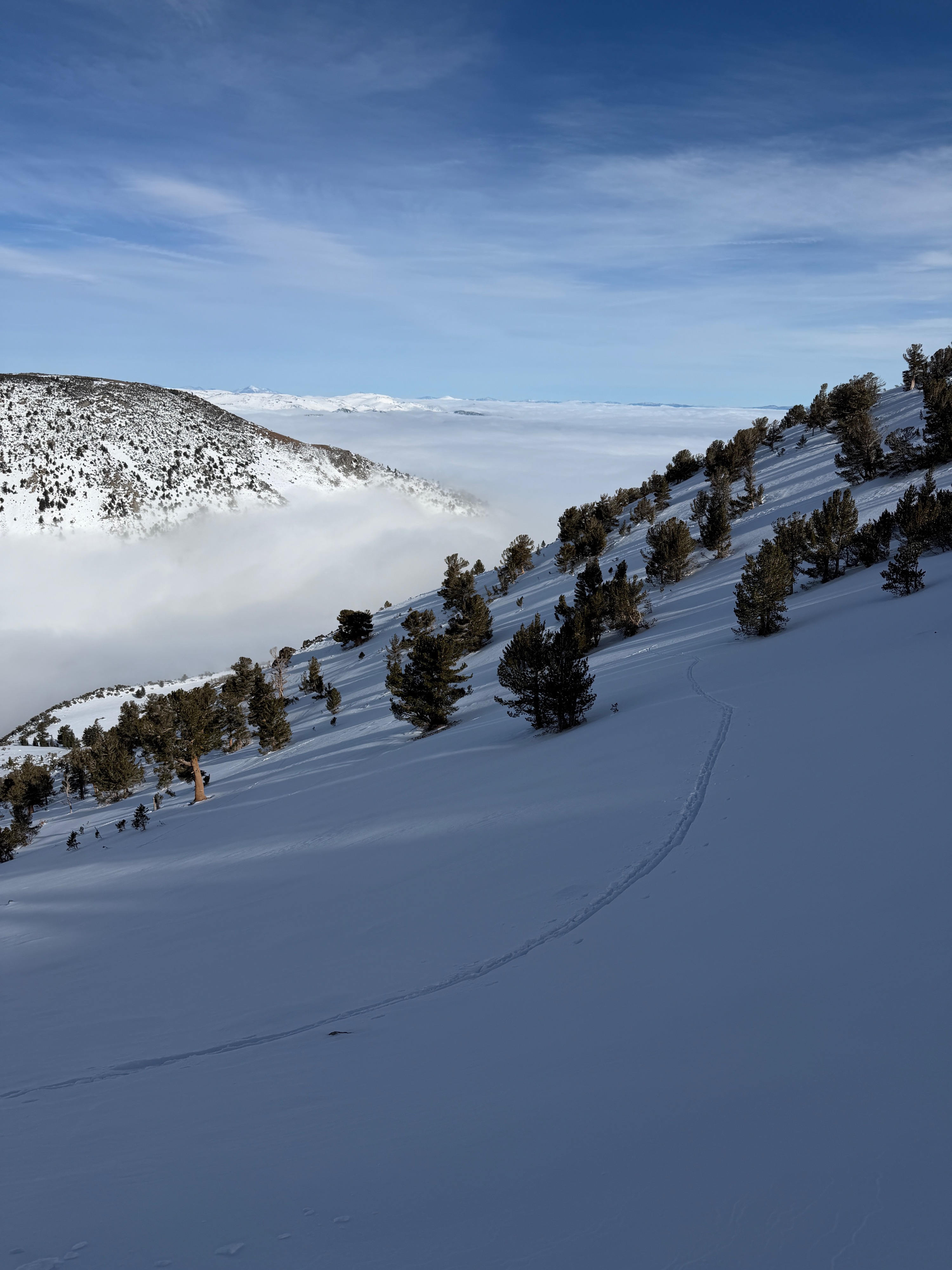
Minimal cloud cover through the day, with calm to light winds from the southwest bumping up in speed after 2 pm. Valley fog above Mono Lake rose to 9,000' around noon, and the entirety of my descent was obscured (and cold) skiing through the fog.
Snowpack
- ~40cm of settled snow on the closed road, increasing to 60-100cm as I gained elevation.
- A widespread rain crust from New Year's on W-N-E facing terrain up to 9500'.
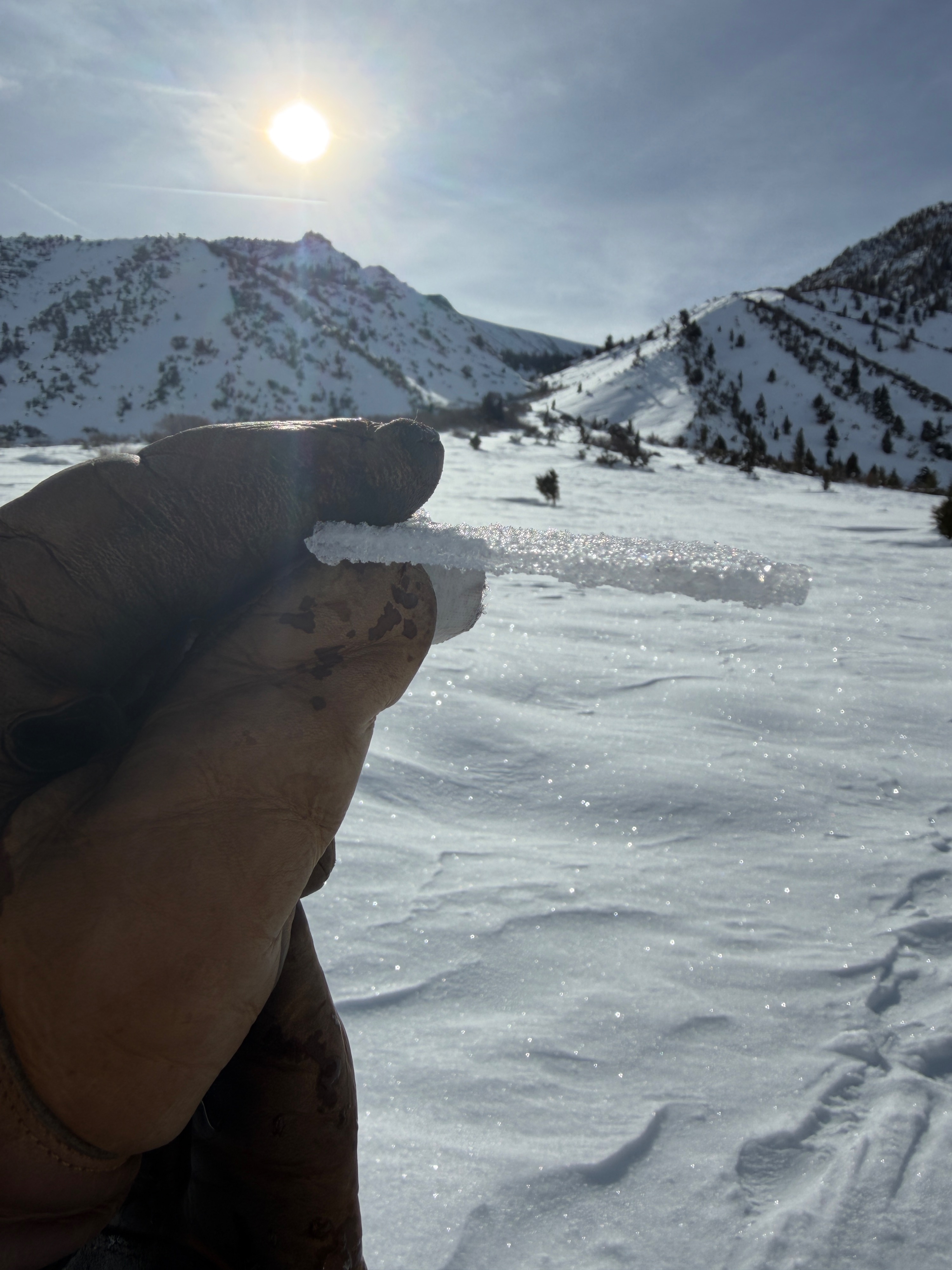
- 20-40cm of stiff (1F+) wind-packed rounds capping soft (4F-F) decomposing fragments in isolated places.
- I found no old snow (pre 12/24) up to 9500'. Much of this area had melted to dry ground.
- Generally, "right side up" structure beneath 12/31 rain crust.
Avalanche
- Size
- D1 R1
- Aspect
- NE
- Trigger
- AS
- Elevation
- 9300 ft