
Quick report
- Cracking
- Observed
Extreme wind speeds, new snow, and a rising rain line have all contributed to weird and dangerous avalanche conditions across the mountains. The recent snow is falling on a crust that developed on March 8. As temperatures increased on Wednesday night (March 11), a new surface rain crust formed, which tapered off at 5,600 feet. New storm slabs are inverted, with denser snow sitting on lighter, lower-density snow. Continued strong winds are exacerbating the size of Storm Slabs, and drifts that are several feet deep and still growing are developing below ridgelines and cross-loaded steep terrain features.
We observed cracking between ski tracks, and rapid loading from the strong winds.Weather
- Cloud Cover
- overcast
- Wind Loading
- intense
- Rain Elevation
- 5,600'
- Recent Snowfall
- 30-45
- Snow Avail For Transport
- moderate amounts
Strong winds and light S-1 snowfall. A high cloud deck most of the day allowed for visibilty of the surrounding mountains.
Snowpack
Overnight on Wednesday, the rain line climbed into near tree line terrain. We found a new breakable crust that started at the trailhead and extended to 5,600 feet. The thickness of the crust varied across the terrain and changed with elevation. In some places, the crust was almost thick enough to be supportable, but would still break with ski pressure.
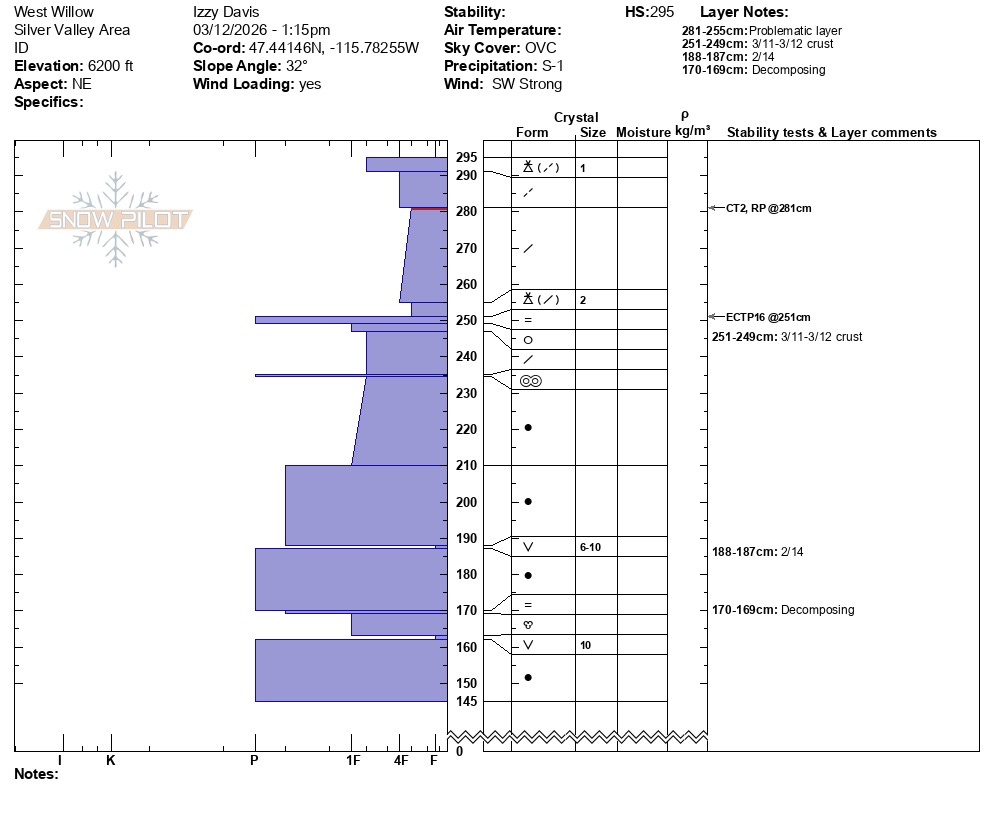
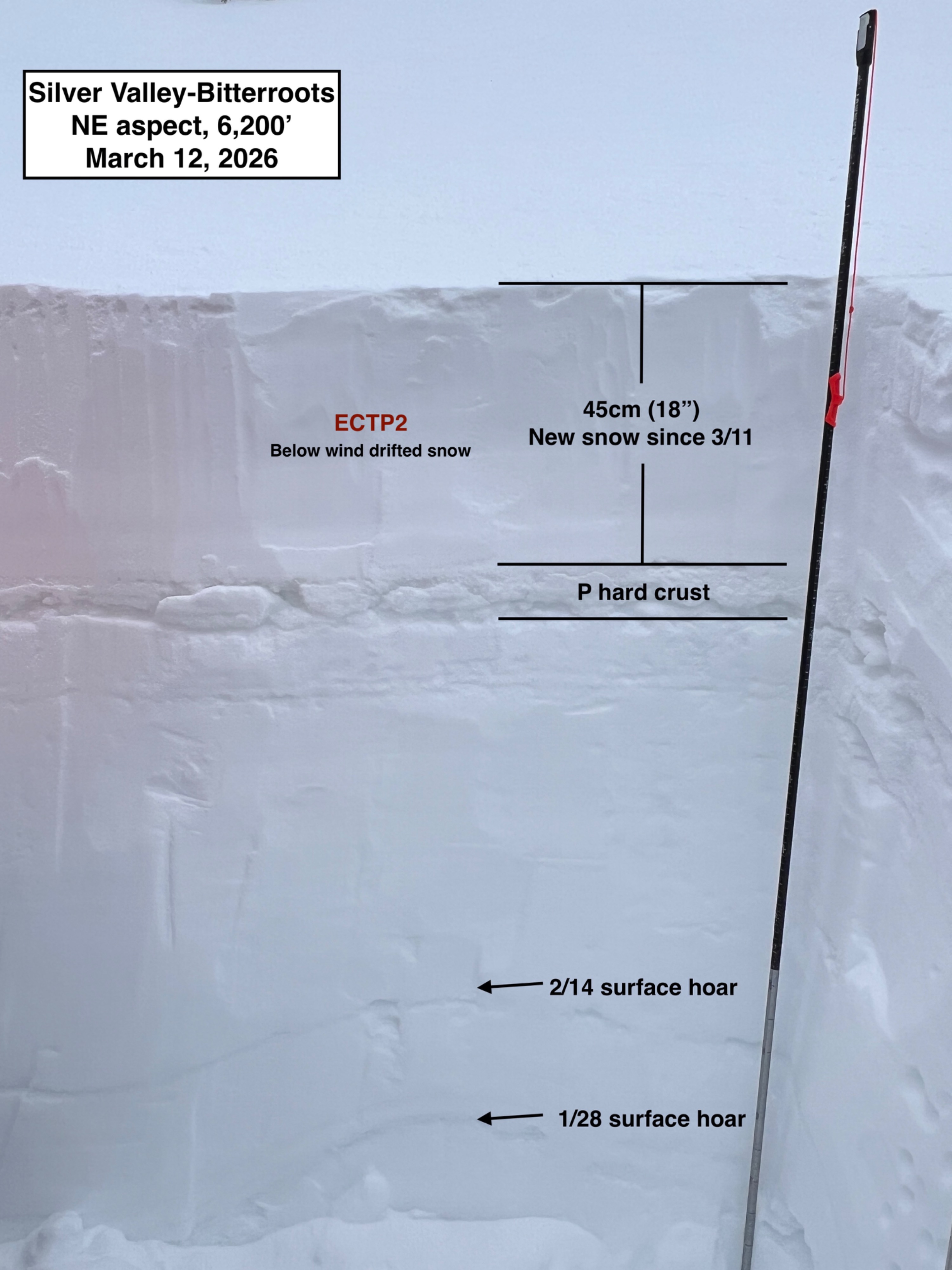
At 5,300', there was 30 to 35cm of new snow since March 11. At 6,200', we measured 45cm of recent snow. In both locations, there was quite a bit of graupel mixed in with the new snow. The new slab was inverted, with lighter-density snow at the bottom and denser snow on top. This inverted slab produced an ECTP2 at 6,200' on a northeast aspect. The slope had been previously loaded by the wind, and more drifting was occurring throughout the day.
Before snow started on March 11, all surfaces had been saturated by warm temperatures and rain, and this likely extended into the upper elevation peaks. We found this interface to be refrozen, and slabs continue to grow in size on this layer. In our snowpack test, a break started at 12 taps on this layer and propagated across the column in 16.
Avalanche
None Observed.