
Quick report
- Cracking
- specific
While we were very happy to see the new snow, the snowpack was not excited. Lots of new snow load quickly is stressing shallowly buried weak layers - specifically two surface hoar layers. Today was the first day where we started to see an uptick in signs of unstable snow outside consistent propagating failures in tests. This is a clue things are changing and triggering is ramping up to a more likely scenario.
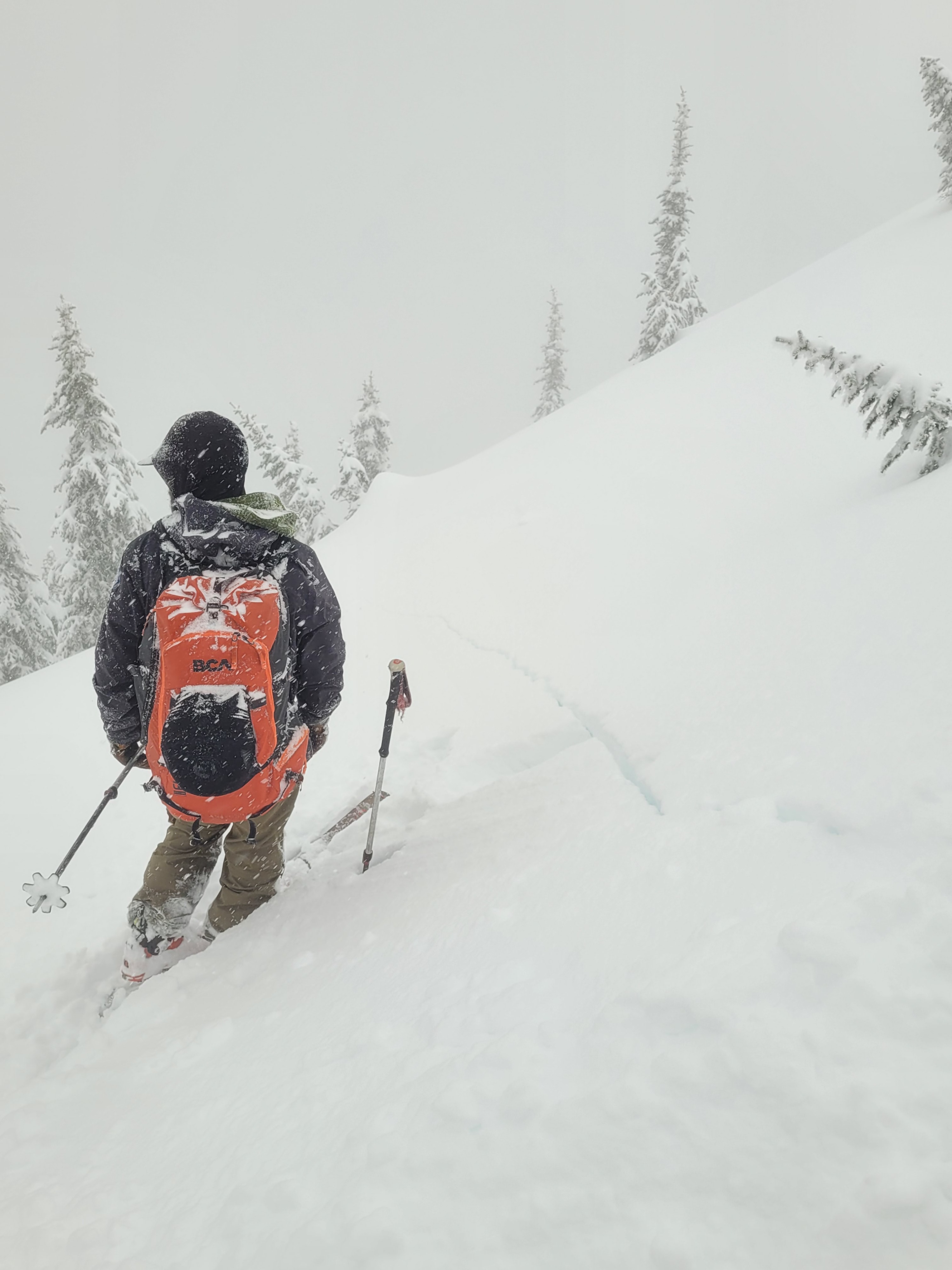
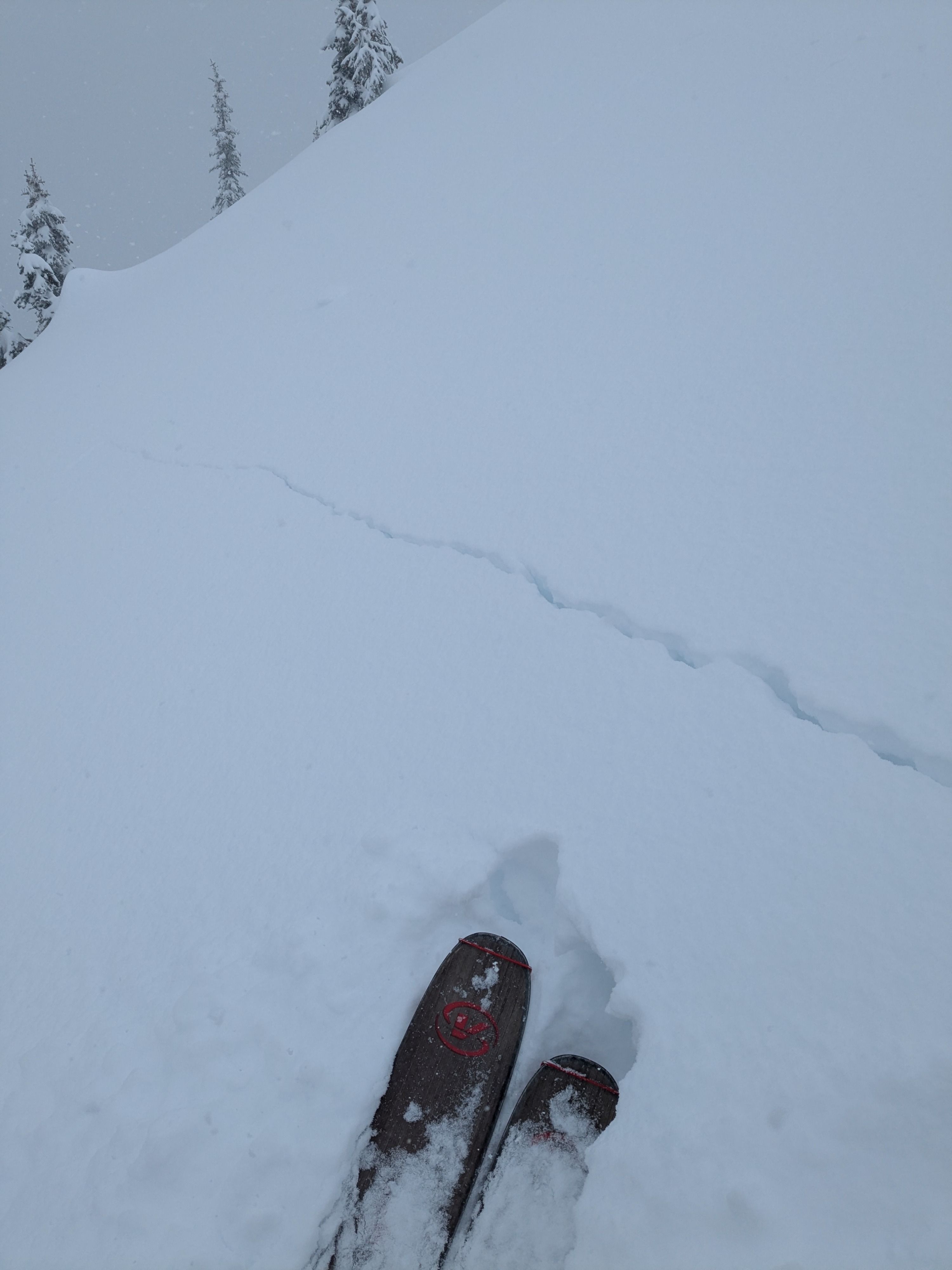
We easily triggered cracking in deeper drifted areas. Crossing across the top of a short, open slope around 32 degrees (leeward-facing) we triggered a crack that extended outward. The crack failed at the V-Day surface hoar layer.Weather
- Cloud Cover
- obscured
- Wind Loading
- moderate
- Recent Snowfall
- 7cm in ~4 hours mid-day. 15-25cm since 2/14.
- Snow Avail For Transport
- large amounts
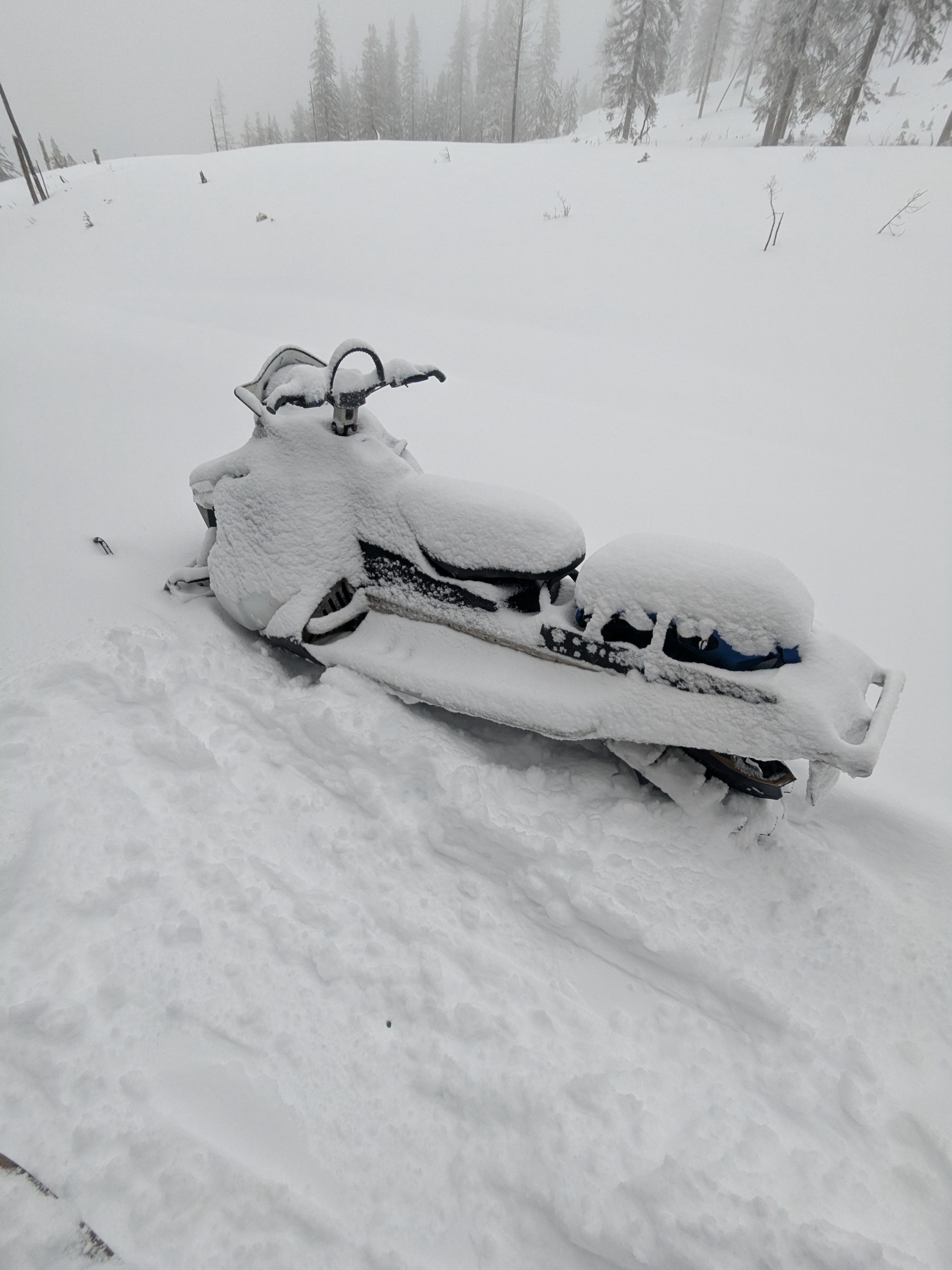
Steady S2+ (~1+ inch an hour) during the day. Ridgetop winds were gusty, mainly out of the south, and actively transporting the new snow into soft but deeper drifts. No visibility into neighboring terrain.
Snowpack
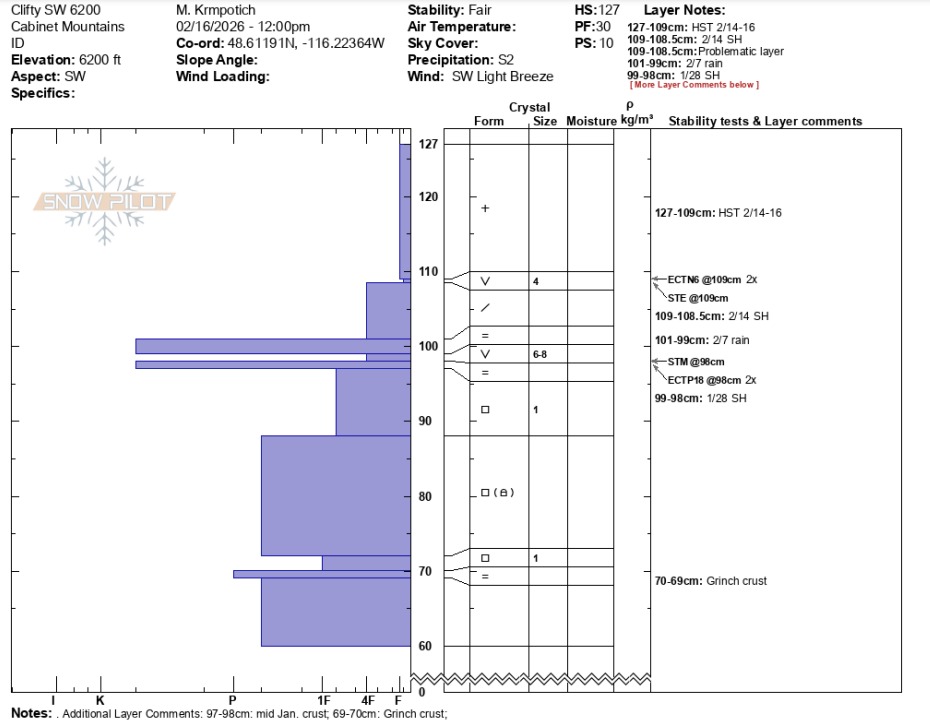
We observed similarities and differences in snowpack structure in two full snowpack profiles and a couple quick pits. The majority of our travels was between 6,000 to 6,500 feet on south through west to north aspects. We observed cracking in the new snow between the skin track while traveling and around steeper convexities. Around 6,000 feet and below, we observed a hard supportable crust below the new snow (approx. 15cm deep) while traveling on sleds and did not break through this crust.
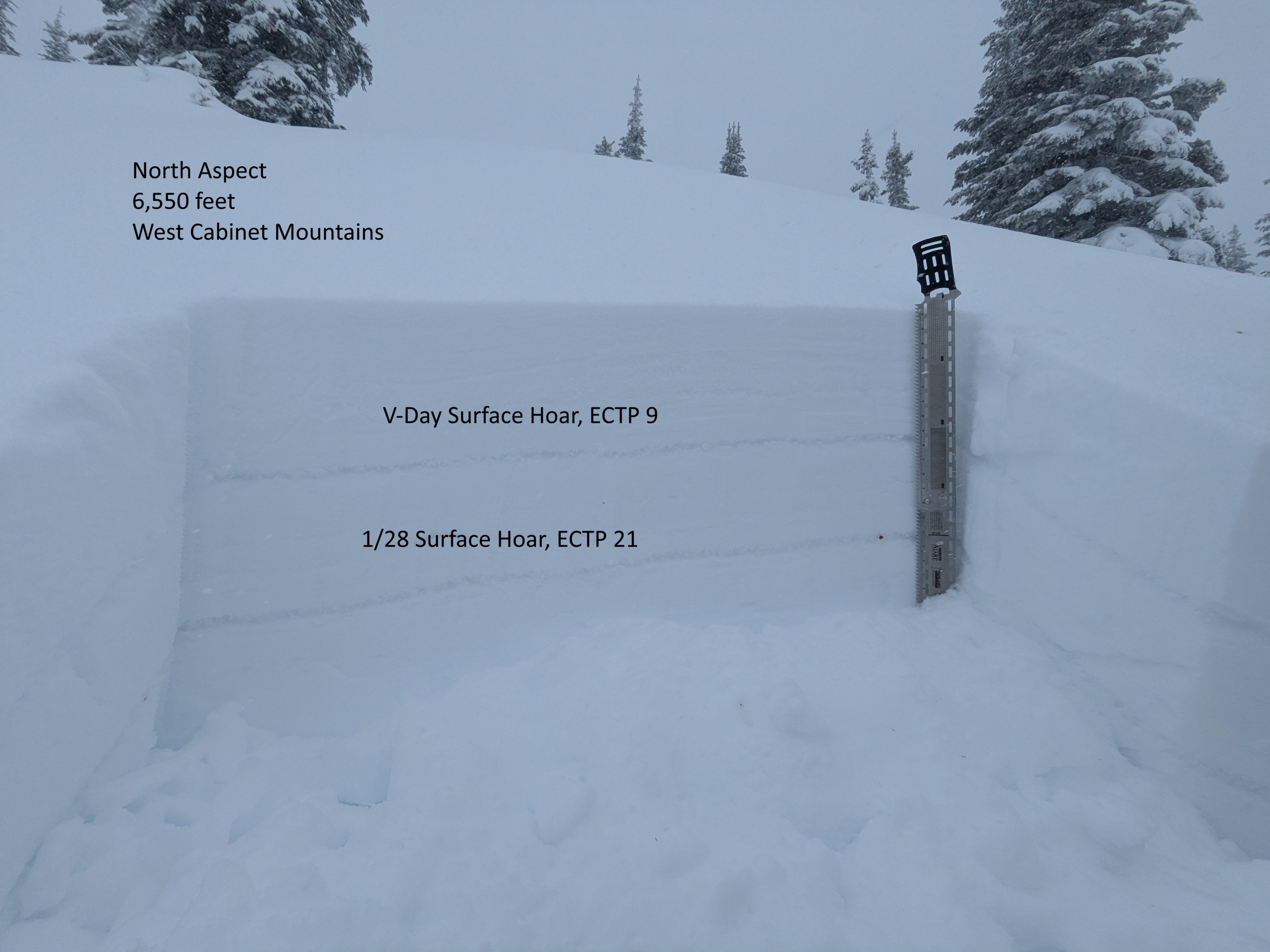
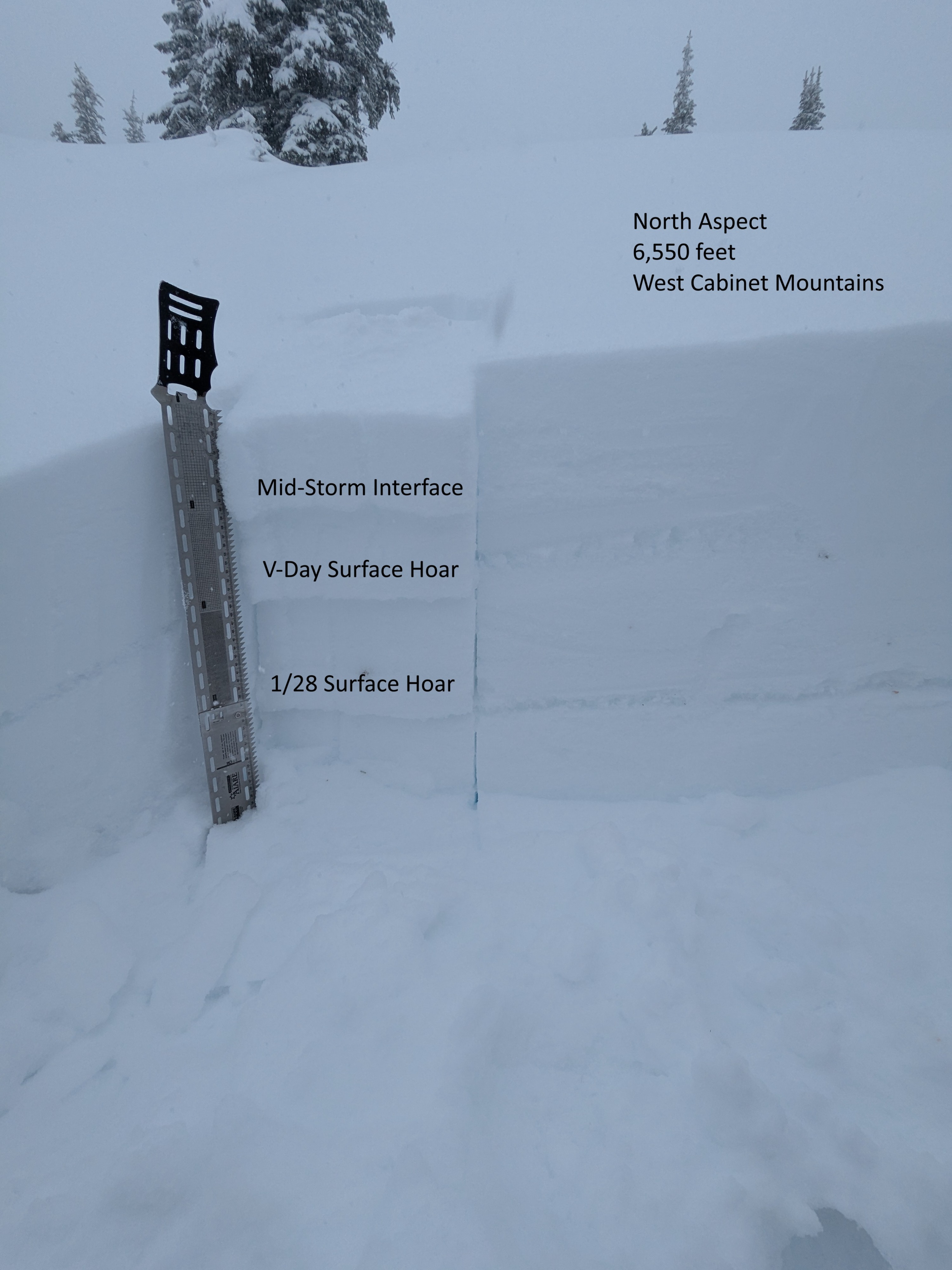
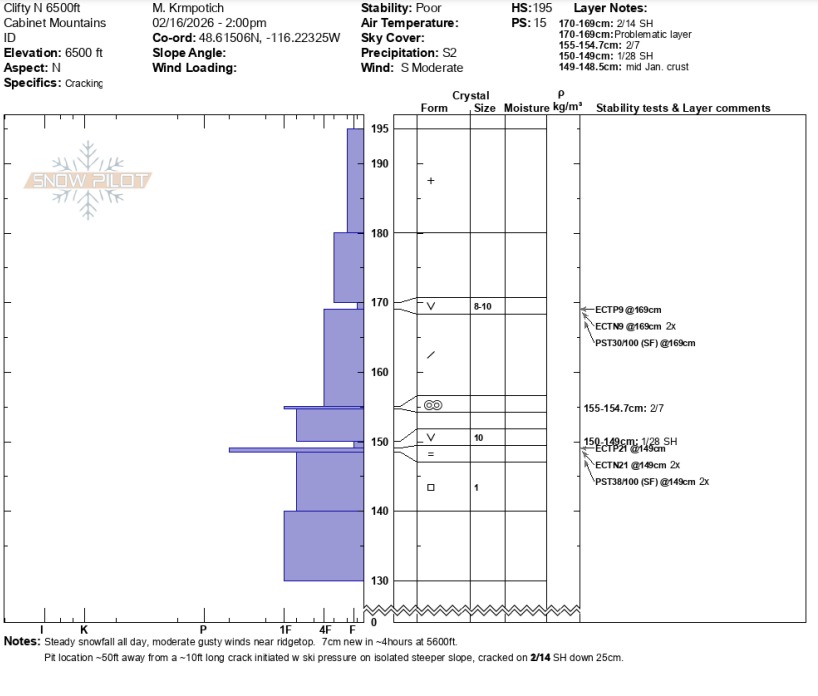
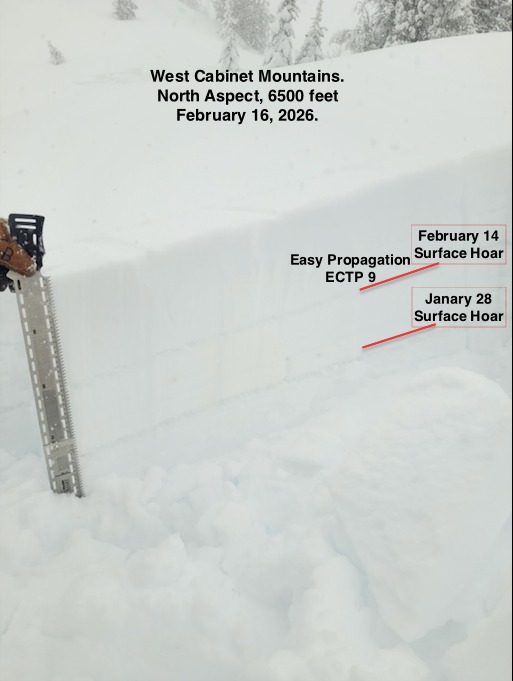
At 6,200 feet on a southwest aspect we observed small 4 mm surface hoar down 20 cm. The uppermost crusts (Knife hard) is likely the combination of the February 7 rain/ melt freeze crust and the mid January rain crust. The January 28 surface hoar was wetted and re-frozen in between the rain crusts. We observed ECTPs 18 between the two crusts (approx. 30 cm deep). Higher up, around 6,400 feet on a west aspect (quick pit), we found both surface hoar layers (1/28 and V-Day) well preserved. There was about 5 cm of soft snow between the two aforementioned February and mid January crusts. The January curst higher up was much thinner but still Pencil hard. At 6,500 feet on a north aspect we triggered a 20 foot long crack (V-Day SH, down 25cm). This crack was triggered by ski pressure on a short, but steep test slope. In a full profile pit nearby we observed large (size 10 mm) well preserved surface hoar. At this location, snowpack tests observed:
- ECTP 9, two ECTN 9 results, PST 30/100 SF on the V-Day SH, down 25cm.
- ECTP 21, two ECTN 21, two PST 38/100 SF on the 1/28 SH, down 45cm.
South aspects near this elevation and location were wind scoured with low ground coverage until below ridgetop. Fresh wind-drifted slabs were building on leeward-facing slopes and terrain features.