
Quick report
There's enough snow coverage on steeper slopes to start thinking about avalanche problems and carry rescue gear - beacon, shovel, and probe. Lots of natural obstacles lurk below the snow surface adding another non-avalanche hazard to your mountain adventure. While the avalanche hazard is likely confined to higher elevation drifted slopes and small, we should anticipate that problems will grow larger in size and be broader in coverage with future storms and deeper overall snow depths.
Weather
- Cloud Cover
- few
- Wind Loading
- none
- Recent Snowfall
- 8 to 12 inches depending on elevation
Lots of sun and a few low-lying clouds. Light winds above 6,000 feet not contributing to snow transport. Temperatures remained below freezing in the afternoon.
Snowpack
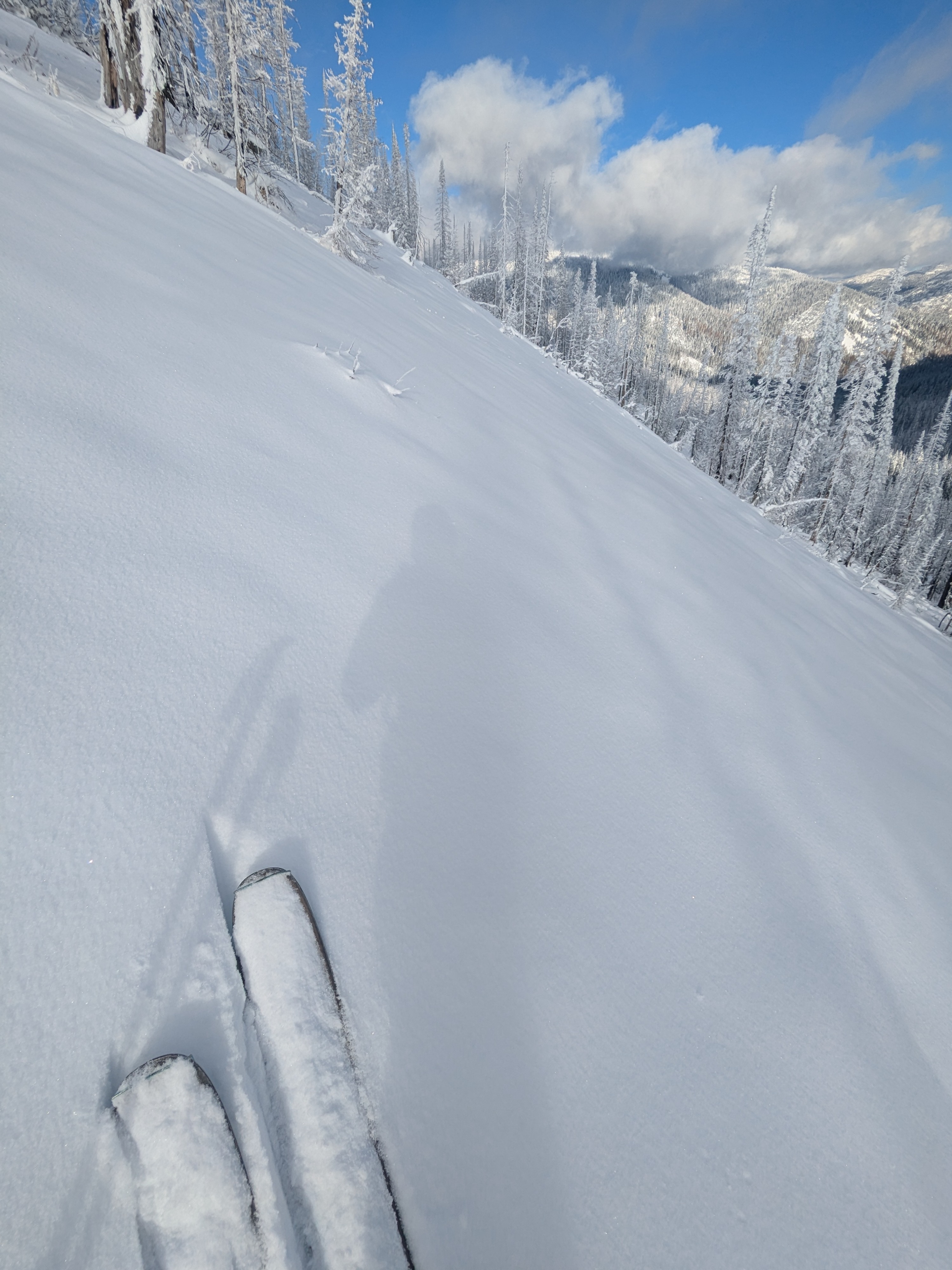
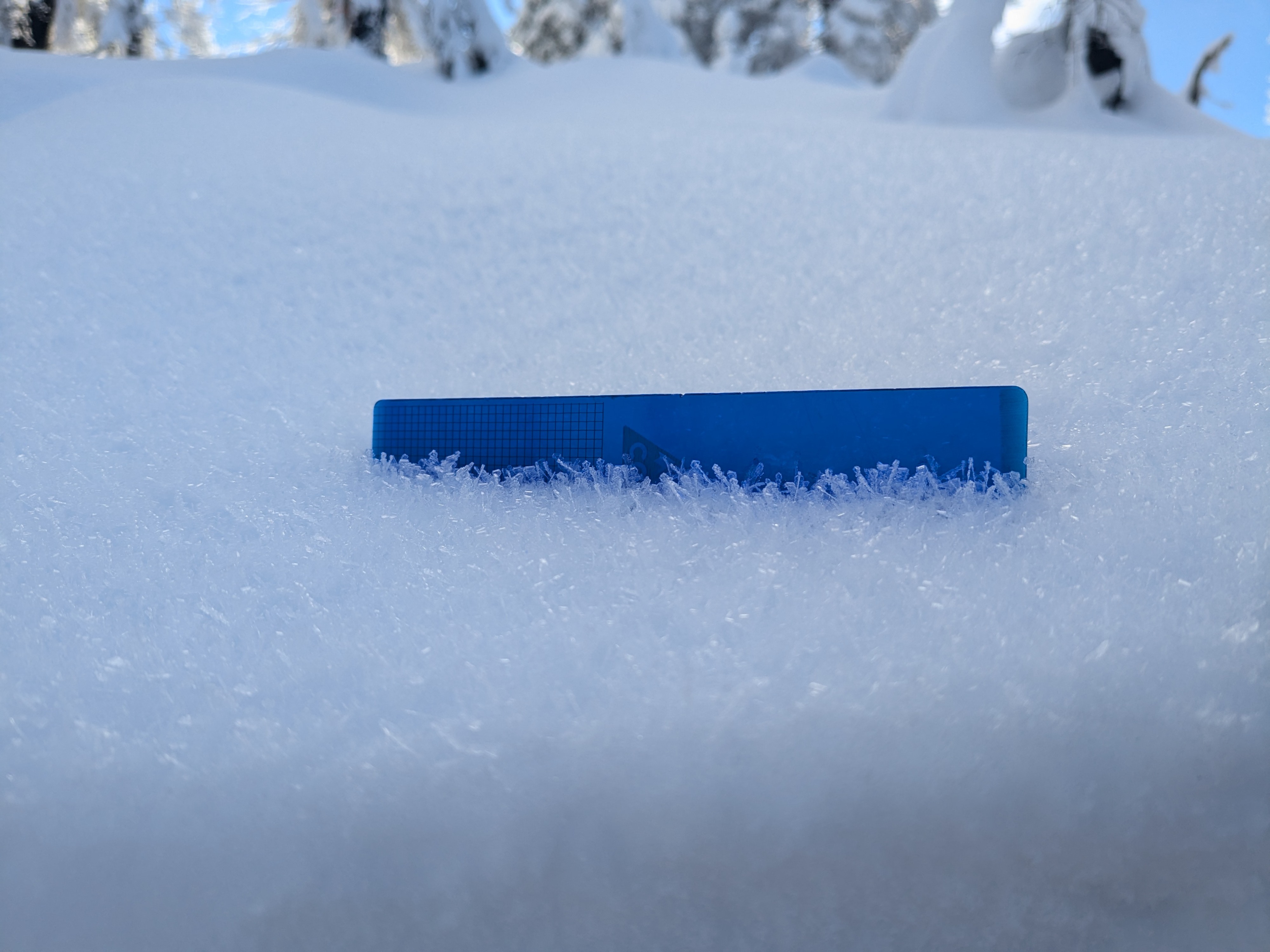
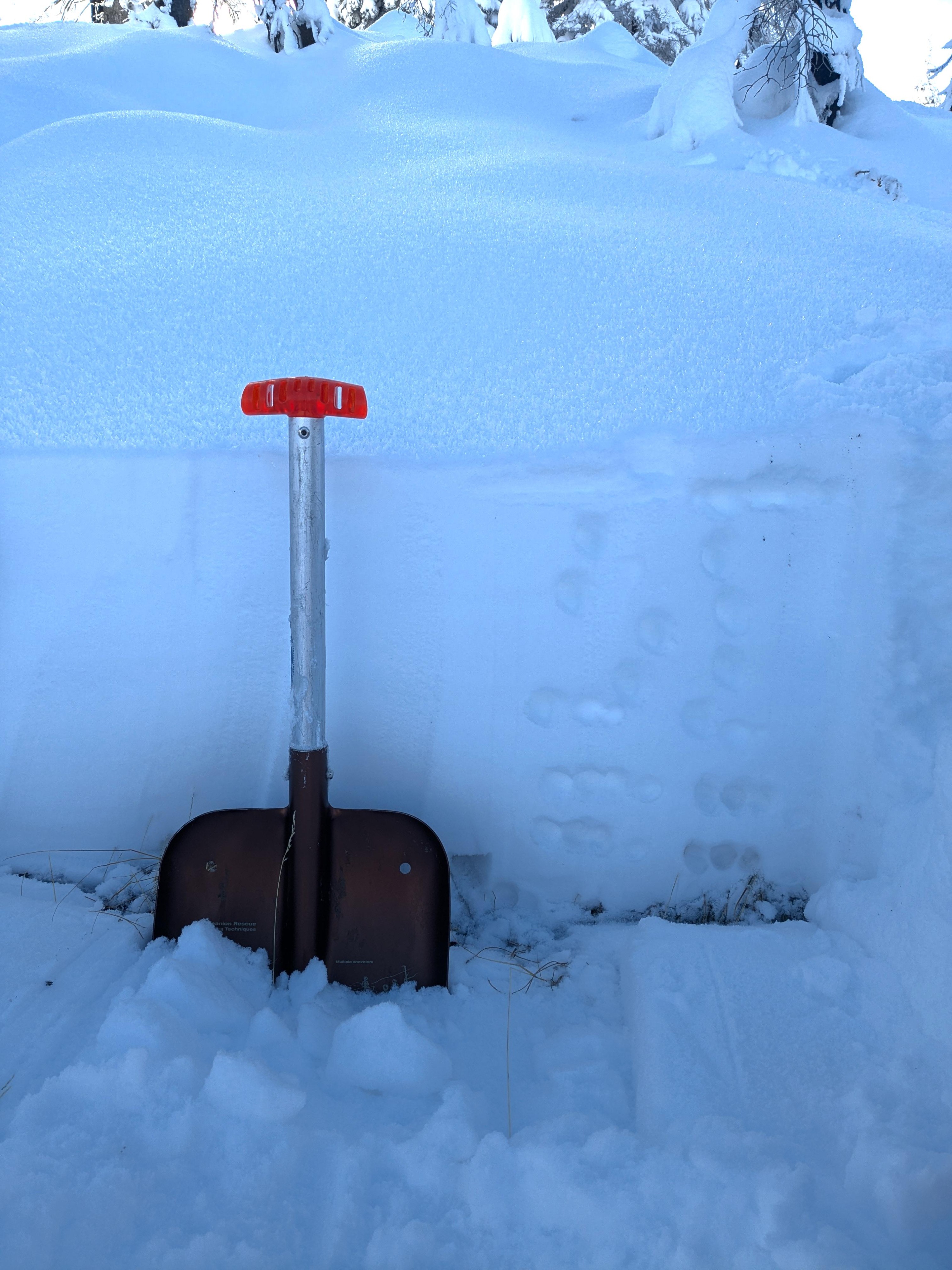
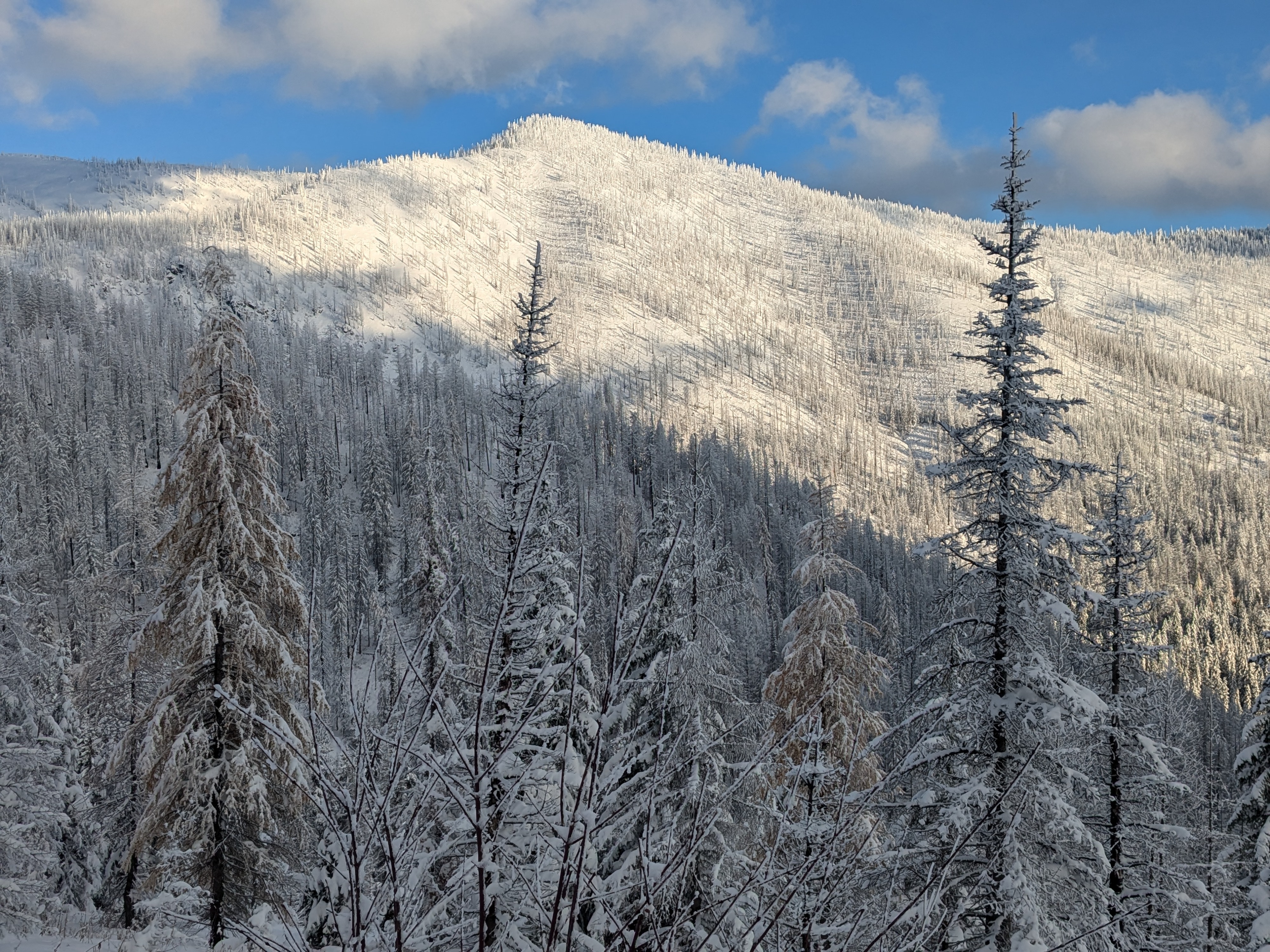
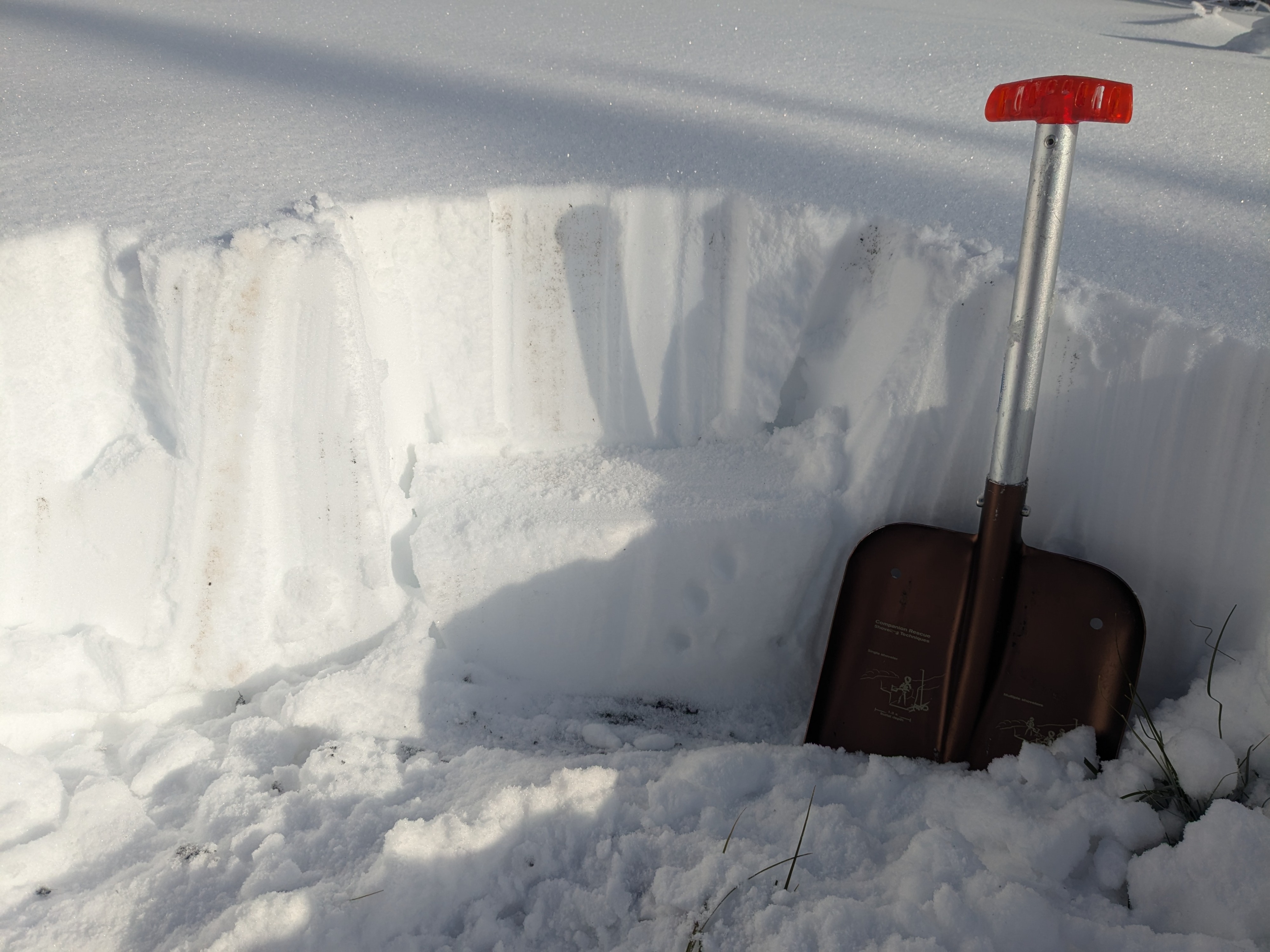
The mountains have turned white and over-the-snow travel is possible, mostly above 4,500 feet. Below that, snow coverage is insufficient for anything but foot travel. Around 5,000 feet, we found around a foot of snow that fell during the last two storms. As we climbed above 5,500 feet and higher, snow depths ranged 18 to 24 inches. So far, the snowpack is fairly homogenous and supportive to travel on skis - both up and downhill. Hardness profile of snowfall from November 1-2 is a bit softer than the last storm, and the snowpack has a slight inverted feel when probing around. Places where the total snowpack is around 18 inches or less, we found small faceted grains at the ground level and on the surface. Where snow depths were closer to 2 feet, faceting on the ground was less pronounced. It seems as of now, surface faceting is the main layer of concern moving forward. This layer was generally 2 to 5 inches thick and grains ranged 0.5-1 mm in size. On southeast and south-facing slopes, we found a very thin crust sitting below near-surface facets and this buried weak layer will be something to consider with our next storm load. Traveling between 5,500 and 6,100 feet, we encountered surface hoar on northerly and easterly-facing slopes that ranged 5 to 10 mm in size. A couple shovel shears on a west-facing slope yielded a clear shear at the two-storm interface, with small facets below a very thin and hard to discern crust. Overall snow hardness was noticably harder on our west-facing pit versus those on more northerly and easterly-facing slopes. While current conditions keep avalanche concerns small and isolated, the majority of slopes now have continuous snow cover and this could allow for future avalanche problems to increase both spatially and in size.
Avalanche
None observed