
Quick report
- Collapsing
- isolated
1 finger to pencil hard wind slabs were found to be stubborn to unreactive. However, propagation occurred in stability test where a collapse was experienced down 30 cms. This indicates that it remains possible to trigger windslabs in specific areas. Wind slabs were mixed with rain crust below 3500' and stripped areas above 3500'. Rain crust had limited the amount of snow redistribution to some degree. below 3500'.
2 moderate collapses were observed in an area of windslab that was mixed with scoured snow,Weather
- Cloud Cover
- clear
- Wind Loading
- light
- Rain Elevation
- 3500
- Snow Avail For Transport
- none
Clear and calm conditions were present below 4000'. Above 4000' moderate north wind was present with little to no snow transport. Moderate snow transport was visible along high elevation ridges.
Snowpack
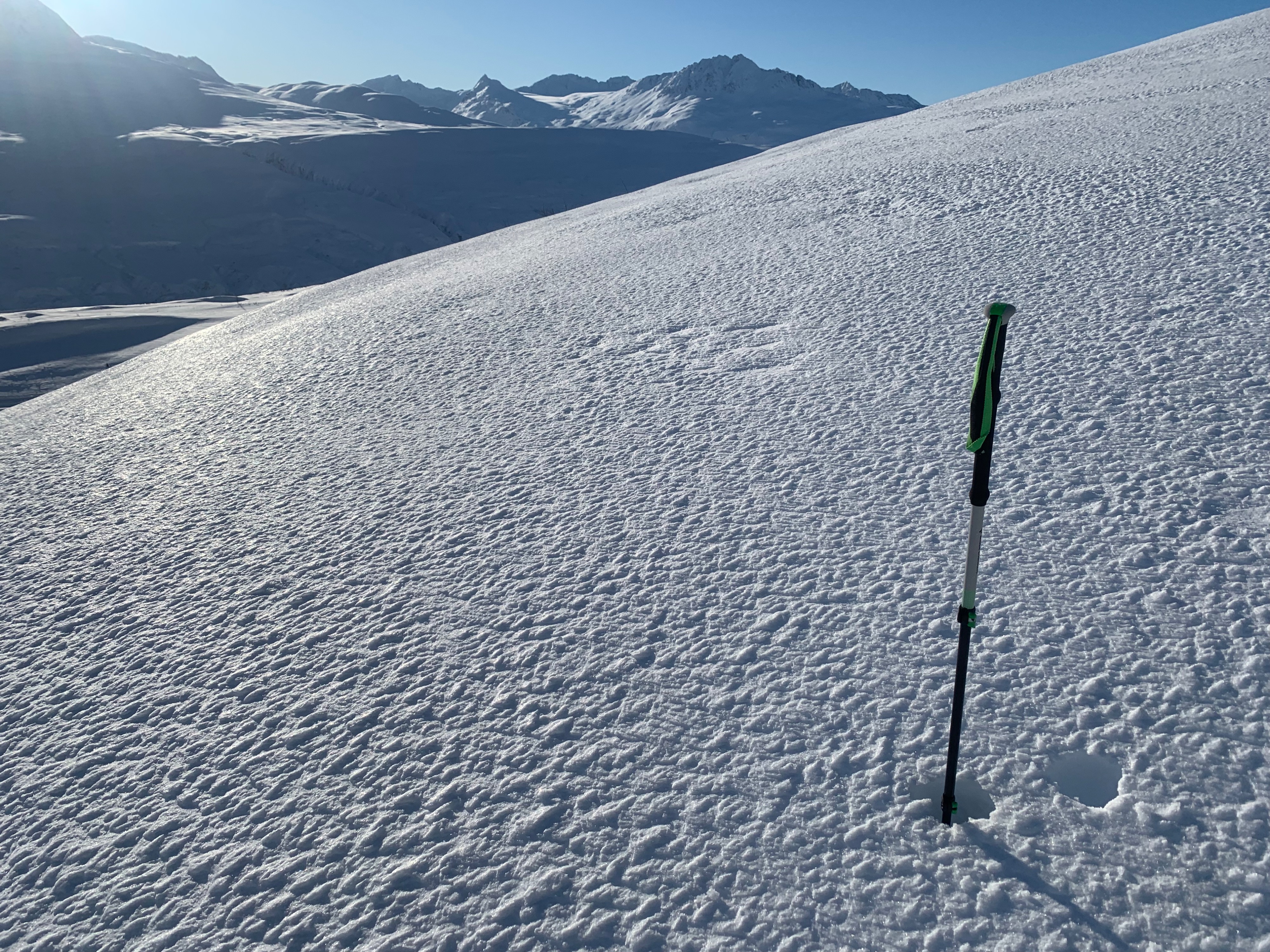
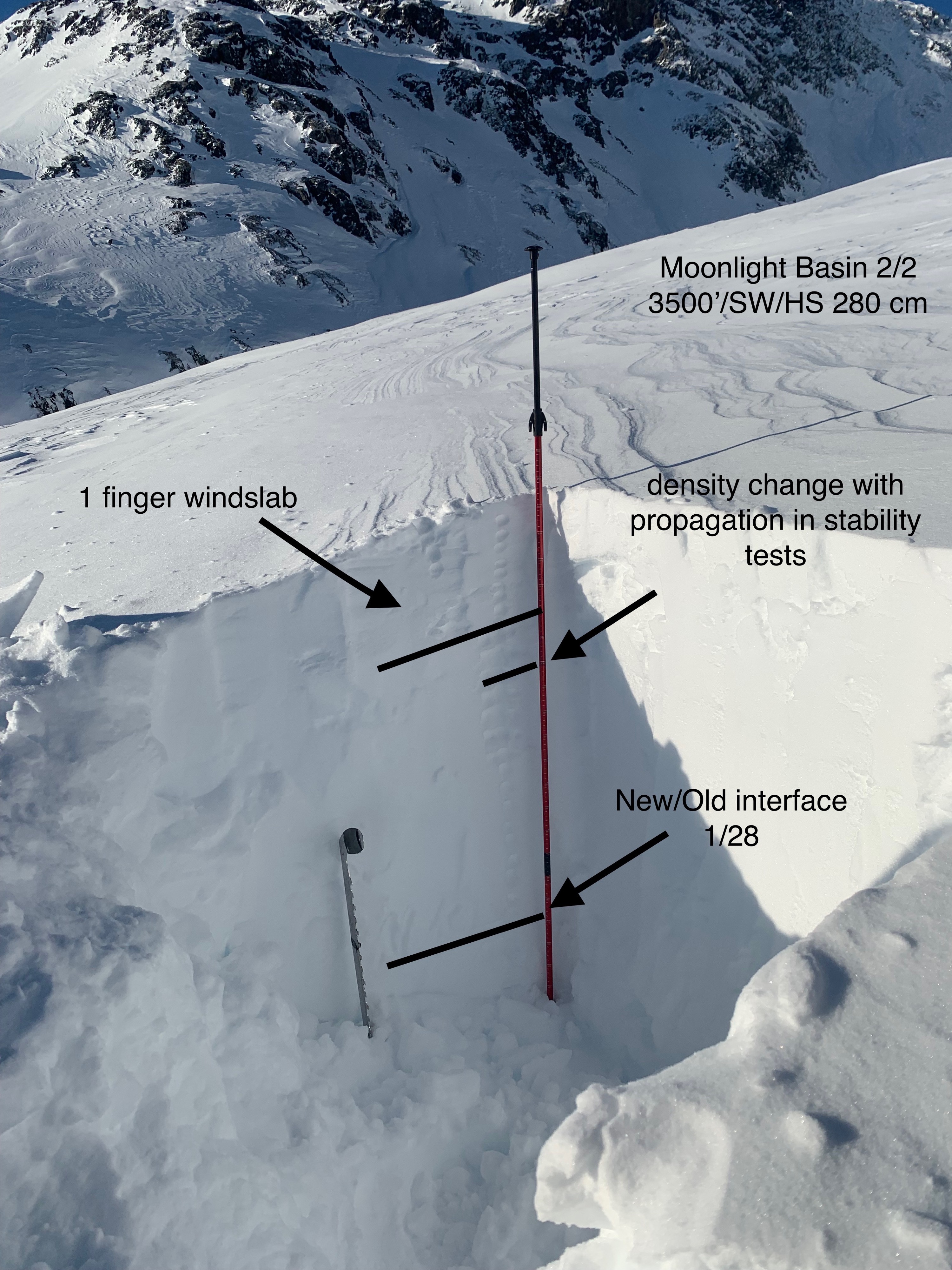
The upper snowpack consisted of storm snow from 1/28-29 that had an average settled depth of 50-70 cms. This snow was capped with a mix of wind slab deposits up to 16" and rain crust up to 3500'. Above 3500' surface was a mix of stripped areas and wind deposits 4-16 inches in depth. Dug a pit at 3500' where I experienced a moderate collapse. Snowpack height was 280cms on a SW aspect with 10° incline. Pit results produced ECTP11 down 30 cms repeated twice and PST END (25/100) down 30 cms. Weak layer was a density change 10 cms below windslab and consisted of 1-2mm decomposing fragments.
Dug another pit at 4000' where there was no wind slab present and the above mentioned instability did not show signs of propagation. ECTN22 down 20 cms. No reaction was observed at new/old interface in both pits.
Knife hard wind slabs exist below the 1/28 snowfall with good strength and structure.