
Quick report
- Cracking
- specific
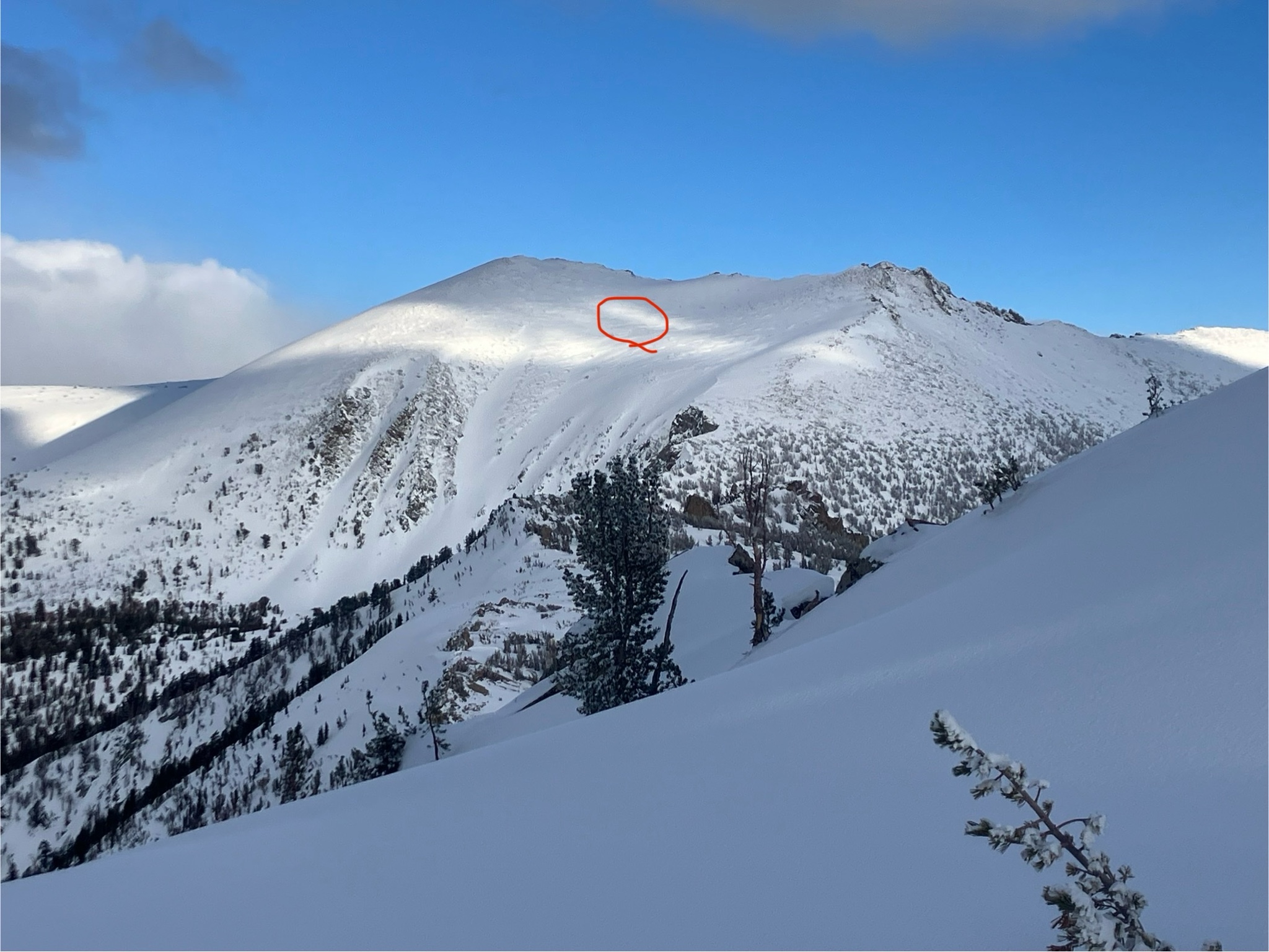
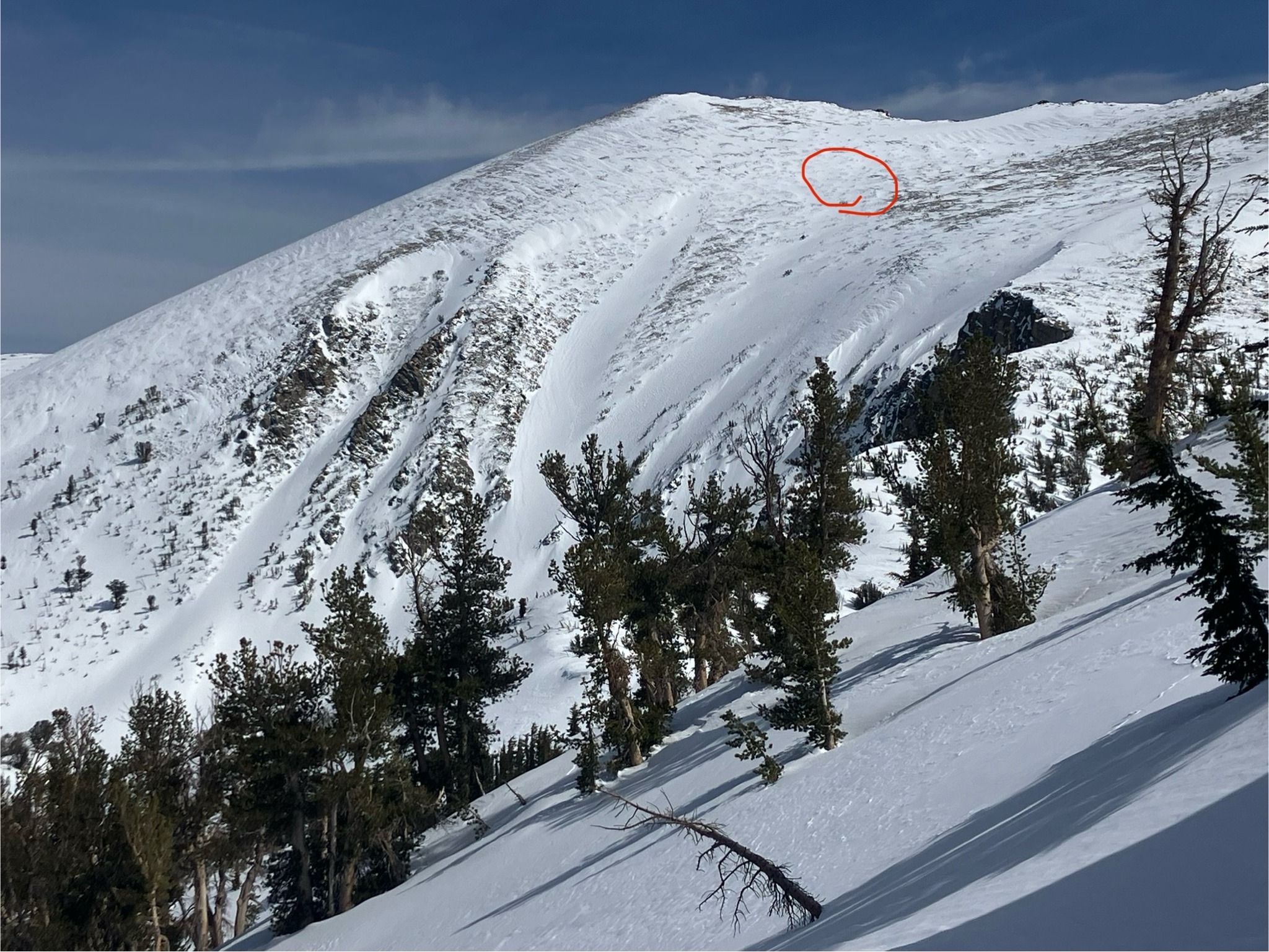
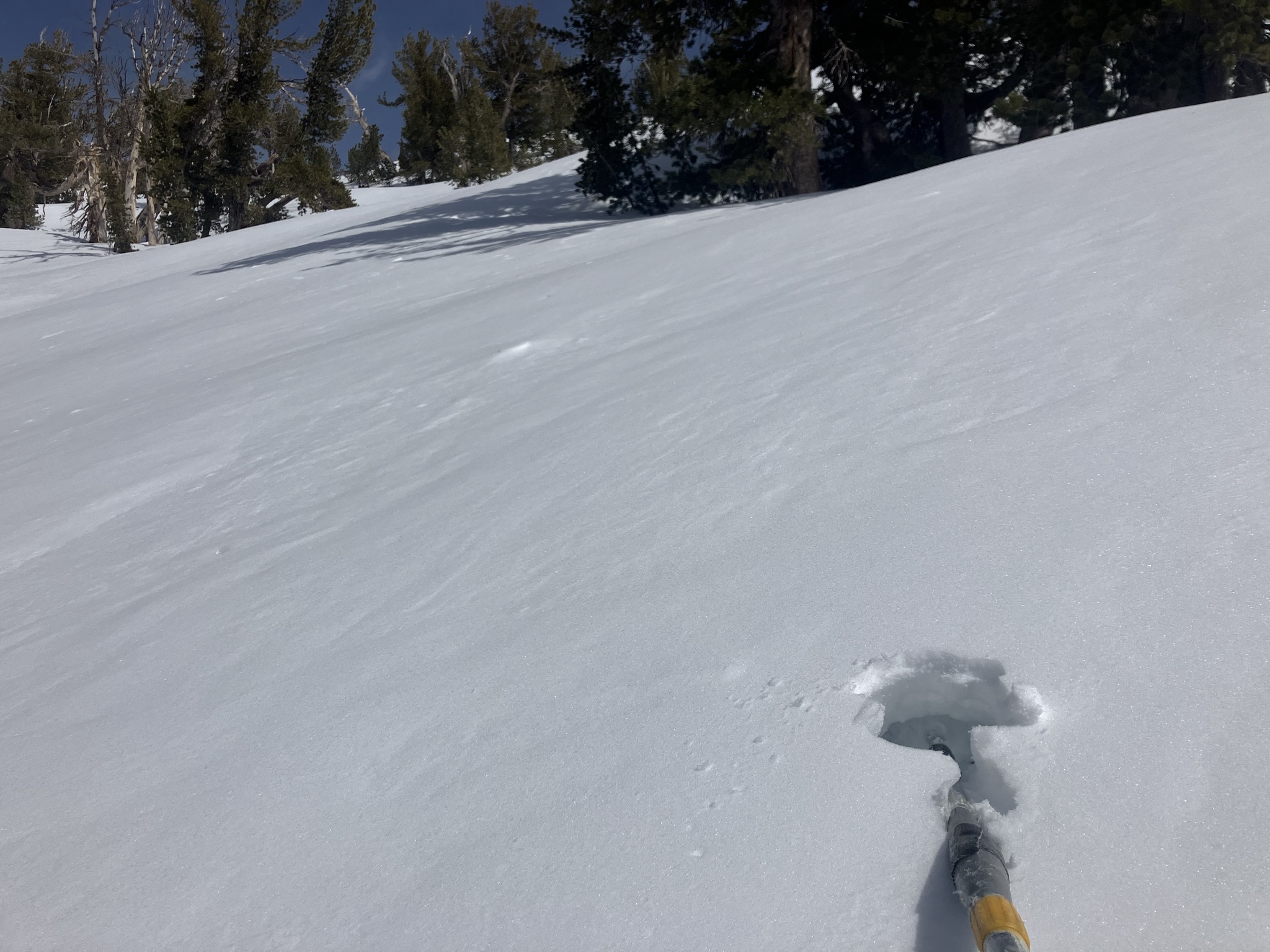
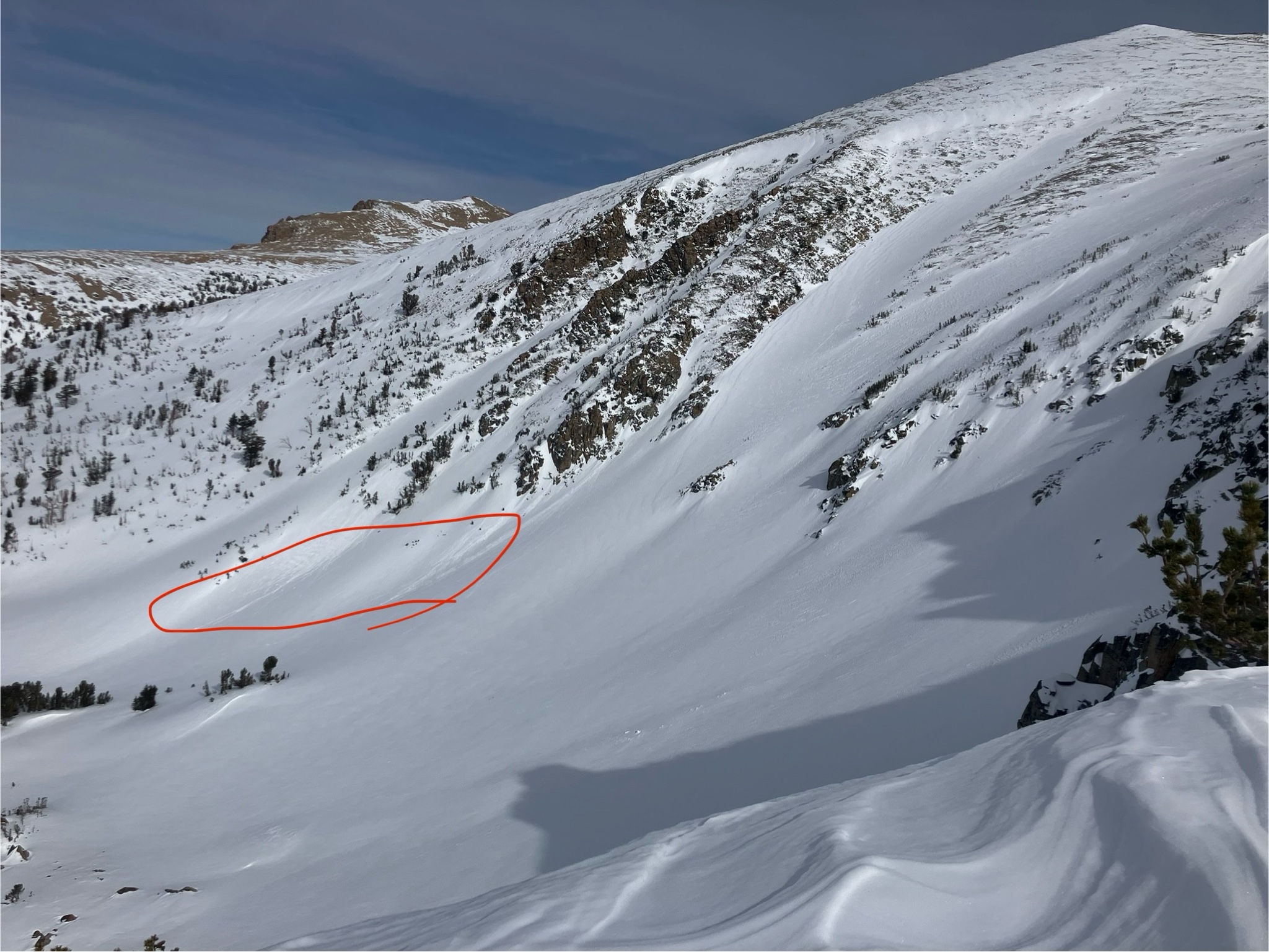
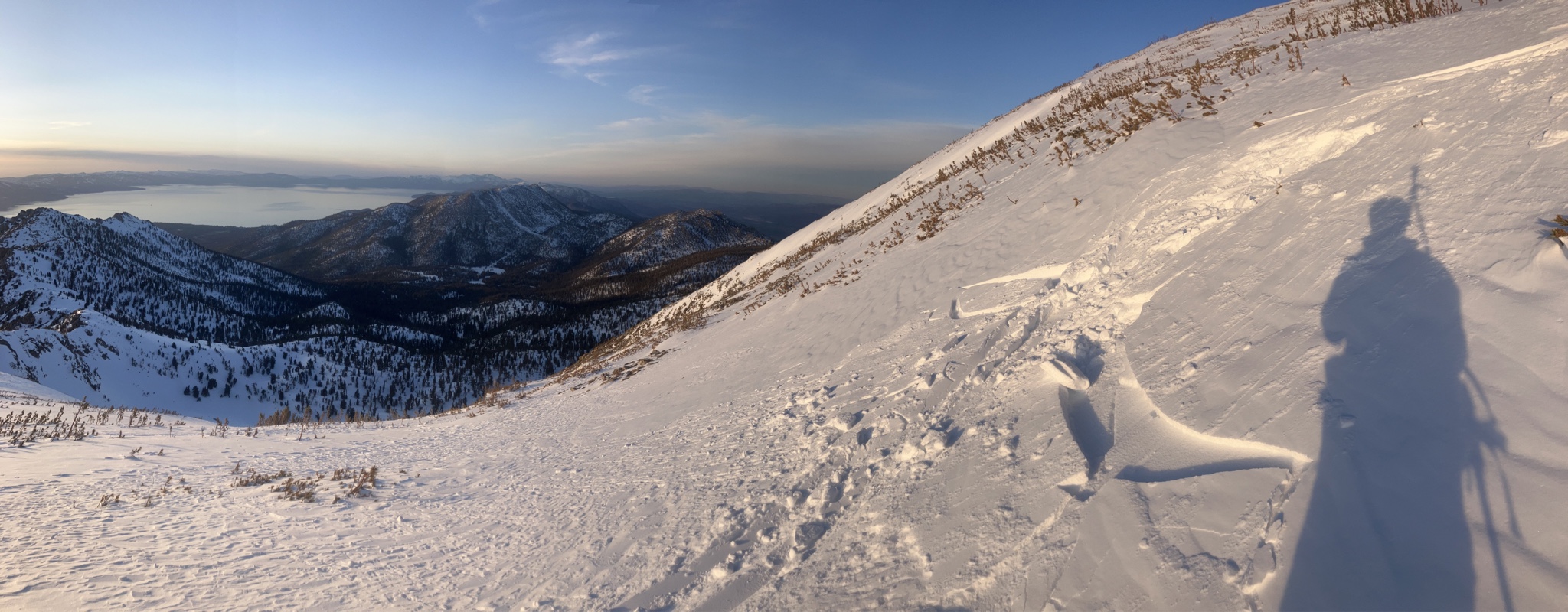
Point of obs is to provide potential warning (especially in no-fall terrain) of lingering thin wind slab problem on northerly-facing routes. Ascended Freel Peak from High Meadow TH via Trout drainage. Didn’t notice any signs of wind slab instability all day (including on same slope that I skinned prior to skiing approach to y-shaped couloir which caused the warning flags (fracturing and starting to slide) and mini slides (on lower angle, well-anchored/supported terrain). While slab thickness was very small, the last jolted me enough to notice it and losing footing on more consequential and much steeper/less- supported/non-anchored couloir was not an option so despite the dwindling daylight reascended 450’ to summit to ski opposite sides NE-facing curved gully route (also steep and wind-loaded but different aspect and one I’ve skied a couple times prior and knew a safe way down if similar warning flags presented themselves (they didn’t, it actually skied great, both my 8pm headlamp ski and a couple tracks likely from it earlier today).
Avalanche
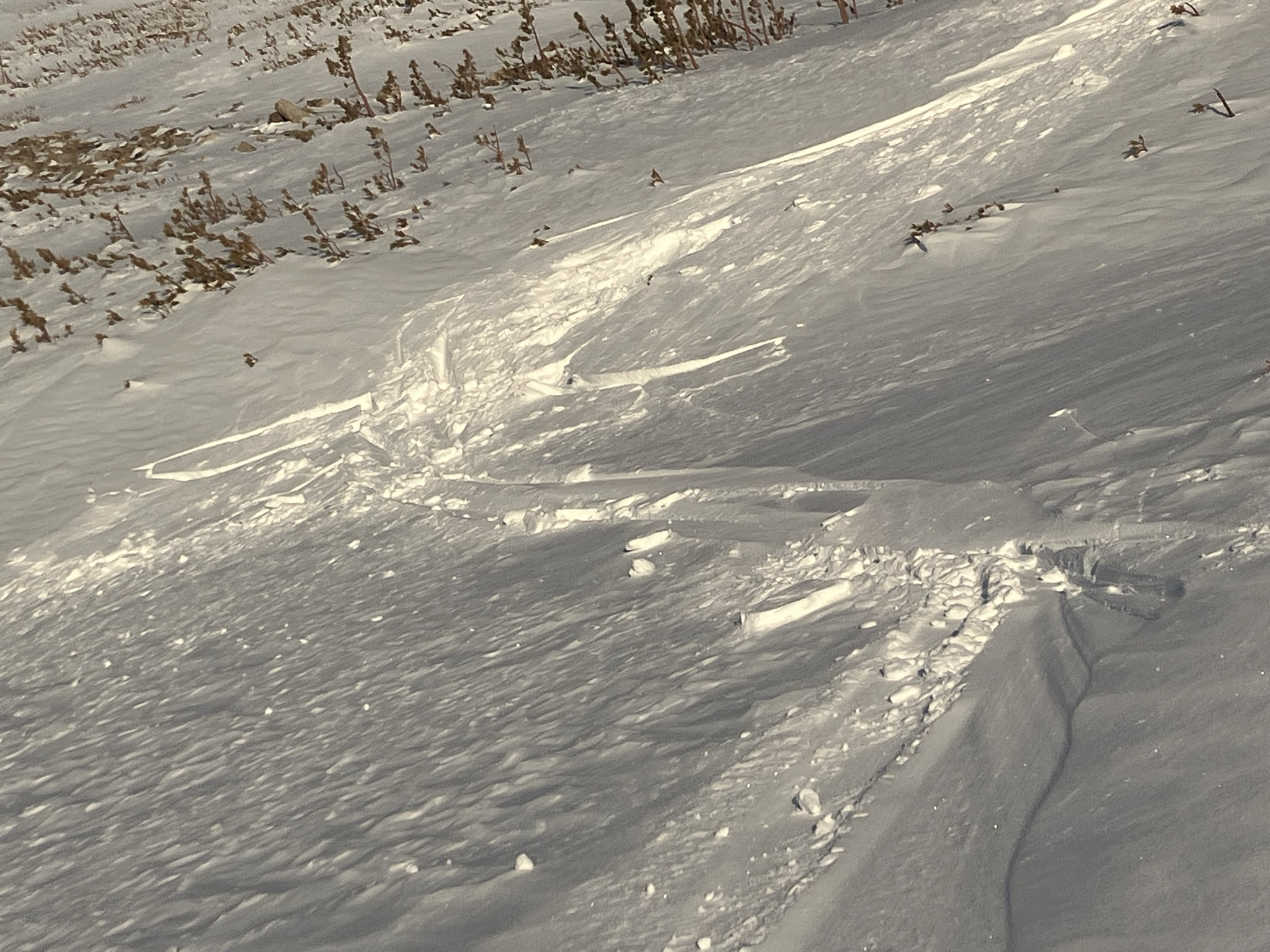
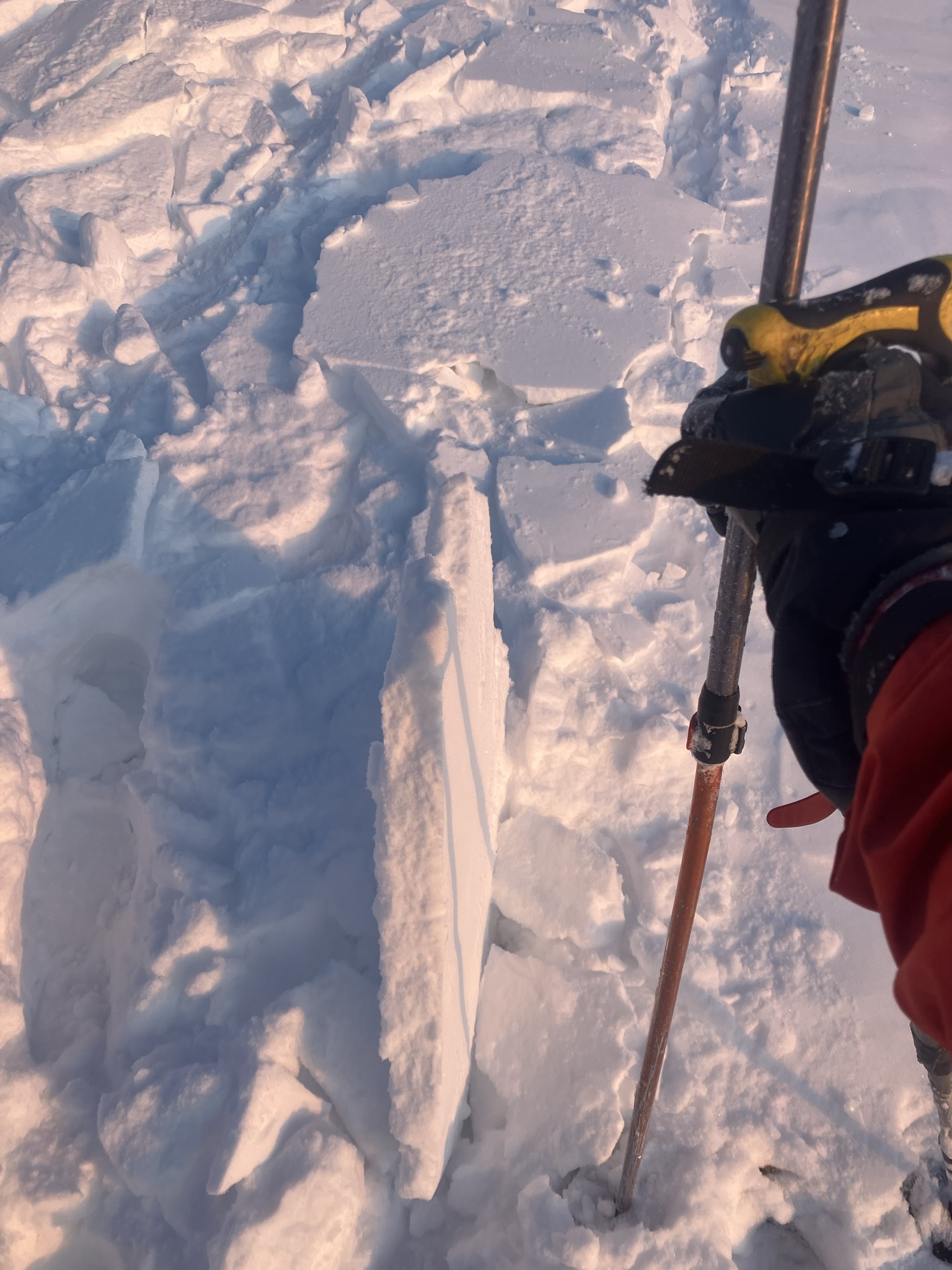
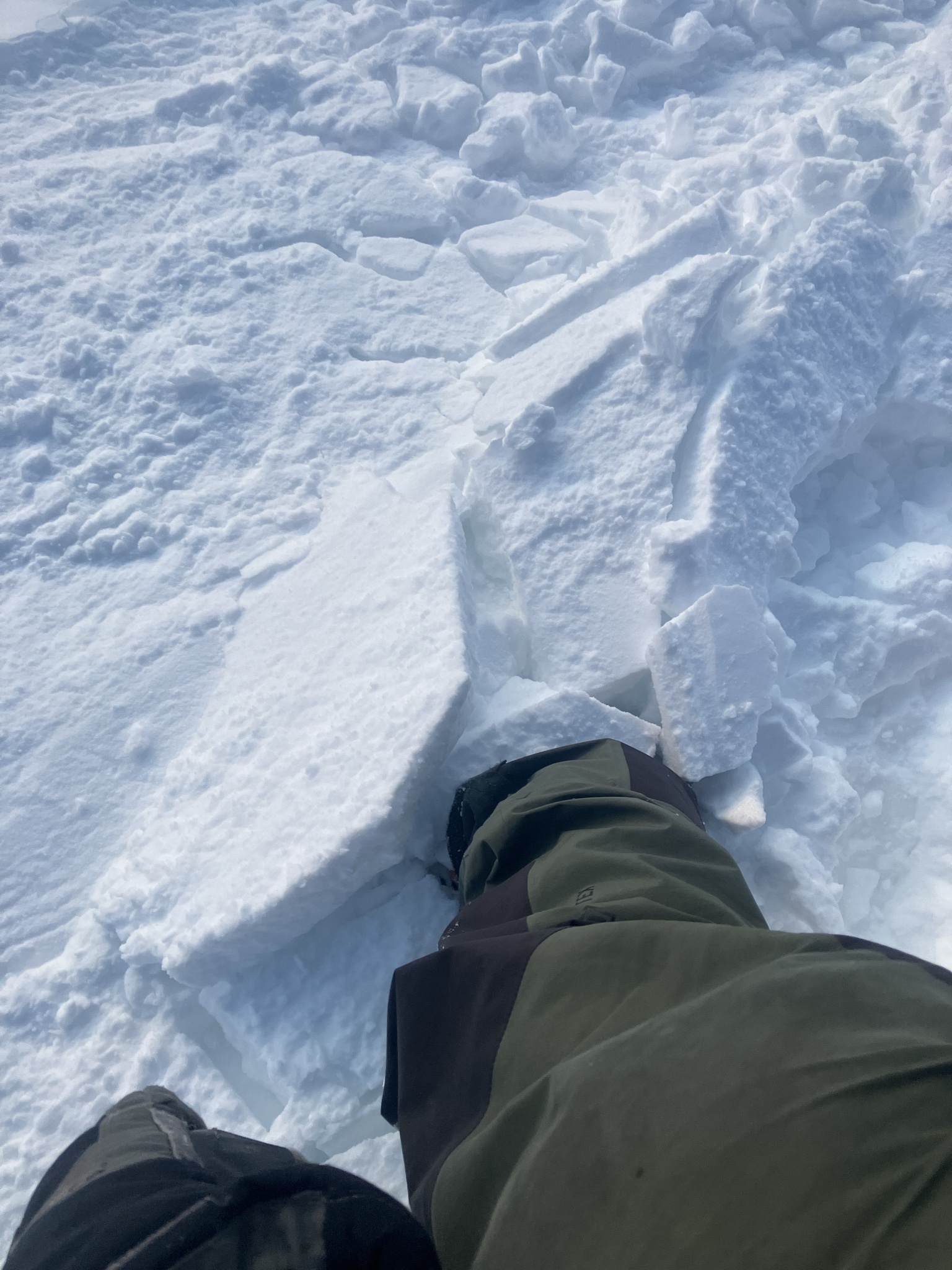
Slab of only 1-2 inches in thickness NW of summit, about 10450’ on relatively well-anchored, shallow, lower angle terrain (likely why it popped, fractured and and slid slightly on the bed surface. On boot pack back up to summit (ie after cancelling “Y-shaped” couloir ski plans due to similar elevation and aspect and possibly cross-loading risk), I noticed many other spots that fractured similarly on my ski (but didn’t feel occur) that hadn’t given any cracking on my adjacent skin track (either due to force differences or possibly due to the skin track removing the lower support just enough?)