

Quick report
- Cracking
- isolated
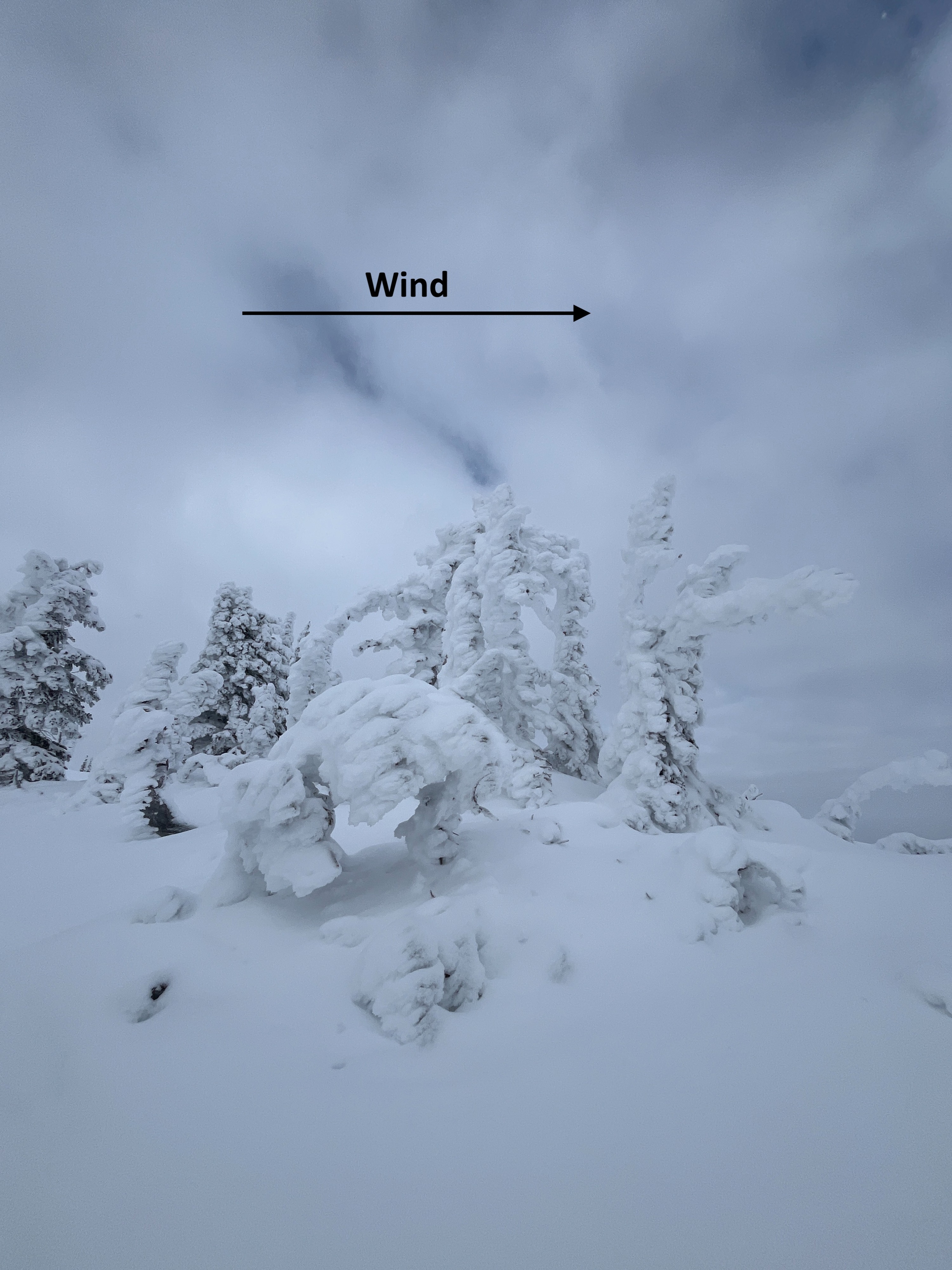
I was pleased to see that although the east central zone had largely missed out on the first big storm at the end of the January drought this far east, Mission Ridge has continually gotten a few incremental inches most days which had added to their snowpack and made for pleasant travel conditions. This new slab does overlay faceted layers in the snowpack but the facets are not quite as well developed and weak as I've seen them in other parts of the zone. In addition to poor snowpack structure, we saw numerous signs of previous wind loaded along the ridgeline, such as scouring, riming, and cornice development which showed wind loading to be on north and east facing terrain.
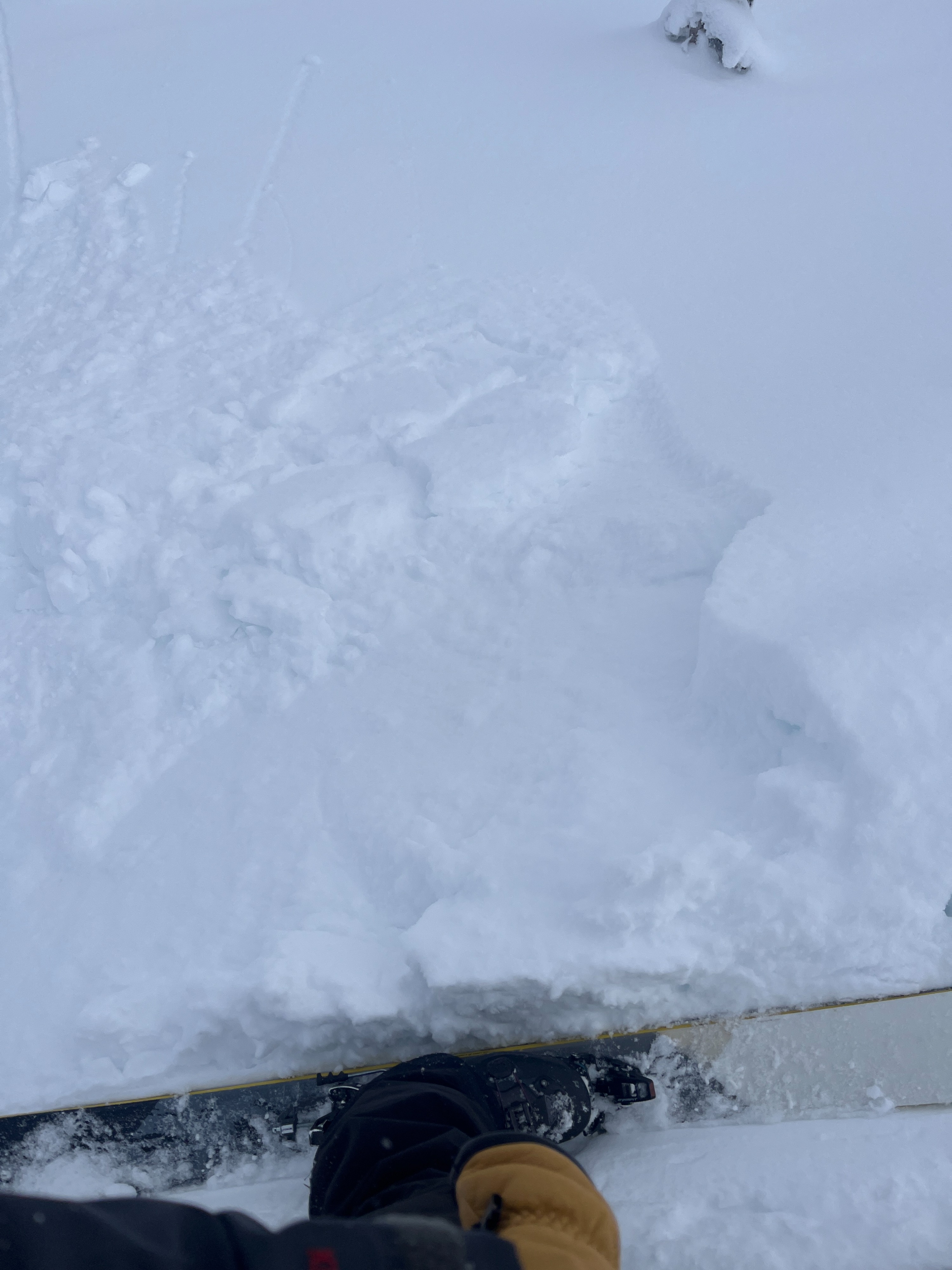
We were able to get some stubborn cracking in wind loaded terrain which small cornice drops.Weather
- Air Temp
- 3
- Cloud Cover
- broken
- Wind Loading
- none
- Recent Snowfall
- 6 new/32 recent
- Snow Avail For Transport
- small smounts
We started out the morning with overcast skies and some moderate snowfall. As we traversed the ridge and landed at our pit location, the snowfall dropped to very light and the sun started breaking through the clouds. The wind was calm with some light ridgeline gusts from the WSW. Temperatures were cold and we battled white tipped noses and cheeks throughout the day.
Snowpack
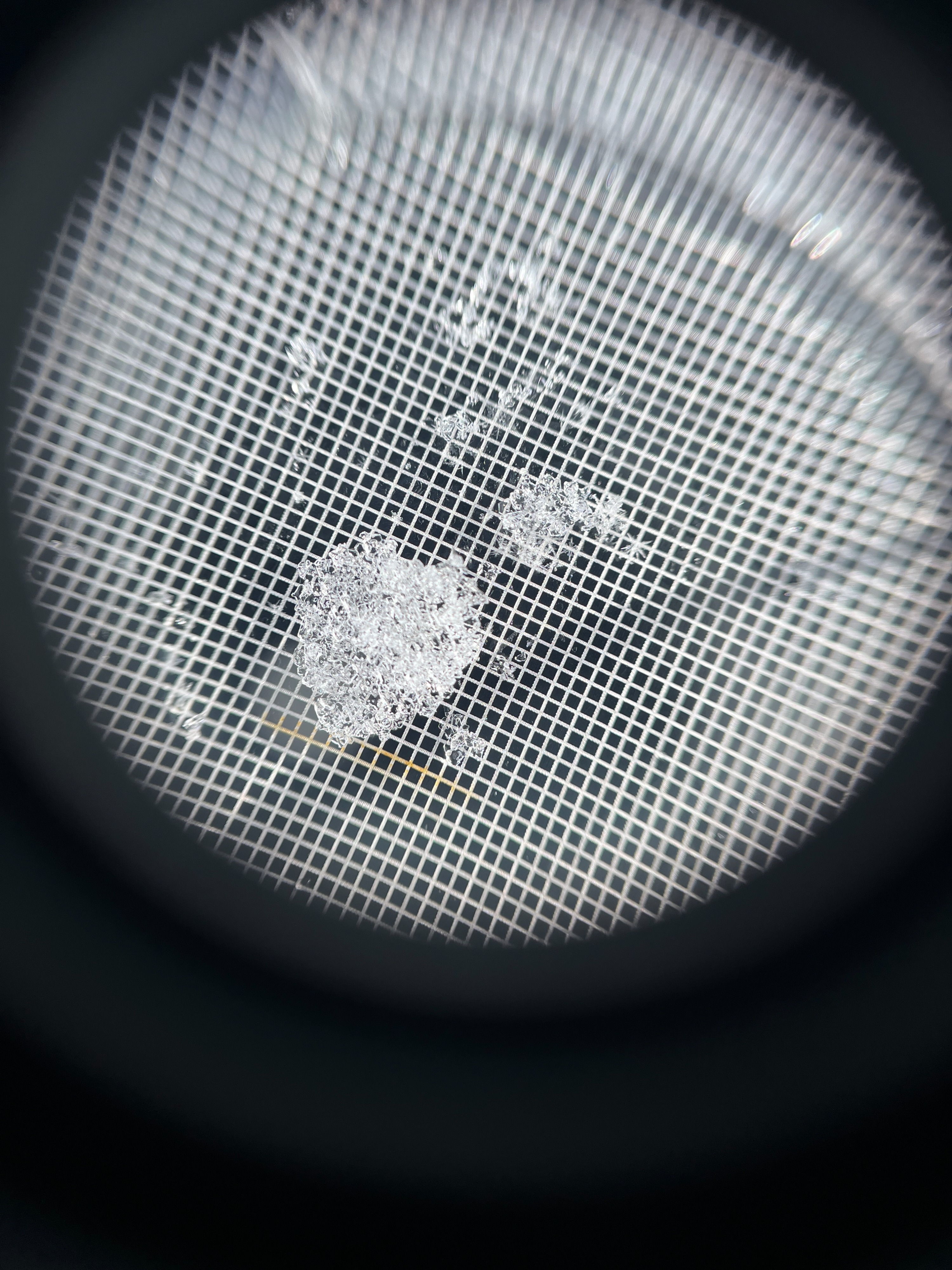
The new snow that had fell and was actively falling throughout the day was super light and very pretty (see fun precipitation particle photo)! We enjoyed some soft fresh turns in this snow. Although the day was quite cold, the inbounds snow had softened by the end of the day and made for some lovely groomer turns as well.
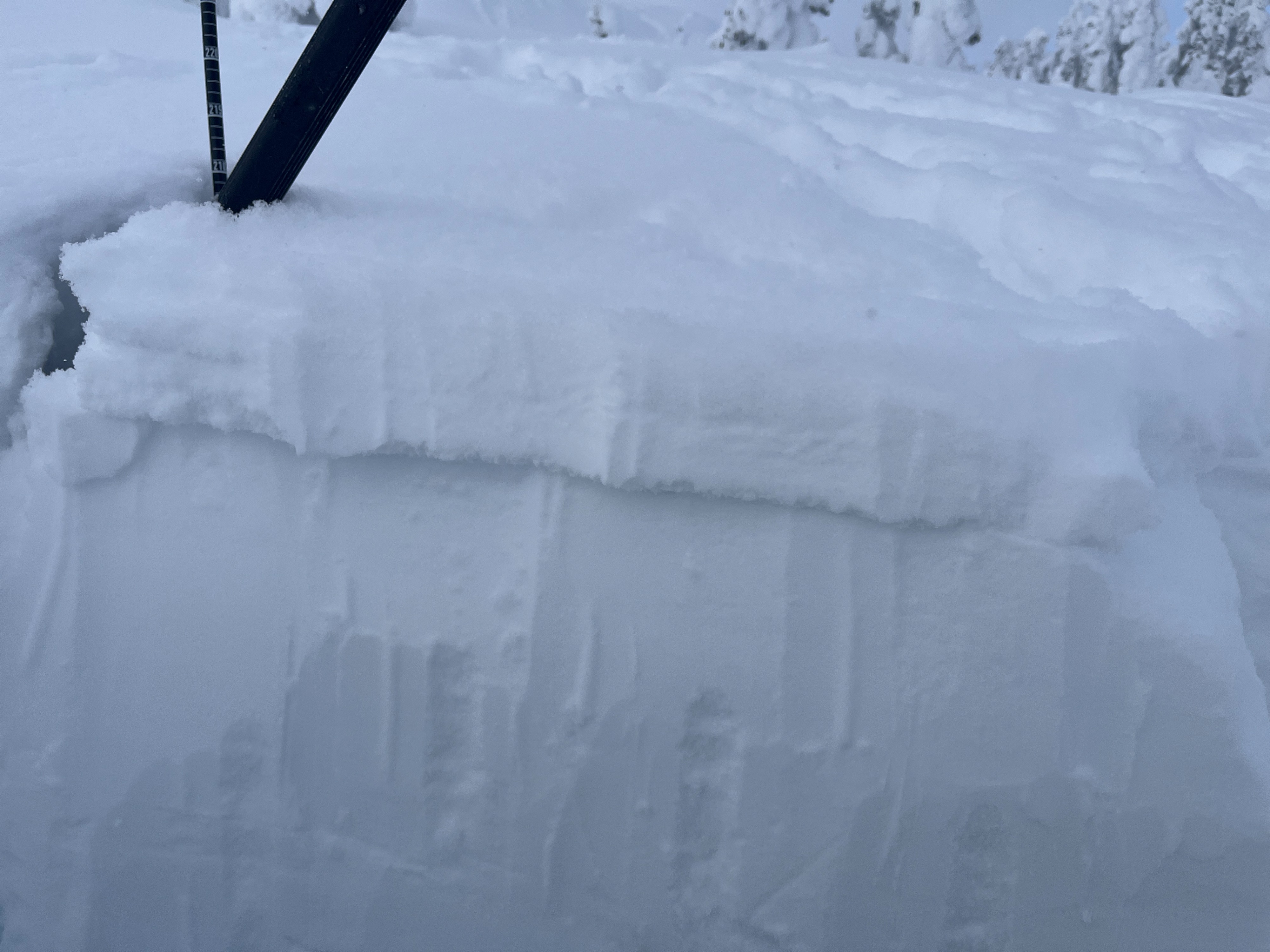
We dug a pit on a NE aspect at 6693 ft. The depth of the snowpack at this location was 93in/237cm and the depth of our snowpit was 51in/129cm. We found 6cm of new snow that had a poor bond to 32cm more of recent snow. Below this slab we found faceted snowgrains but of varied hand hardnesses which was indicative of some wind affect this location likely sees oftentimes. We identified a layer of buried surface hoar 24in/60cm down. We performed a compression test and got sudden collapses at the new/recent snow interface and the buried surface hoar (CT4, SC / CT16, SC). We got a non-planar break at the recent/facet snow interface (CT14, BRK). We performed an extended column test and got a hard, non-propagating result at the recent/facet interface (ECTN22). We performed a propagation saw test at the recent/facet interface and got a non-propagating result far into the cut (PST75/100SF).