
Quick report
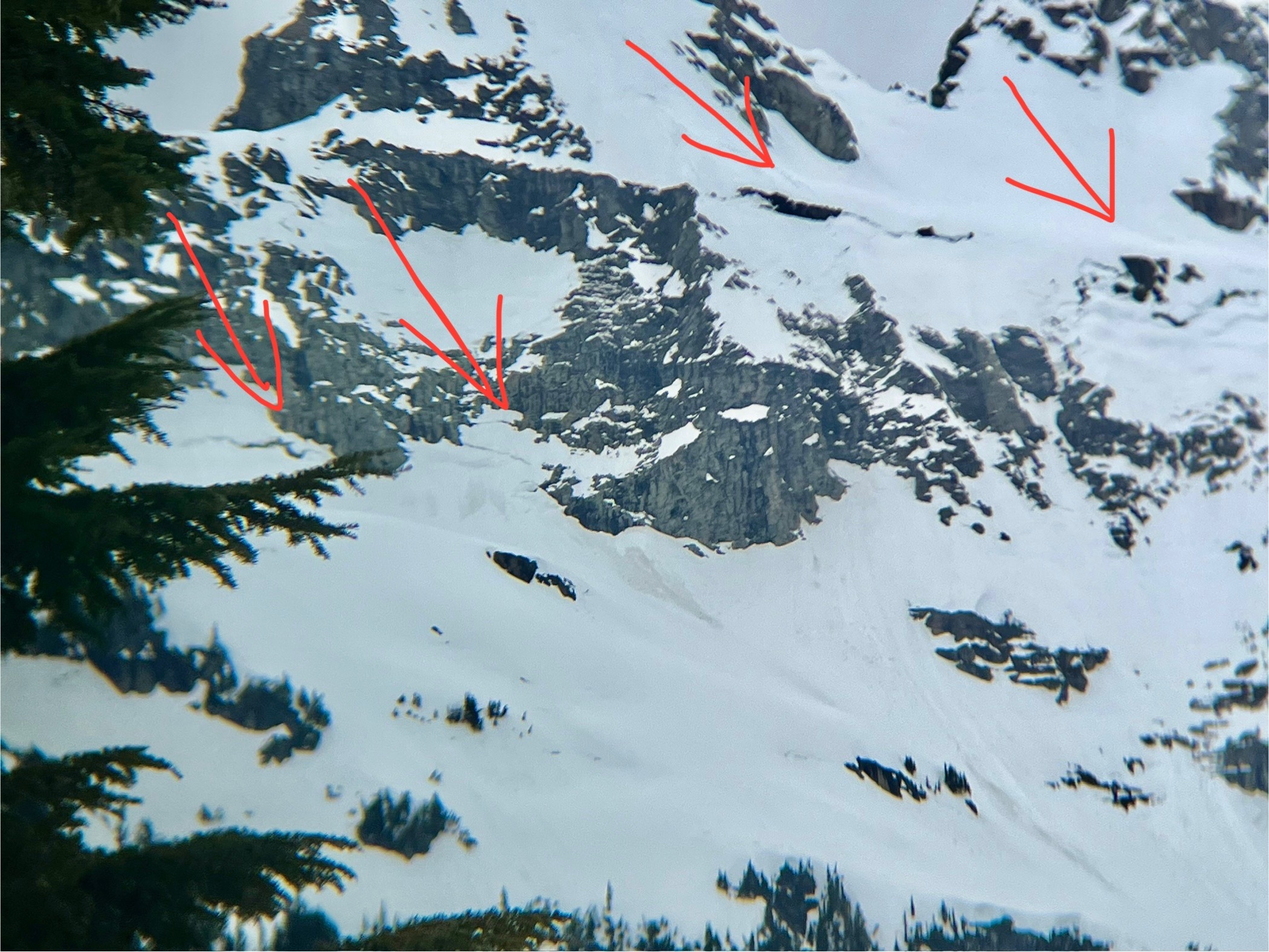
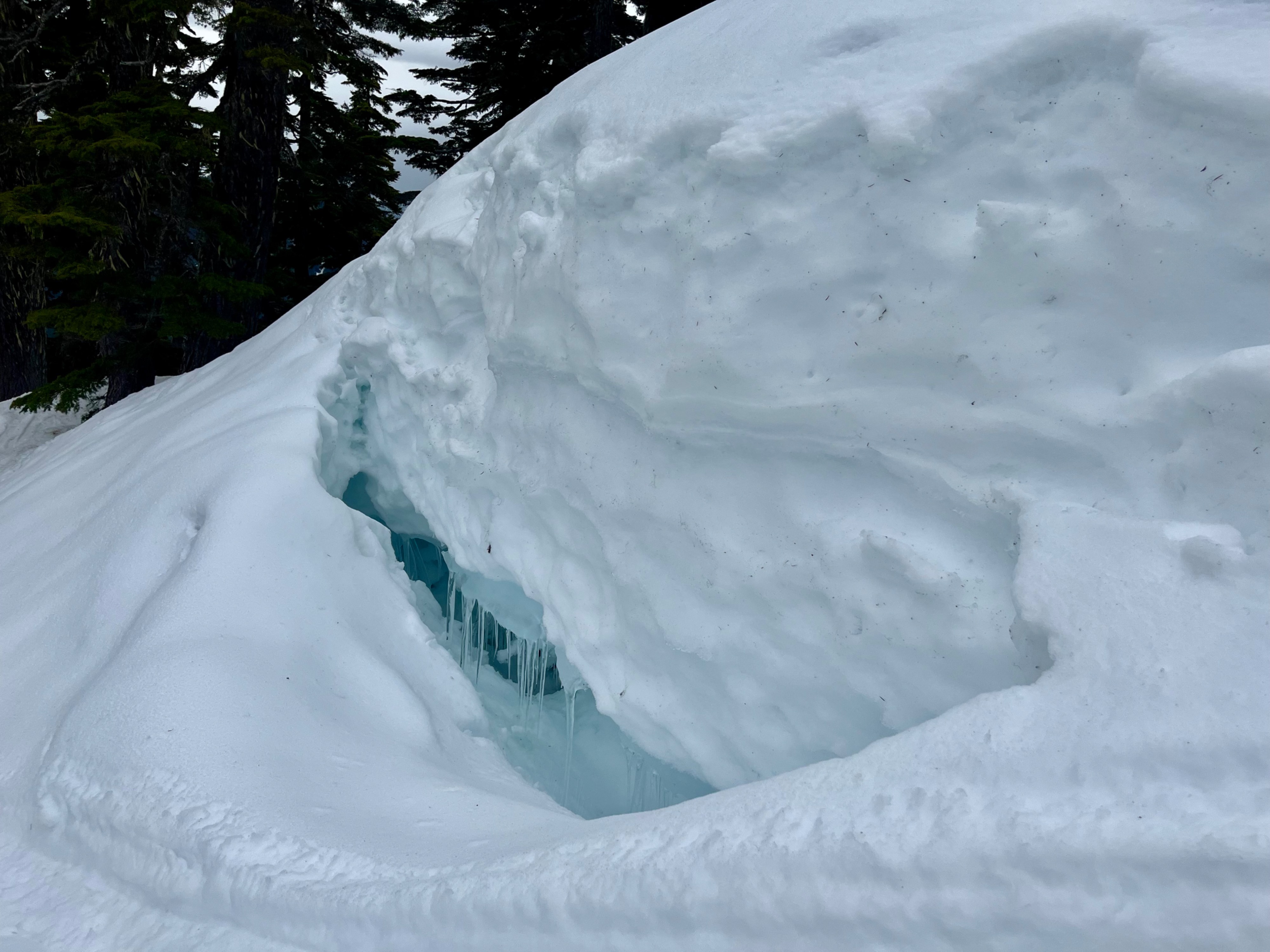
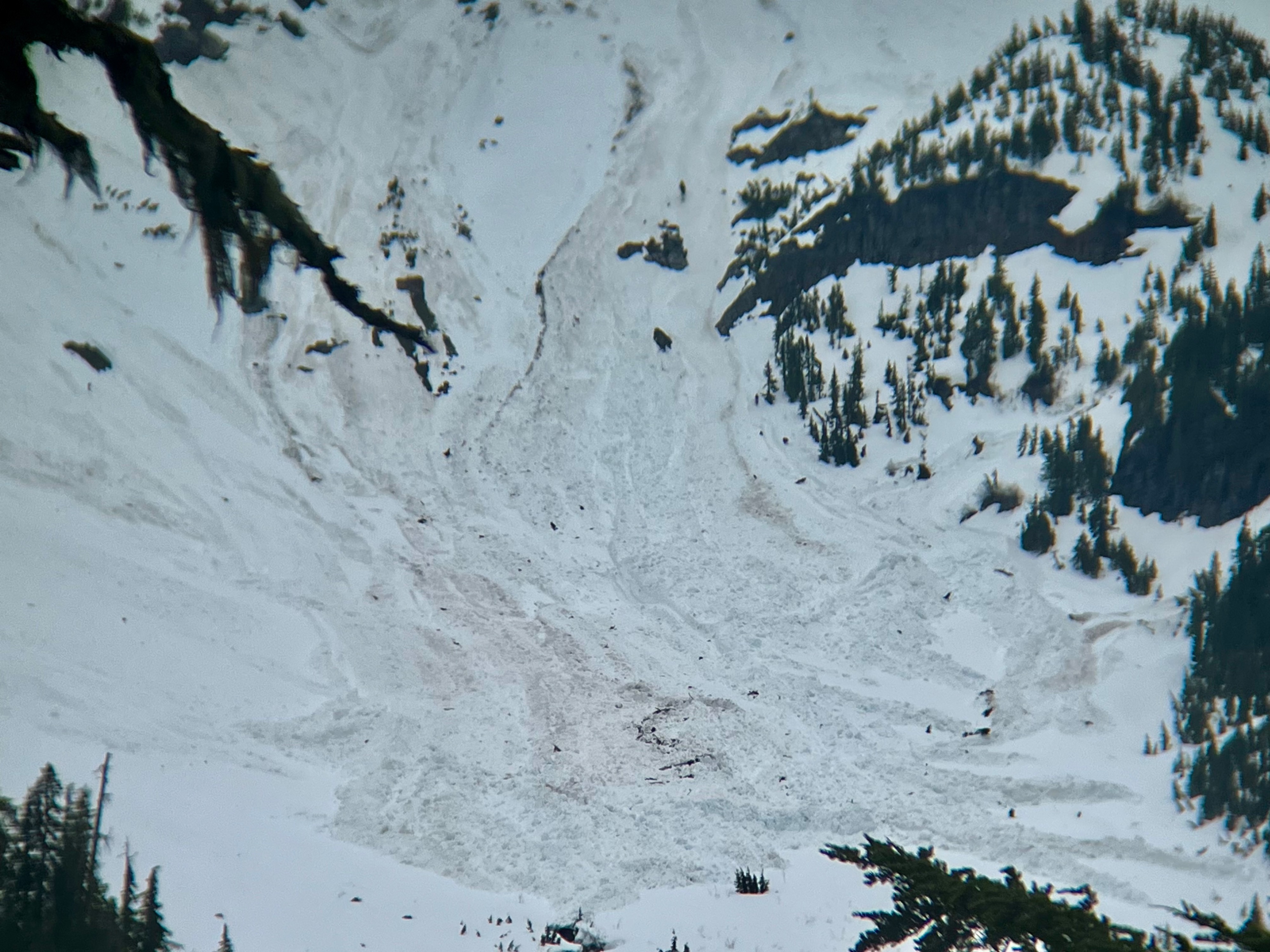
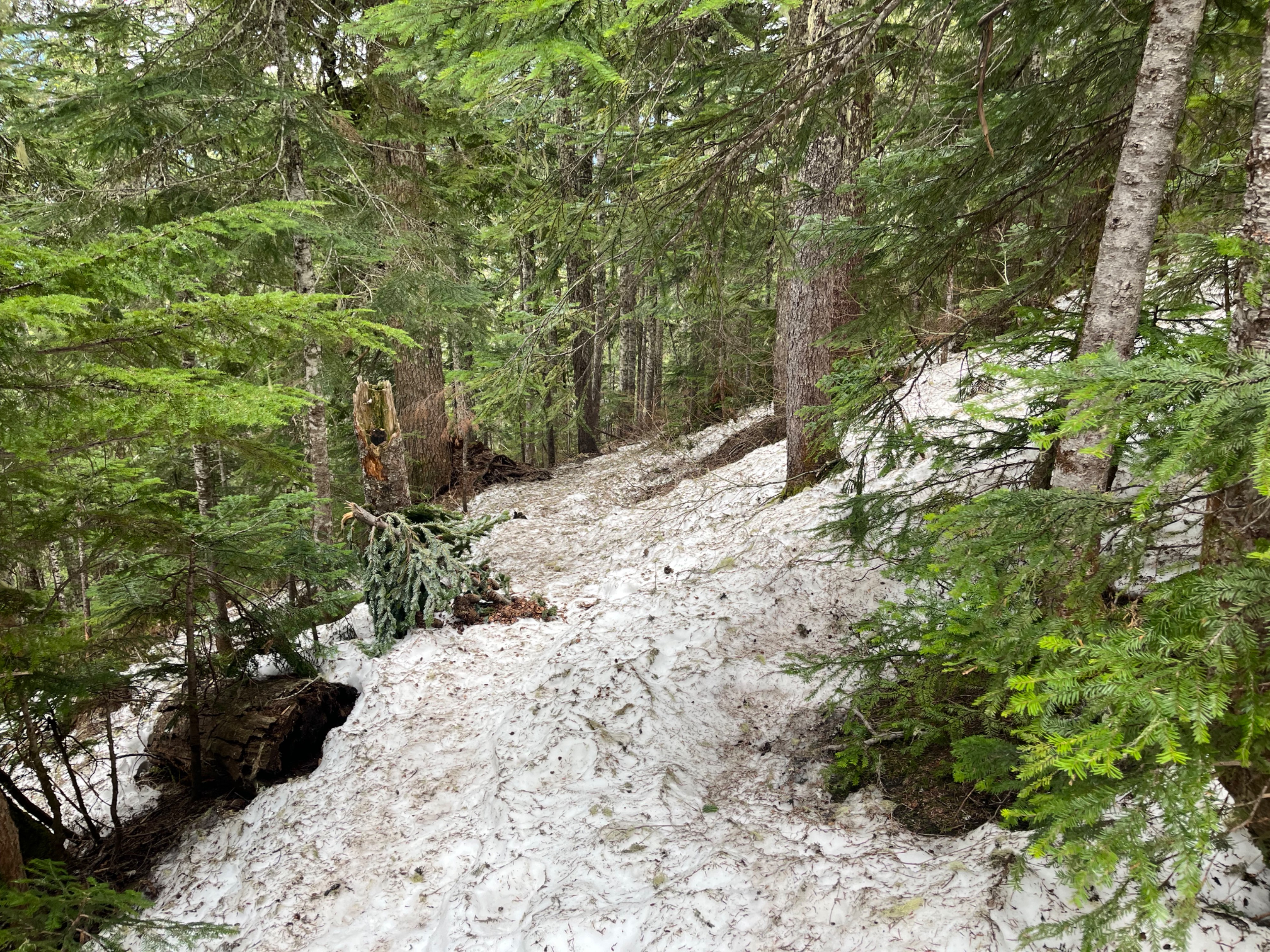
Snowlines receded about 500 vertical feet since the atmospheric river ended. We were now on foot, with no signs of snow until almost 3500ft. This was an abrupt change, given that snowlines were fairly consistent at a little below 3000ft for a majority of the winter. This is the first time it truly felt like spring snow out there. Glide cracks are open on many steep slopes and snow at middle elevations, as far down as I dug, was melt forms. Even to the highest elevations we viewed, at about 7000ft, we couldn't see any recent signs of dry snow or any snow clinging to rocks.
See avalanchesWeather
- Cloud Cover
- overcast
- Wind Loading
- none
- Snow Avail For Transport
- none
Very light early morning rain showers backed off by 8. Light-moderate rain began at 2:30pm. Moderate wind was blowing along ridgelines, and as the afternoon showers approached a light breeze was present at lower elevations amongst trees. Temperatures were well above freezing.
Snowpack
Snowlines are rapidly receding and snow is beginning the transition to a spring snowpack. A semi-supportable crust made ski travel reasonable. Skis sat on top, whereas feet sank from 6-18" deep. A 1-2" surface layer softened during the day. All snow layers in a pit we dug were moist, and consisted of large-grained melt forms. A few harder crust layers were present near the bottom of the pit, from about 2 feet deep.
The other obvious layer of note was the distinct difference between the April Fool's snowfall, which had consolidated to about 6" at the surface, sitting over the late March atmospheric river layer. Although both layers were large-grained melt forms, the April Fools layer wasn't as well transitioned and snow was much fresher-looking. It also made for sticky skiing.
Avalanche
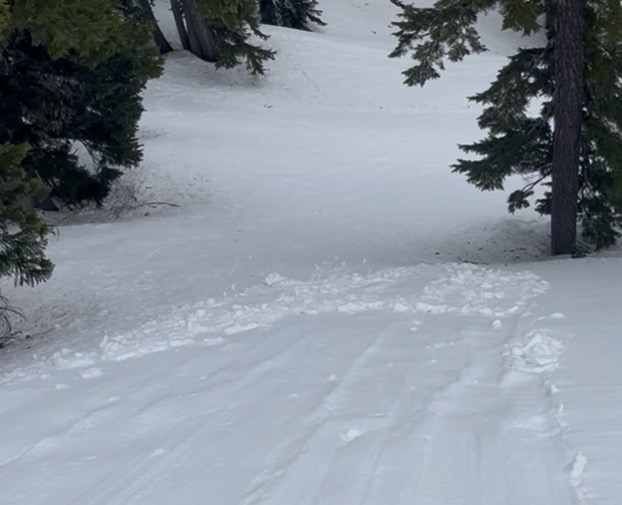
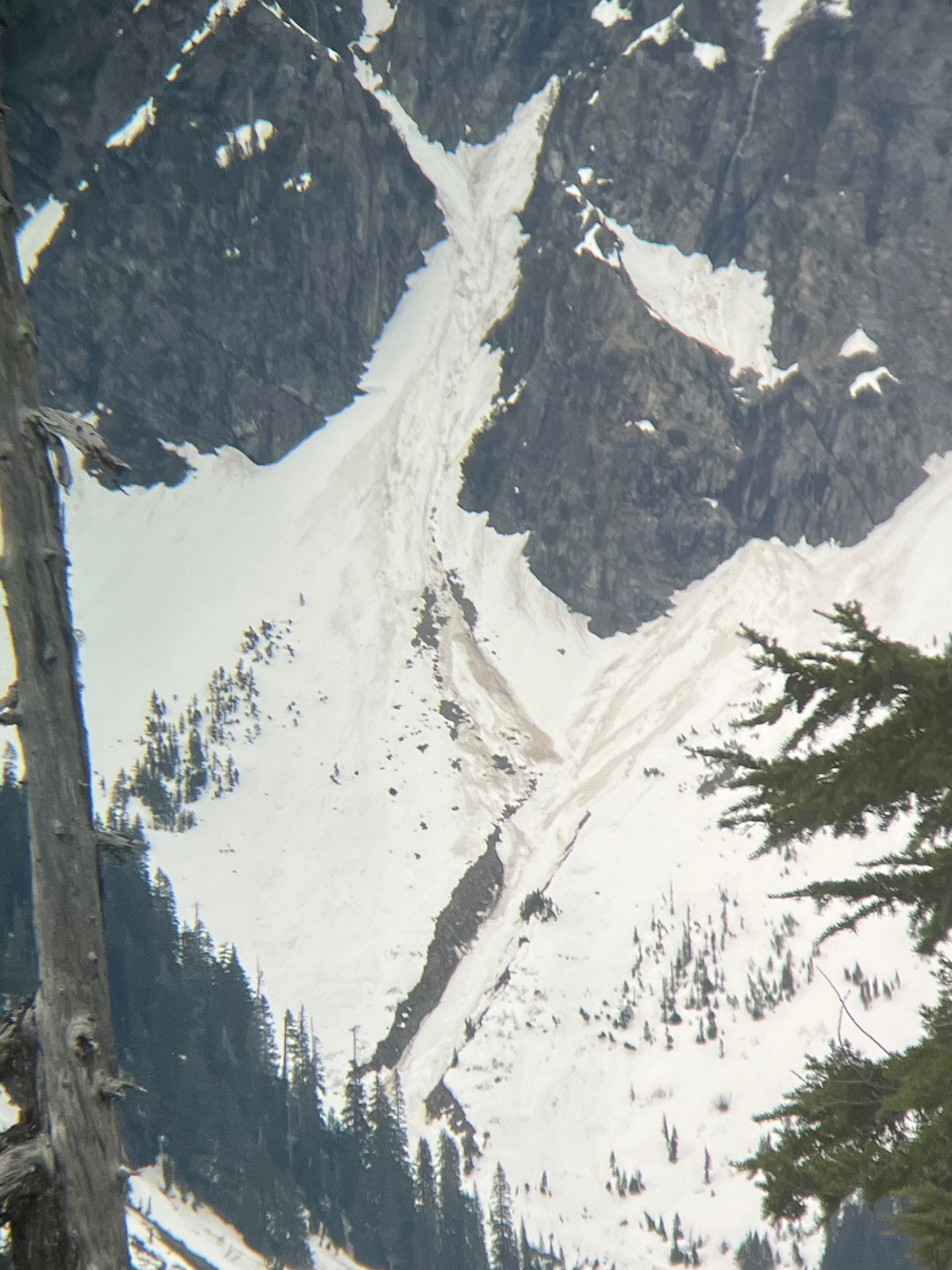
Very small and shallow wet loose avalanches were initiated in the day's softened surface layer of melt forms- about 5cm, or 2". With flat light it was hard to see if there were any natural avalanches that had happened in the last few days. A few distant loose avalanches up to D1.5 had likely occurred sometime in the prior 4 days.