
Quick report
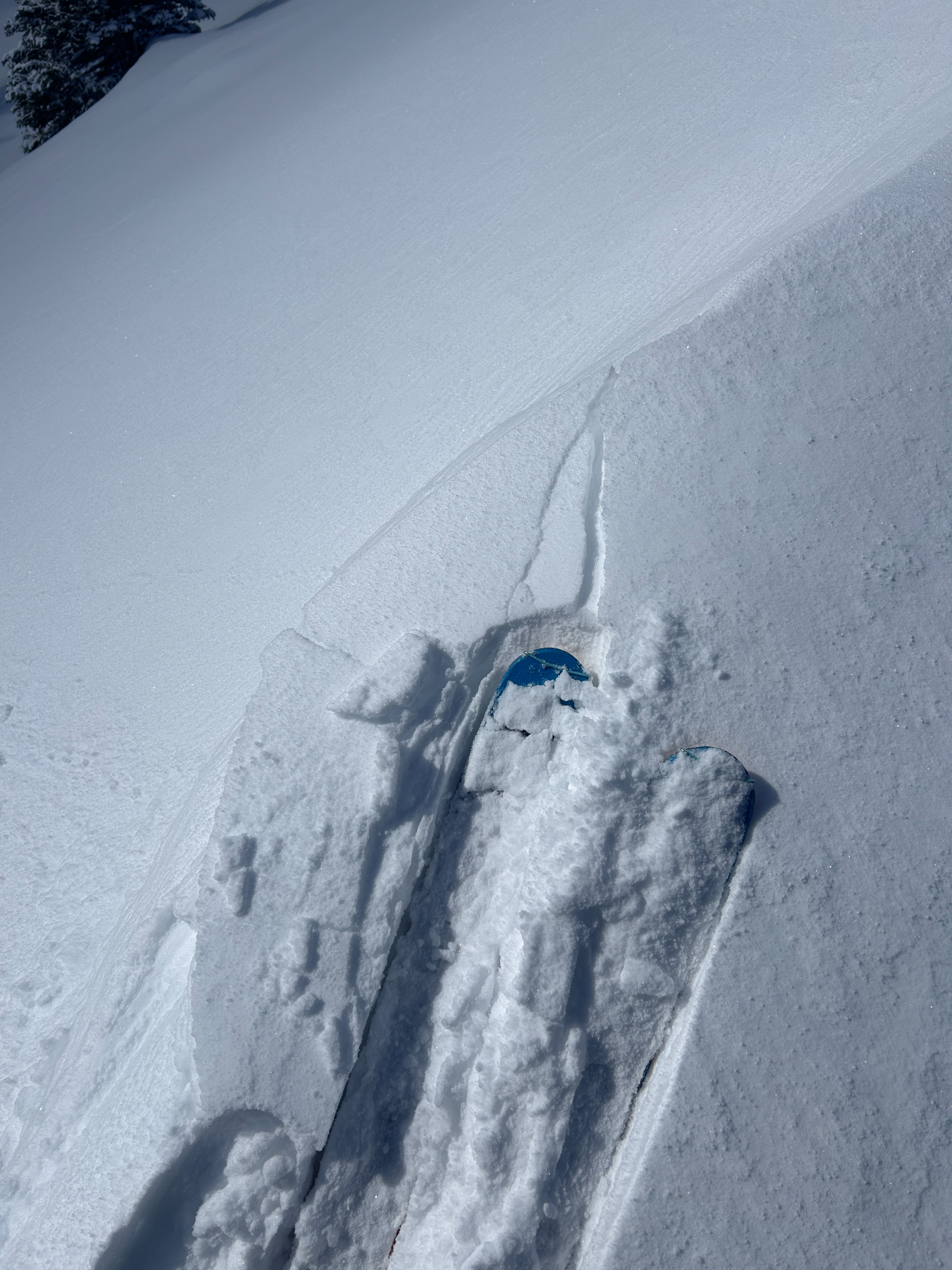
- Cracking
- isolated
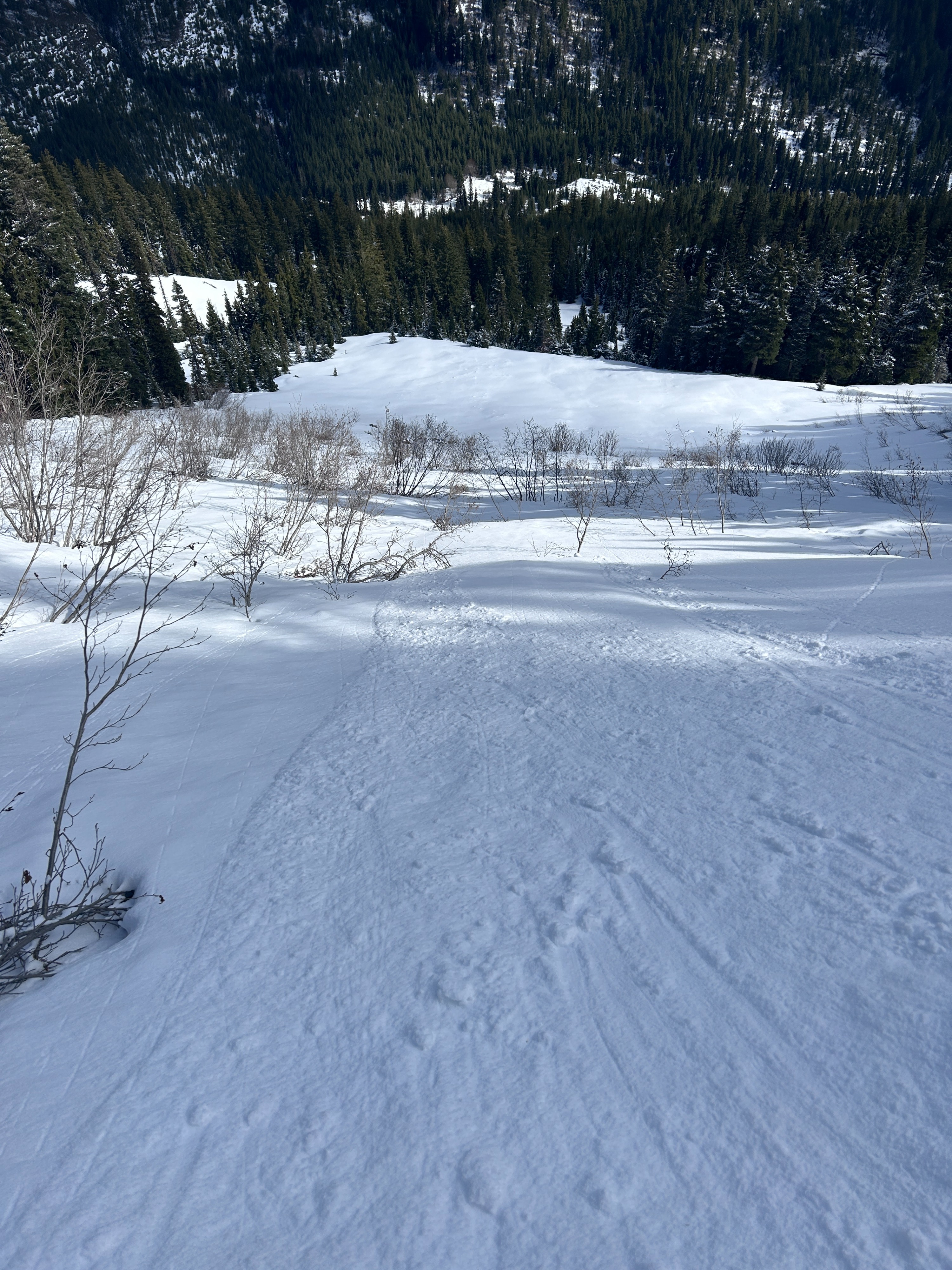
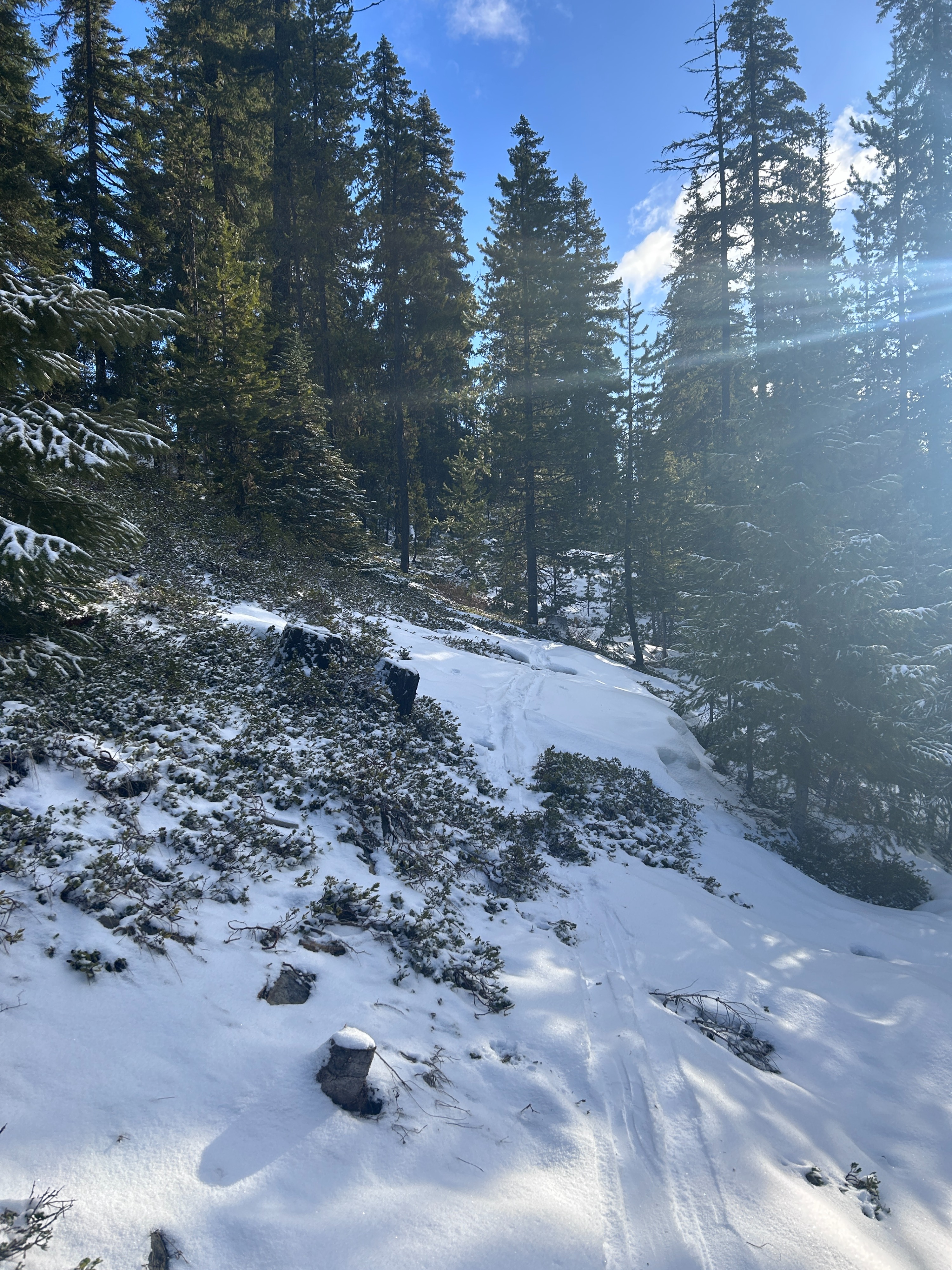
Was I a fool for skiing Fools Day Peak? At times it felt like it. The combination of extremely minimal coverage with unsupportable surfaces by the afternoon at lower elevations made for some pretty tricky travel in and out. The terrain in between was better, but the crusts underneath recently fallen snow are quite uneven and slick. Alas, it was still a good information gathering day, and confirmed some suspicions that more snow had recently fallen in the Salmon La Sac than what was being reported by weather stations. There were a variety of avalanche problems in the terrain, but nothing big or too likely.
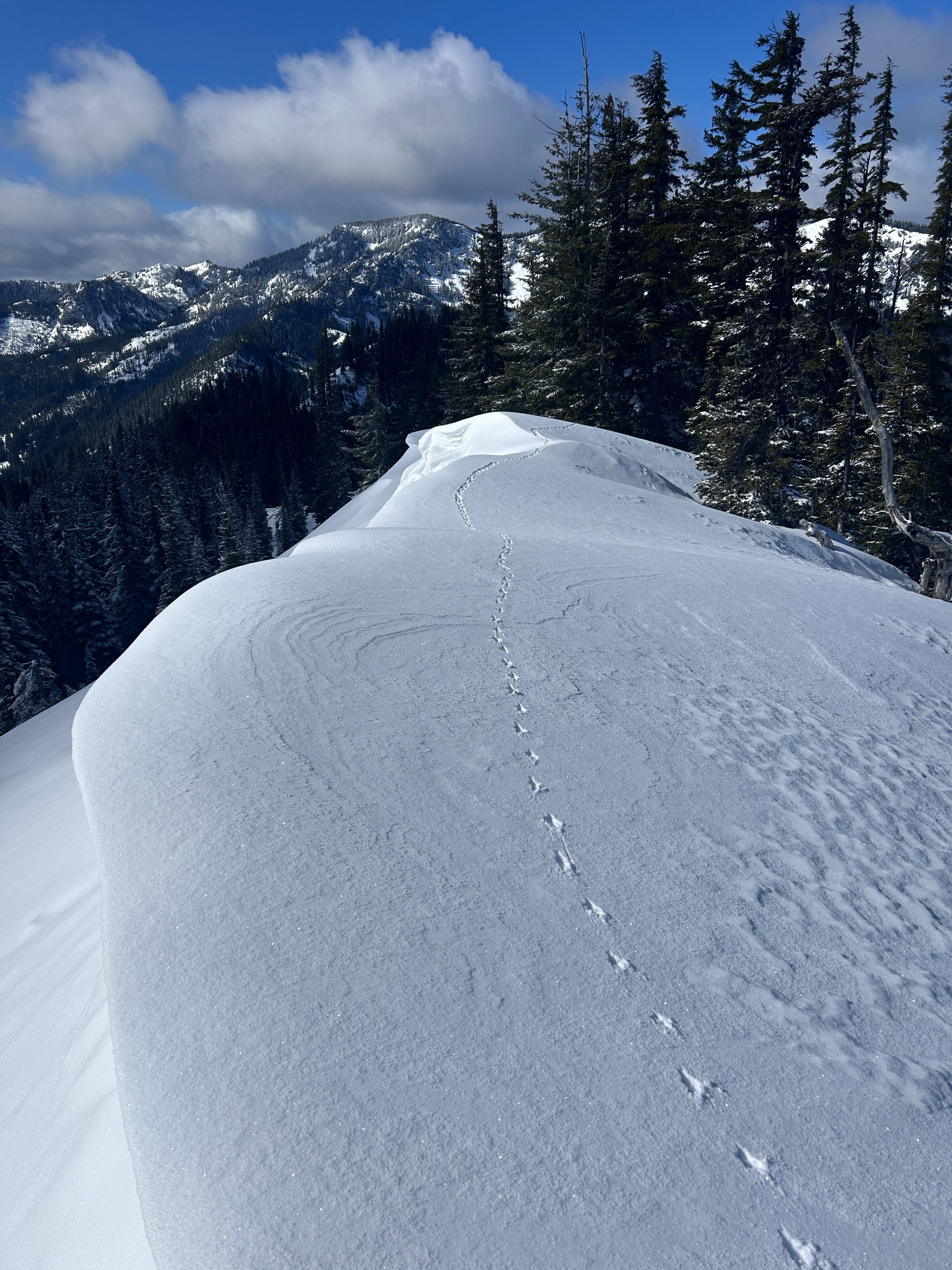
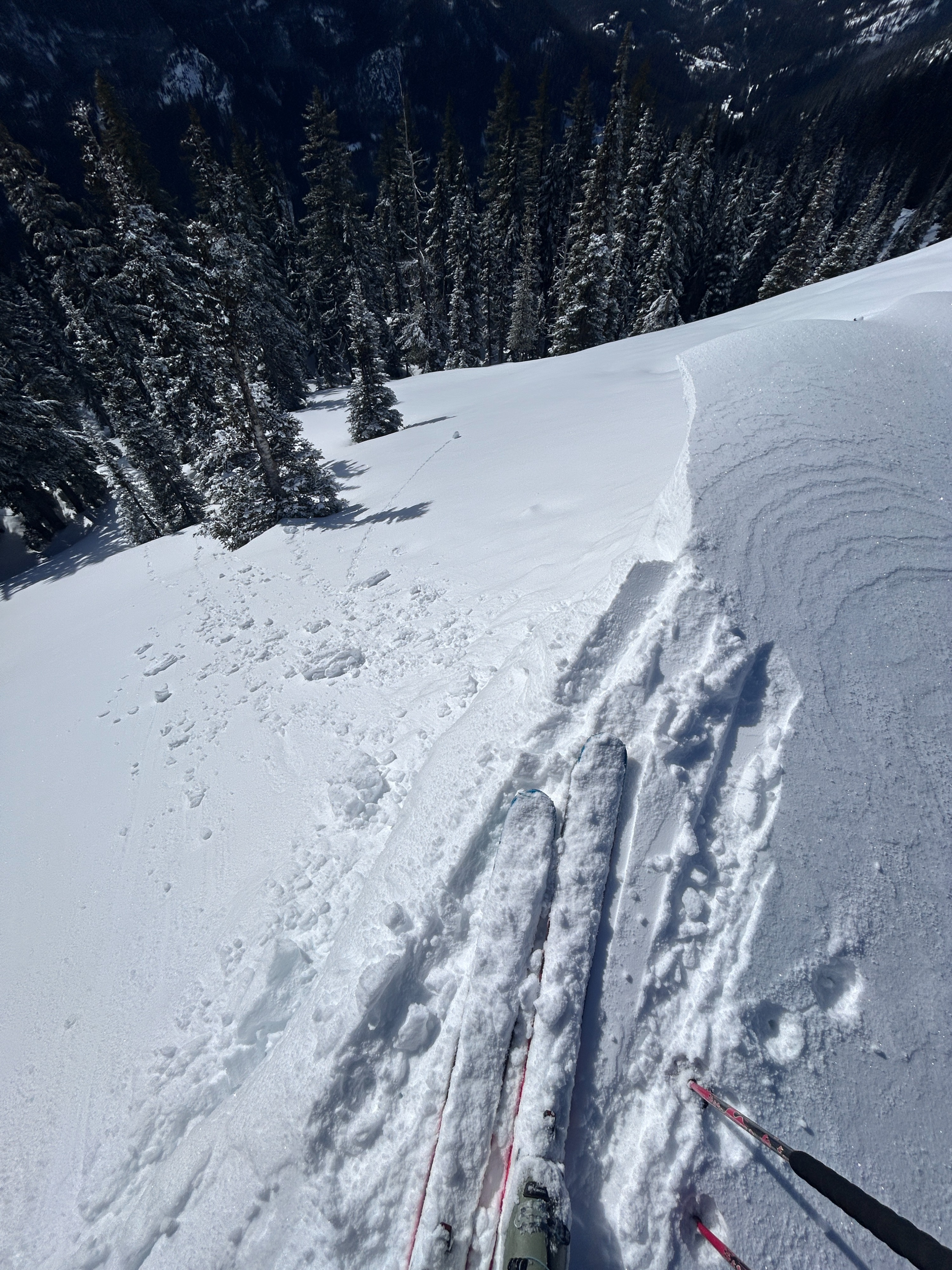
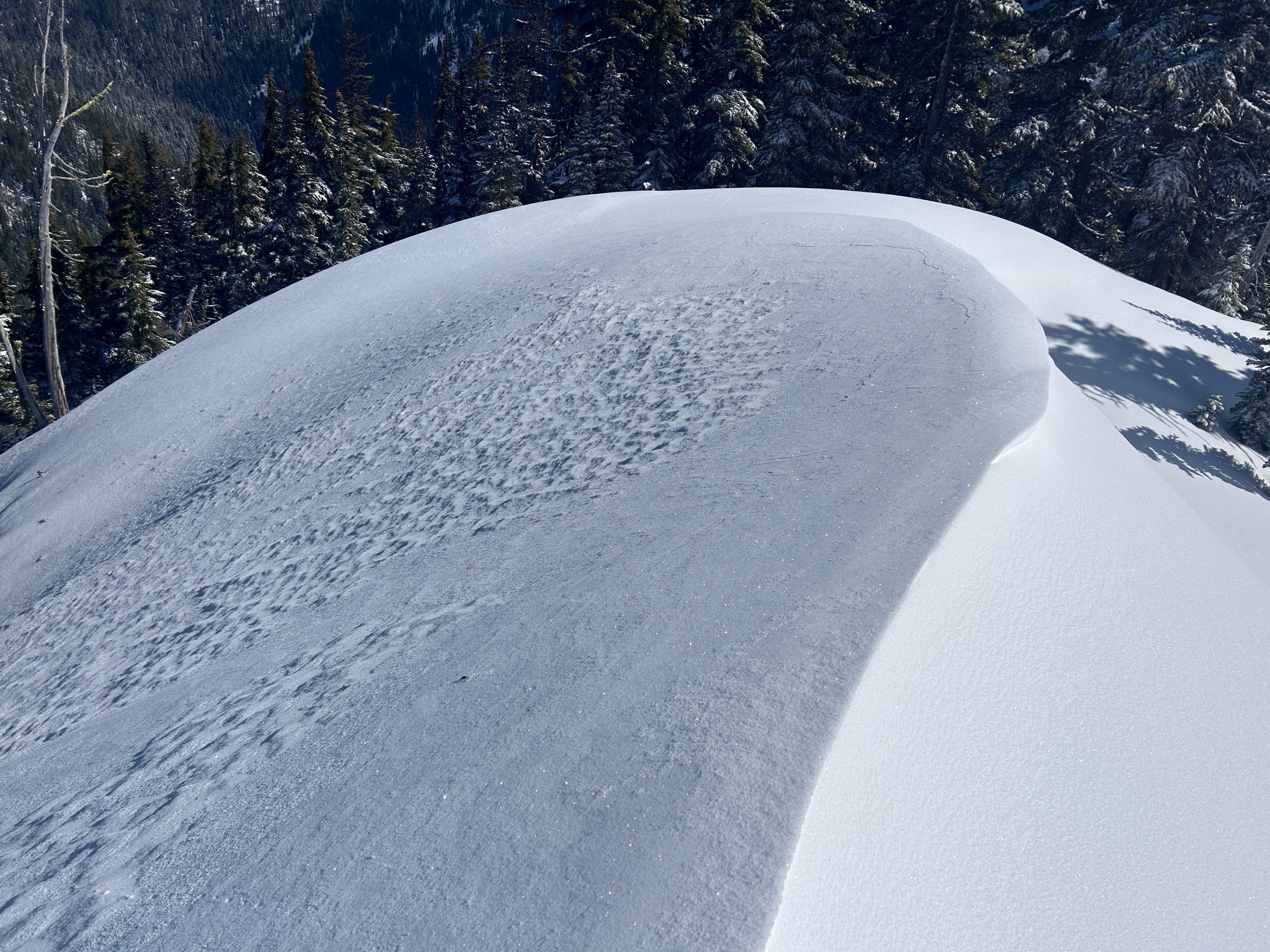
I triggered very stubborn cracks in some wind loaded snow along the summit ridgeline of Fools Day Peak. I was also able to easily trigger dry loose sluffing on my descent. These sluffs ran on a crust below. I observed the beginnings of roller balls in softening snow by the afternoon, but did not see any wet loose action.Weather
- Air Temp
- 28-54
- Cloud Cover
- few
- Wind Loading
- previous
- Recent Snowfall
- 10
- Snow Avail For Transport
- small smounts
Popcorn cumulus clouds littered the sky and blotted out the sun occasionally throughout the day. The morning started out chilly and was slow to warm, but warmed plenty. There was calm wind from the southeast. I observed minimal previous wind loading at the summit.
Snowpack
Lower elevations: There is little to no snow coverage on south and west aspects. Coverage is better on north and east aspects, but can be spotty at times in thick tree canopy. By the afternoon, the snow had softened and become unsupportable below 4300 ft on all aspects. I dug a pit on an east aspect at 4400 ft. The depth of this pit was 127cm (50in). I found 10cm (4in) of new snow that was a mix of graupel and dendritic snow. This sat atop a 5cm (2in) thick crust that was knife hard, and somewhat supportable. Ski penetration at this location was 6cm and boot penetration was 17cm. Below this crust was layers of previously wetted snow that has a bit more drying out to do, but was almost there. I perfromed small column tests and got a moderate sudden result directly below the crust (CT13SC down 14cm) and a hard sudden result at the interface of two layers lower down (CT23SC down 37cm).
Middle Elevations: Snow coverage is a little more guaranteed on south and west aspects at middle elevations. I dug a pit on a southeast aspect at 5200 ft. The depth of this pit was 160cm (63in). I similarly found 10cm (4in) of new snow. The crust that this sat atop was slightly thicker, and had the addition of an ice hard layer of ice right below. This made surfaces at these elevations much more supportable. Below were numerous layers of previously wetted snow, as well as another, even thicker layer of ice in the bottom portion of the snowpack. The snow below this ice layer retained some moisture, but was nearly dry. I did not perform snowpack tests in this pit, believing the surface crust to be too hard to get any results.