
Quick report
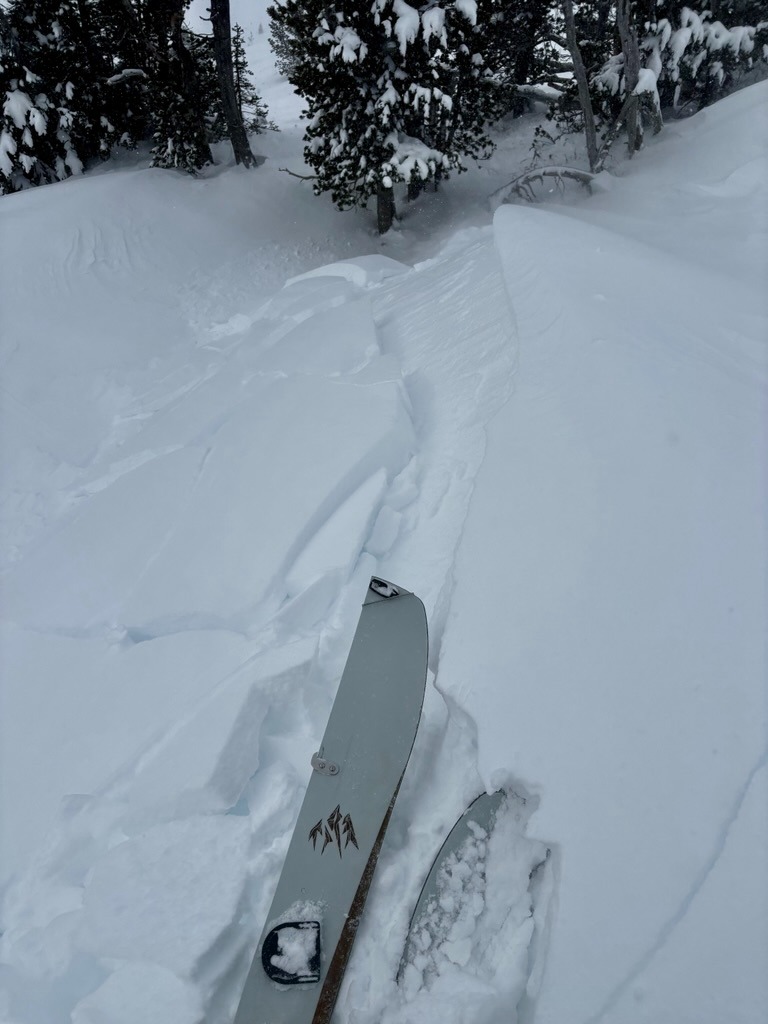
- Cracking
- specific
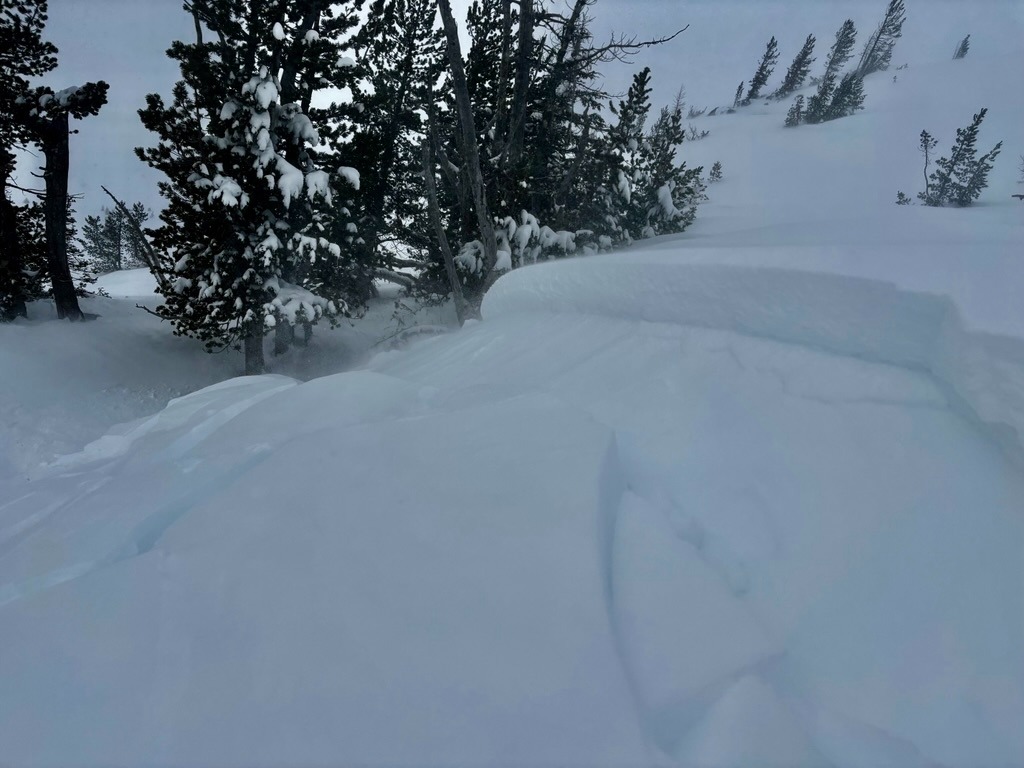
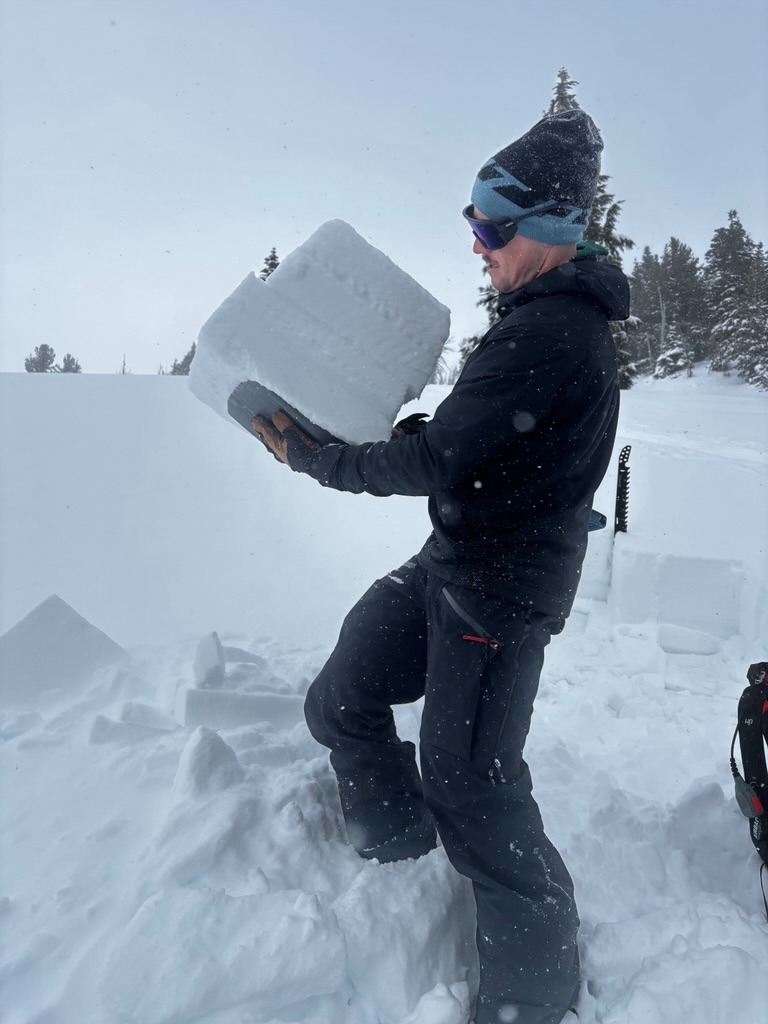
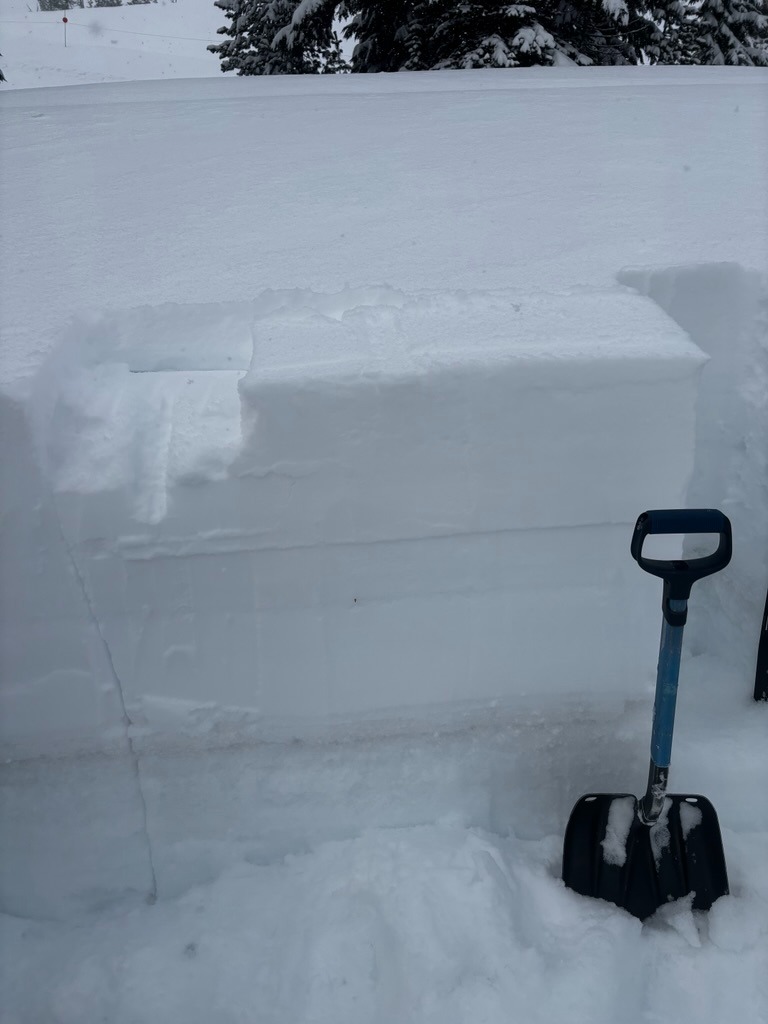
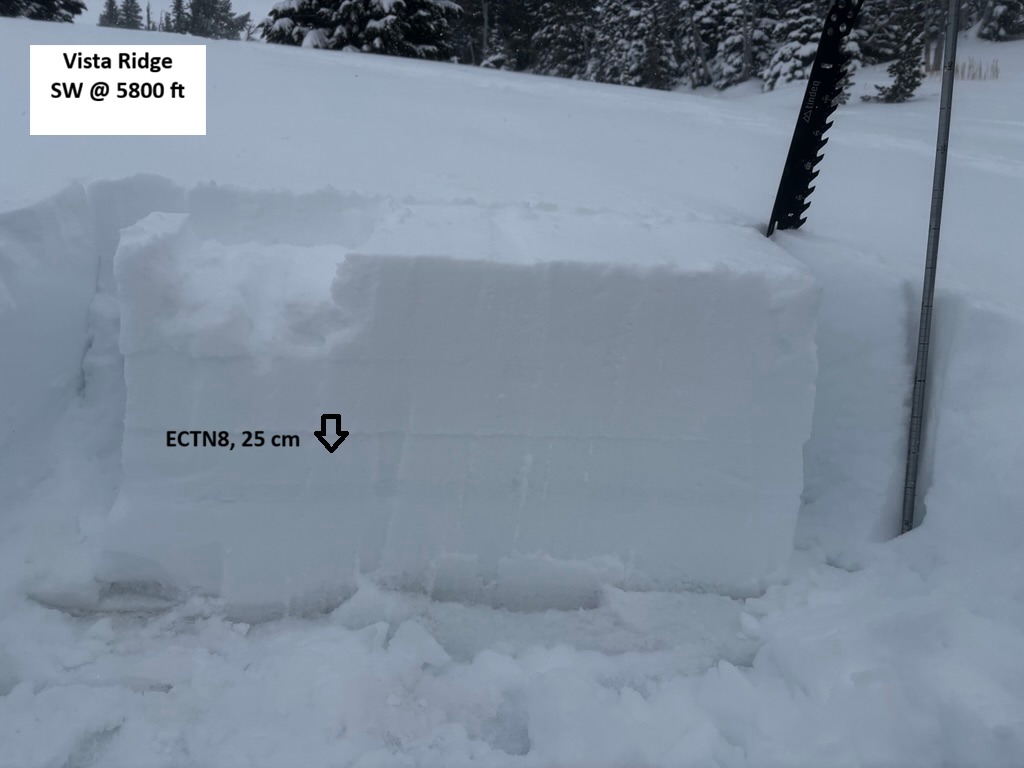
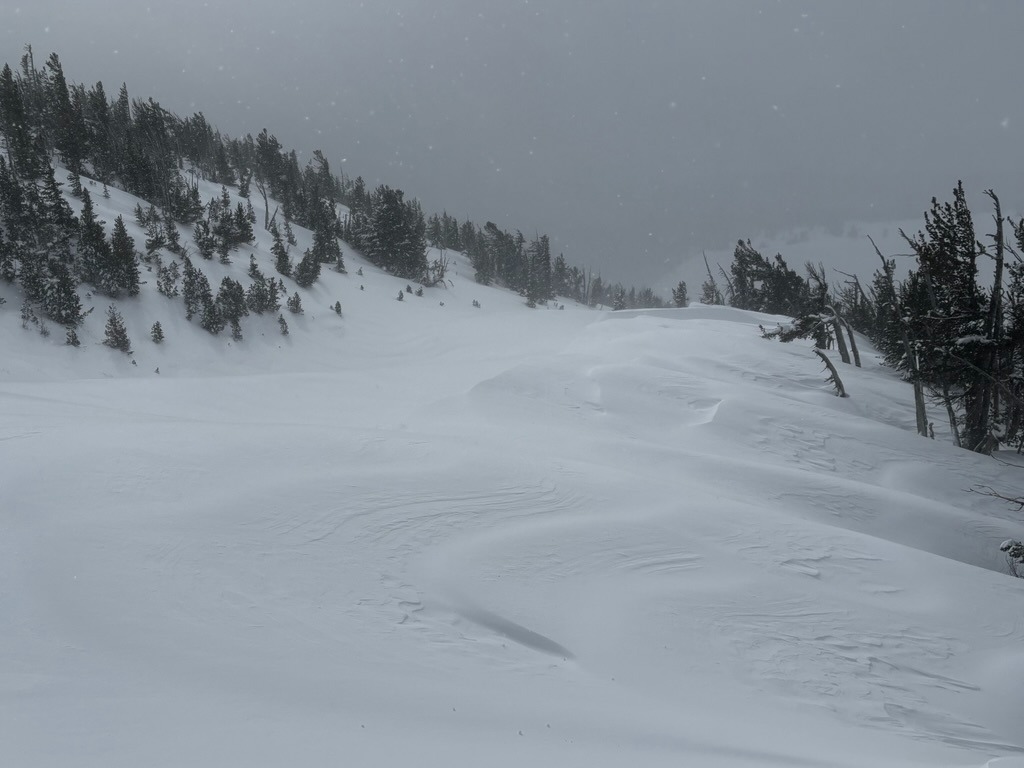
Increasing wind speeds drifted new snow accumulations into reactive slabs, ranging from soft to stiffer, in exposed terrain. These instabilities were shallow in the area I traveled. A couple of layers, approximately 12-15 inches below the surface, consistently failed in snowpack tests but did not fully propagate with longer columns. Low-density accumulations have significantly improved riding conditions.
Instability was confined to wind loaded terrain.Weather
- Air Temp
- 20s
- Cloud Cover
- broken
- Wind Loading
- moderate
- Rain Elevation
- 1600 ft
- Recent Snowfall
- 15 cm
- Snow Avail For Transport
- large amounts
Snowpack
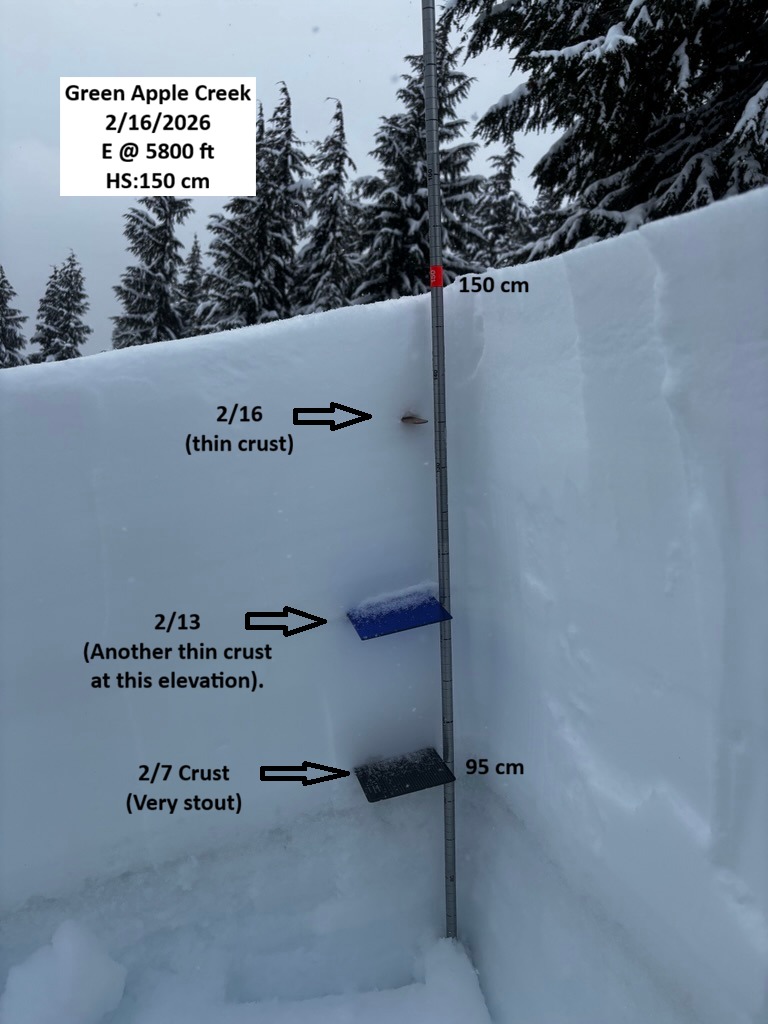
I couldn't find buried surface hoar, but I did locate a layer of preserved stellars just above the 2/13 interface that consistently failed in snowpack tests (roughly 25 cm below surface), but didn't quite propagate through the full length of longer columns. The stout 2/7 crust is easily identifiable and sits about 2 ft below the surface. The snow directly above this crust was slightly weaker, but really not that concerning on the slopes I traveled below 6000 ft. Above this interface is the 2/13, which is in the form of a thin crust around this elevation. There is a new heat crust from yesterdays warming that was buried today (2/16).