
Quick report
It was snowing and blowing at Copper Mountain today! All exposed windward slopes (SW, S, SE) were wind-scoured down to a stout melt-freeze/rain crust, while leeward (W, NW, N, NE, E) slopes were actively loading with fresh snow.
- We found unstable results on buried weak snow ~2.5 ft down
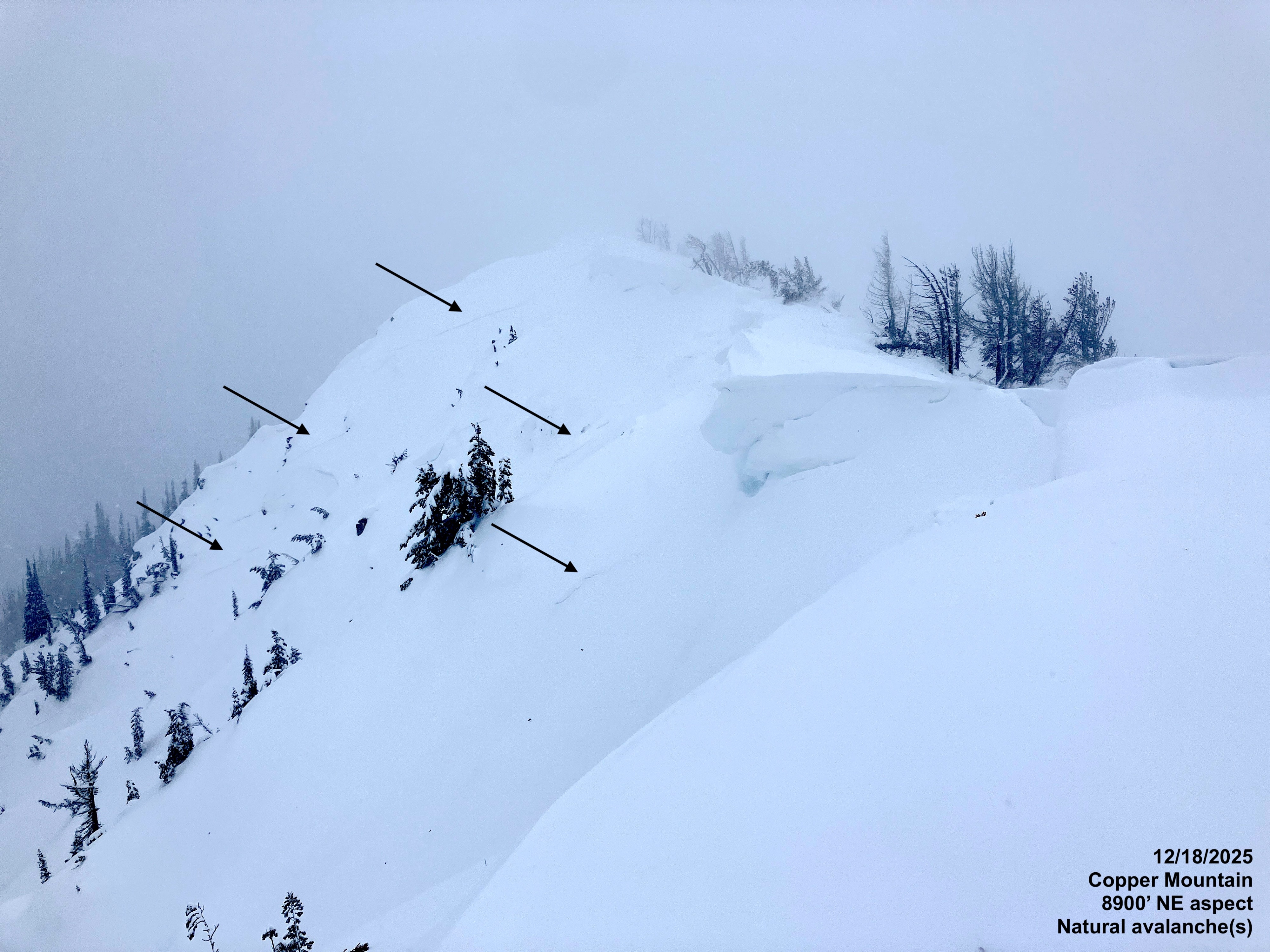
- We observed one (or a few?) natural avalanche(s) that appeared to have failed yesterday and appeared to be thin wind slabs.
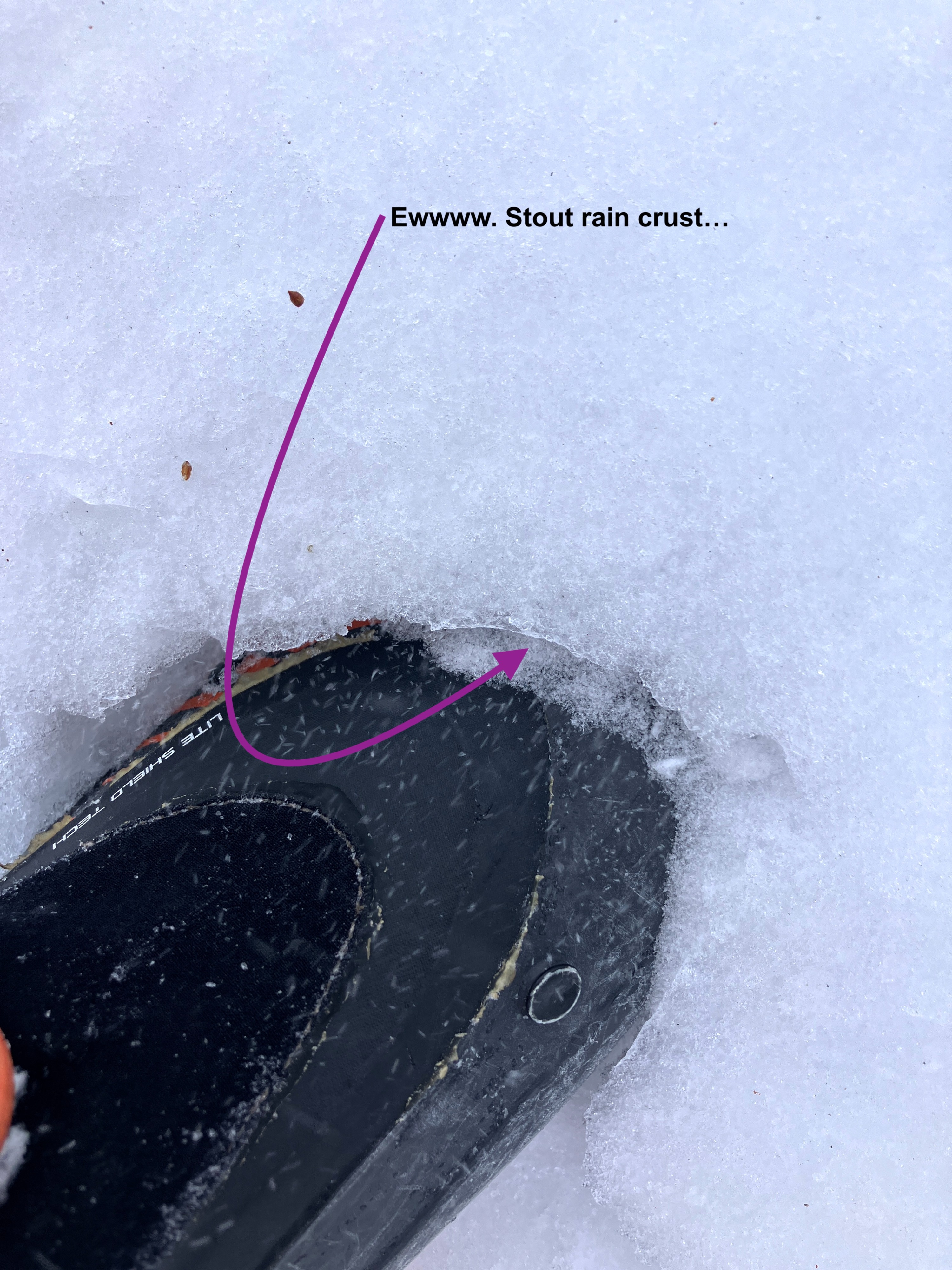
- We found a stout, mostly-supportable rain crust that extended all the way to the summit (8900 ft)
- Travel below 8000 ft was still challenging with much down timber and even bare spots... buyer beware!
Weather
- Air Temp
- 20 to 26
- Cloud Cover
- obscured
- Wind Loading
- moderate
- Rain Elevation
- 8900'+
- Recent Snowfall
- 10
- Snow Avail For Transport
- moderate amounts
Light snow in the morning intensifying around noon with slightly warming temperatures throughout the day.
Snowpack
Rain crust: We found stout supportable rain crusts exist all the way to the summit of Copper Mountain (8900') and were observed on all aspects travelled. This stiff crust is thinner and more breakable below 8000', and up to 2" (5cm) thick above 8,000'.
Wind slab: We observed high intensity snowfall and with sustained moderate SW winds actively building fresh wind slabs in leeward terrain. The avalanche(s) observed at the top of Copper appeared to be a wind slab avalanche triggered from cornice fall. Active drifting along the ridgeline was quickly thickening the slabs on N, NE, and E aspects.
Persistent Slab: We found a prominent persistent weak layer buried ~2.5 ft (70cm) on a W aspect at 8300' (and a couple others nearer to the surface). This deeper layer of sugary facets had unstable results in stability tests (ECTP17 x2). We identified the same buried weak layer with pole probing and small hand pits on NW, N, and NE aspects above 8000'. Below 8000', the snowpack is significantly thinner, generally moist to wet, and seems set up for locking up into a cohesive block.
Avalanche
One (or possibly a few) small natural wind-slab avalanche observed on the NE aspect off the summit of Copper Mountain that appeared to have failed yesterday. The crowns were actively re-loading with wind redistribution, so we're unsure if they're connected or multiple small pockets.