
Quick report
- Cracking
- isolated
- Collapsing
- specific
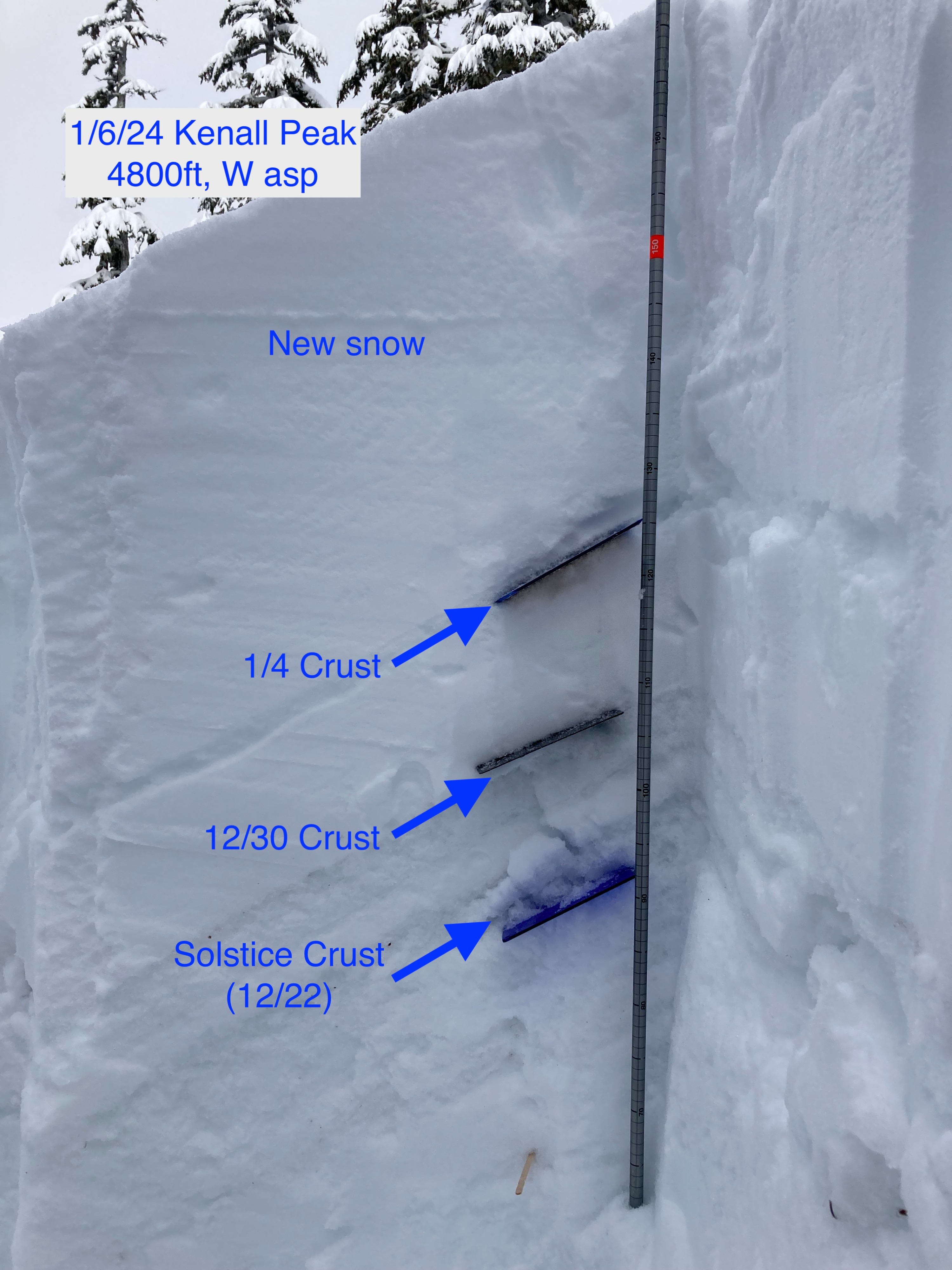
It was a beautiful, powdery day in the mountains today! There was quite a bit of storm snow (about 18in/45cm at 4800') from the past 48 hours sitting over the 1/4 crust. The new snow was low density compared to what we've been used to in recent times, and the potential for wind transport was evident even with today's light winds.
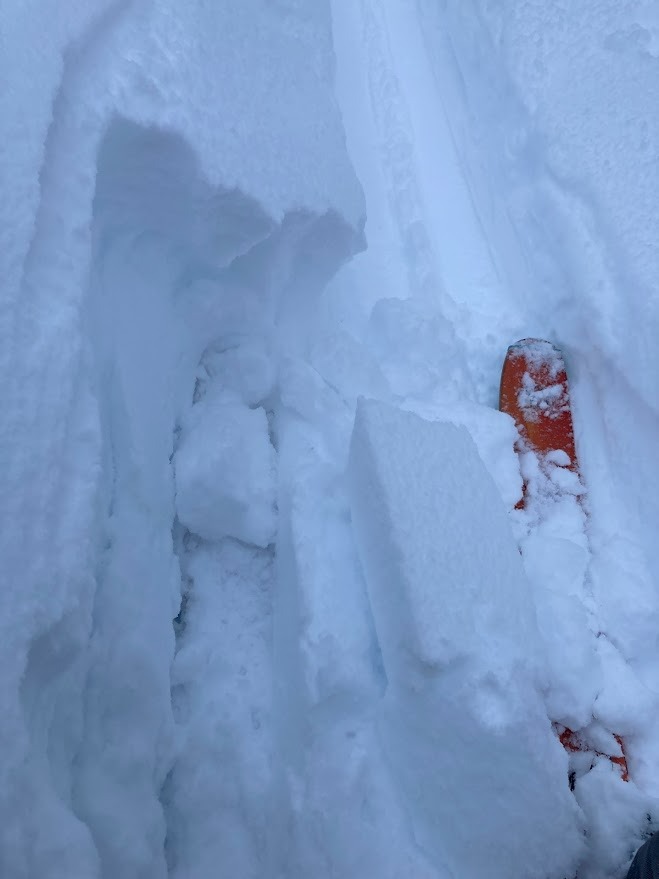
Stomping on test slopes led to collapsing underfoot, and sluffing, but no cohesive slabs or propogation. Our snow profiles and column tests showed a more hazardous picture however - see below for more details. Although the snow felt stable underfoot, the weaknesses in the snowpack are now buried deeply enough to be difficult to observe while traveling, and would cause large consequence if they were triggered. All these factors kept us traveling in low angle, well supported terrain, and avoiding any exposed terrain where wind slabs were likely to lurk.
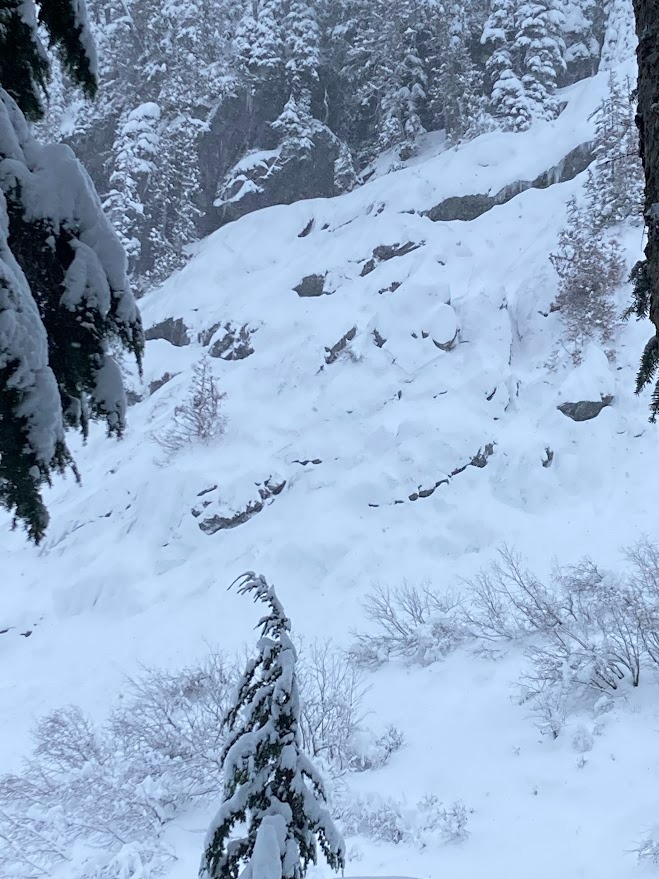
We observed one D1 storm slab at 3800', W aspect, in steep rocky terrain. With clearing later in the day, we did not observe any evidence of avalanches on neighboring slopes which were large enough for us to see from a distance.
While the new snow has certainly improved travel conditions, there are still many open creeks and tricky branches lurking just below the surface of the snow.
Subtle collapsing when breaking trail, and storm snow cracked easily in small, soft chunks around skis.Weather
- Air Temp
- High 20s - Low 30s
- Cloud Cover
- broken
- Wind Loading
- light
- Rain Elevation
- N/A
- Recent Snowfall
- 40cm
- Snow Avail For Transport
- large amounts
Periods of moderate and heavy snowfall until around 11am, after which some blue sky and patchy sunshine broke through the clouds. Lights winds, with some gusts. Some intermittent snow showers over the next two hours. We left the field at around 1.
Snowpack
Stability tests performed at 4800', W aspect, showed reactivity in the uppermost crust, and in the mid-December crust complex. An ECT showed potential for propogation on both of these layers. Consistent with other recent observations, we found plenty of weak, sugar-like snow within, above, and below the mid-December crust complex.