
Quick report
- Cracking
- isolated
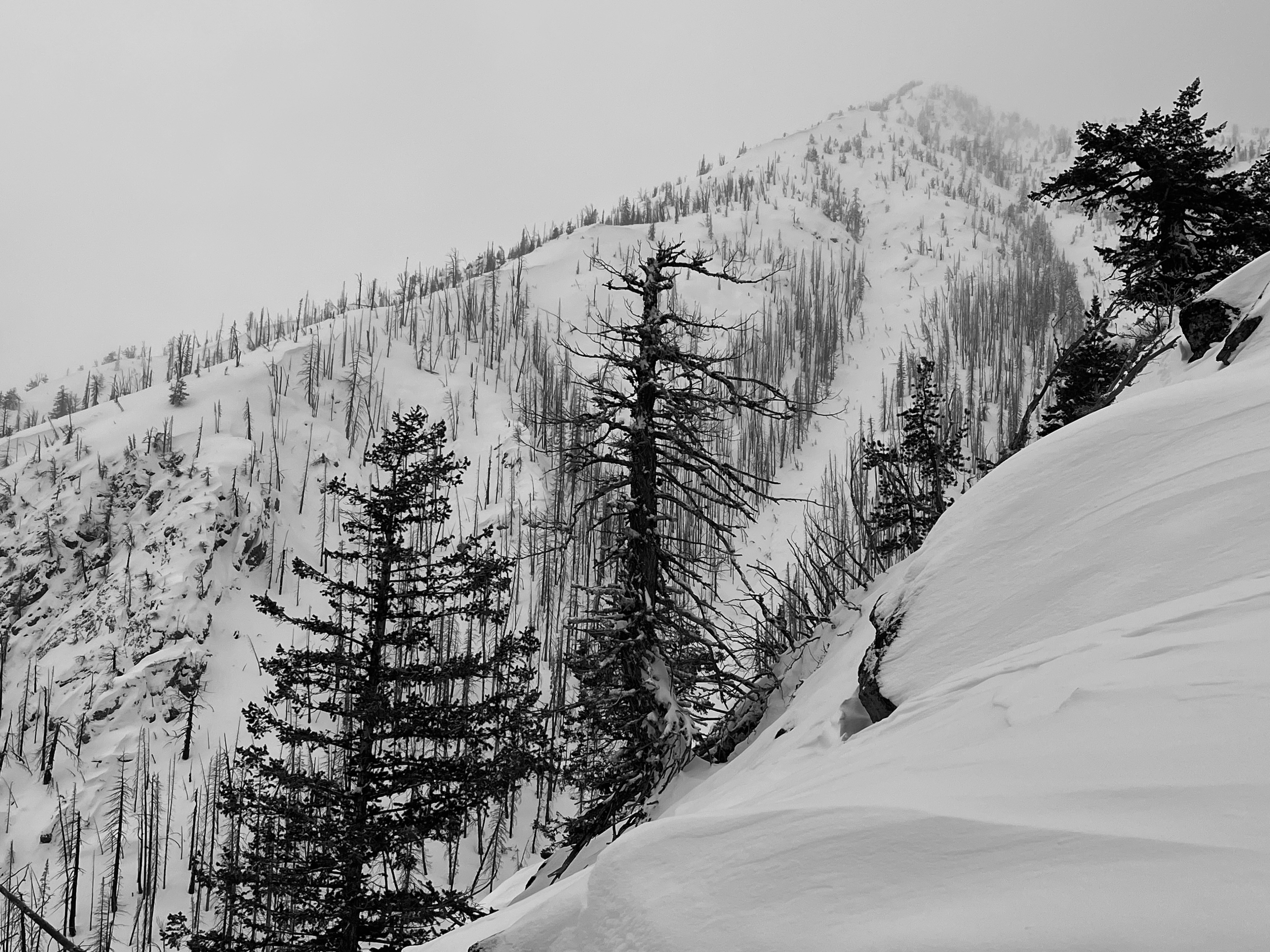
Overall, excellent ski quality and stability in wind-sheltered, mid-elevation terrain of the upper Twisp River. The lower elevations retain some character. Expect that much variability exists in the previously wind-swept alpine.
We experienced few signs of instability in the field today. However, with previous wind effect, we probably would have avoided larger alpine features and starting zones. We found some dry loose reactivity with ski cuts in steep, open, wind-sheltered terrain.Weather
- Air Temp
- High 20's
- Cloud Cover
- broken
- Wind Loading
- previous
- Recent Snowfall
- 30cm
- Snow Avail For Transport
- large amounts
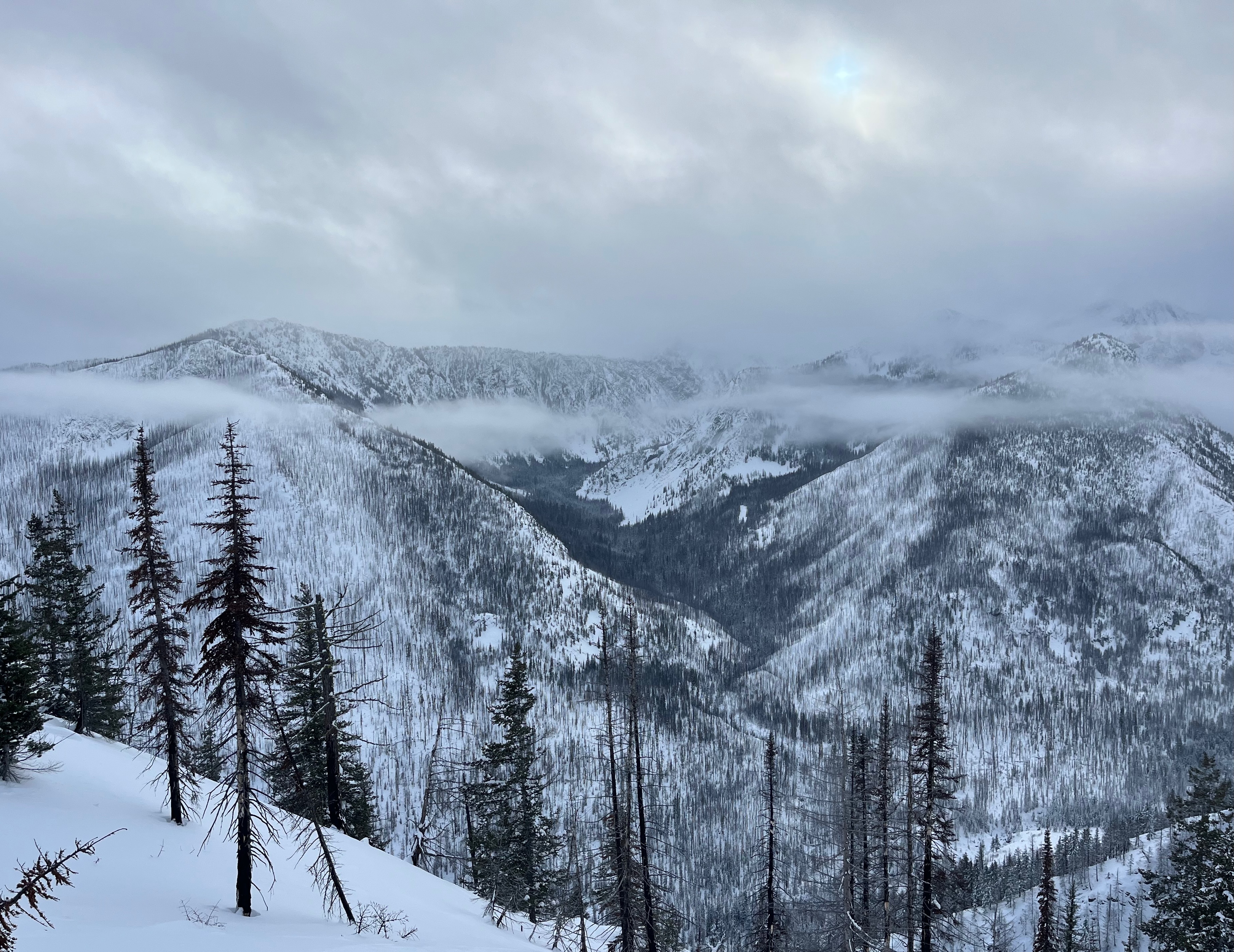
Broken to obscured skies AM with bands of mid-level fog. Light snowfall and overcast to obscured PM. The mountain was briefly wrapped in a strange freezing mist, briefly in the early PM, but snow quality was not effected. Calm winds throughout the day.
Snowpack
A very weak, very skiable zipper crust exists in the Twisp River up to ~ 3800' or so. At these elevations near the valley bottom, snow surfaces were moist and effected by tree drip today. A bit uninspiring at road level, but quality improved quickly with elevation. We probed ~ 70cm at the road @ 3100'.
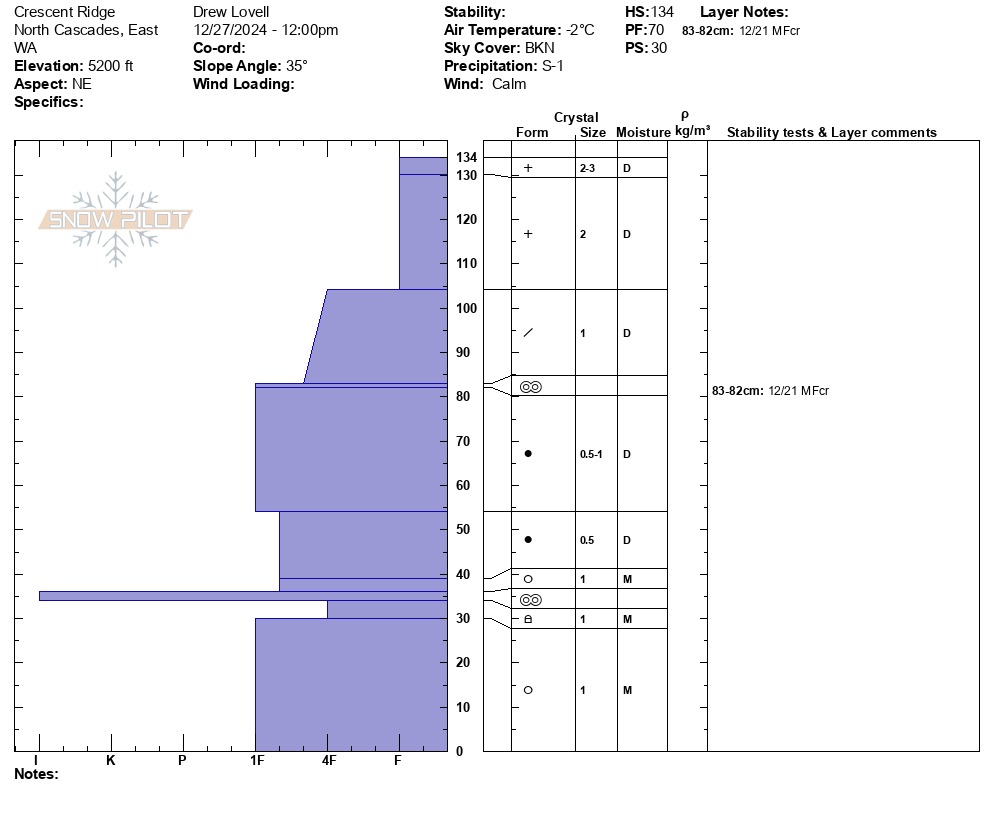
In a profile at 5200' on a NE aspect, we found a total snow depth of ~135cm, with the Solstice Crust down ~ 50cm. Here, the crust was very weak, brittle, not boot supportable, and not noticeable on skis. We found a good bond between the crust and both underlying / overlying snow. The 12/7 crust was down ~100cm in this location, consisting of a stout 2cm thick ice formation and supporting a good bond with overlying snow. Lingering rounding facets beneath the crust were moist and did not seem problematic. Stabiity tests were unremarkable.
Overall, the snowpack structure seems perhaps more favorable than the norm, for the watershed. We found no noteworthy persistent grain types or interfaces of concern today, and the typical house-of-cards, with stacks of alternating crusts and facets, was notably absent from the high quality snow of the mid- and upper-snowpack.