
Quick report
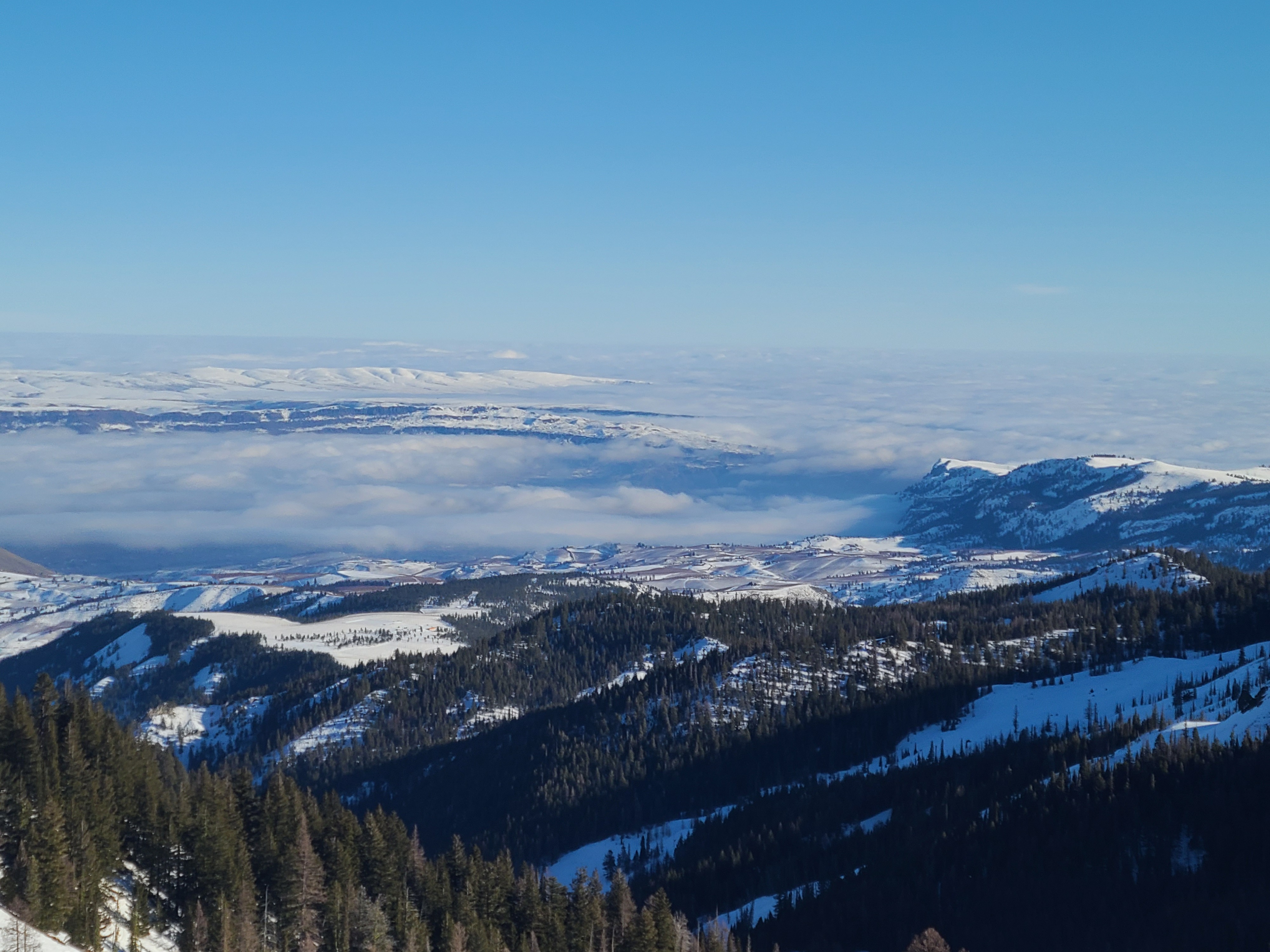
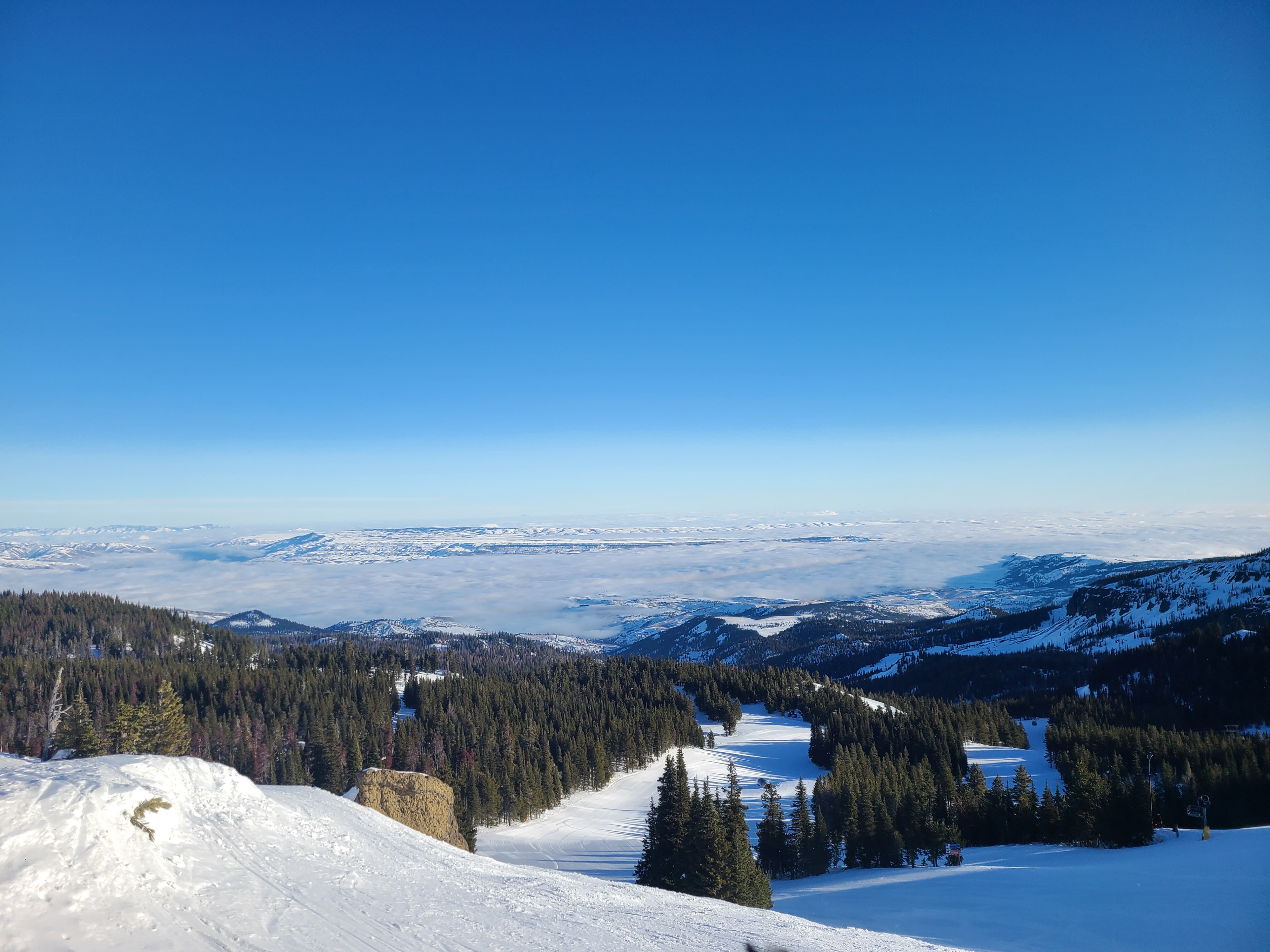
Icy surfaces, breakable crusts, and frozen coral reef in the trees were my primary hazards today. It was nice to get up above the inversion clouds in the morning, and the winds began to break up the low cloud deck by midday. The strong winds kept surfaces frozen during the morning, even on sunny slopes. While the winds were strong, minimal snow was available for transport to form fresh wind slabs, so the resulting drifting was just the occasional surface snow tornado.
Overall, I found minimal avalanche concerns. The 1/10 interface seems to be strengthening, and it just doesn't have enough of an overlaying, cohesive slab to be a problem at this time. The weakening recent snow with surface hoar over a melt-freeze crust on the surface has the potential to be a future problem when we finally get back into a stormy winter weather pattern.
Weather
- Cloud Cover
- few
- Snow Avail For Transport
- none
The inversion clouds in the valley began to mix out during the day. Above the inversion, just a few scattered clouds dotted the skies. The most impactful weather of the day was the strong westerly winds. While there wasn't enough soft snow to form actual wind slabs, the winds were strong enough to create spin drift across surfaces
Snowpack
Snow surfaces stayed cold and frozen, even on sunny aspects during the morning hours. I left the field at 11:00 am, so surfaces could have continued to warm up, but the strong winds seemed to limit much softening.
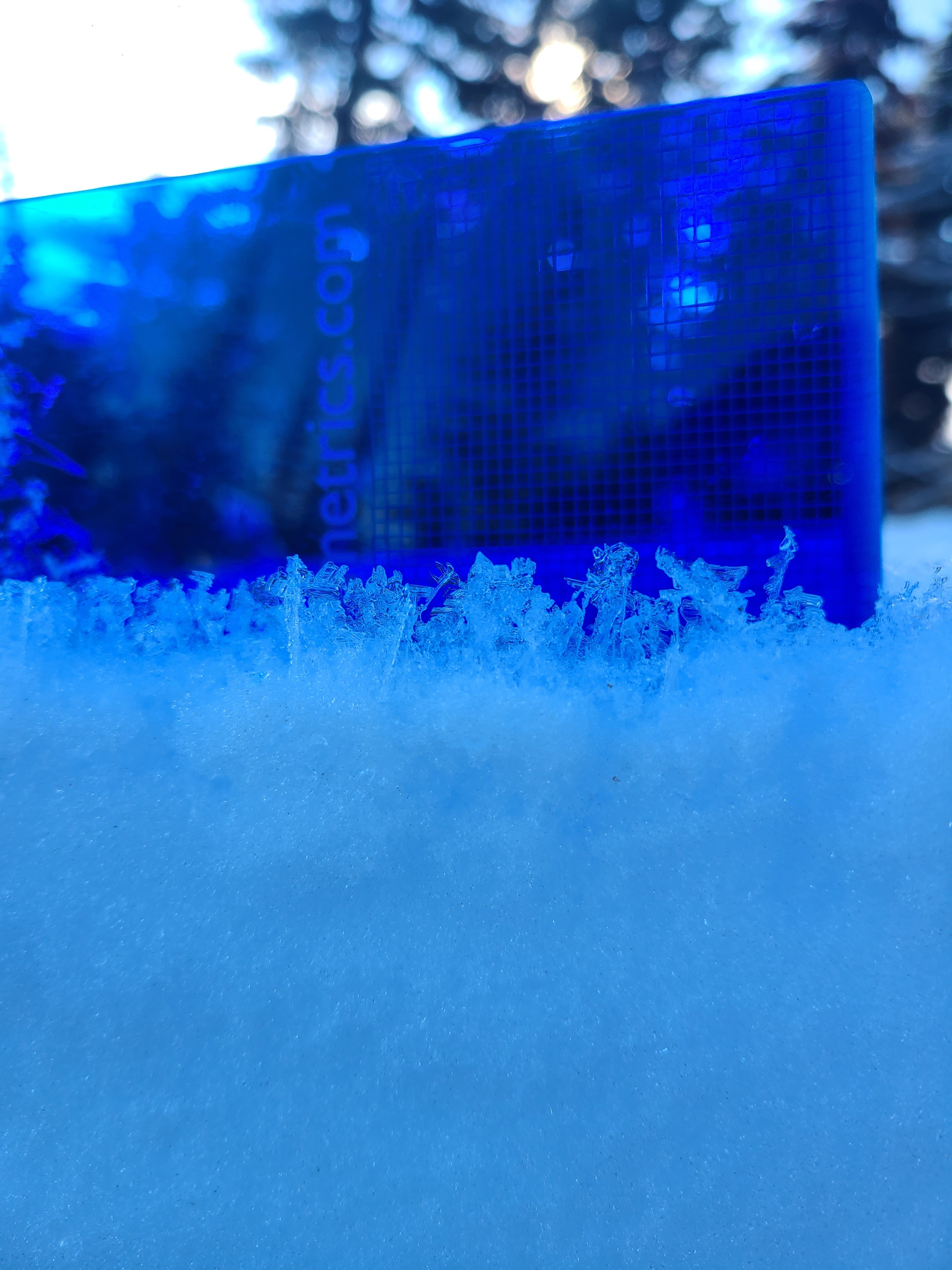
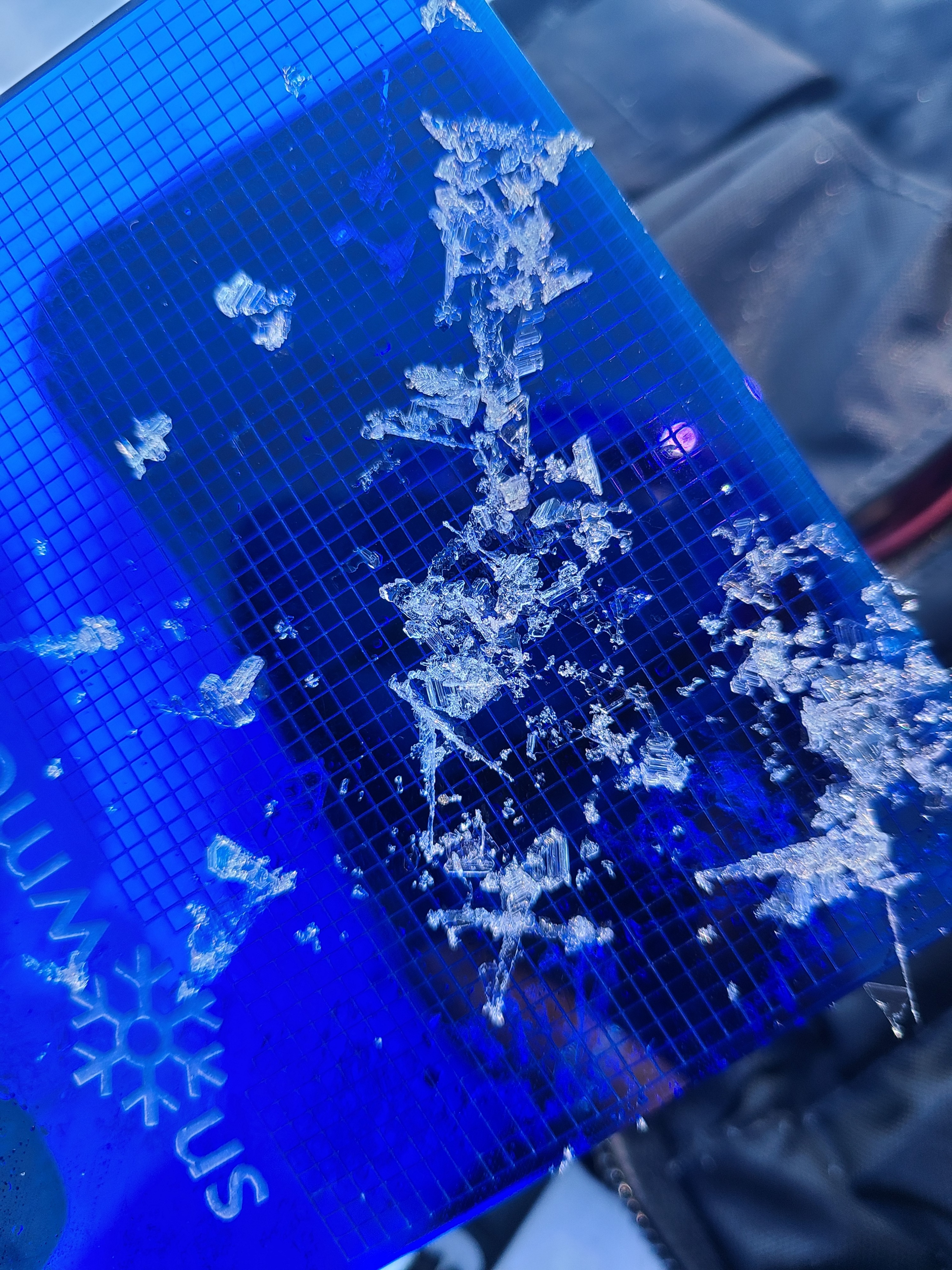
Sheltered northern to eastern aspects all had a layer of 1cm surface hoar over a thin, brittle melt-freeze crust from the recent warm temperatures. This crust was less noticeable on northerly aspects but still present.
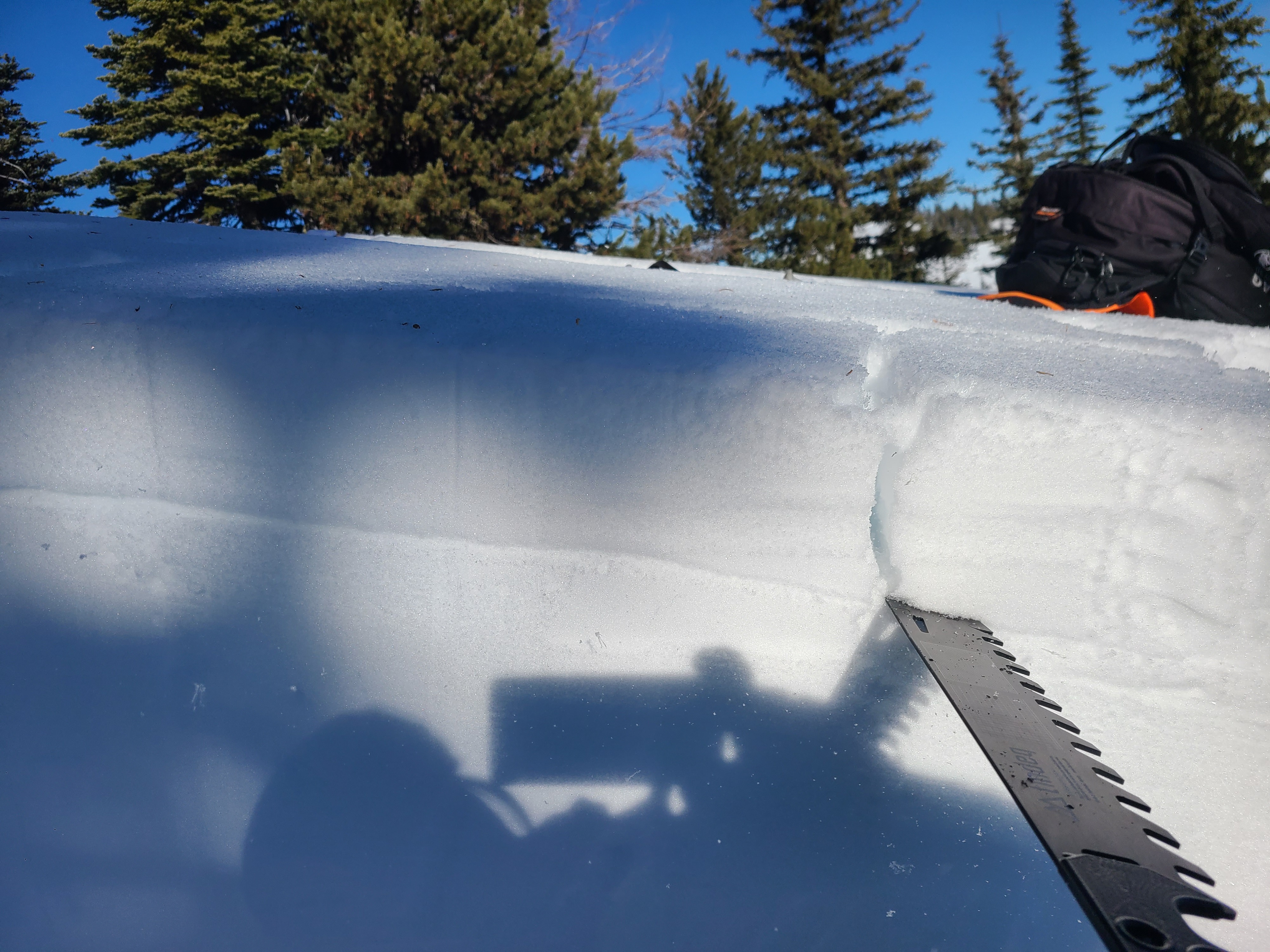
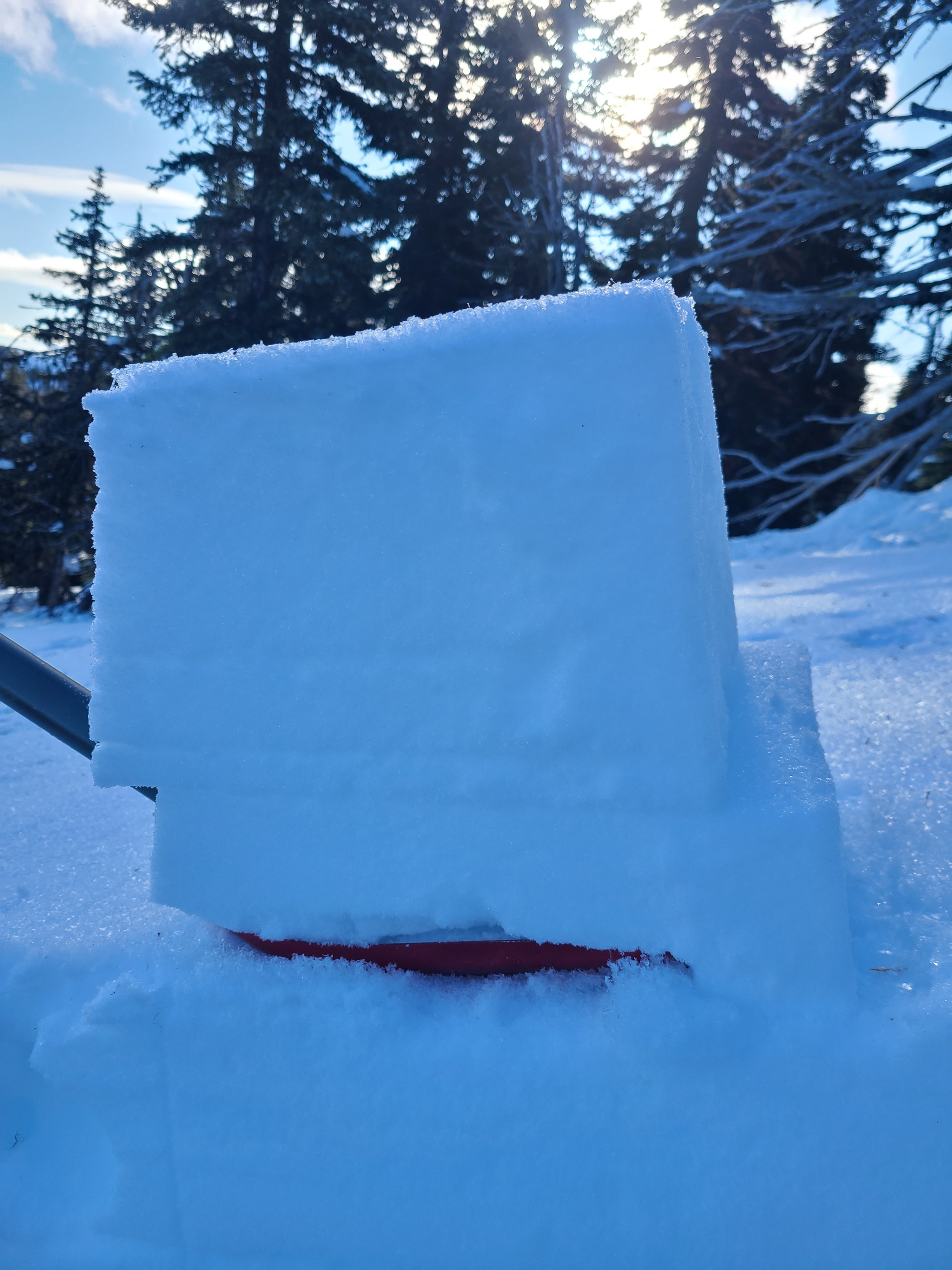
At my snow profile site, 6600ft on an E aspect, I found 120cm of snow. Below the surface hoar and melt-freeze crust on the surface, the top 15-20cm was soft, dry, faceting snow over the 1/10 interface. This interface was primarily well-developed, near-surface facets (1-2mm), but I could also occasionally find elusive surface hoar grains in this layer. I also found a very thin melt-freeze crust beneath these weak faceted grains. This interface failed stubbornly in shovel tilt tests and compression tests. It failed to propagate a fracture in an extended column test, and a propagation saw test resulted in a slab fracture.
CT19 SP
ECTN23
PST 25/100 SF
Below this interface is a multitude of thin melt-freeze crusts, rounding facets, and consolidated rounded grains down to the Solstice Crust, buried 70cm deep. While there were plenty of weak snow layers in various stages of rounding, I found the snowpack to be fairly strong, with minimal concerns below the 1/10 interface.
Boot Pen: 10-15cm
Ski Pen: 5cm