
Quick report
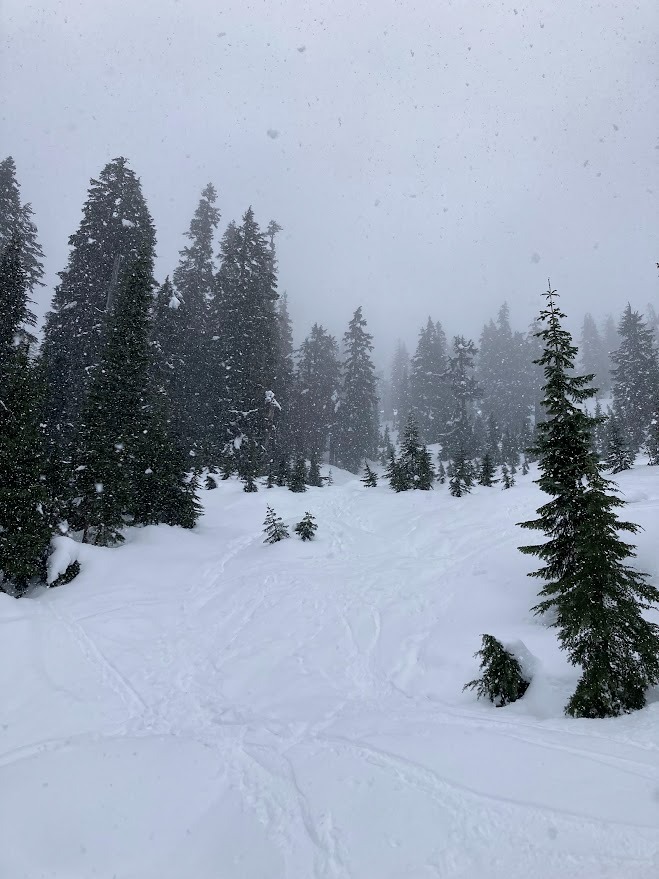
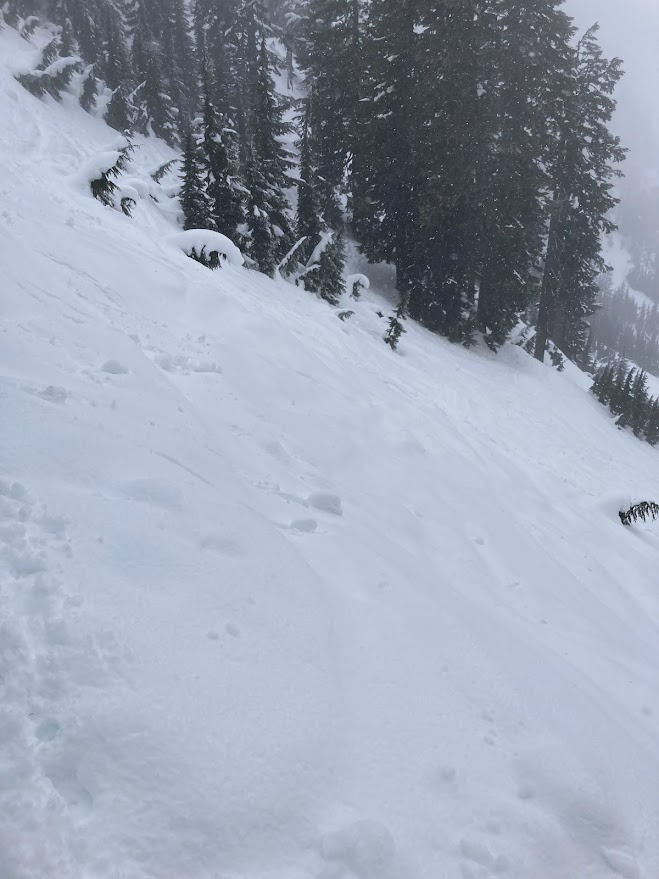
Dallas and I headed up the Alpental Valley today with the goal of checking out surface conditions and the upper snowpack on various aspects prior to the incoming storm. On southerly aspects we found a crust which was mostly supportable to skis, but not boots. Skin tracks on sunny slopes, and low elevation tree-covered terrain were slick, making for challenging travel. In sheltered, shaded terrain, we found some thin breakable crusts, and pockets of dry, settled powder. As mist and drizzle descended, these relatively dry surfaces became damp, initiating small roller balls off ski tips. Other than these roller balls, we observed no signs of instability. Our main hazard for the day were open creeks, slick skin tracks, and some chundery skiing conditions, with lots of barely-buried frozen debris.
Weather
- Air Temp
- Near freezing
- Cloud Cover
- overcast
- Wind Loading
- none
- Rain Elevation
- Varied throughout the tour - drizzle reached up to 4500ft at least.
- Recent Snowfall
- 1
- Snow Avail For Transport
- none
We enjoyed dry weather with higher clouds until around 10AM, when the clouds descended and we started to experience some some snow flurries, followed by a period of heavier snowfall, which turned to a misty drizzle around 11. We got alternating light drizzle and snow fluries for the remainder of the tour, exiting the field at 12:30PM.
Snowpack
We dug a snow profile at 4500 ft on a N facing slope. We found the Early February Crust (EFC) about 20 inches (52cm) below the surface. Our pit revealed a relatively strong and warm upper snowpack above the EFC, mostly composed of rounds and several melt-freeze crusts. We found some weak snow, specifically near the 2/14 crust (about 10in/25cm below the surface), and it reacted in snowpack tests (ECTN28), but it showed resistance to propagation. We also found surface hoar and near surface facets on sheltered and shaded slopes, preserved beneath the trace amounts of new snow. This surface hoar likely formed during the period of clear weather we had on Thursday and Friday. We did not find evidence that this surface hoar survived on sunny aspects.