
Weather
- Air Temp
- 25
- Cloud Cover
- clear
- Wind Loading
- none
- Recent Snowfall
- 0
- Snow Avail For Transport
- moderate amounts
Clear, calm day, started in the negative digits (Fahrenheit!) and warmed to mid-20s, though temperatures remained cold enough to find dry snow on most surfaces, except the most sun-exposed, southerly slopes.
Snowpack
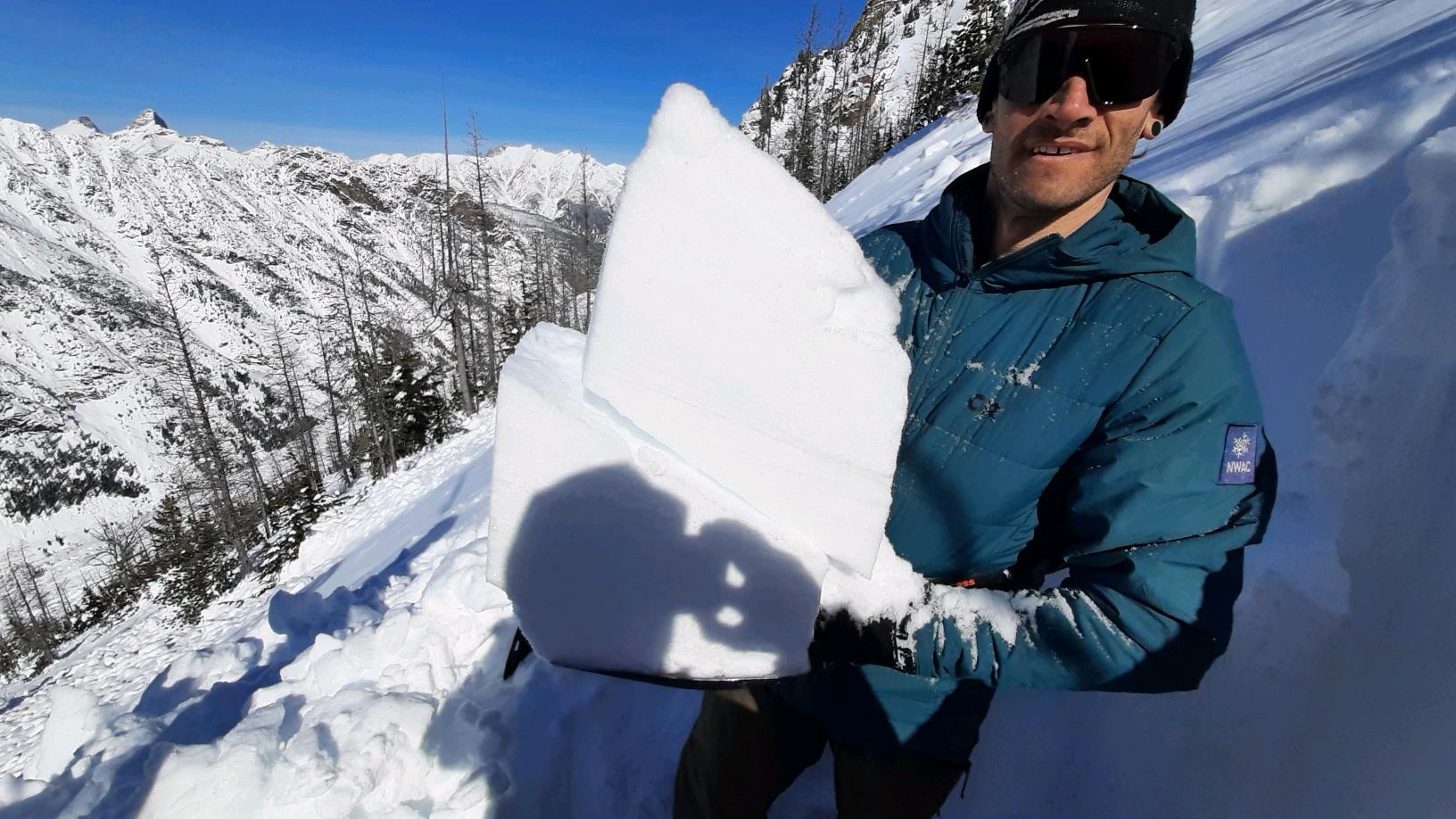
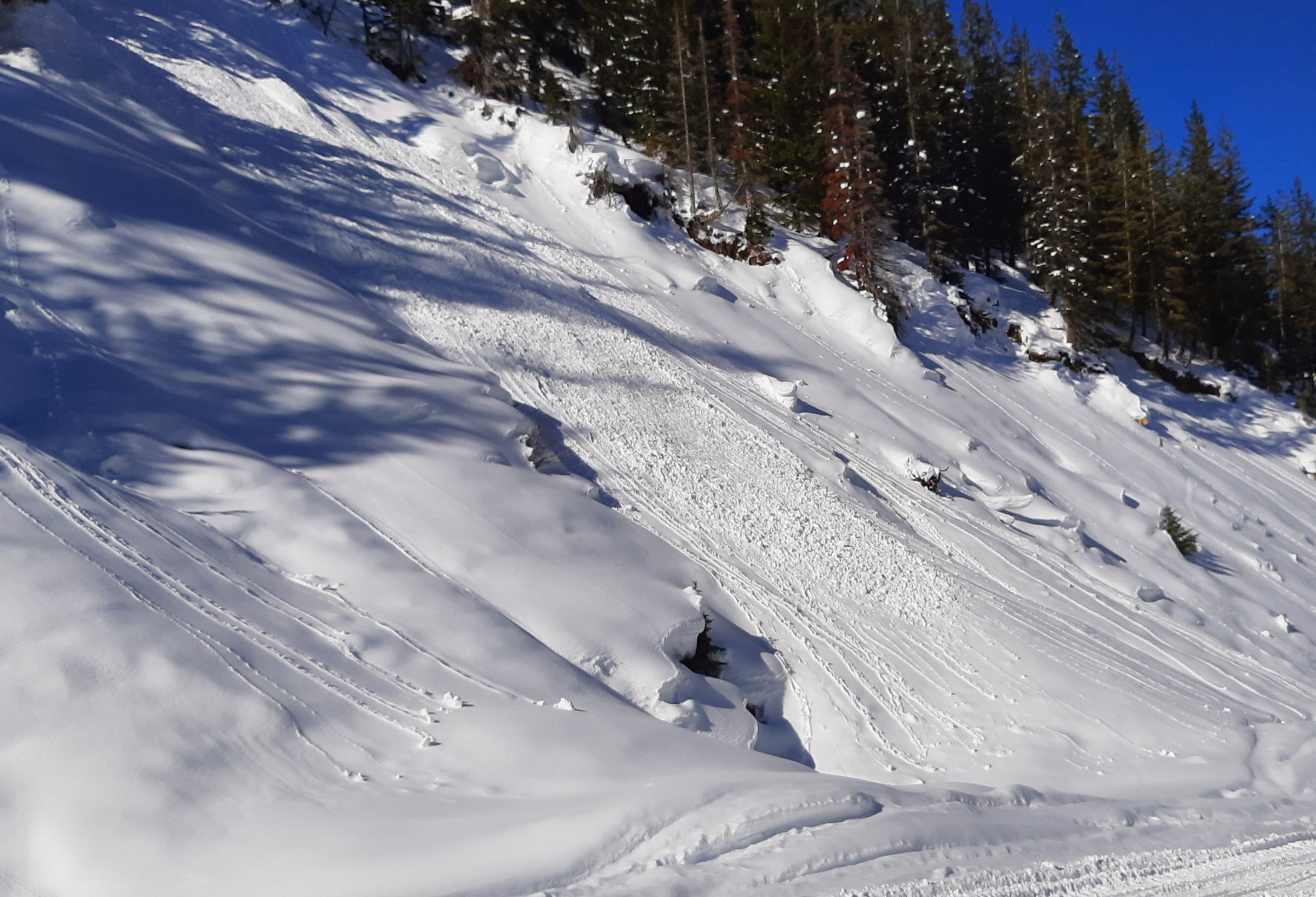
Our primary objective was to visit the site of a size D3 avalanche that was remotely triggered on Sunday, 3/3, on Kangaroo Ridge. Details can be found here. We conducted a series of profiles at and near the crown. The avalanche was on a leeward side of poorly defined rib that typically gets cross-loaded from south to southwest winds. Cold temperatures kept most surfaces cool and dry. Steeper, southwest slopes became moist by 2p.
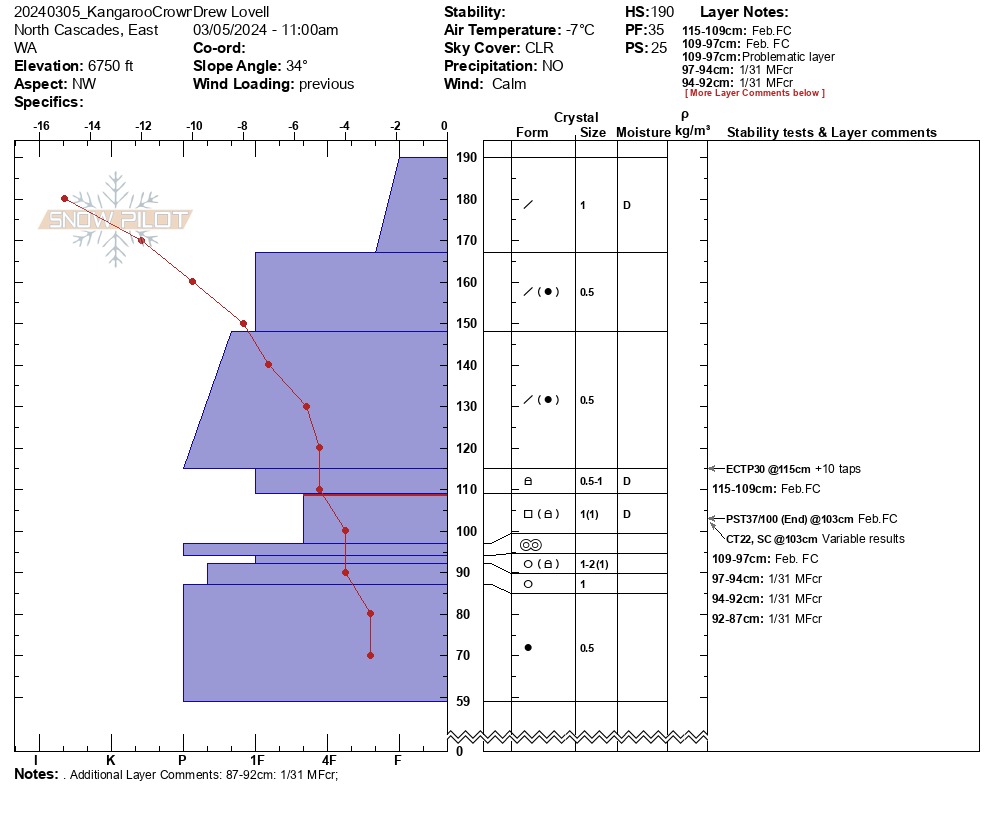
We found that the avalanche ran on a thick layer of 1.0mm facets above the Jan 31st interface. We also found that weak layer(s) 50-75cm below the surface are problematic for human triggering where the weak grains are well-developed and overlying slabs are thin/soft enough. Snowpack tests were somewhat inconsistent but showed potential for triggering and propagation on 3 different interfaces between the burial dates of 2/25 and 1/31. While we found a similar snowpack structure throughout the terrain, there was significant variability in the height of snow, thickness of layers, and layer characteristics due to exposure to wind and sun. Our most detailed data came from a profile adjacent to one of the flanks:
Profile- WNW, 6,750ft, HS 190cm, previous wind loading, BootPen 35cm
↓42-75cm: 1F+-P hard, 2/25 settled storm snow
↓75-89cm: 1F hard, 0.5-1.0mm FCxr. ECTP40 (beyond test), PST 90/100 END ↓75cm- 2/25 interface
↓89-97cm: 4F+ hard, 1.0mm FC (FCxr). CTH (SP) ↓89cm, CTH (BRK)x2, PST 37/100 END ↓89cm- Mid-Feb interface
↓97-107cm: P-1F hard, MFcr. CTM (SP)- 1/31 crust
At the crown/flank nearby, we found a similar structure to the above, with an overall shallower snowpack and thinner layers. Notably, the 2/25 interface has a thin crust, which has been commonly found on more sun-exposed slopes:
Crown Profile- W, 6,800ft, HS 150cm
↓55-70cm, FCxr capped w thin crust, 2/25 interface
↓70-77cm, FC, Mid-Feb, Avalanche weak layer/bed surface @ 70cm
↓77cm, 1/31 crust
Avalanche
- Size
- D3
- Count
- 2
- Aspect
- N
- Trigger
- N
- Elevation
- 7200 ft
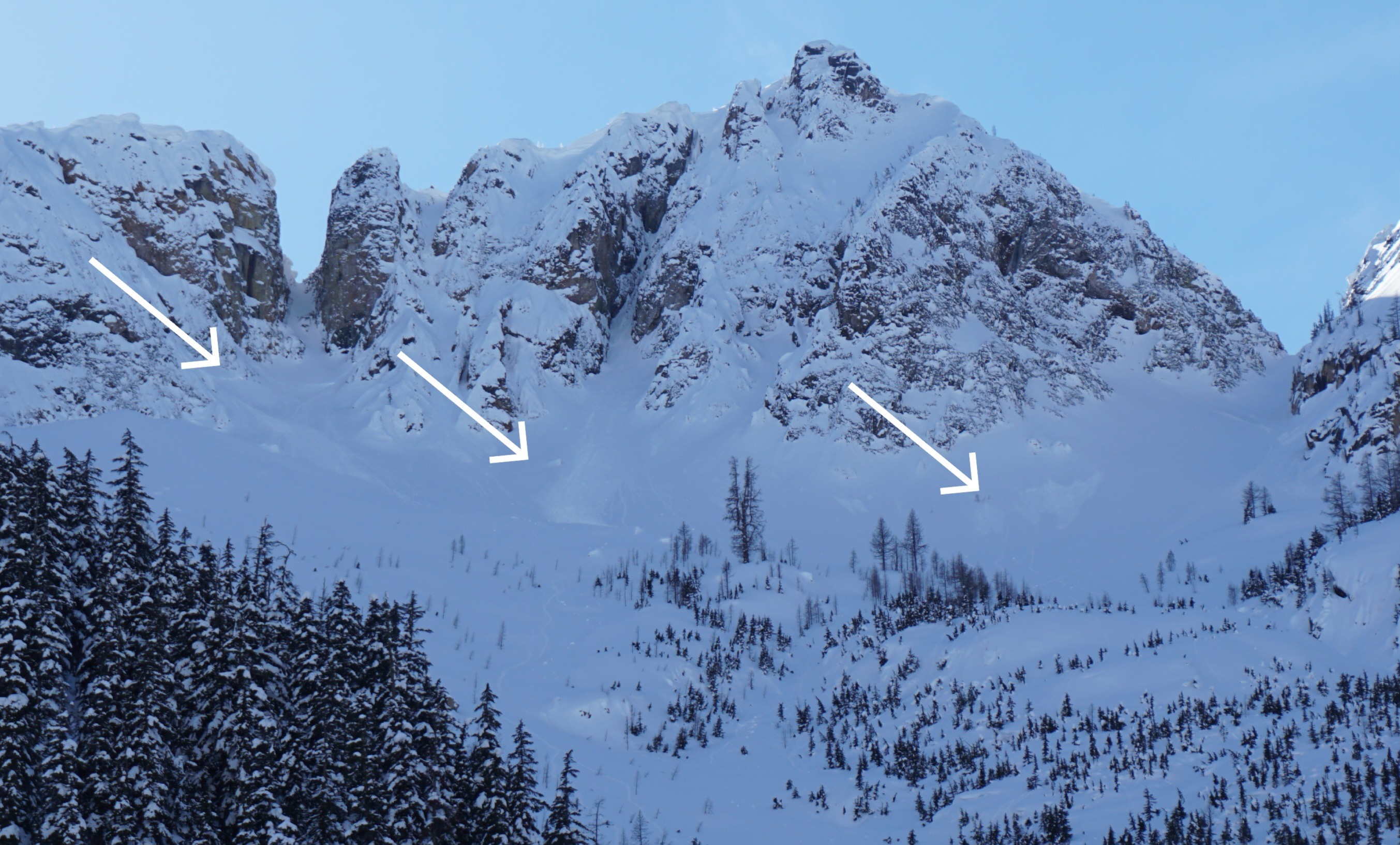
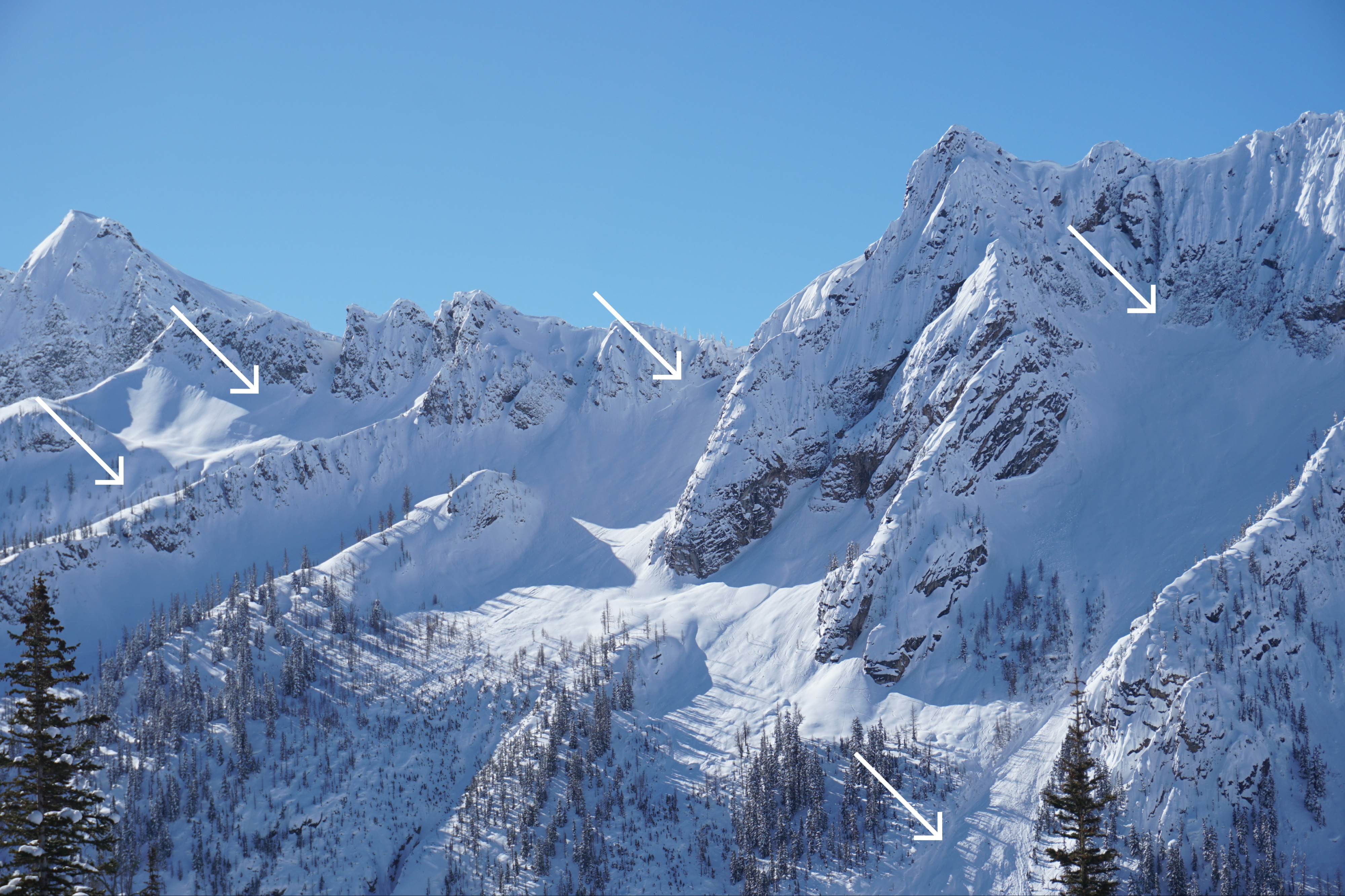
The only new avalanches were a few small sun-induced loose dry slides at upper elevation, southeast-east, and small wet loose avalanches at low elevations. We saw many older crowns of D2.5-3 natural avalanches from 3/2-3 and 2/28.