
Quick report
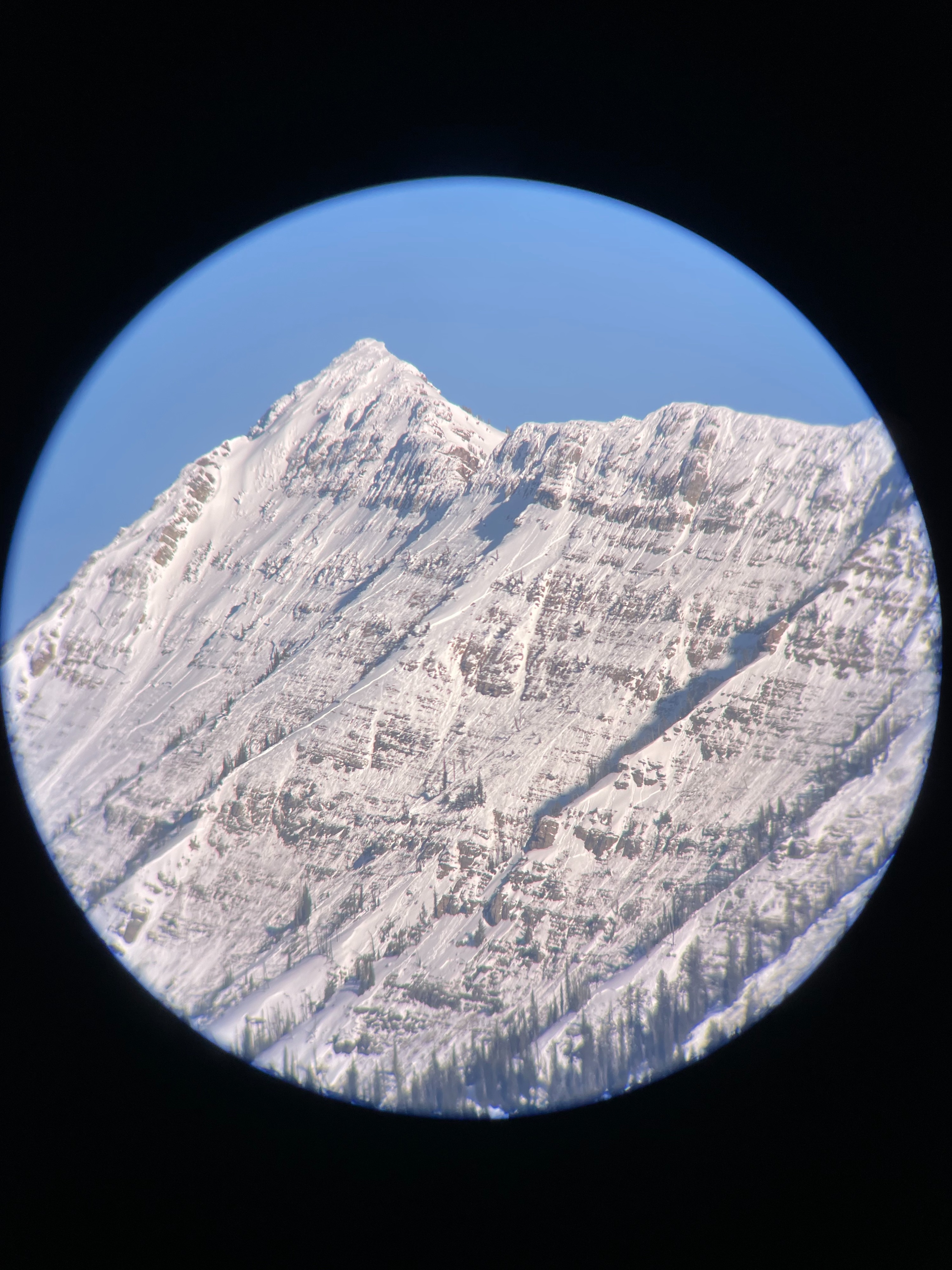
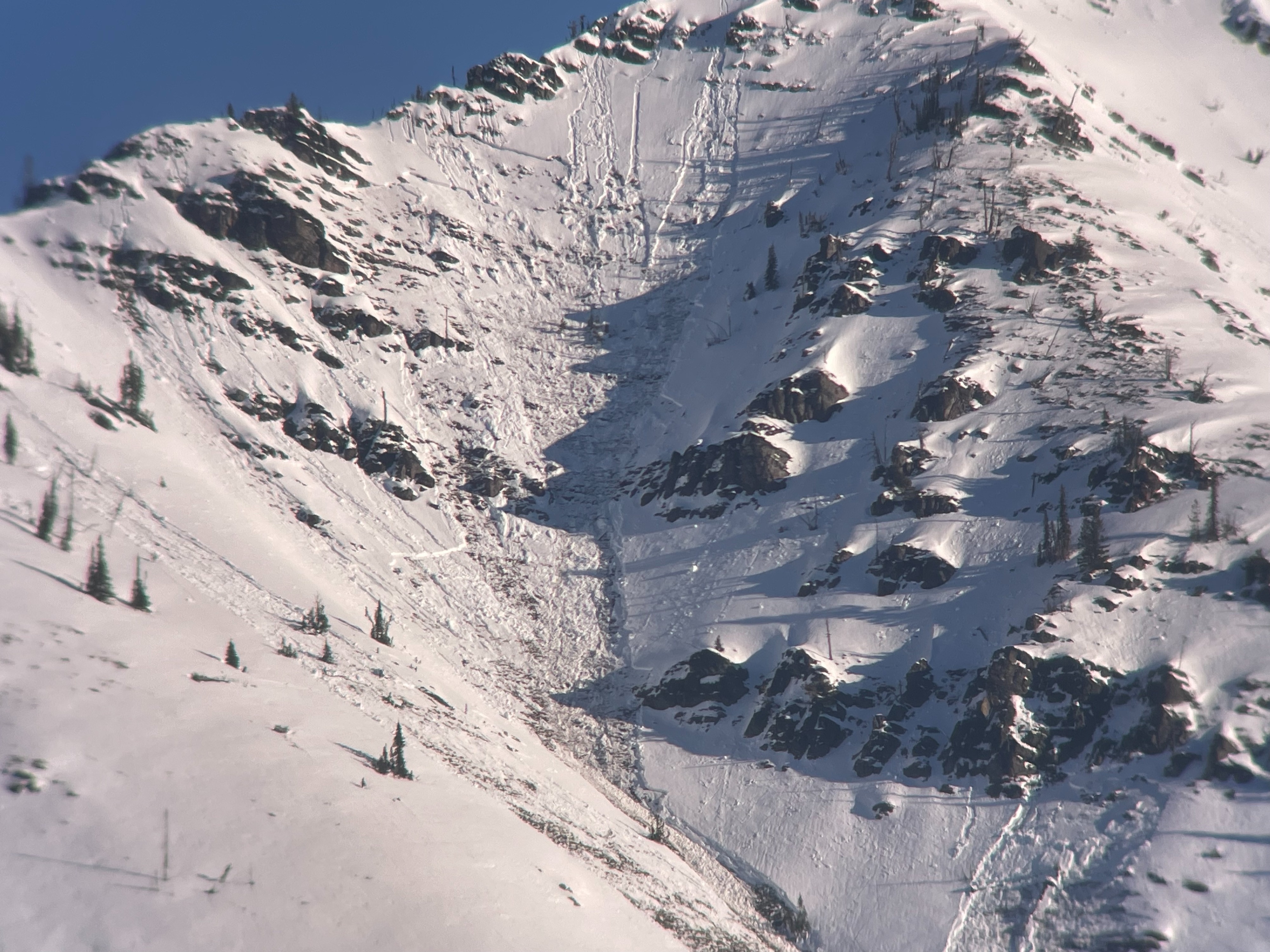
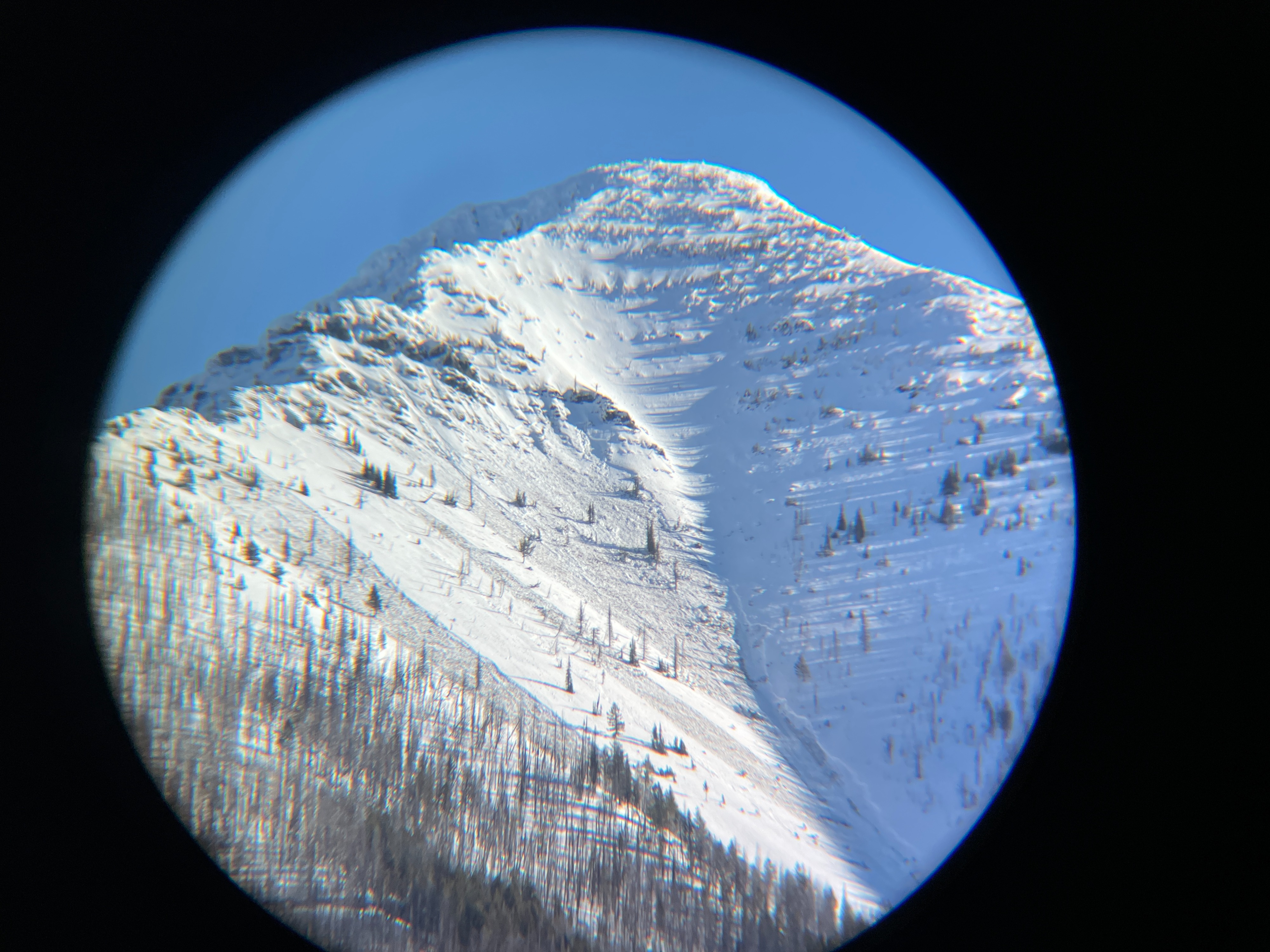
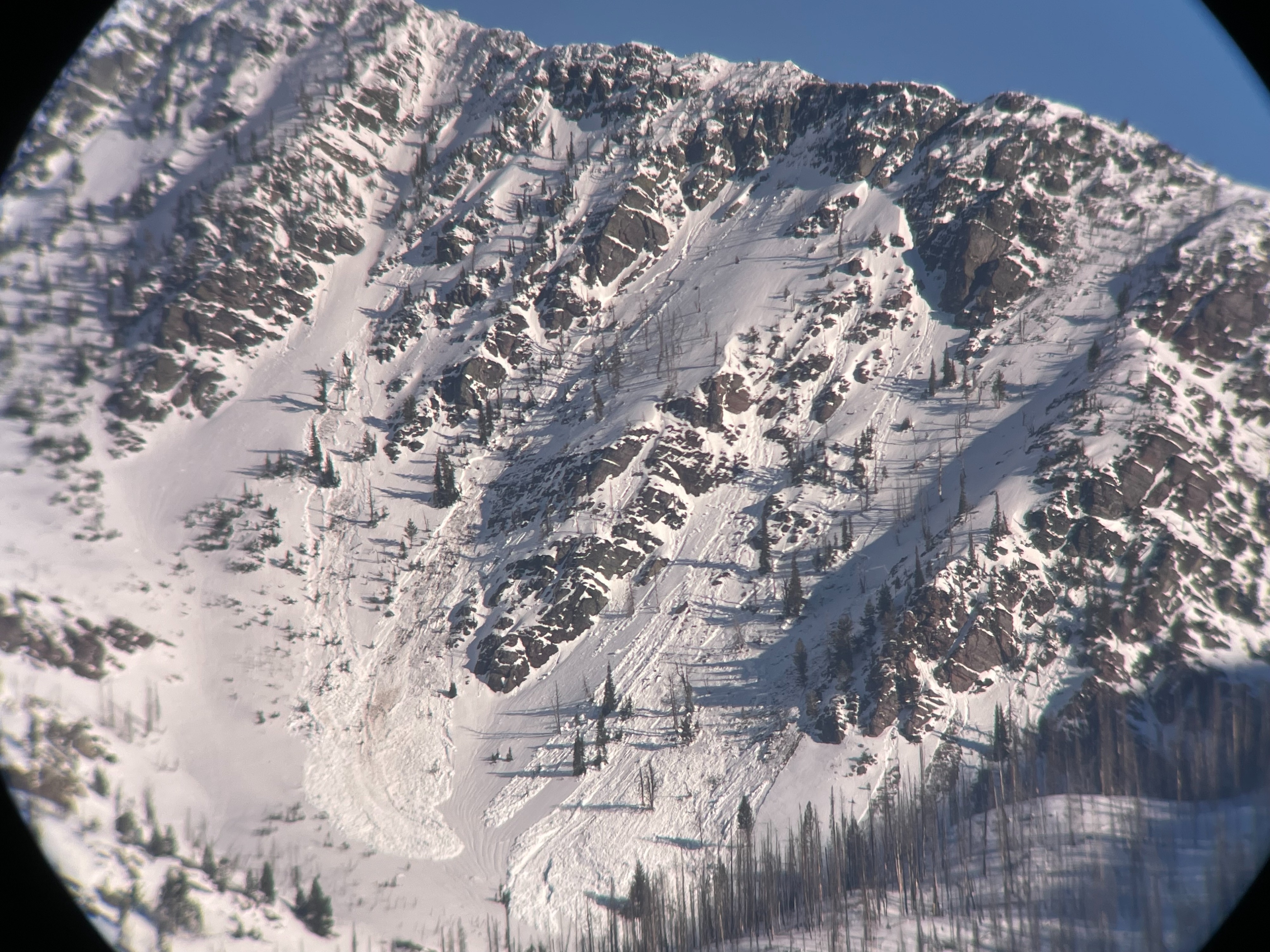
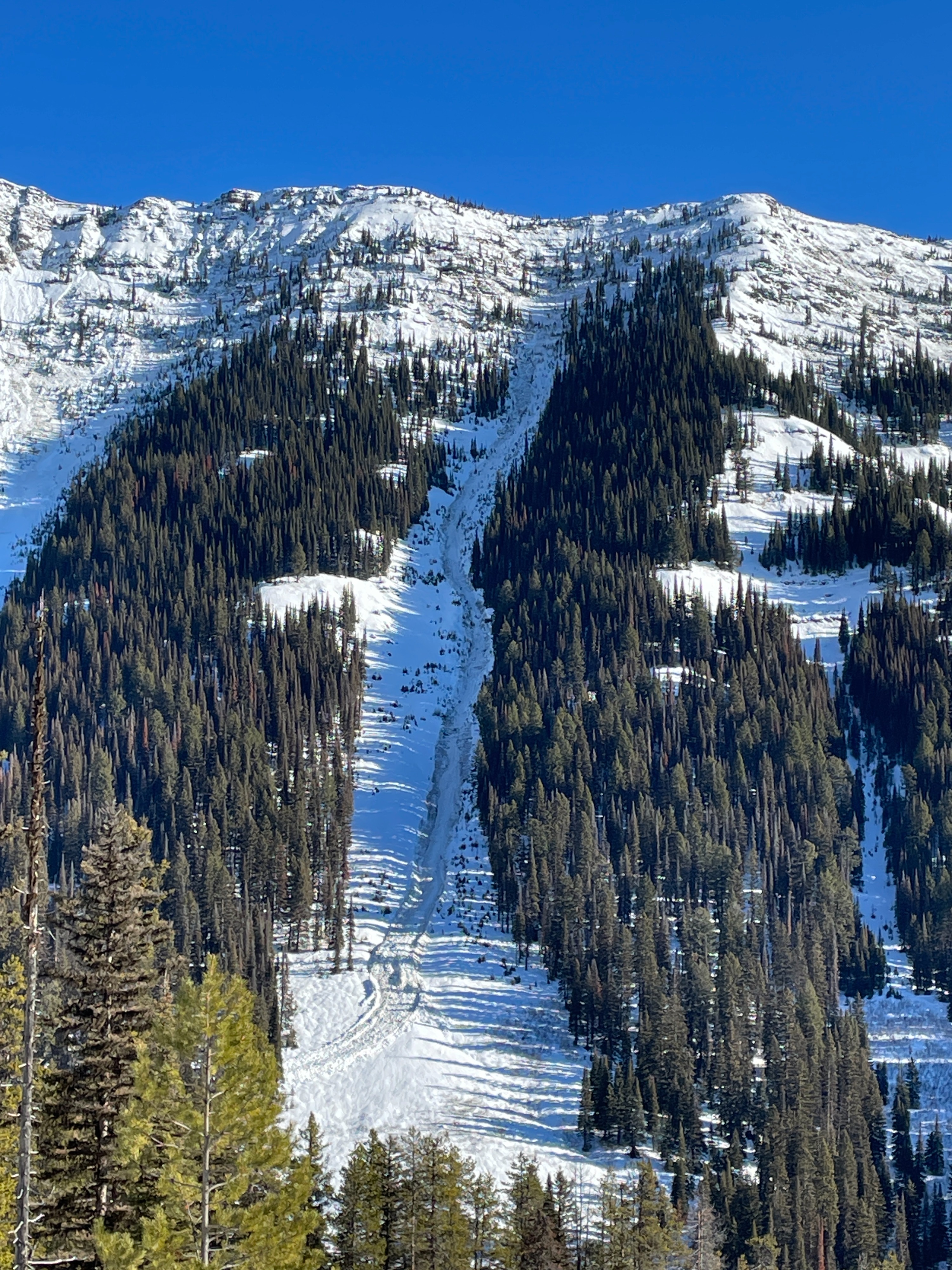
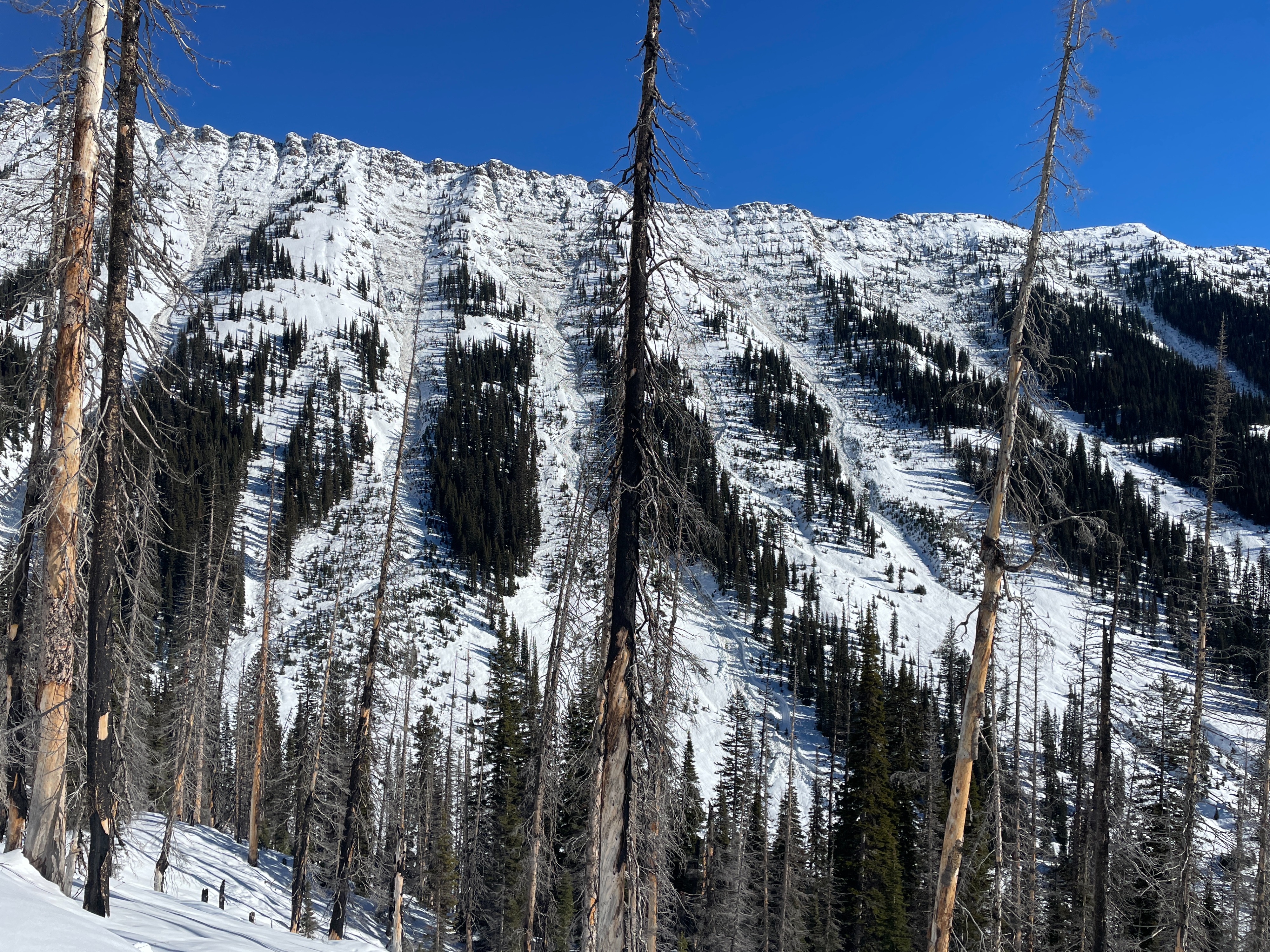
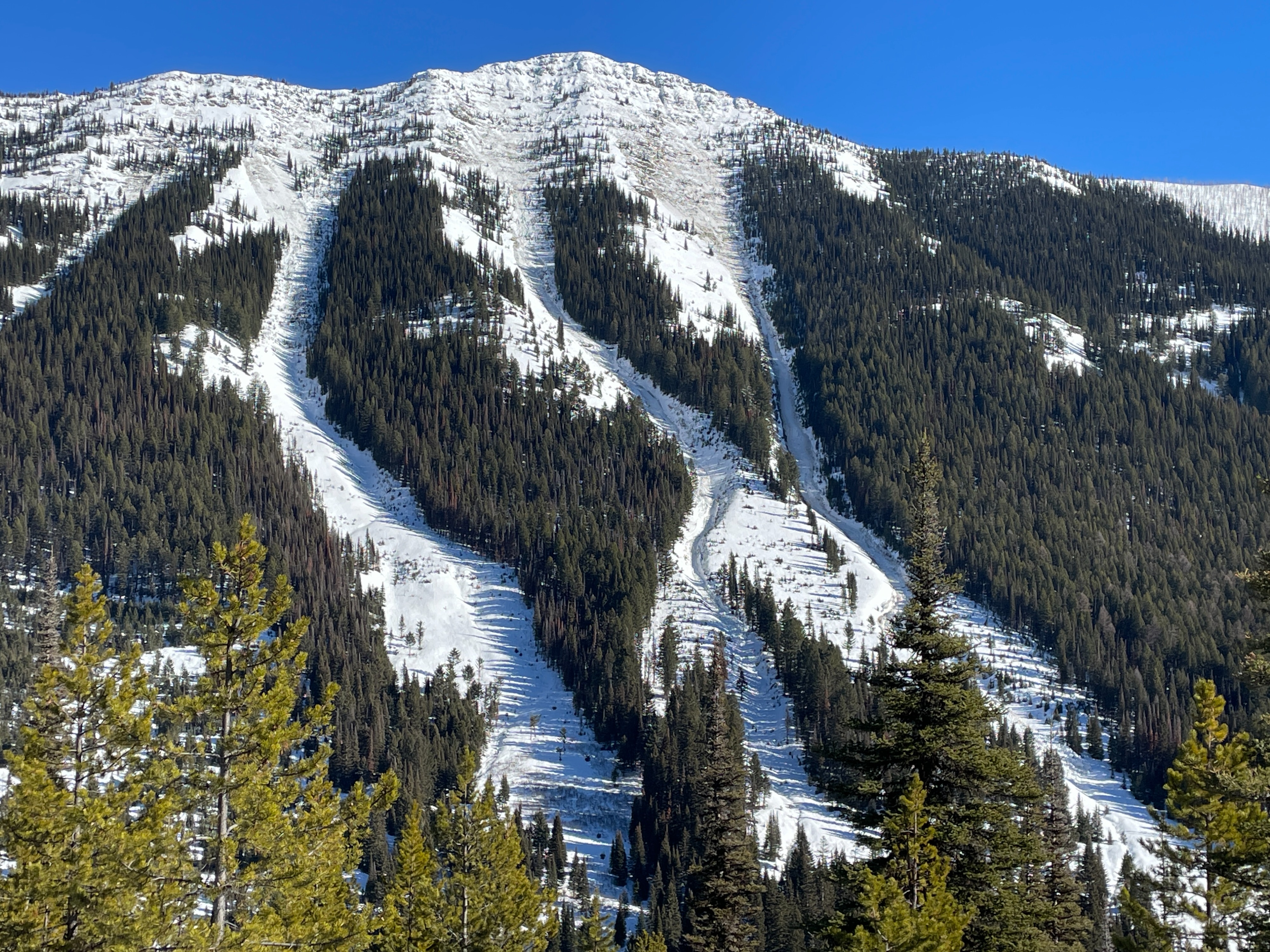
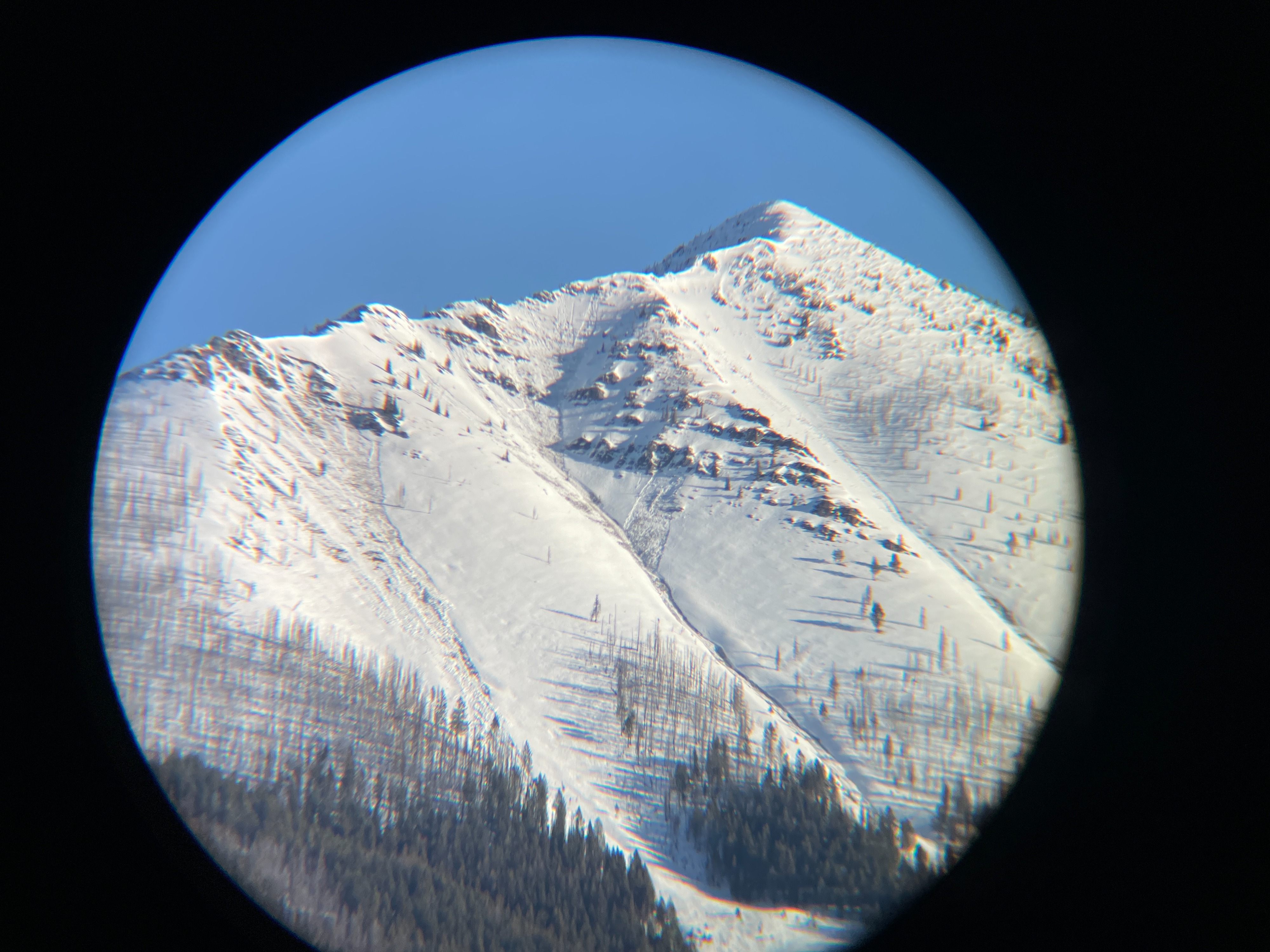
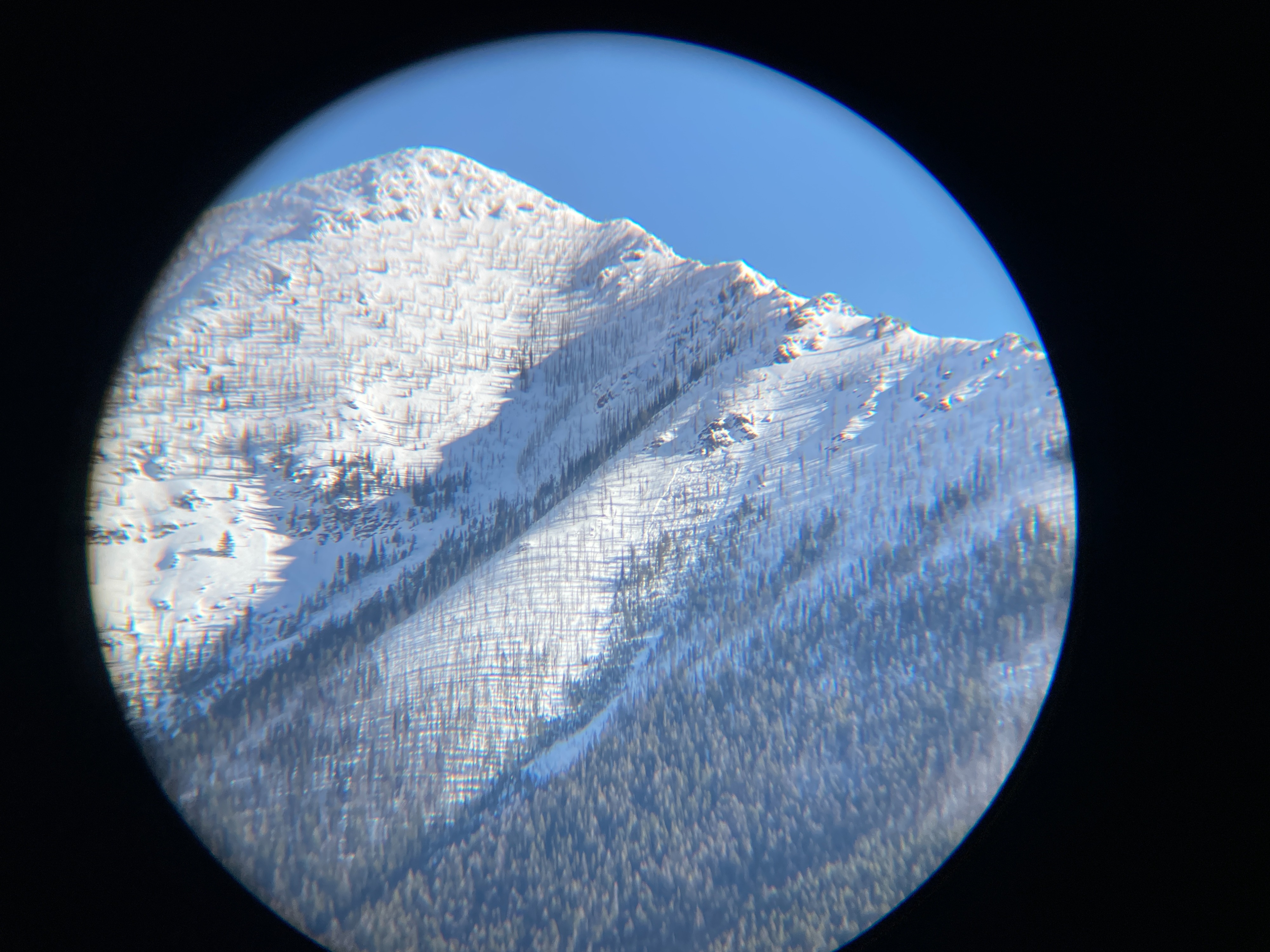
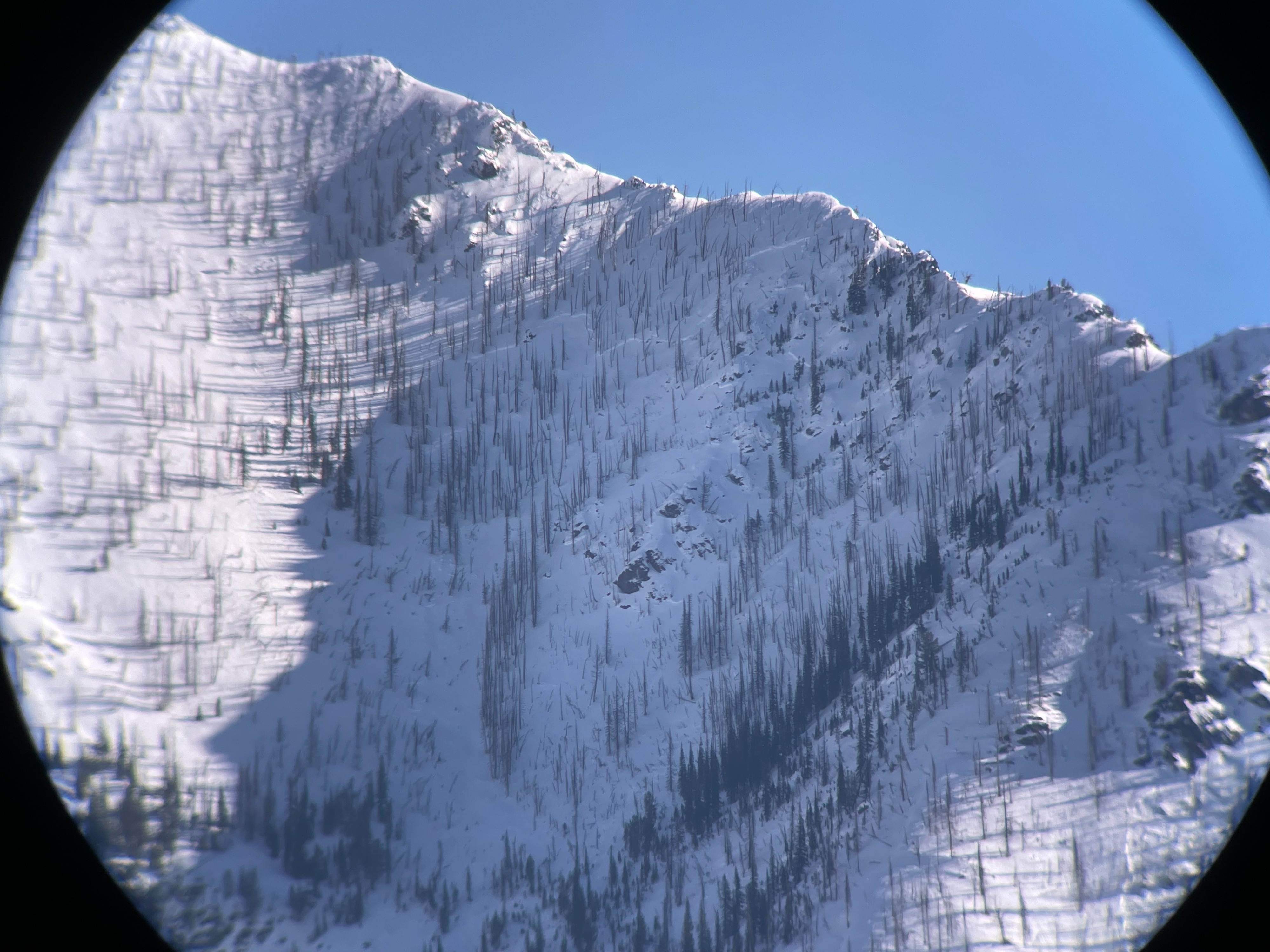
We observed an impressive recent widespread large natural avalanche cycle. The avalanches failed due to the recent unseasonably warm temperatures, sunshine, and rain. They were generally wet loose avalanches that gouged down to the ground and triggered slab avalanches along the way.
We observed widespread recent large natural avalanches on all aspects at middle and upper elevations.Weather
- Cloud Cover
- clear
It was a very warm day with clear skies and calm winds. Temperatures were cool in valley inversions in the morning, but rose quickly as we left the inversion.
Snowpack
There was generally a marginal refreeze overnight and the snowpack quickly became wet and unsupportable today. Due to inversions, valley areas had the coolest temperatures and the best refreeze.
We dug a snowpit on an east aspect at 6500 ft and found a snow depth of 85 cm. The snowpack was wet or moist to the ground, and the bottom half was wet facets. An extended column test produced a propagating result on the 14th tap on facets just above a crust in the middle of the snowpack (ECTP14).
Avalanche
- Size
- D2.5
- Count
- 2
- Aspect
- N
- Trigger
- N
- Elevation
- 7800 ft
We observed many recent large natural avalanches on all aspects at middle and upper elevations. Almost every visible slide path had a large natural avalanche that failed recently - it was impressive. Most slides were wet loose avalanches that gouged down to the ground and triggered slab avalanches along the way. The avalanches failed due to recent unseasonably warm temperatures, sunshine, and rain. Several of the avalanches were at or approaching the very large size category. However, the thin snowpack limited the size of most the avalanches. The debris piles were generally less impressive than the start zones. Most avalanches likely failed on 1/28/24 or 1/29/24. We did not observe any new avalanches occur during the day today before we left the field in the early afternoon. We also observed two older slab avalanches that likely failed on buried weak layers sometime before this warm-up.