
Quick report
- Cracking
- isolated
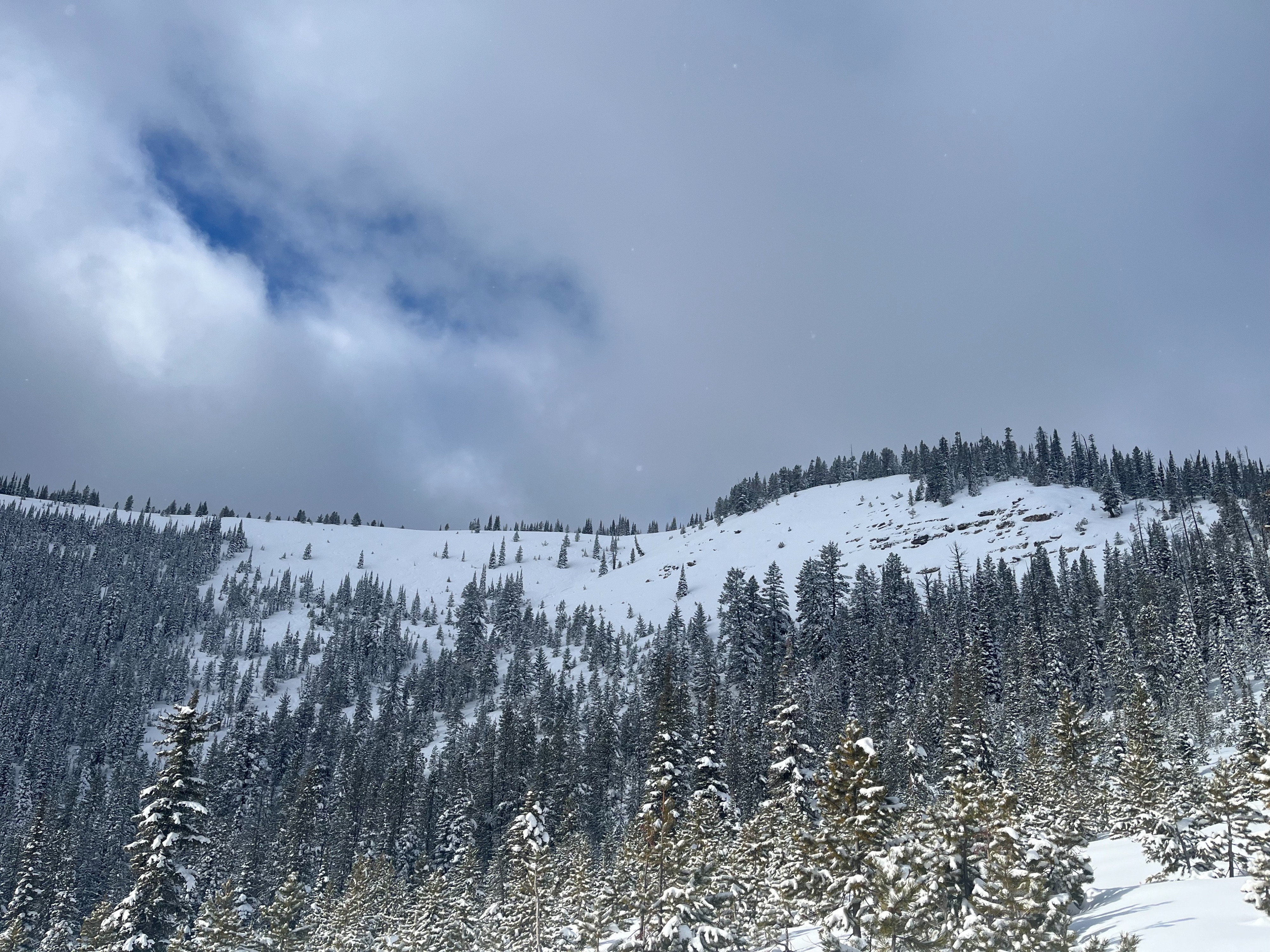
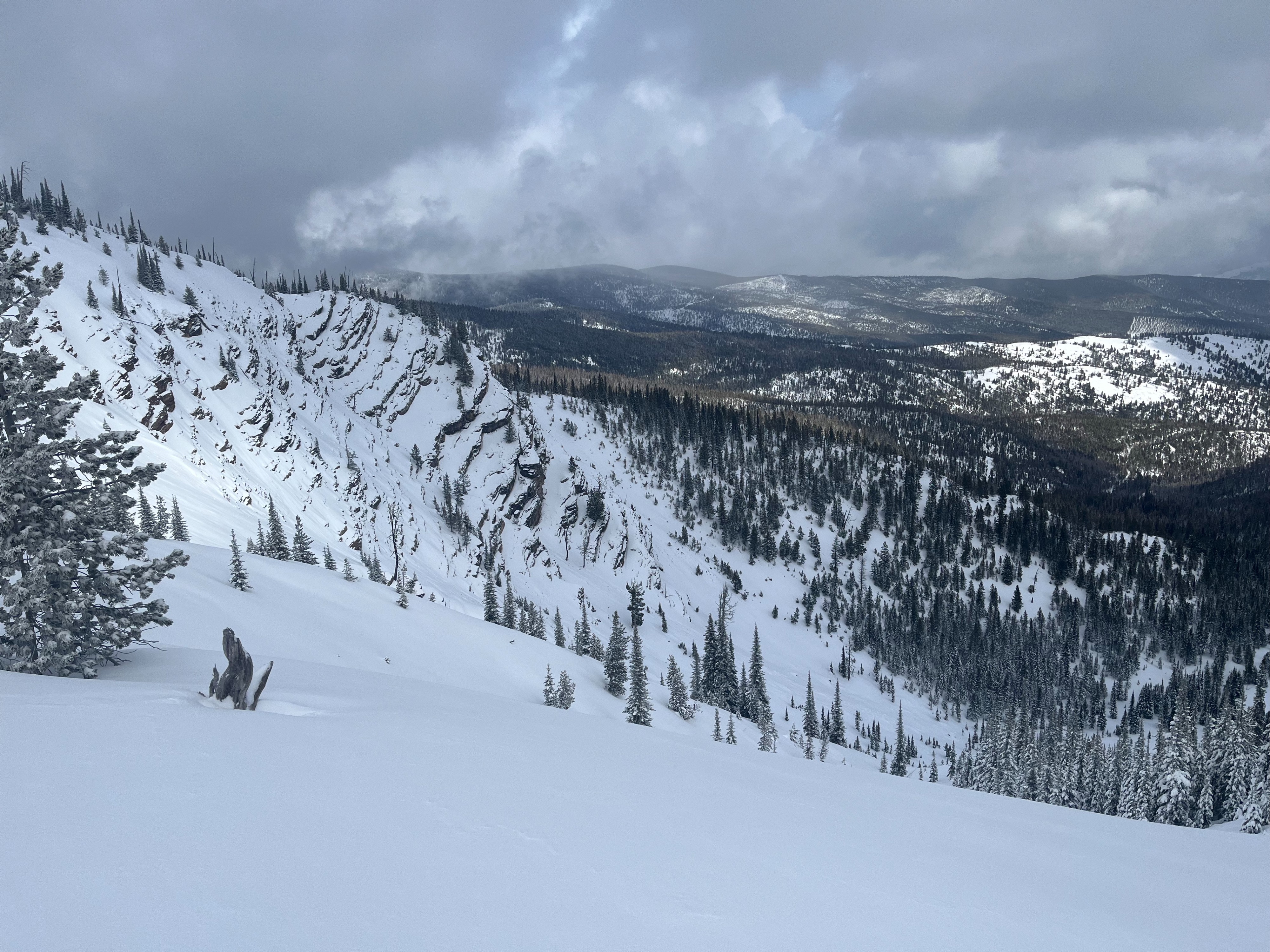
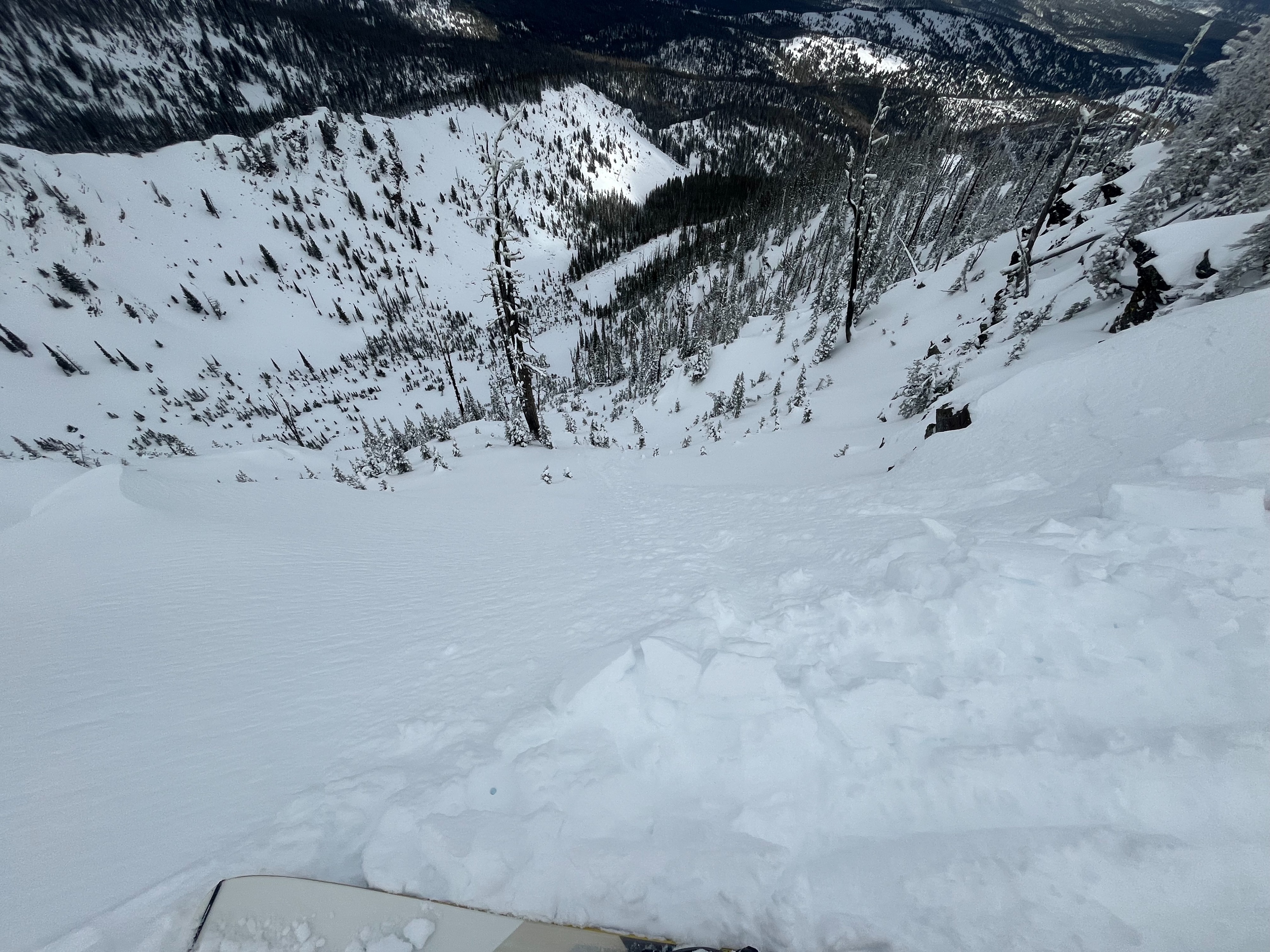
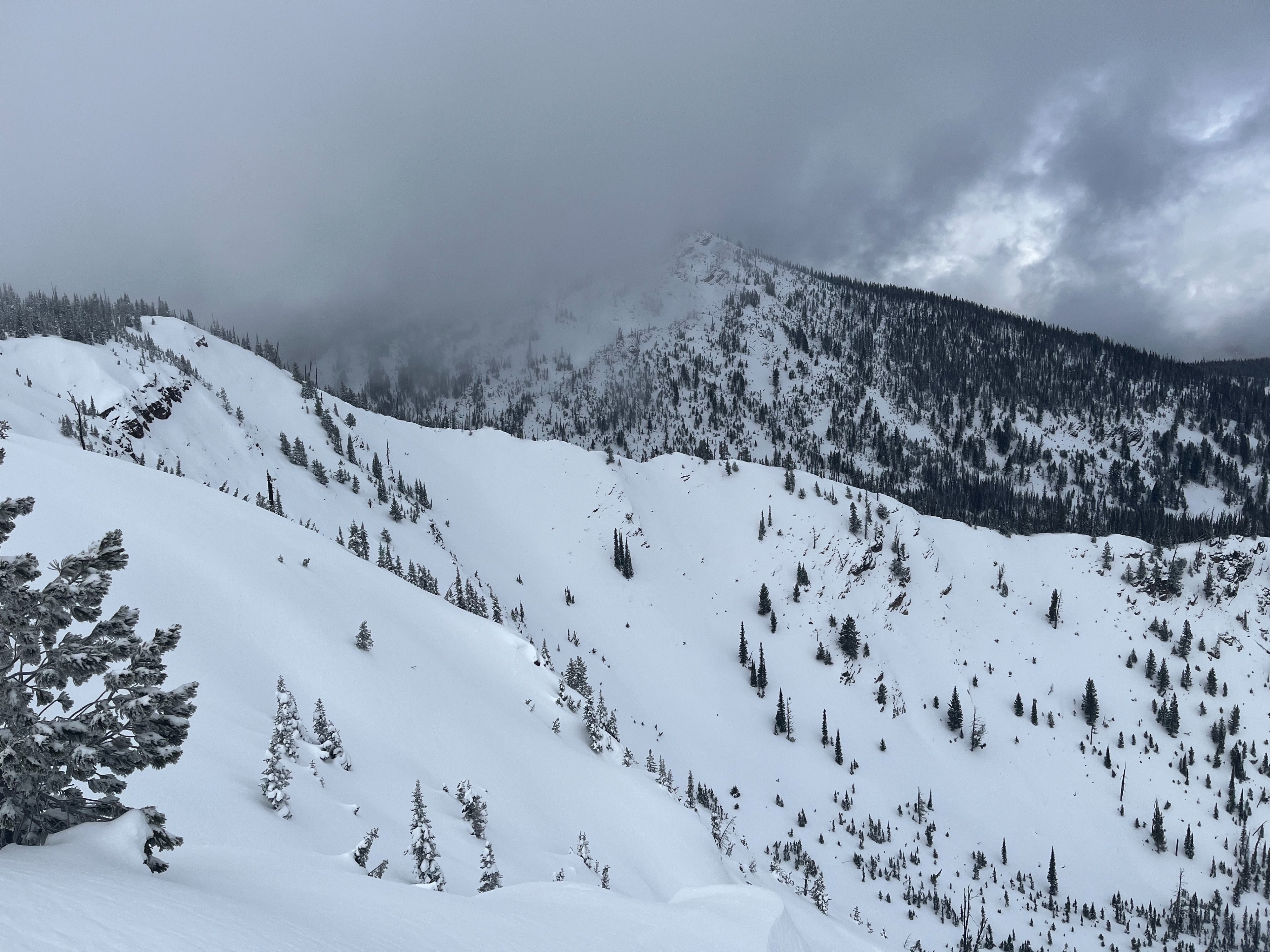
The new/recent snow was largely soft and unconsolidated. Dry loose avalanches showed the potential to sluff off a melt freeze crust below in steep terrain. The slab overlaying weak layers near the ground is stiff and supportive. However, we still got propagation in snowpit tests and we found buried surface hoar in many areas. We encountered a bit of cracking in wind affected snow on north and east facing ridgelines.
We observed isolated cracking in new/recent snow in areas that were wind affected; namely on north and east facing ridgelines.Weather
- Air Temp
- 18-35
- Cloud Cover
- broken
- Wind Loading
- previous
- Recent Snowfall
- 36
- Snow Avail For Transport
- large amounts
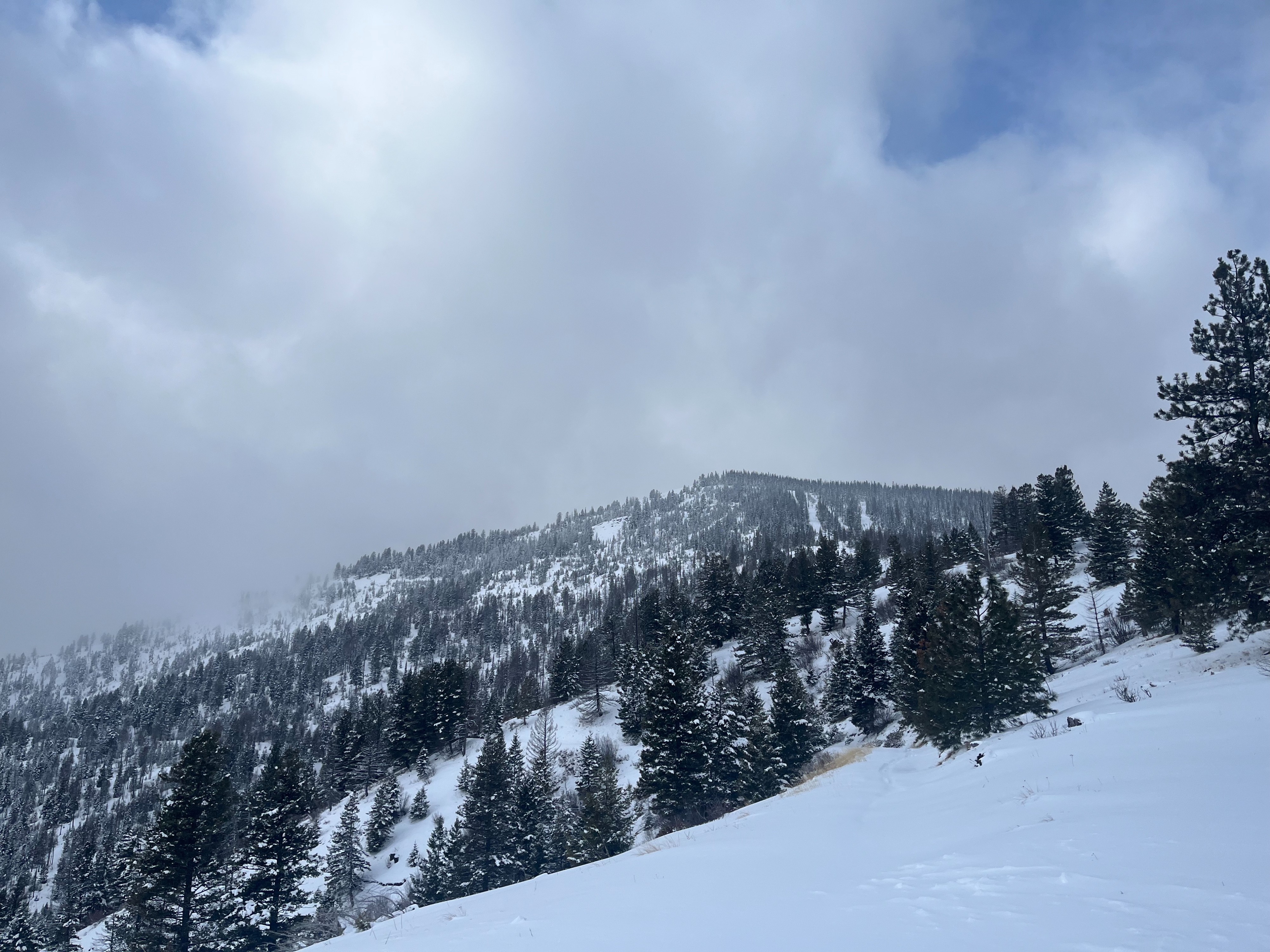
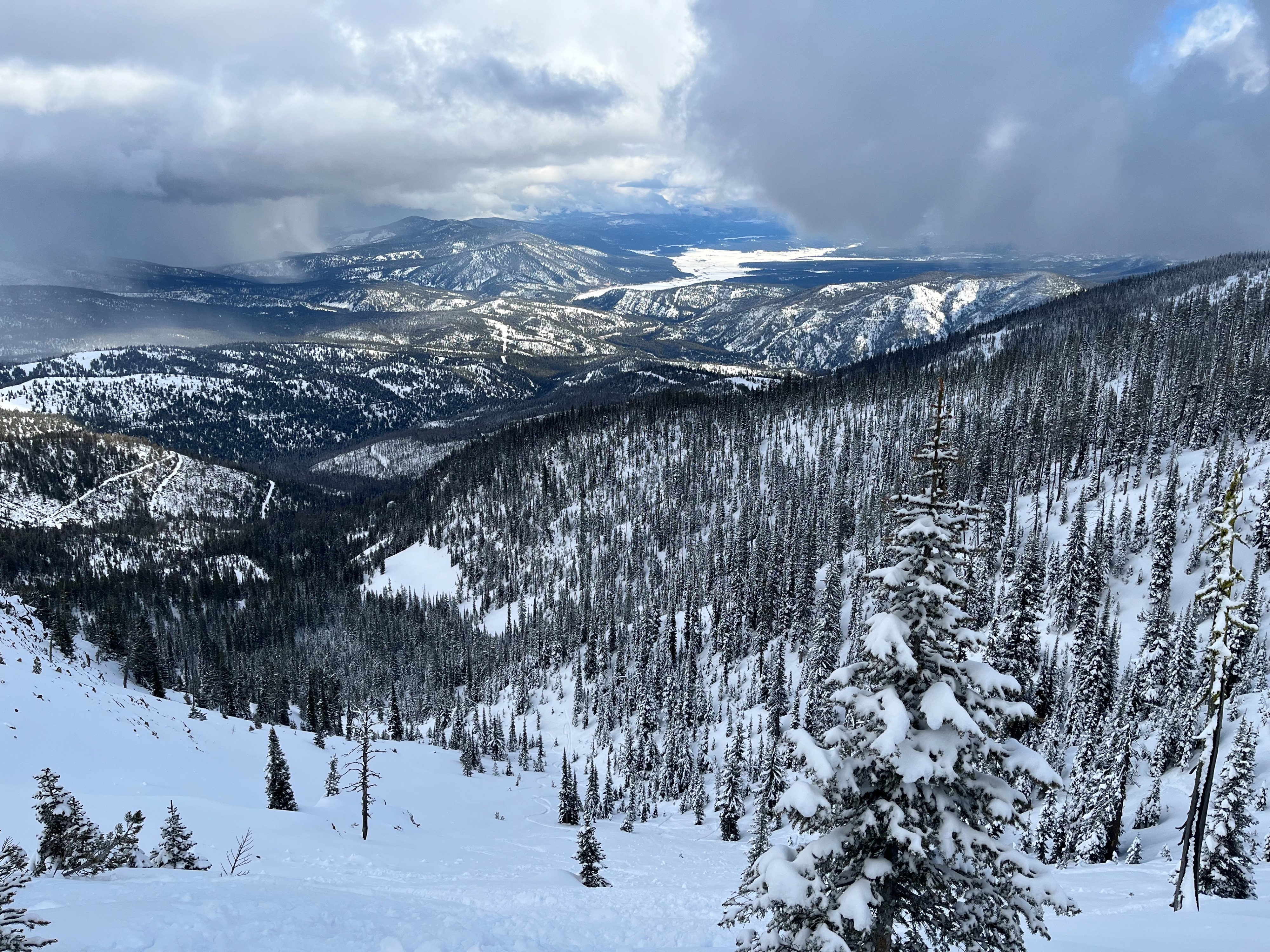
The sun came in and out of the clouds all day. We did not see any precipitation until the very end of the day while we were sledding back down the road. Temperatures ranged from 18 degrees up at ridge line to 35 degrees down at the trailhead. The wind was calm and from the east.
Snowpack
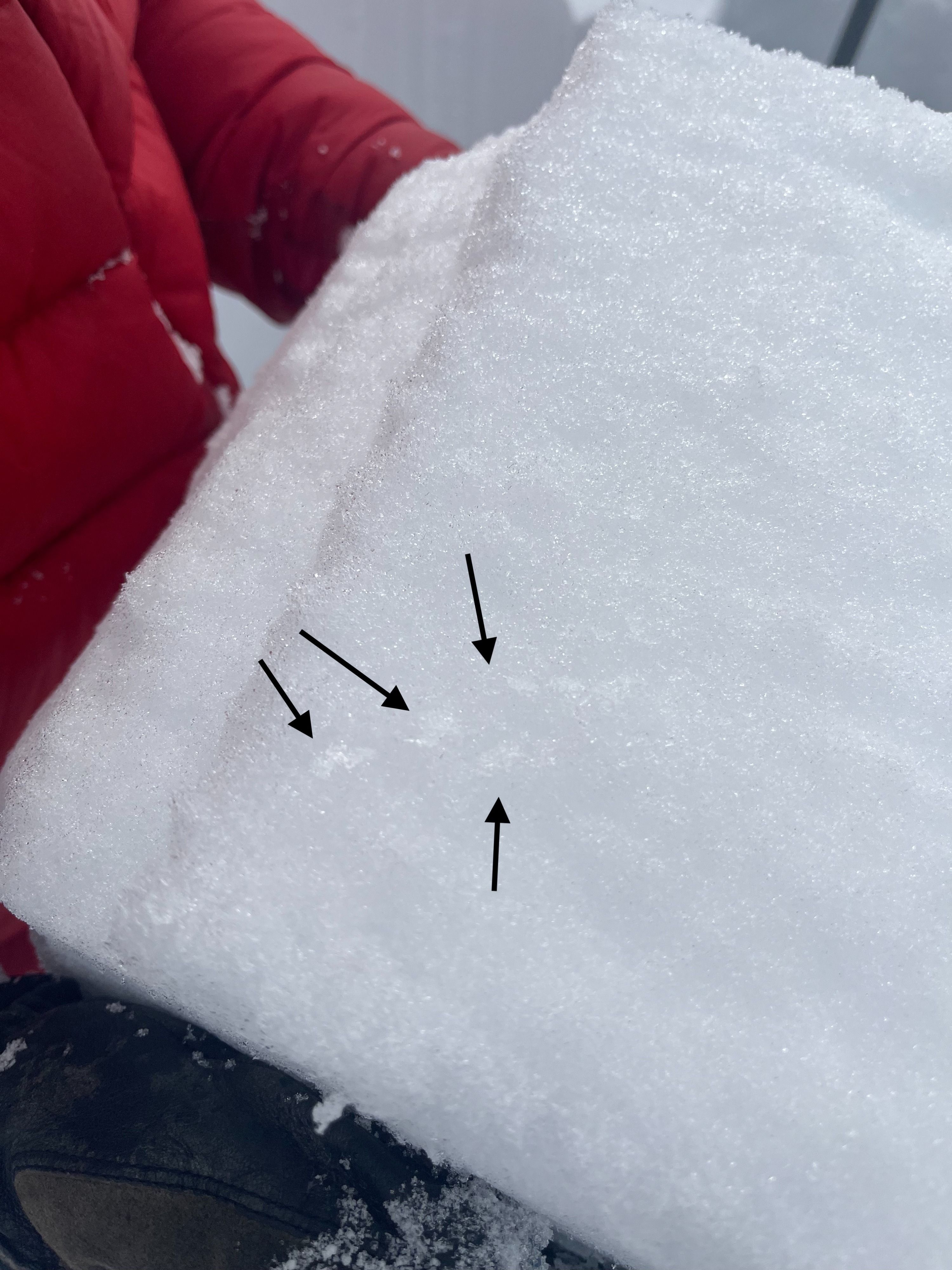
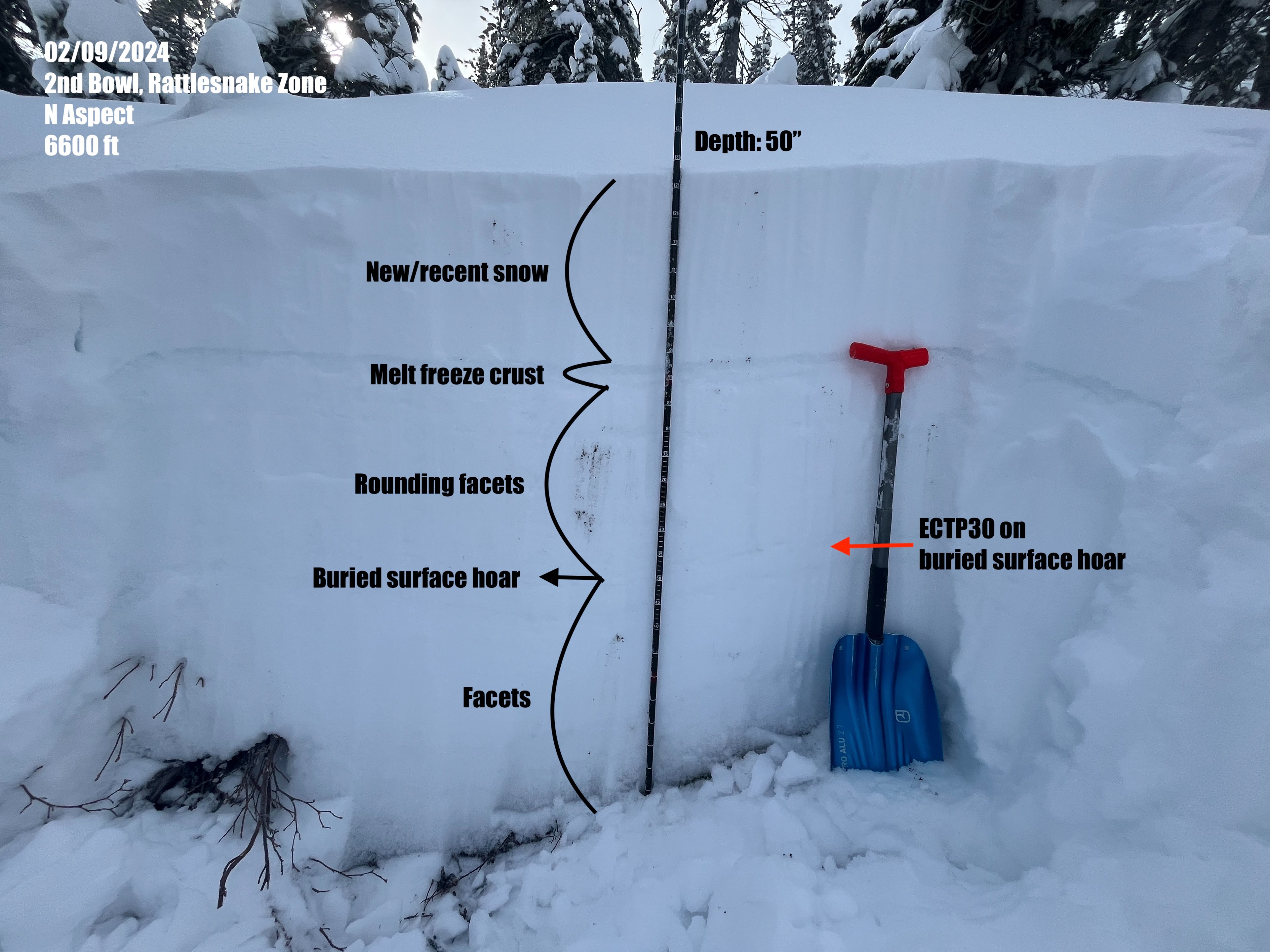
We first dug a pit on a north aspect around 6600'. The depth of this pit was 50" (127cm). We found over 1 foot of new/recent snow sitting on top of a hard melt freeze crust. Below the crust was rounding facets, buried surface hoar, and dry facets at the ground. We performed an extended column test and got a hard propagating result in the buried surface hoar (ECTP30).
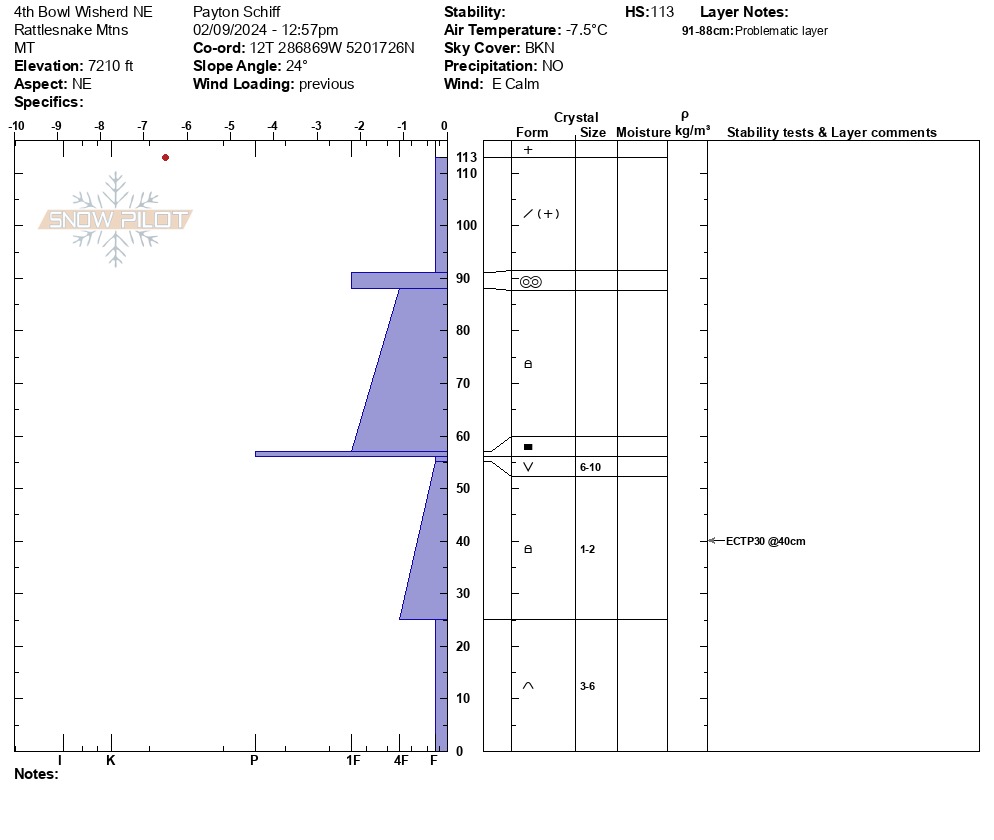
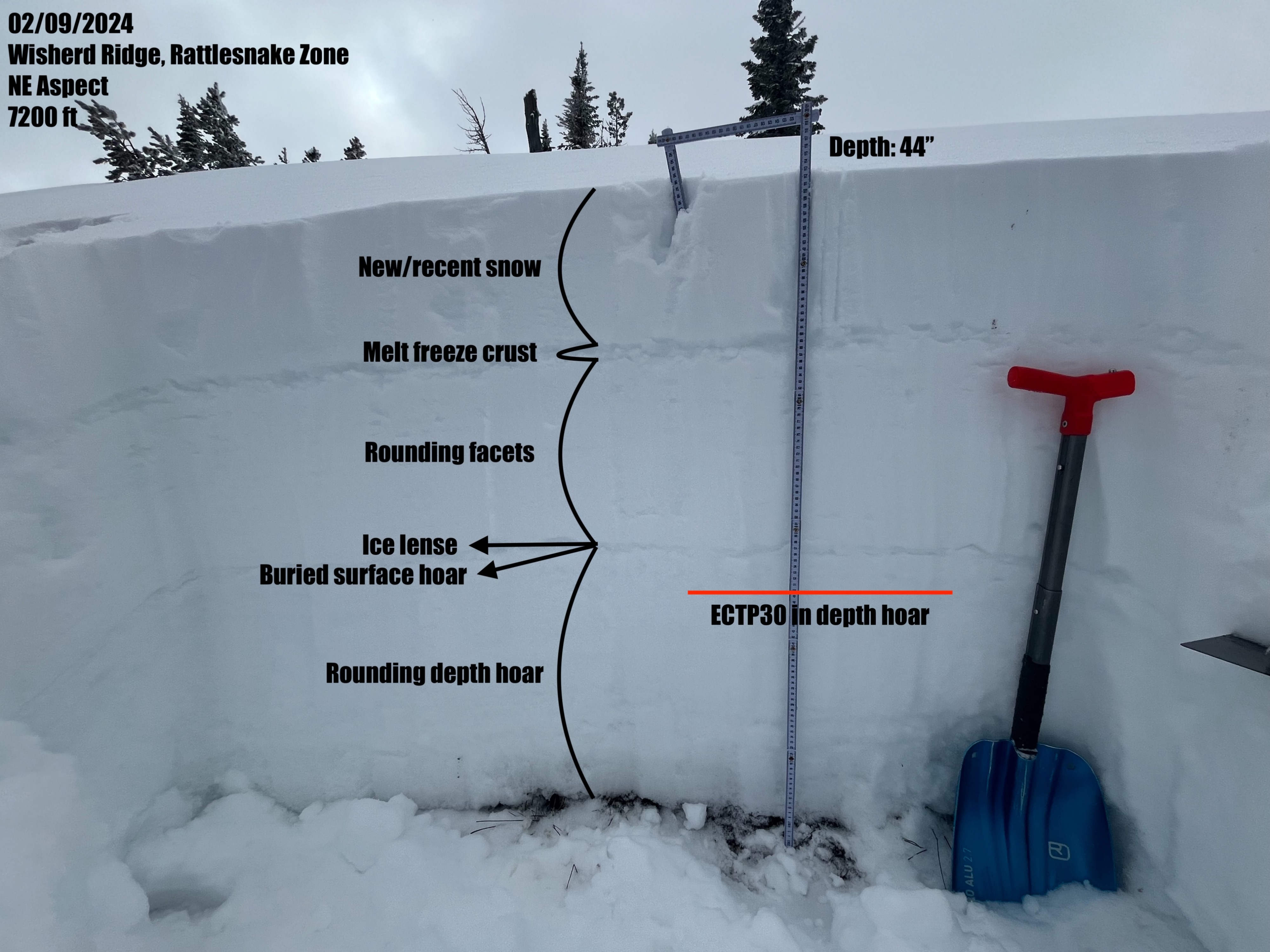
We dug another pit on a northeast aspect around 7200'. The depth of this pit was 44" (113cm). We found slightly less new/recent snow at the surface due to a bit of wind scouring we suspected. We found a similar stout melt freeze crust below the new/recent snow, rounding facets that made up a 4F-1F slab, and a thin layer of ice below the slab. Just below the ice layer was buried surface hoar, and at the ground was rounding facets and depth hoar. We performed an extended column test and got a hard propagating result in the rounding facets near the ground (ECTP30).