
Quick report
The objective of this tour was to assess the conditions in a typical springtime zone, assess the snowpack in the Abineau watershed, and to look for previous avalanches in the area.
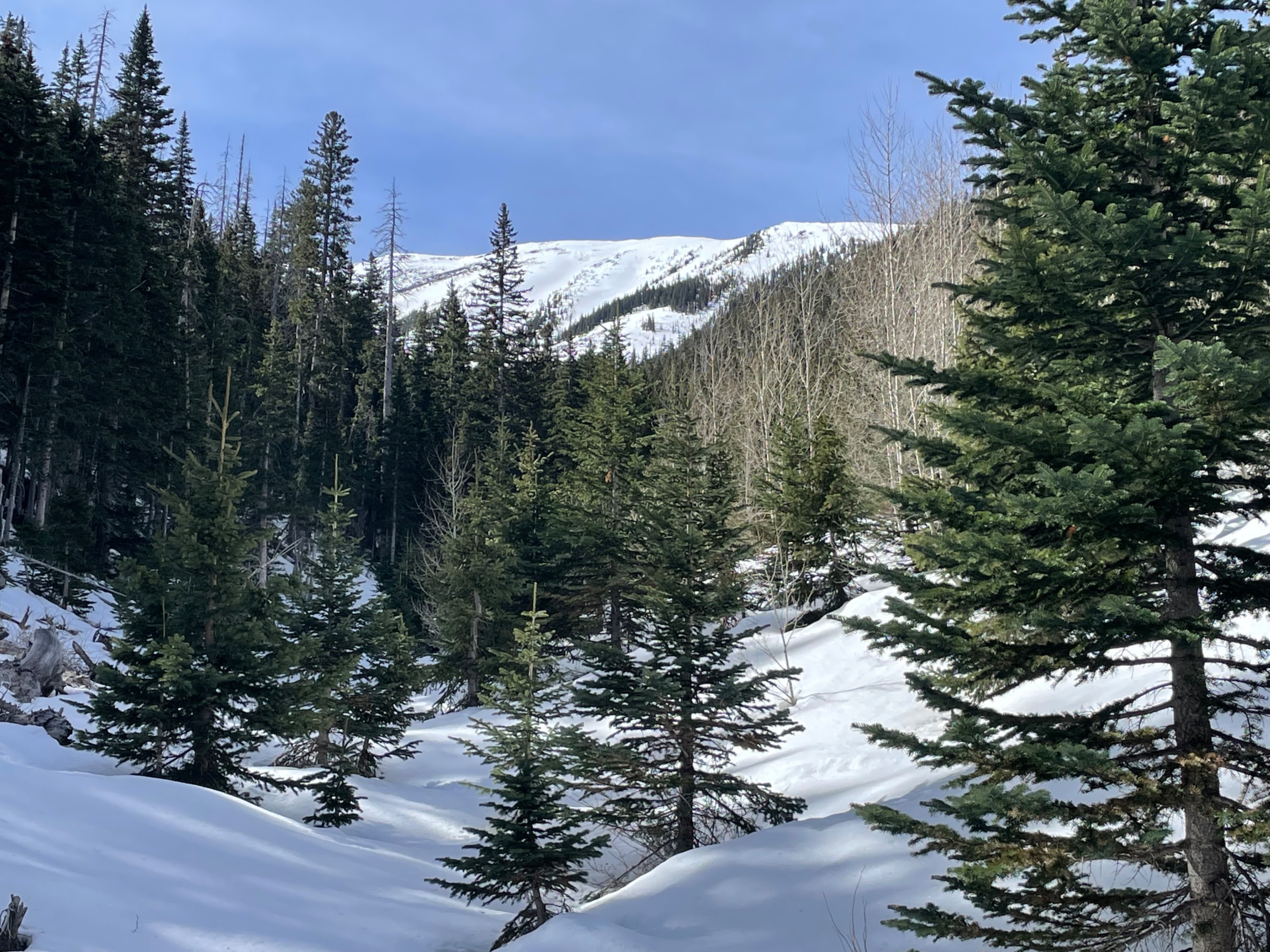
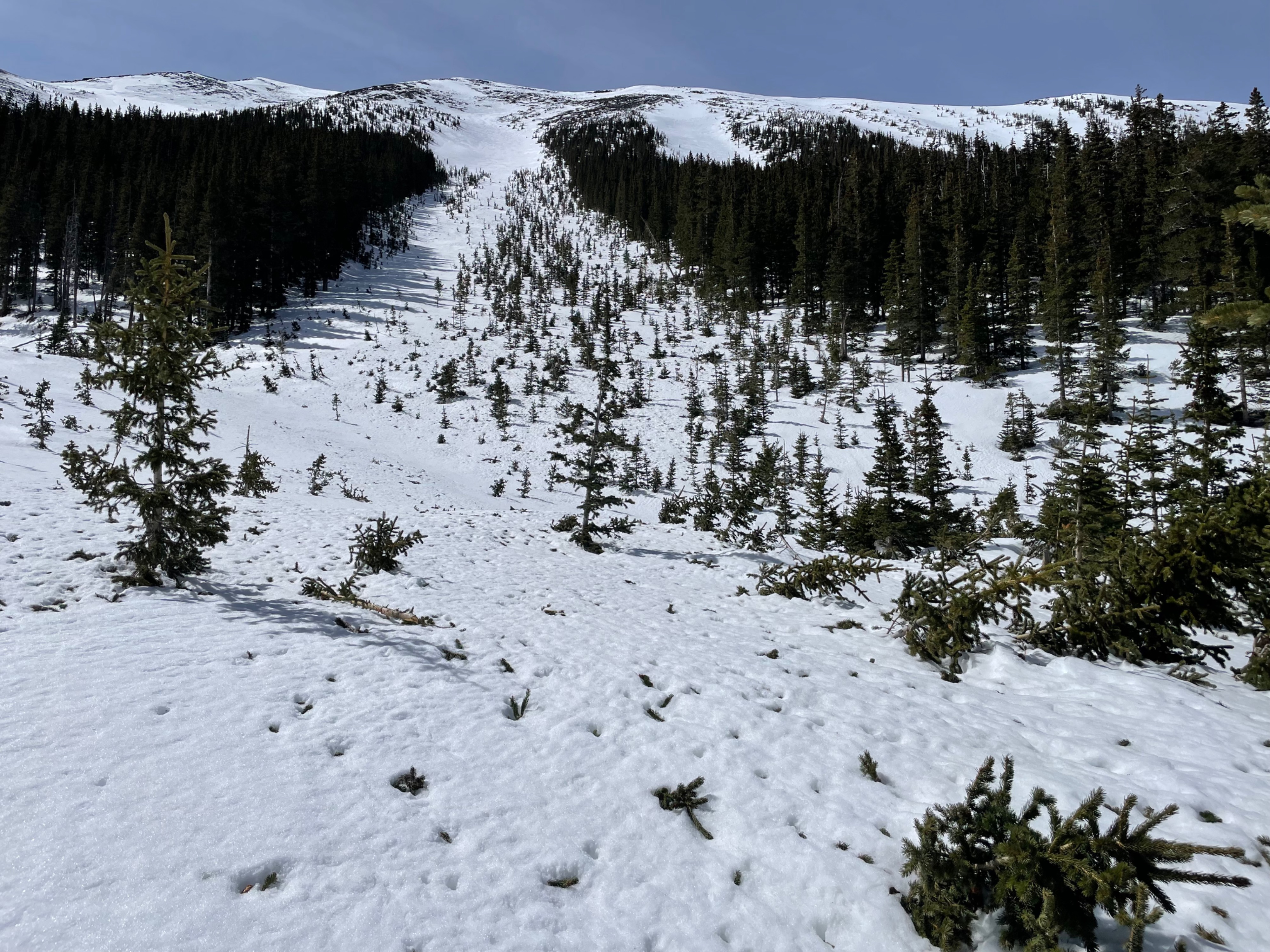
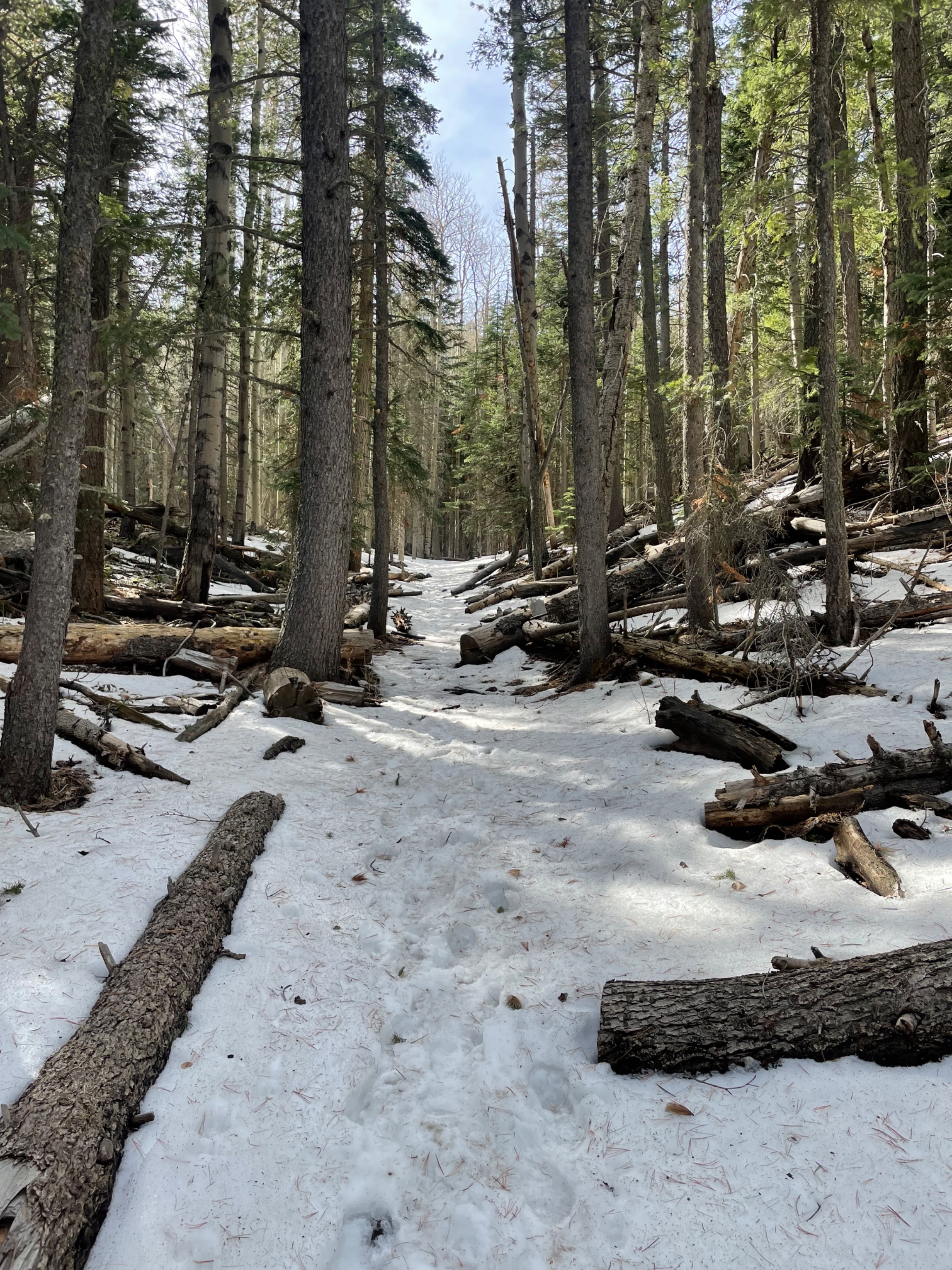
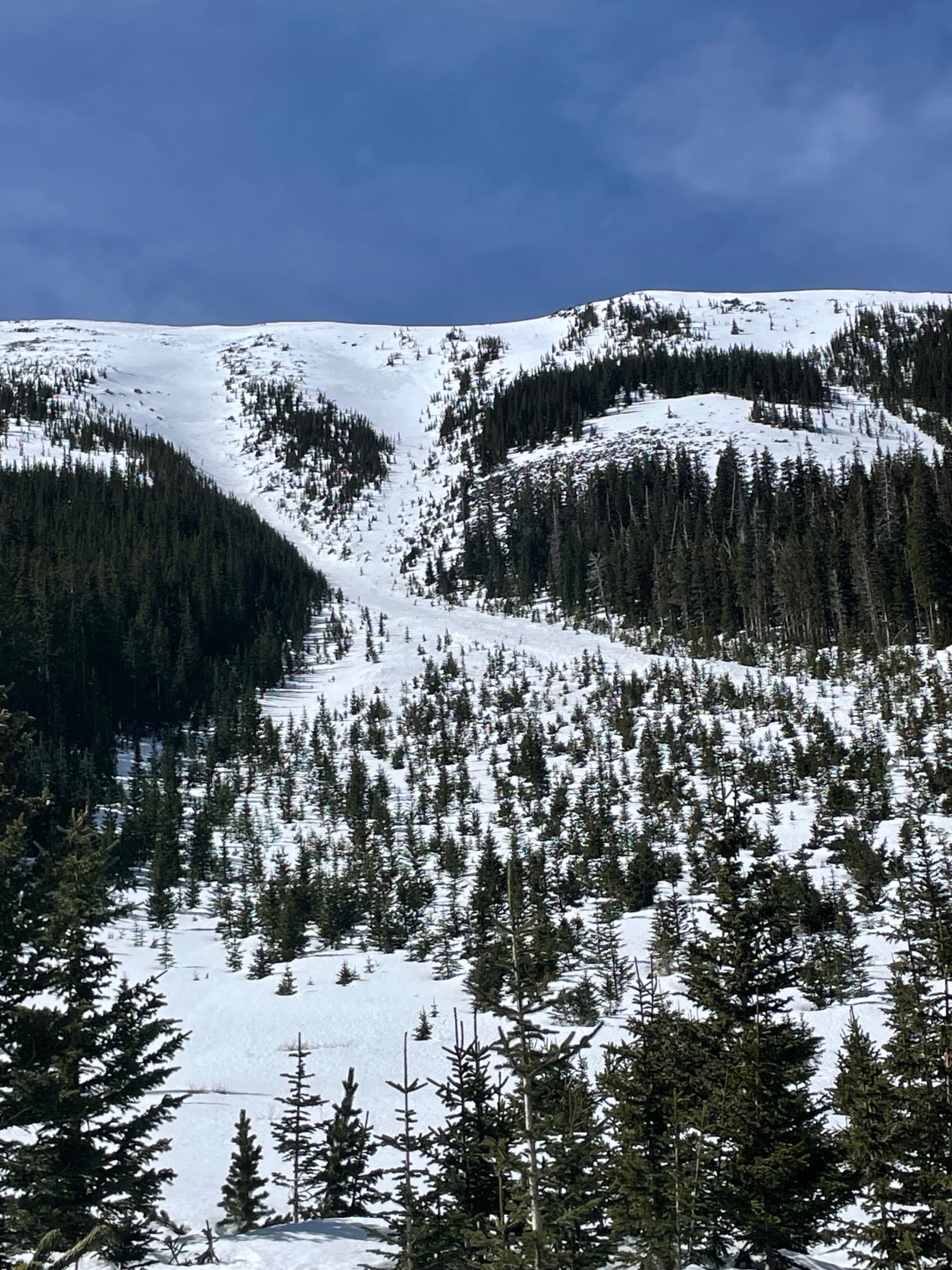
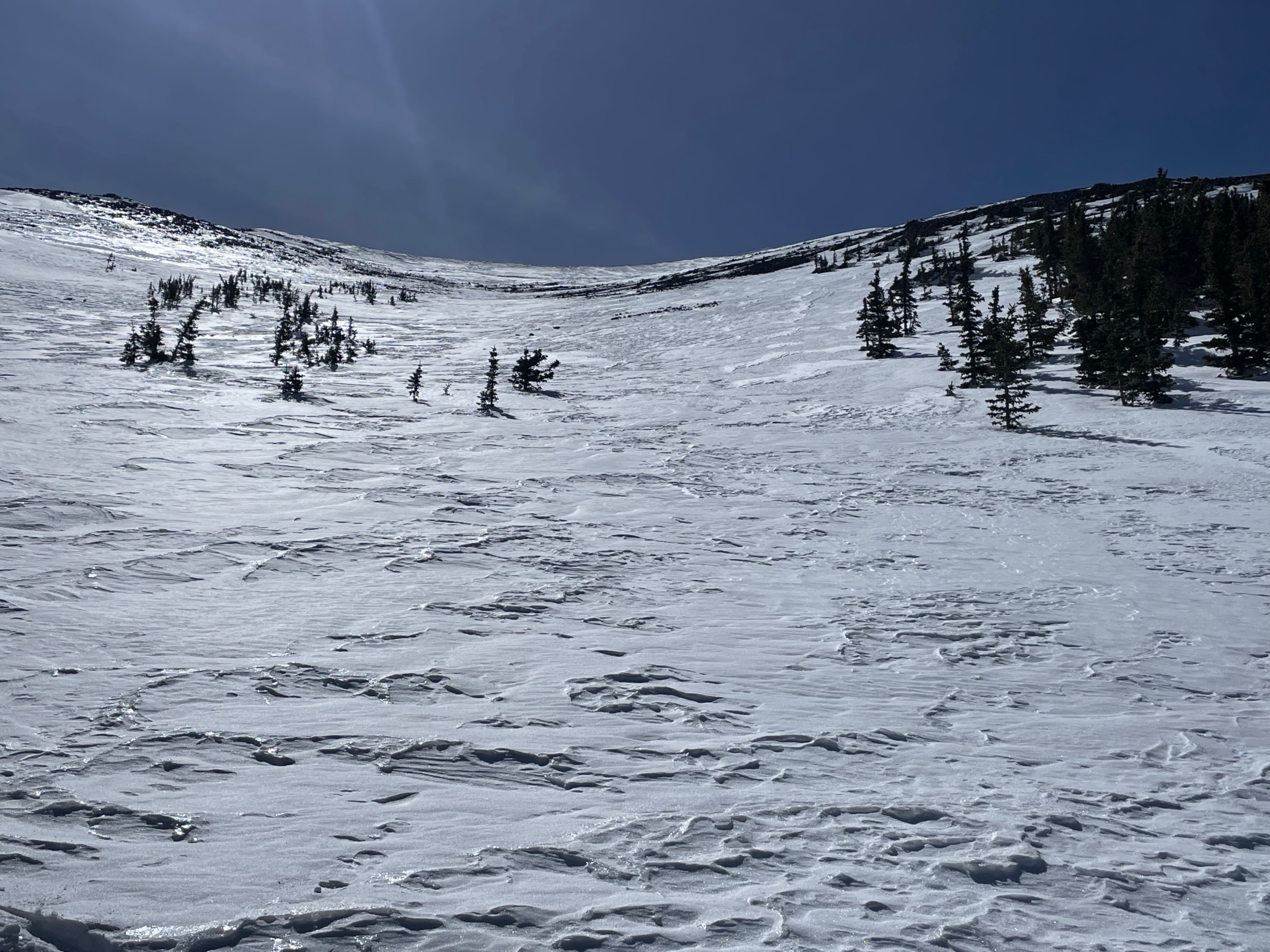
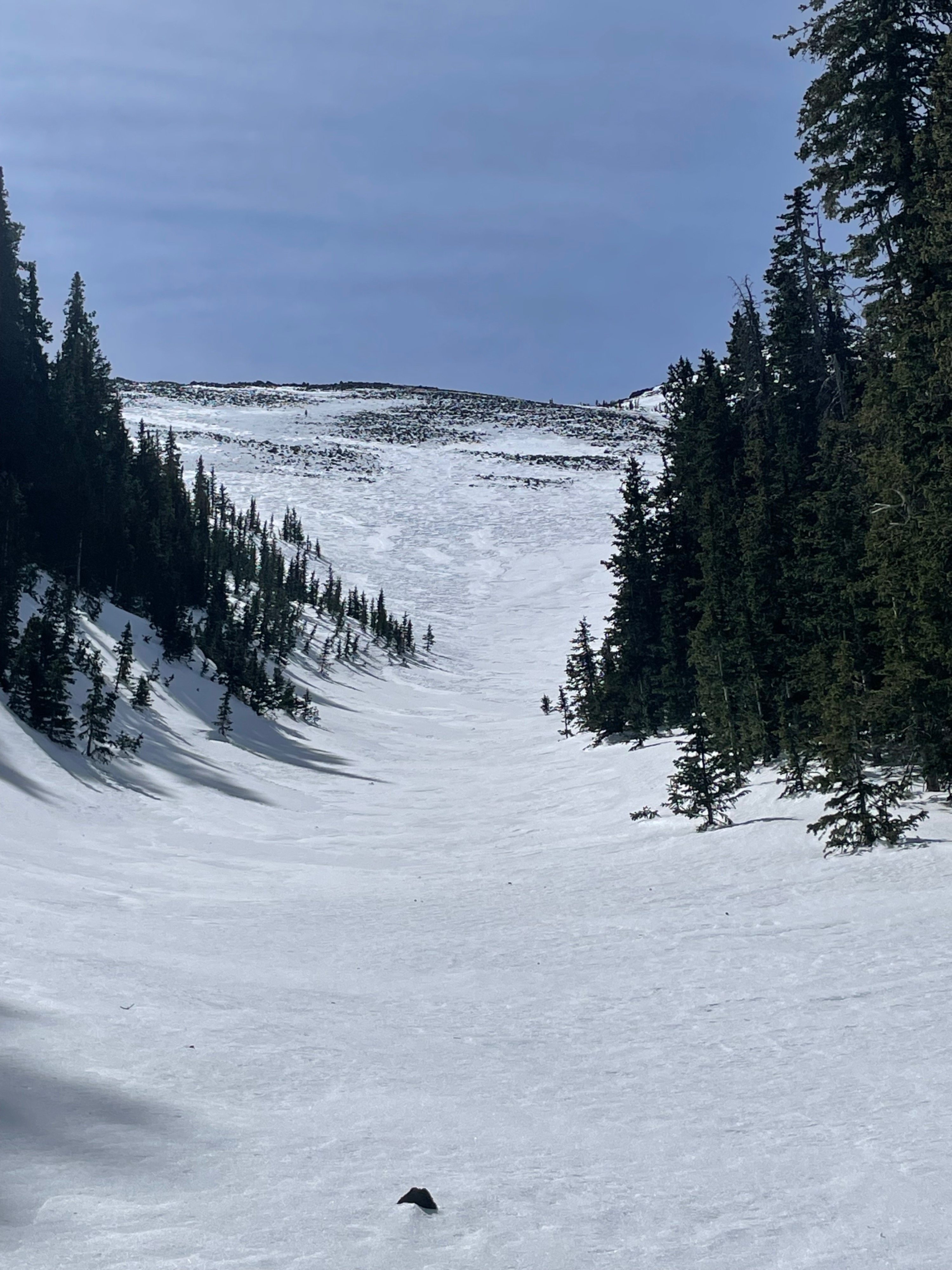
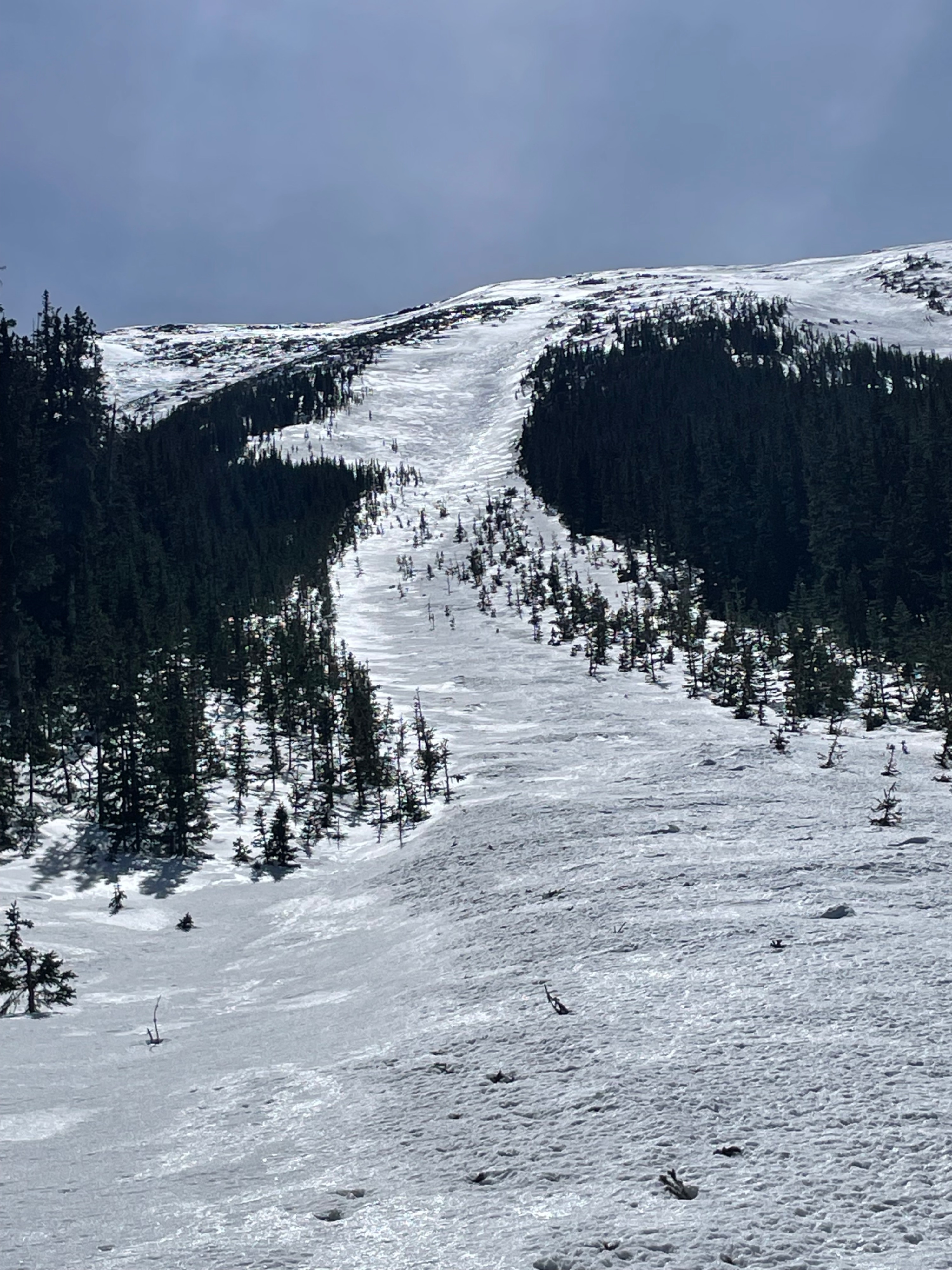
Conditions: The road to the Abineau trailhead was generally clear of snow. Small mud patches were frozen in the AM and had softened in the afternoon. The trail was clear or held small patches of snow for the first mile; after which, skinning on the trail made for the most efficient travel. AM conditions were frozen. Upon reaching the waterline road, we began to assess surface conditions of the various Abineau chutes. The north chute of crossfire had slid (D2.5), as had Sinagua and Anasazi (also D2.5). The Abineau path had not slid. Conditions at 10:00 AM on this "cooler" day required ski and splitboard crampons above 11k. Surface conditions were variable. In some places, what was left of the Holiday Ice Lens (HIL) was exposed. This layer was still hard, but lacked the "blue ice" character reminiscent of much of the season. In other areas, a layer of wind textured snow was present, and still in other locations, there was a melt/freeze crust. The patterns of these areas were generally inconsistent, and snow surfaces varied every 10-30 feet.
In spring conditions, timing matters, and we waited a bit to see if surfaces would soften. By 1:30 PM, surfaces below 11,000 had softened and rode well. Upper elevations did not fully soften on this day, but will likely do so this week, given the higher temperatures forecast over the next few days. This area has been highly impacted by wind and avalanches, and the surfaces will take some time to become more uniform.
On the way down we were able to ski and ride nearly back to our morning transition location.
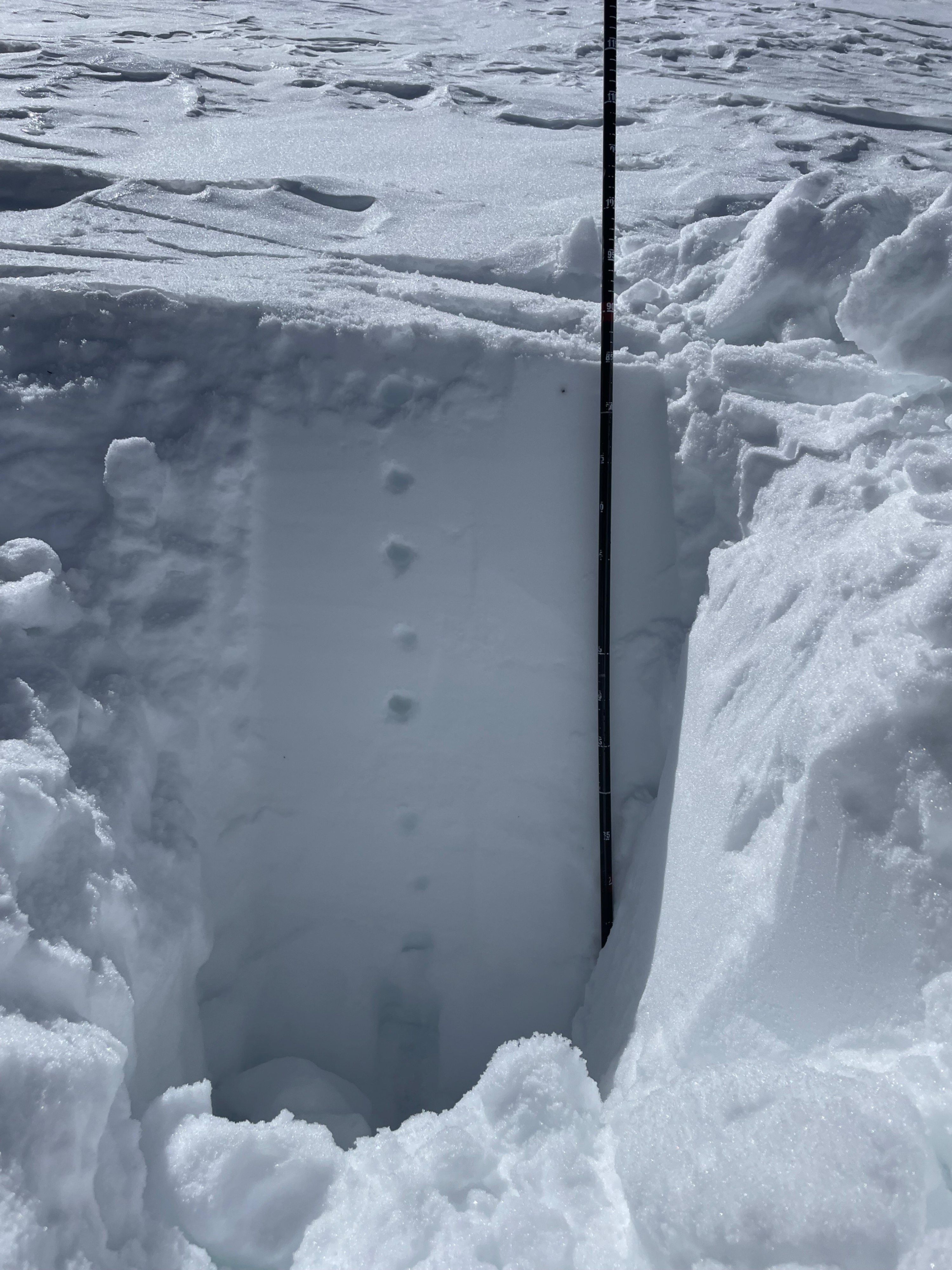
Snowpack: I dug at 11,500 ft. on a NW aspect in previously wind deposited snow. HS averaged 100 cms in most snow covered locations, and this pit measured 105 cms. The upper 4 cms was melt/freeze crust, followed by 1F until about 30 cms where the former ice layer was present (10 cms P). Below the ice lens was a layer of facets that ran to the ground. Most of the snowpack was either wind-compacted particles or rounds. No stability tests were performed.
Avalanches: Crossfire, Sinagua, and Anasazi all had avalanche debris at the bottom of the paths. These slides likely occurred around 2/19, failing on a layer of buried NSFs above the ice lens. Check out the avalanche observations for more information on these slides.
Summary: While the Abineau area is typically a "go to" zone for spring skiing, the current conditions are not as exceptional as normal. Surfaces are highly variable, and the area has been severely wind-affected. Additional melt-freeze cycles may improve conditions, but access will slowly become more challenging as melt-off increases. In general, we were able to find to good turns as surfaces softened, but the area is more impacted by wind, avalanches, and the HIL, making it less consistent than typical in previous snow seasons.
For a better impression of the conditions found on Sunday, 3/15, check out the photos in the media gallery.
Weather
- Air Temp
- 40
- Cloud Cover
- few
- Wind Loading
- previous
- Recent Snowfall
- None
- Snow Avail For Transport
- none
Temperatures were cooler than the previous few days, but still above average. Sun intensity was diminished by a thin layer of cirrus clouds. Light to moderate winds, mostly upslope.
Avalanche
- Size
- D2.5
- Count
- 3
- Aspect
- NE
- Trigger
- N
- Elevation
- 11500 ft
All values estimated