
Weather
- Air Temp
- 30s and 40s
- Cloud Cover
- clear
- Wind Loading
- none
- Rain Elevation
- NA
- Recent Snowfall
- 0
- Snow Avail For Transport
- small smounts
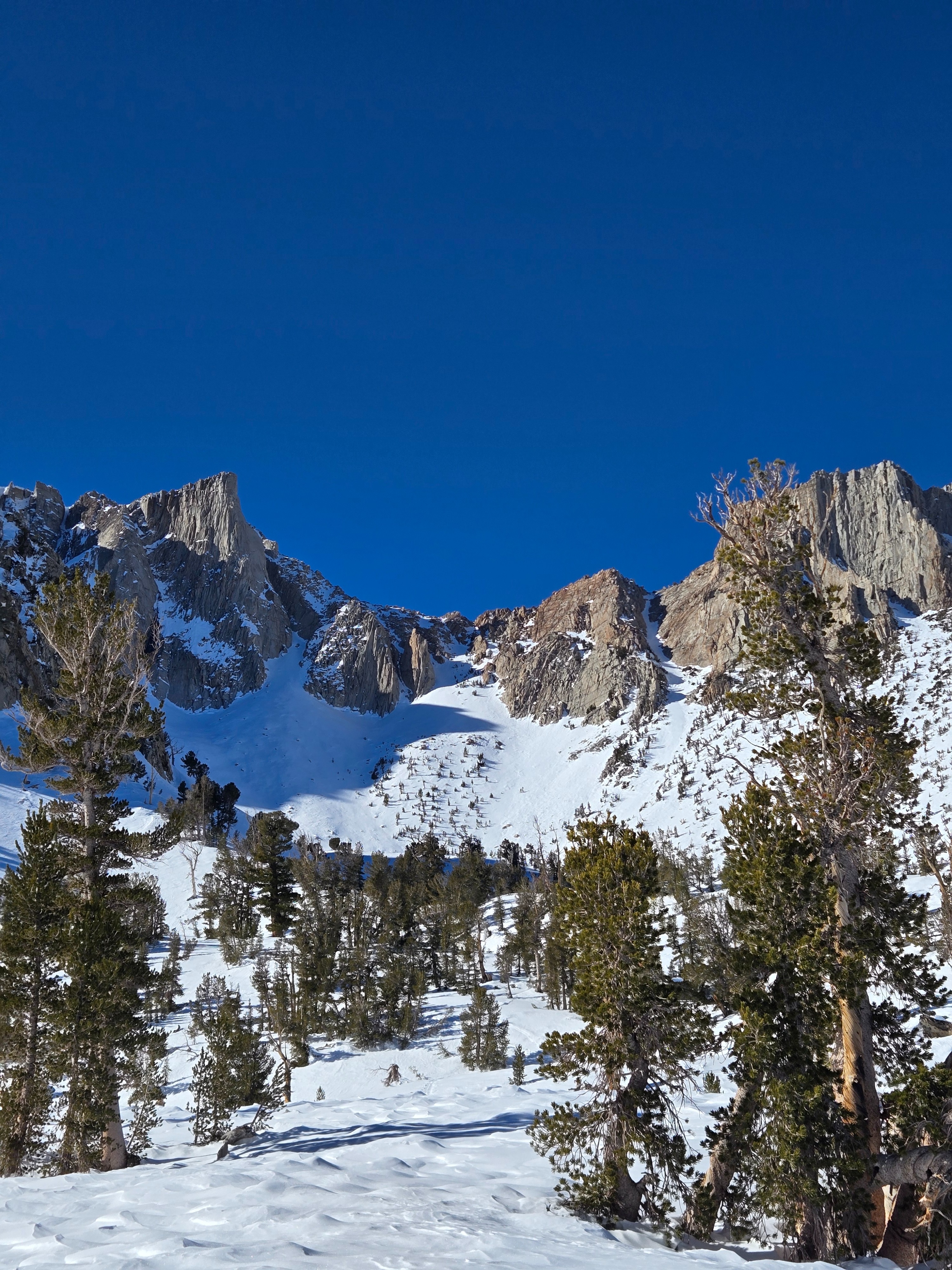
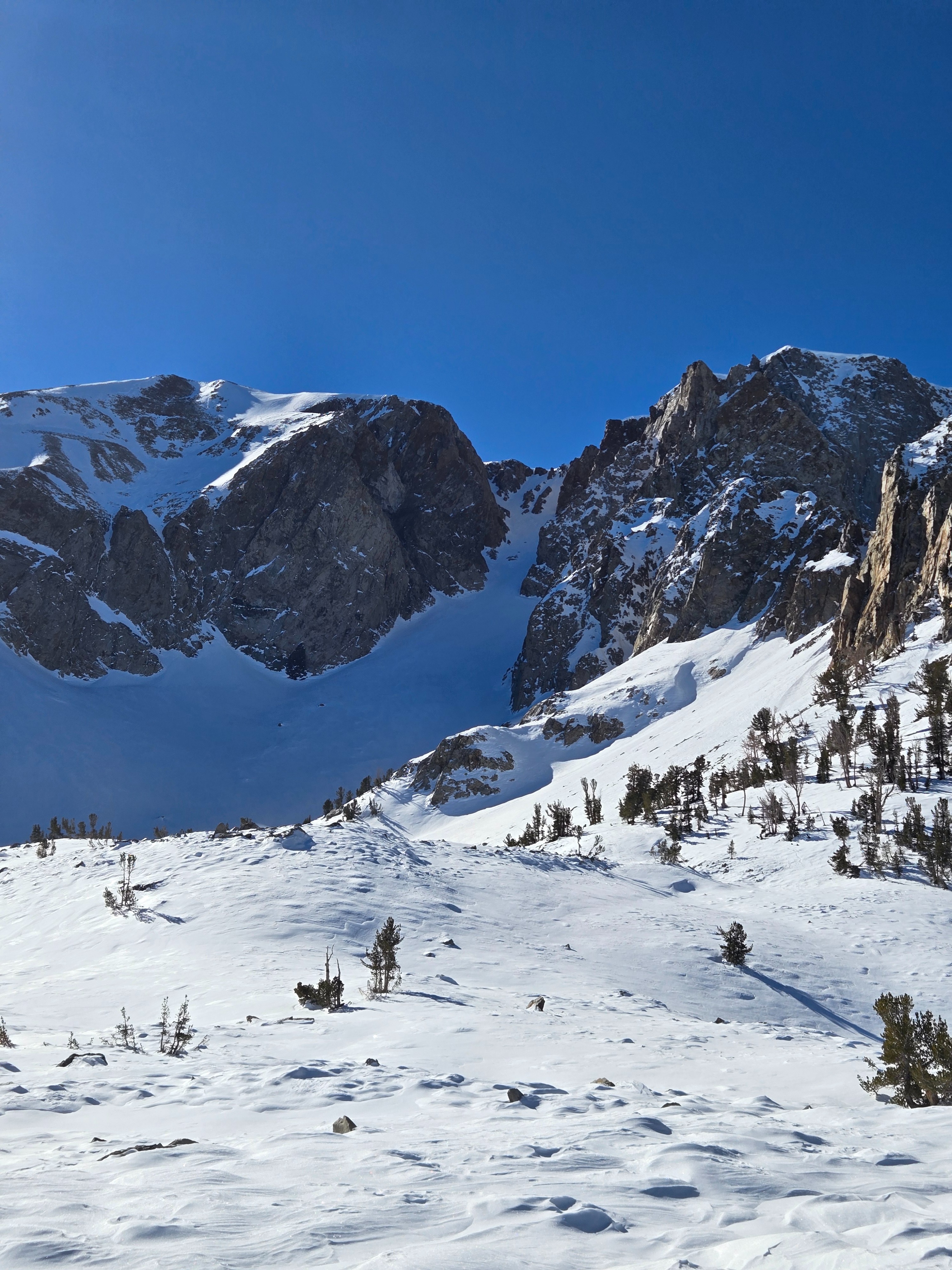
Valley fog around Mono Lake, and very cold morning temperatures gave way to clear skies and above freezing temps as we drove above 7000 ft. into the mouth of Lee Vining Canyon. Light southwest winds, but no blowing snow.
Snowpack
Surfaces:
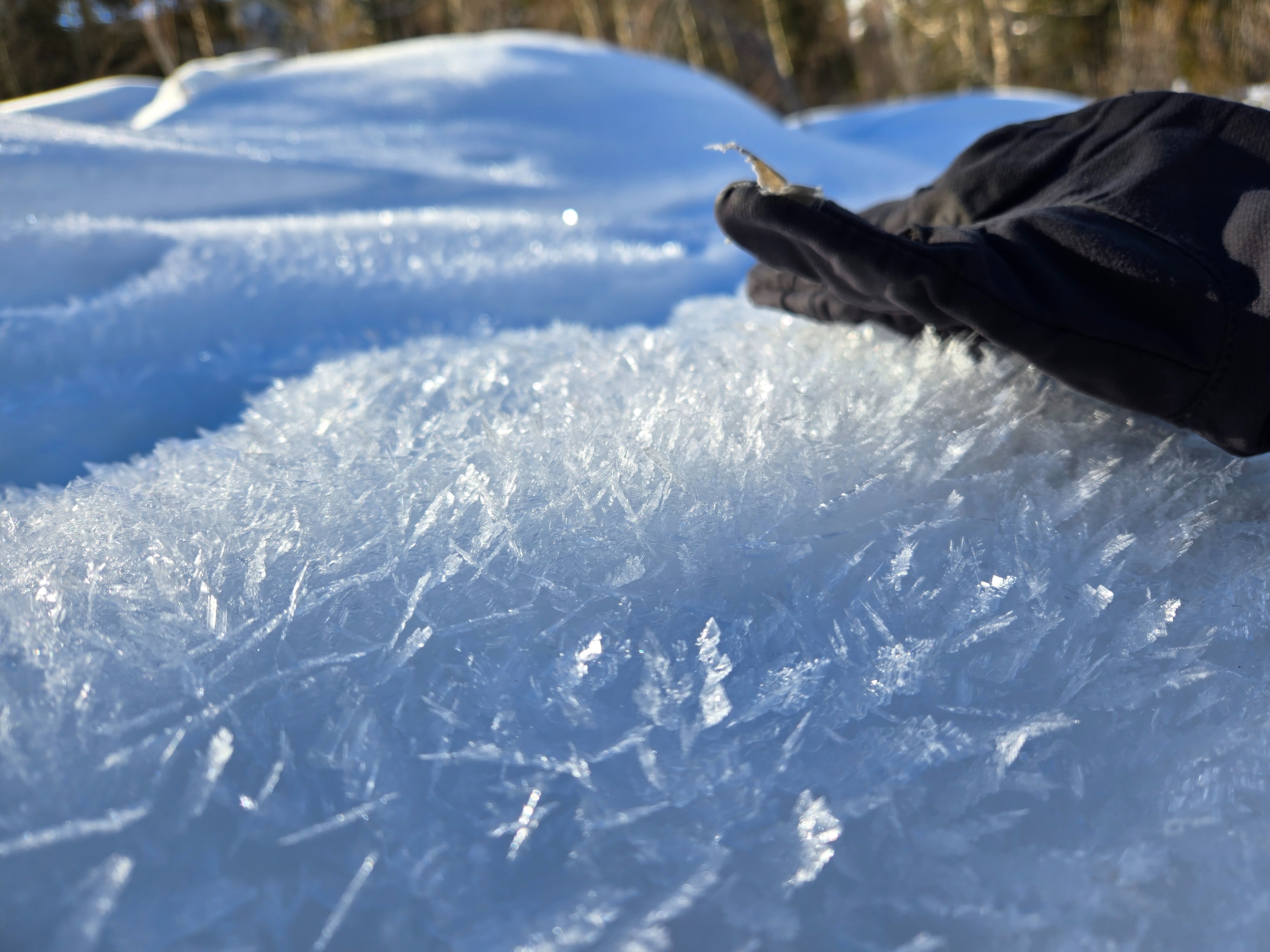
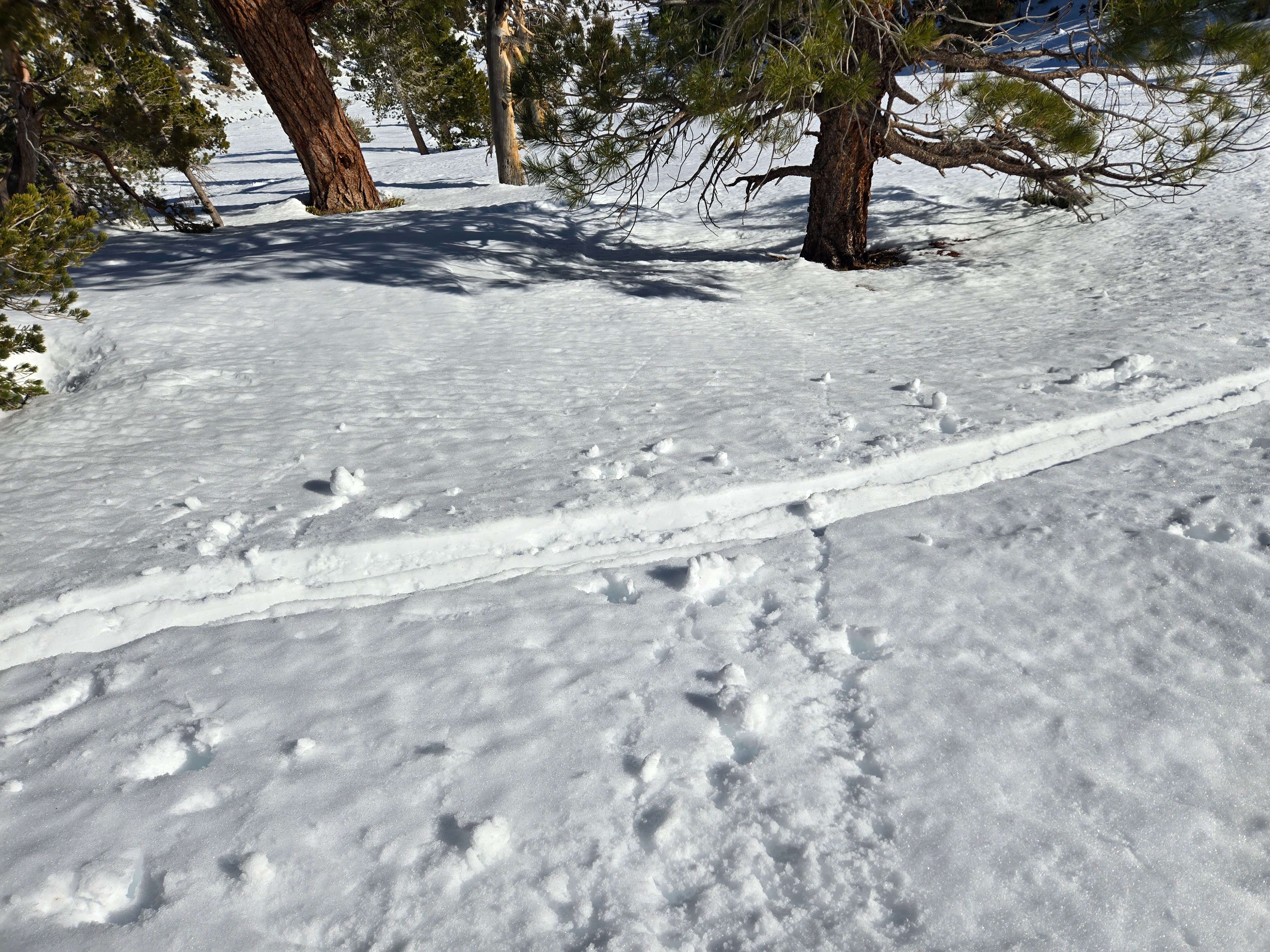
- Wet melt-freeze snow, cold, dry near-surface facets, and stiff windboard all while traversing one terrain feature.
Structure:
My goal was to revisit a place where I saw the most concerning structure around the New Year's Crust over a week ago. I wanted to see if the structure has improved with the warm temps, or deteriorated with the cold nights and clear skies. On north, northeast, and east-facing terrain near treeline, I got propagating snowpack tests on large facets above the New Year's Crust. The facets are larger and weaker than on my last visit.
- ECTP13 on a north aspect at 9300 ft. near treeline where snow depth was 105 cm and the crust was 38 cm below the surface. This was in a more sheltered, treed area where winds can stiffen the surface.
- ECTP 25 on an east aspect at 9500 ft. near treeline where snow depth was 115 cm and the crust was 65 cm below the surface. This was in an open area with obvious signs of previous wind-loading.
Let's review the yellow flags that indicate poor snowpack structure, which can lead to instability.
- The layer of concern consists of grains larger than 1 mm. Check. These facets are 2-3 mm.
- The layer of concern has a hardness of less than 1 Finger. Check. This facet layer is Fist hard.
- The layer of concern is a persistent grain type. Check. These are facets.
- The difference in grain size between the layer of concern and the overlying slab is greater than 0.5 mm. Check. The grains in the slab were 0.5 mm wind-packed rounds.
- The difference in hardness between the slab and the layer of concern is greater than 1 step. Check. The slab was 1 Finger, and the weak layer was Fist. (From softest to hardest: Fist, 4 Finger, 1 Finger, Pencil, Knife, Ice).
- The depth of the interface between the slab and the layer of concern is between 20 and 85 cm below the surface. Check. We found the weak layer down 35 to 65 cm under the surface.
In most places across the Forecast Area, this weak layer is not a problem yet because either no facets are above the crust, or there's no solid slab atop the facets.