
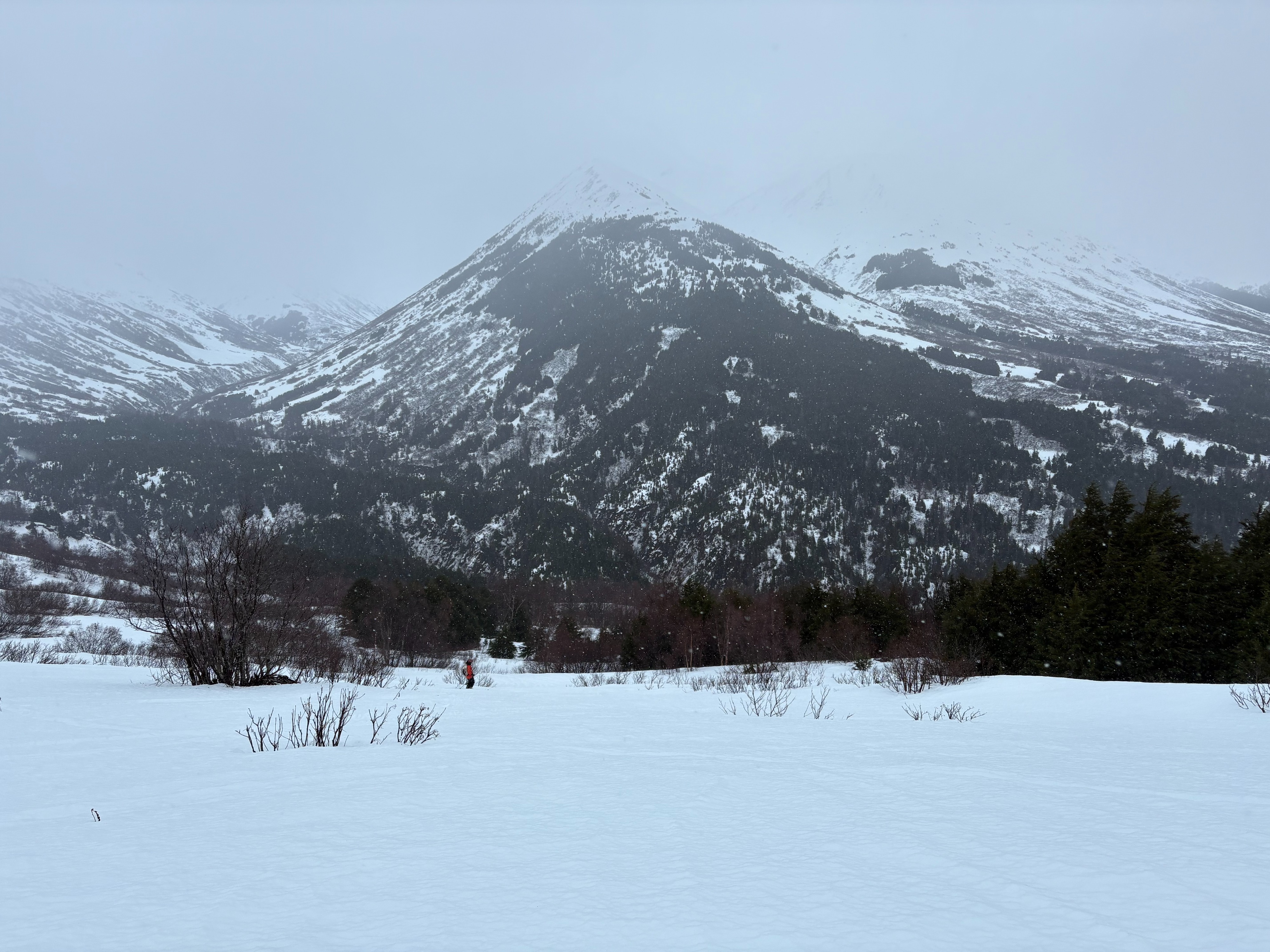
Quick report
- Cracking
- specific
- Collapsing
- isolated
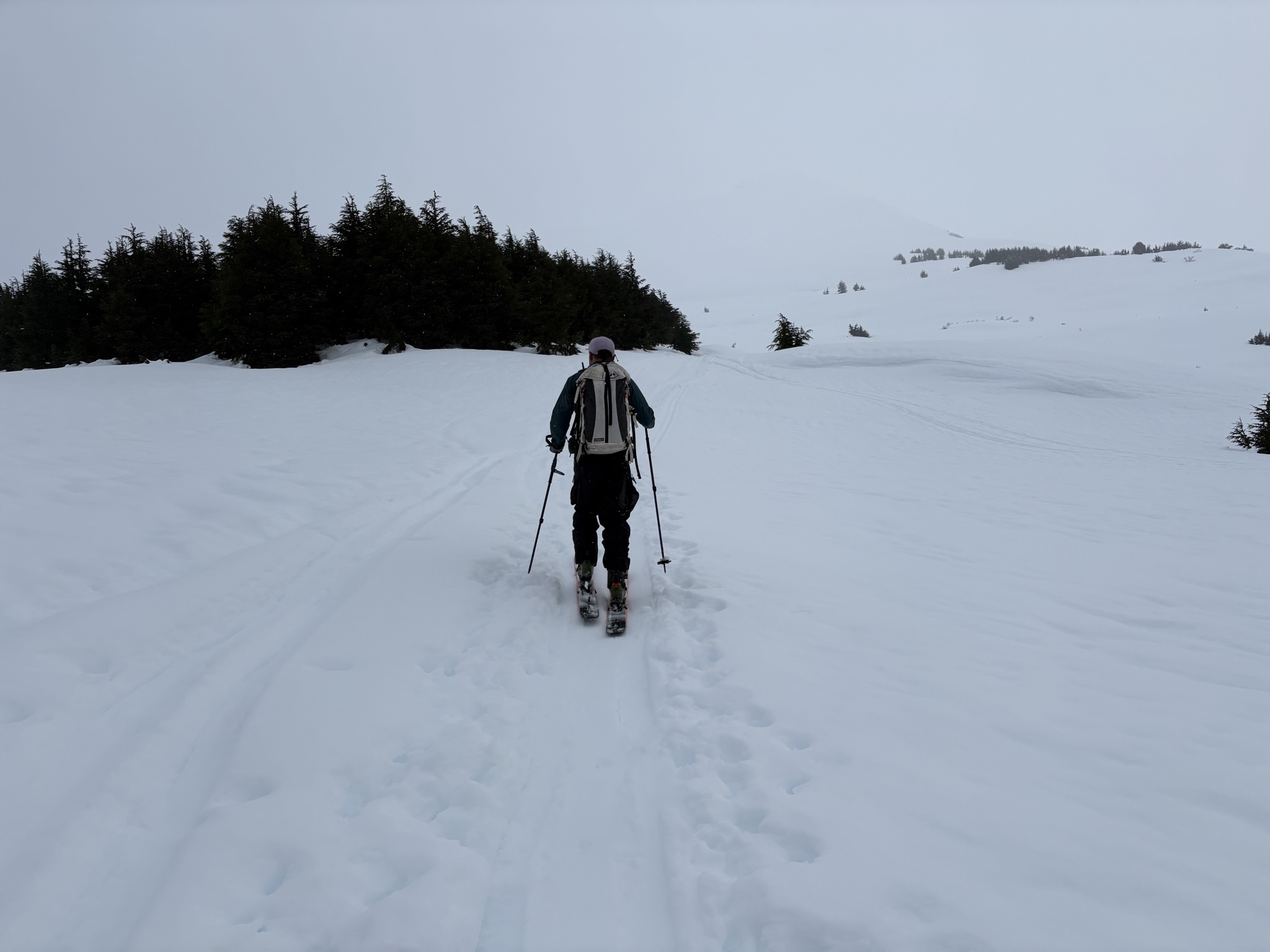
Below 2,500 ft, we encountered saturated snow. Between 2,500 and 3,000 ft, we found a breakable rain crust capped by approximately 2 inches of new snow, with continued moderate snowfall throughout the day. Around 3,000 ft, the rain crust disappeared and surface conditions transitioned to soft snow. We dug a snowpit near 3,000 ft and performed an Extended Column Test. The test did not produce propagating results; however, the December facet layer remained too deep to test effectively, buried approximately 170 cm below the surface beneath several stout wind crusts.
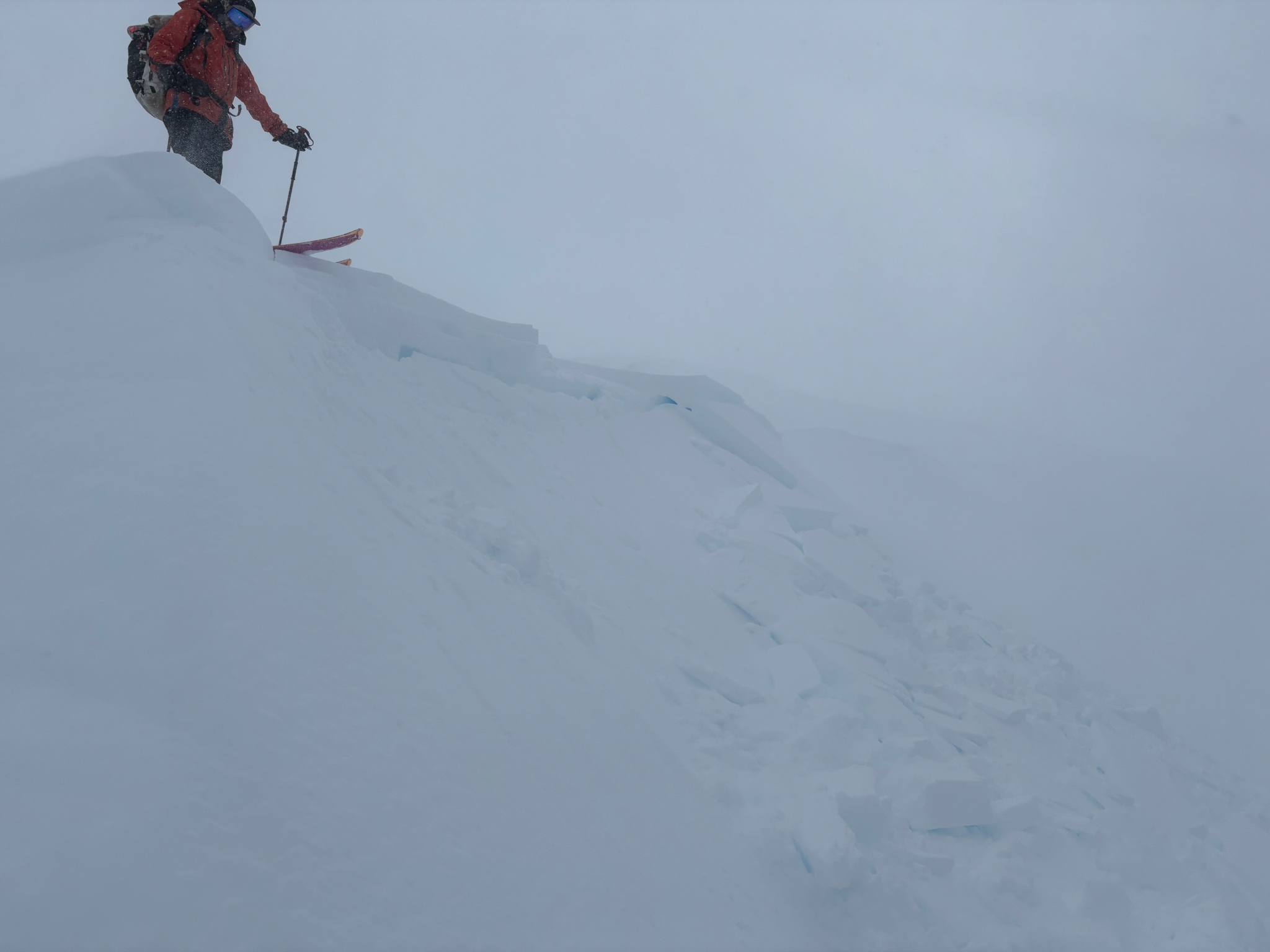
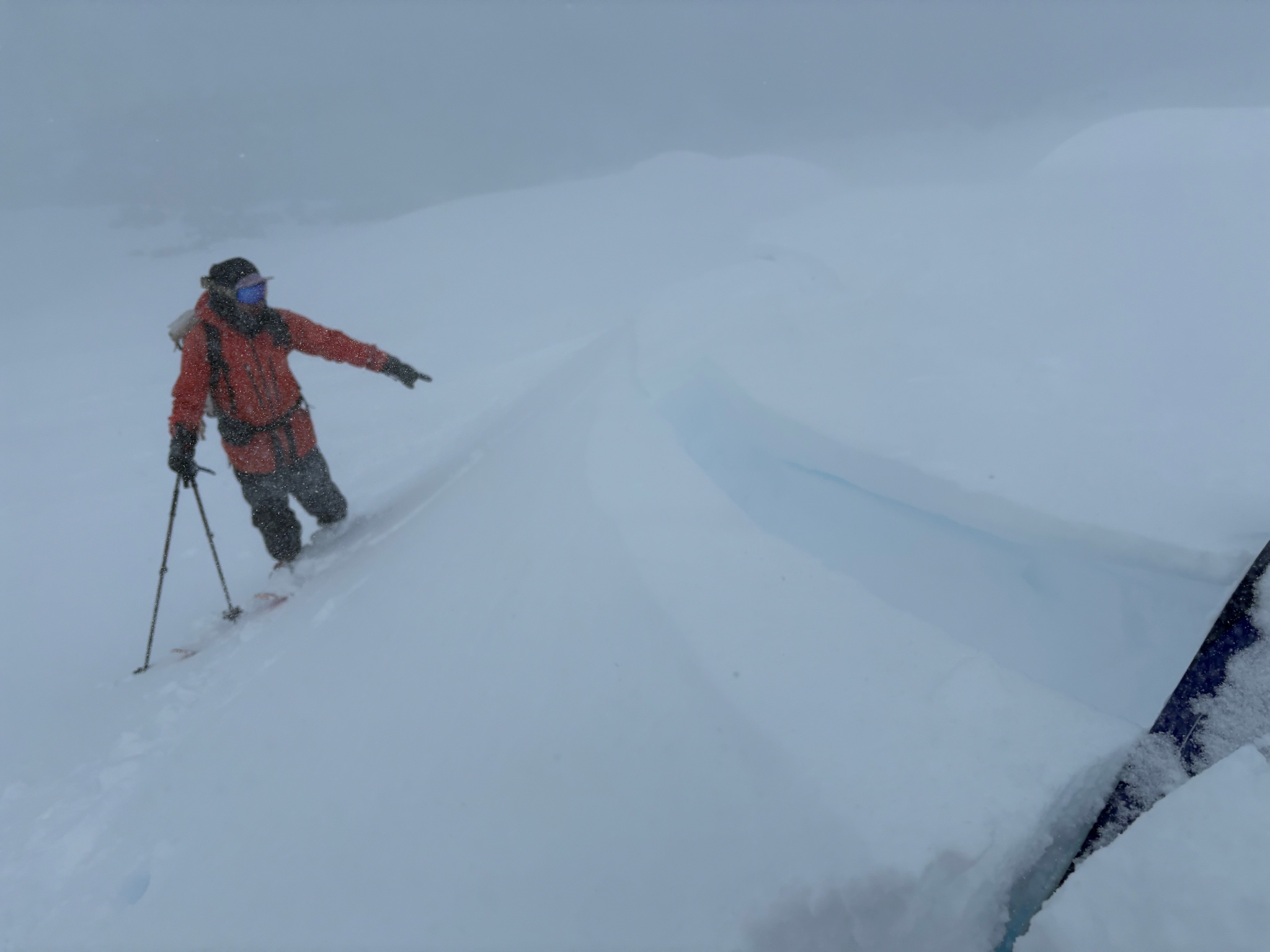
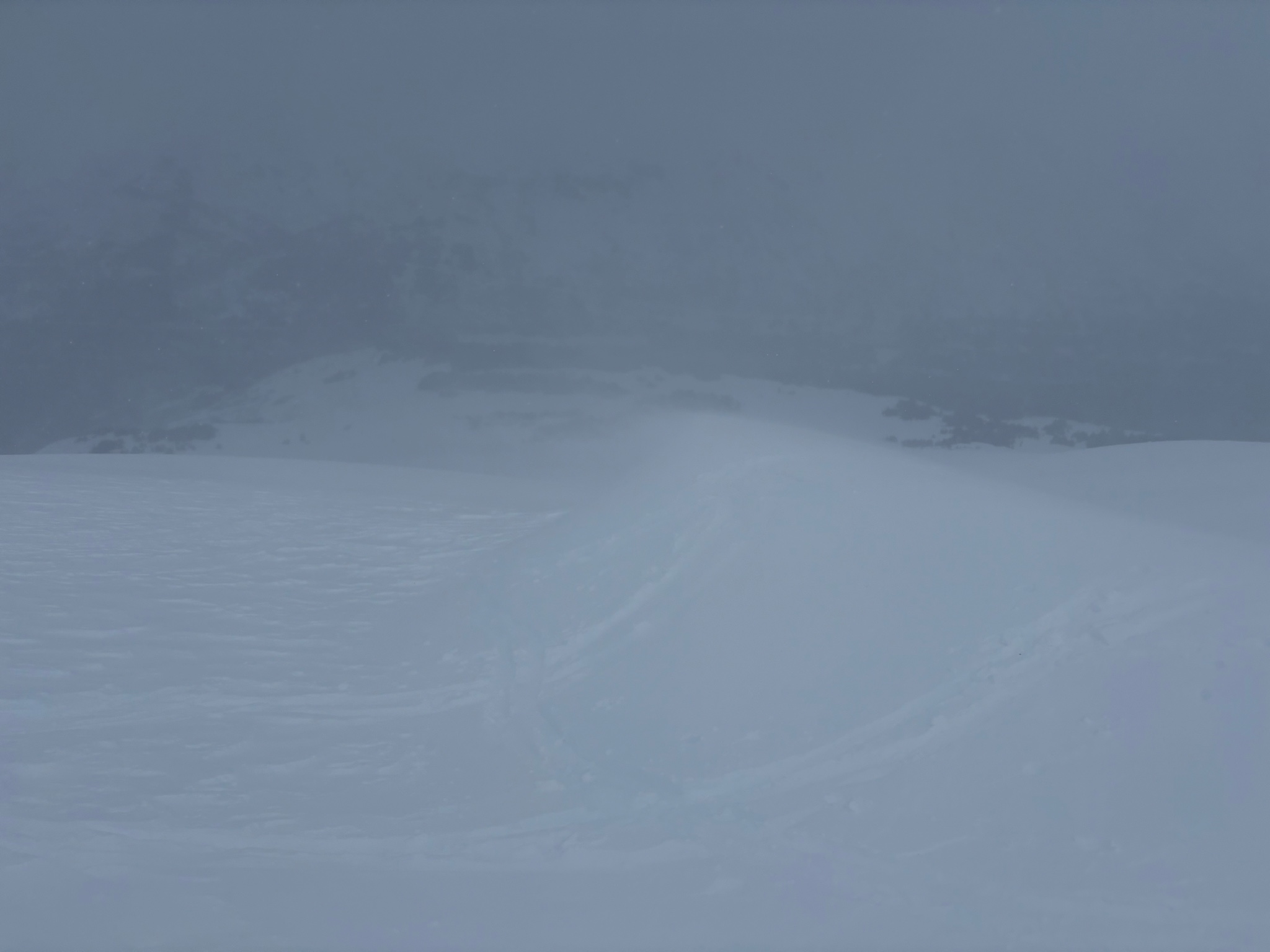
We reached the ridge around 3,400 ft, where we planned to dig an additional pit, but strong winds actively loaded most slopes and snow depths remained too great to effectively target the buried December facets. Along the ridge, fresh wind slabs 0.5–1 ft deep triggered easily, consistent with strong winds and moderate snow accumulation at this elevation.
Manitoba Bowl remains relatively sheltered from easterly winds, and the buried weak layer sits deep in this location, making deep persistent slab stability difficult to assess. Our primary concerns today included freshly forming wind slabs on westerly and southwesterly slopes, as well as the potential to trigger wet avalanches below treeline, where rain continued to fall and the snowpack still produced red flags such as whumphing.
At 1,900 ft, we experienced one loud collapse near the established skin track in saturated snow. Near the Manitoba ridgeline (3,300–3,400 ft), we observed shooting cracks and freshly forming wind slabs on westerly aspects. Most slabs were 6 to 12 inches deep and easy to trigger.Weather
- Cloud Cover
- overcast
- Wind Loading
- moderate
- Rain Elevation
- 2,400 ft in the morning and 2,200 ft in the afternoon
- Recent Snowfall
- 5 cm above 2,400 ft and moderate wet snowfall throughout the day
- Snow Avail For Transport
- moderate amounts
The rain line gradually lowered throughout the day but remained very high. Above treeline, strong easterly winds actively transported snow.
Snowpack
In the alders around 1,900 ft, where we experienced a loud whumph, pole probing indicated the December facet layer remains intact and was the likely culprit of the collapse. This mirrors feedback we have observed over the past few weeks. Above this elevation, the snowpack provided little feedback underfoot.
We dug a pit at 3,000 ft on a westerly aspect and found approximately 170 cm of wind-packed snow overlying sugary December facets. An extended column test did not produce unstable results. Manitoba Bowl remains well sheltered from these easterly winds, and the buried weak layer sits deep in this location. The depth of the snowpack made it difficult to effectively assess the reactivity of the December facet layer and we found no layers within the upper portion of our pit that indicated instability.
Avalanche
Visibility was poor above treeline, limiting views of surrounding peaks. We did not observe recent avalanches on Manitoba but strong winds, ongoing snowfall, and warm temperatures suggest additional natural avalanche activity likely occurred today.