
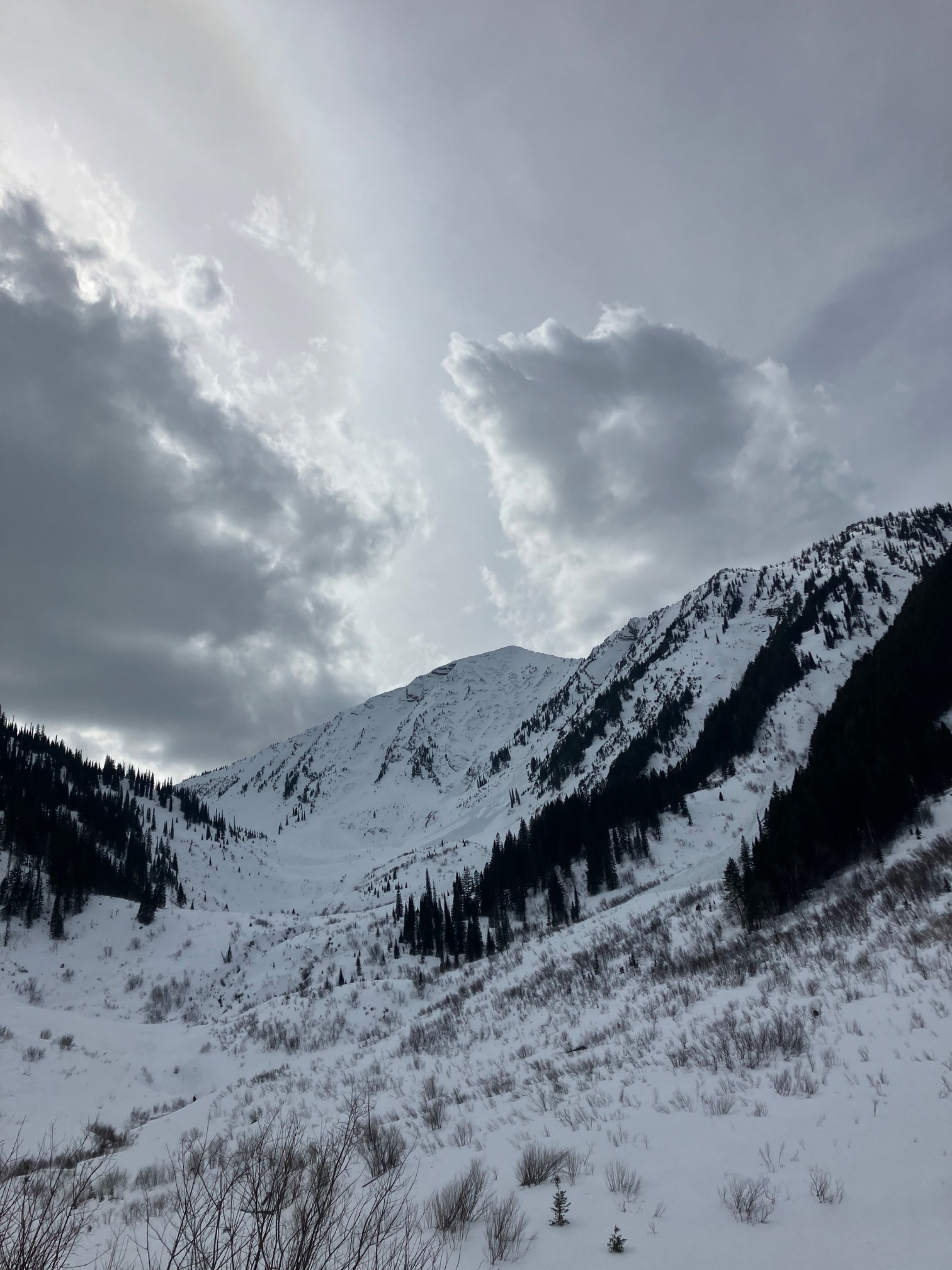
Quick report
Today was a quiet avalanche activity day in Rescue Creek.
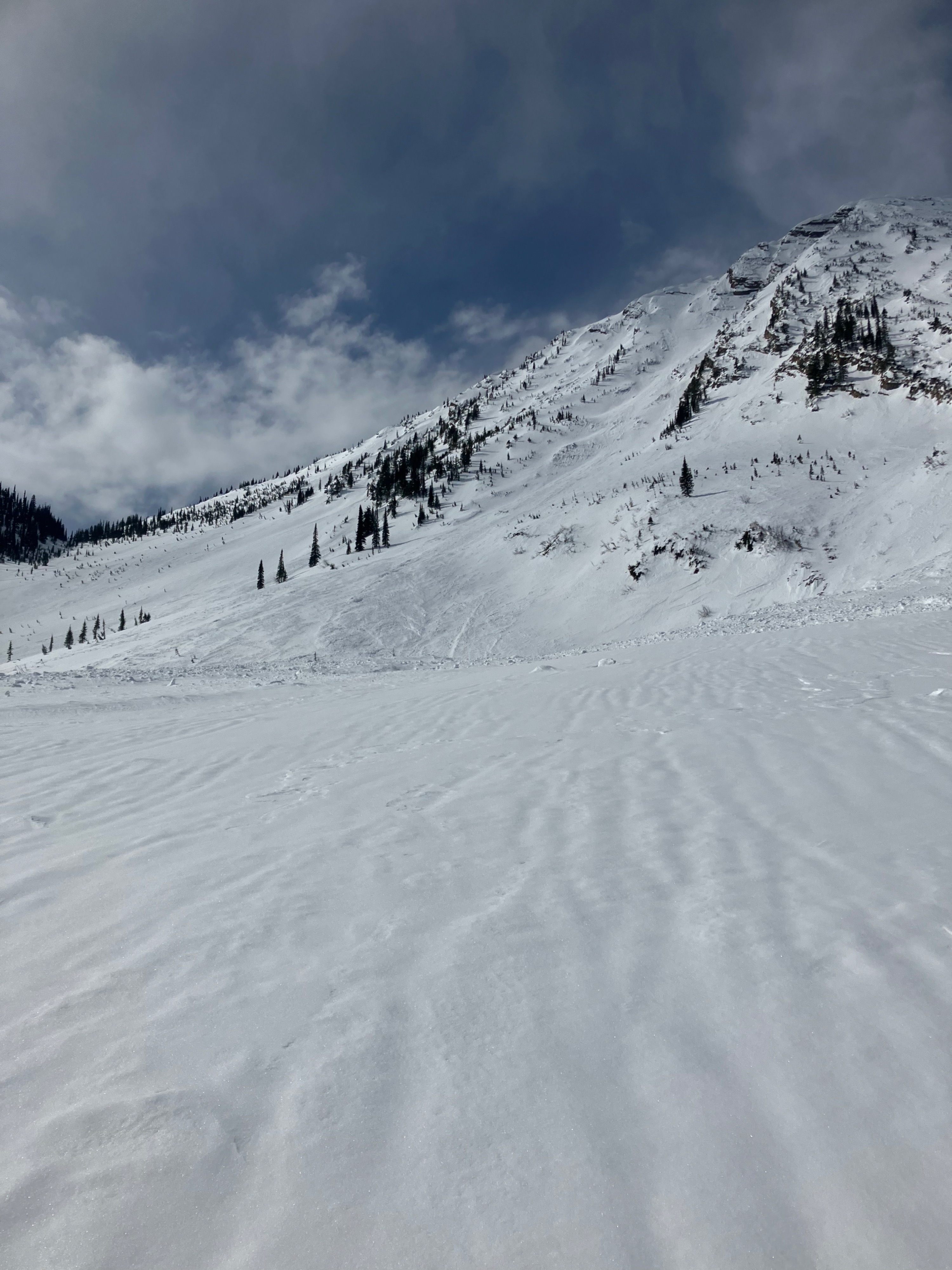
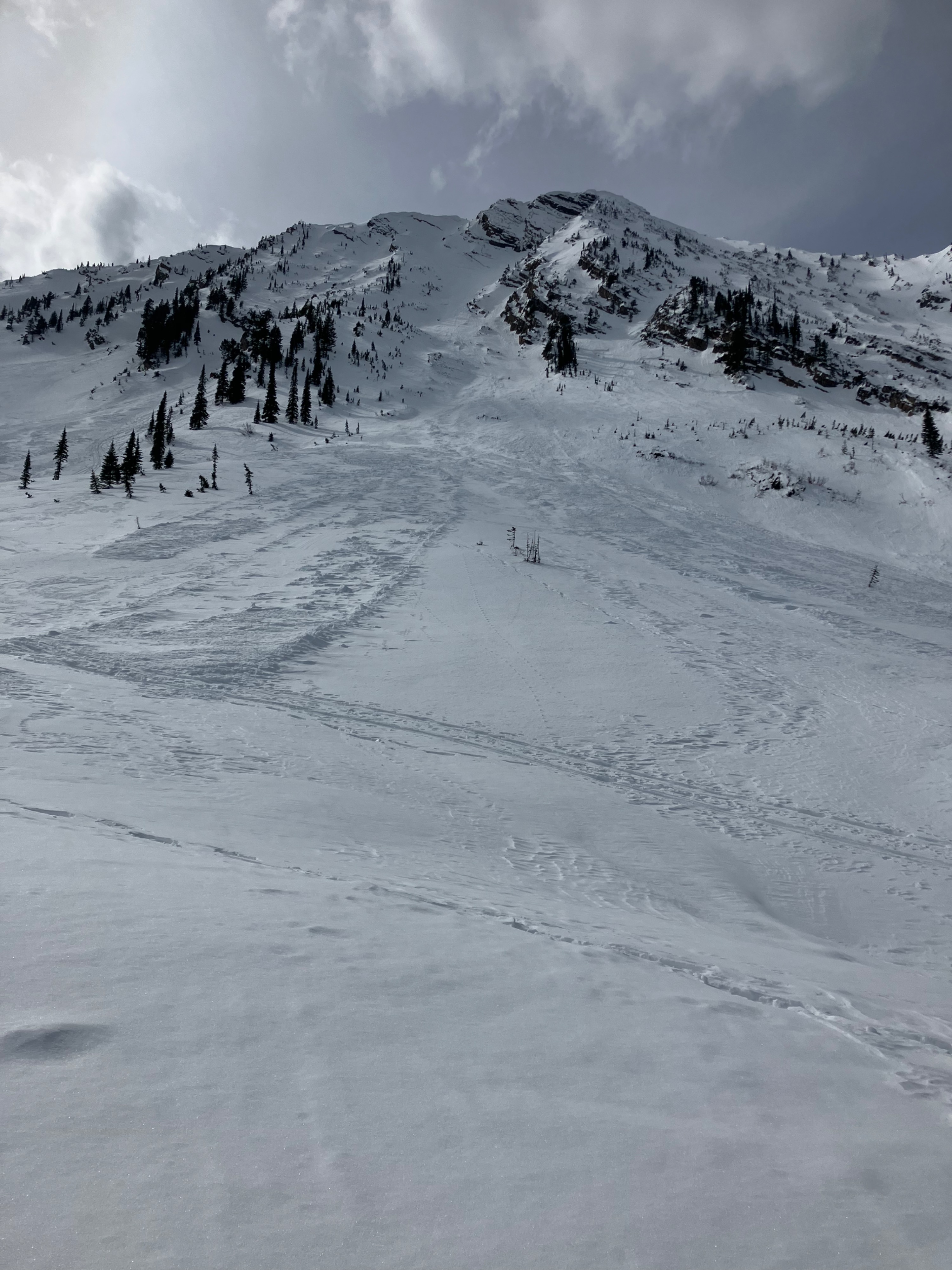
- No avalanche activity was observed throughout the day. We didn't even see a roller ball. All previous wet loose avalanche activity was from previous days this week or earlier.
- Surface crust made fast travel conditions and was supportable until we transitioned to a northerly aspect of about 5700 feet.
- We dug at a pit on a north aspect around 6000 feet, and we got no propagating results.
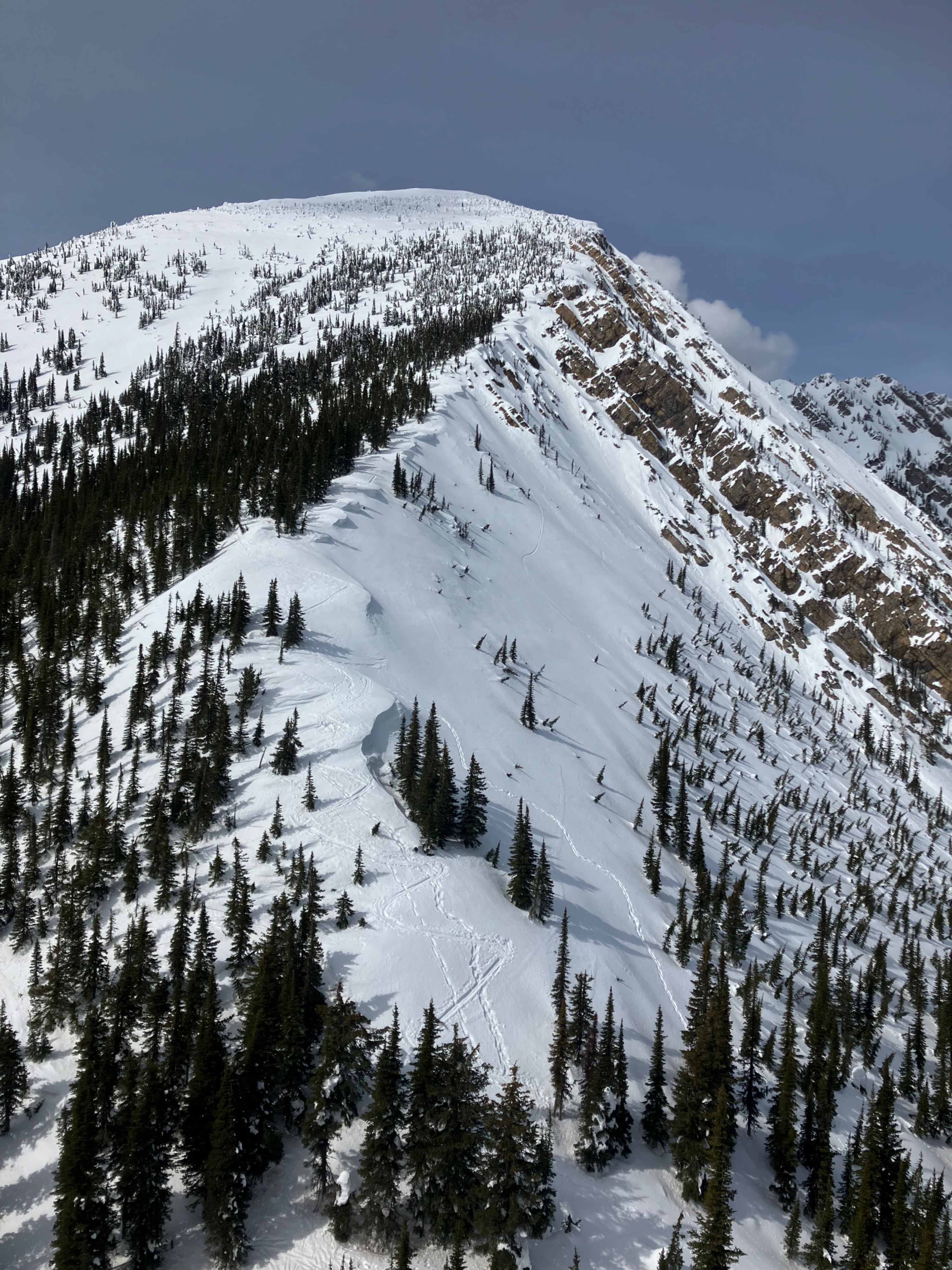
- Spring diurnal weather patterns were clear, as several cycles of wet avalanche activity covered steep slopes. Many of the slides originated from rocky outcroppings.
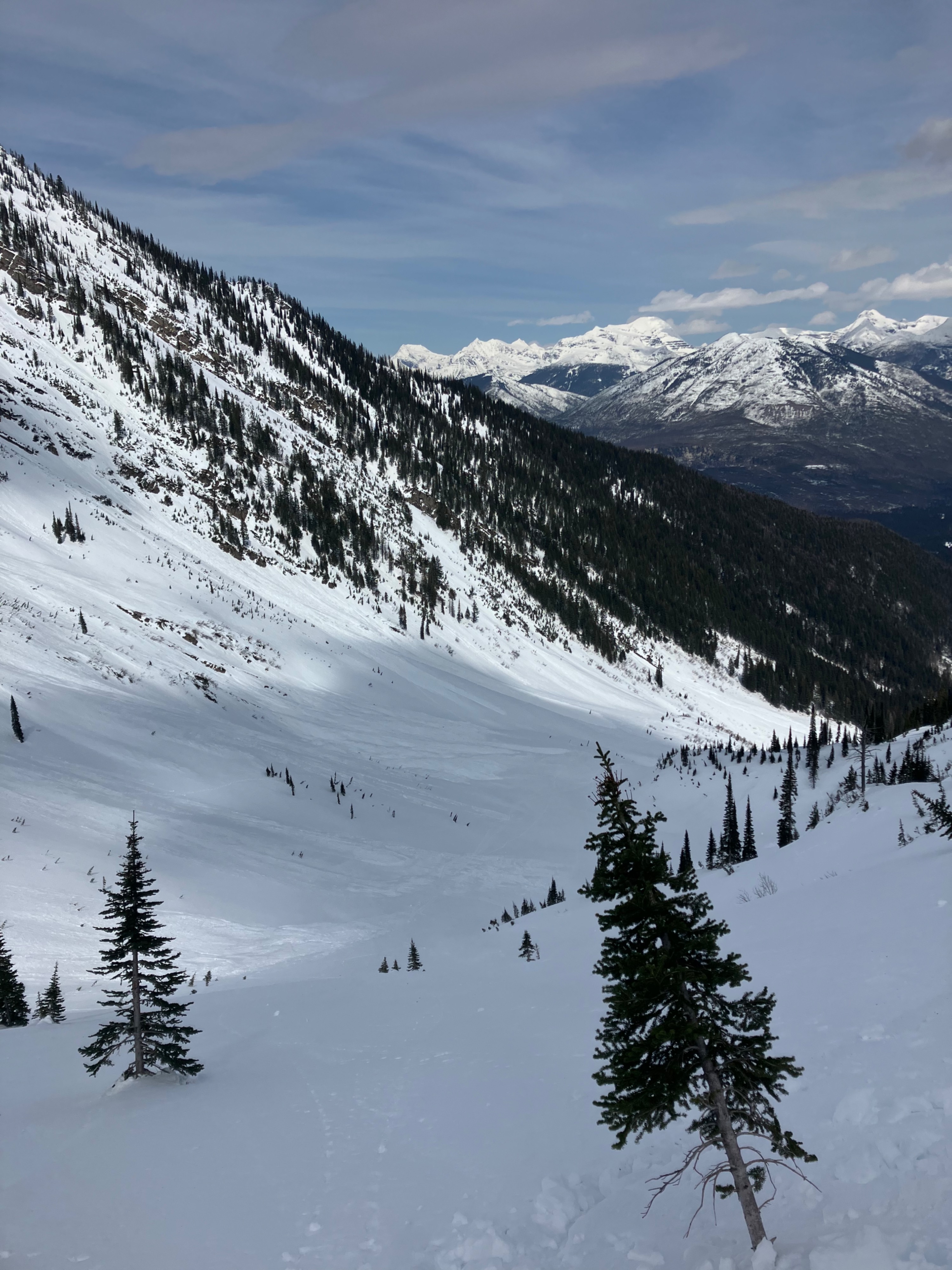
- North aspects skied well above 5800 feet. Below that elevation, the north aspects were punchy wind-stiffen snow. When we moved to a southerly aspect, the 1 to 2-inch surface crust was firm until around 5000 feet. The transition to wet snow was abrupt, and with the afternoon clouds, the descent was a race to stay ahead of the quickly refreezing snow.
- Cheers to the snowshoers that summited Mount Penrose and descended avalanche debris. An impressive showing of snowshoe skills.
- Additionally, we noted the low-flying plane over Rescue Basin, and we thank those flying for their observation and photos.
Weather
- Cloud Cover
- scattered
- Wind Loading
- none
- Recent Snowfall
- 0
- Snow Avail For Transport
- none
Sun in the morning. Around 3 pm clouds rolled in. Winds were light, with a few moderate gusts.
Snowpack
Pit on North aspect @ 6000 feet. HS: 240. ECTX.
- The top 6 inches of surface snow was soft and dry but consolidated from winds.
- The mid-January crust was absent or buried over 150 cm below the surface. Curious.
- The right-side-up snowpack was progressively denser with depth.
- In the top 150 cm of the snowpack, we could not identify any layers of concern or crusts.
- Possibly a wind-loaded/crossloaded spot that buried mid-January crust deeper than other areas?