
Quick report
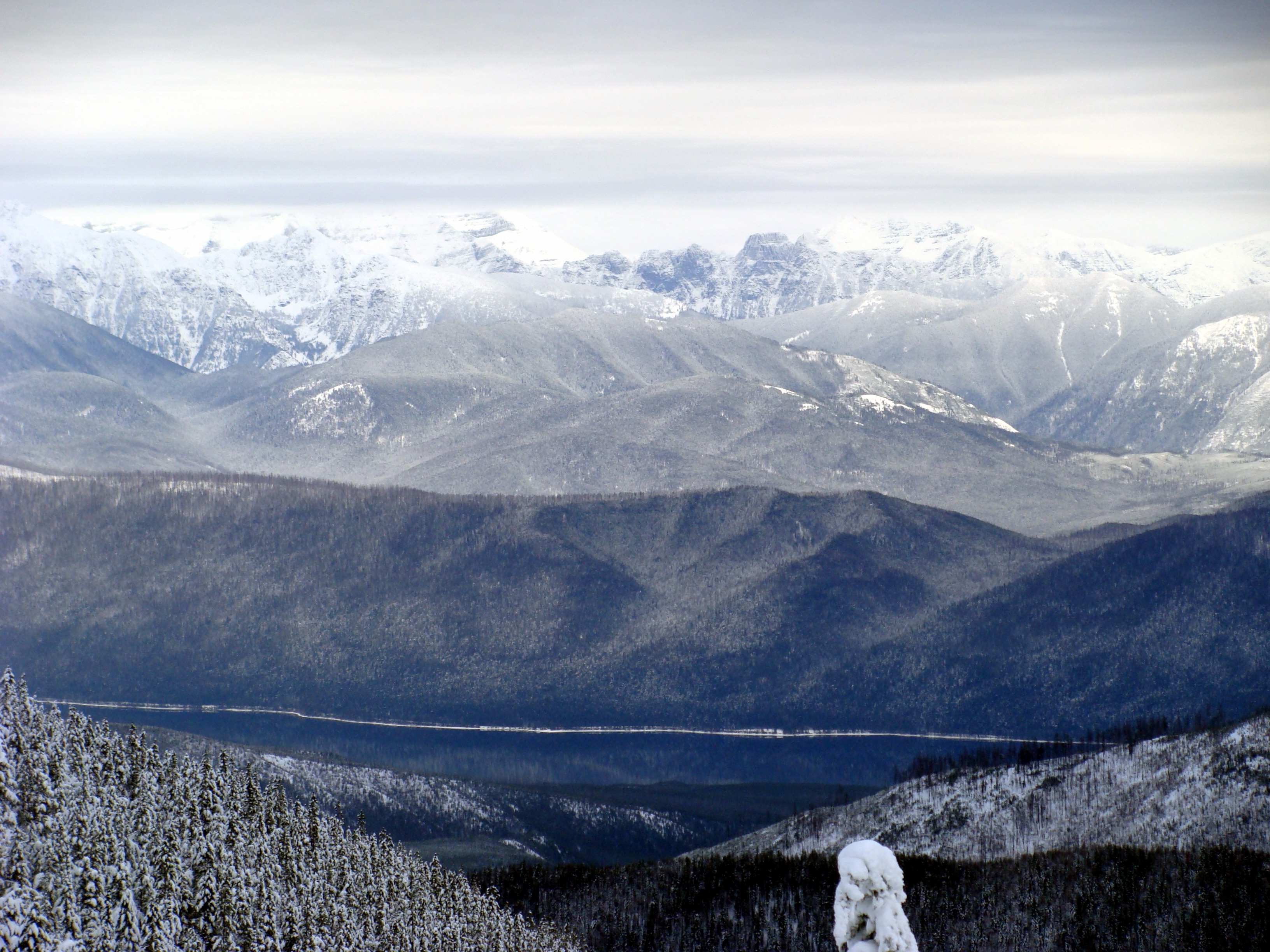
We traveled to a usually windy location to look for recent wind loading and observe the snowpack in western Glacier Park.
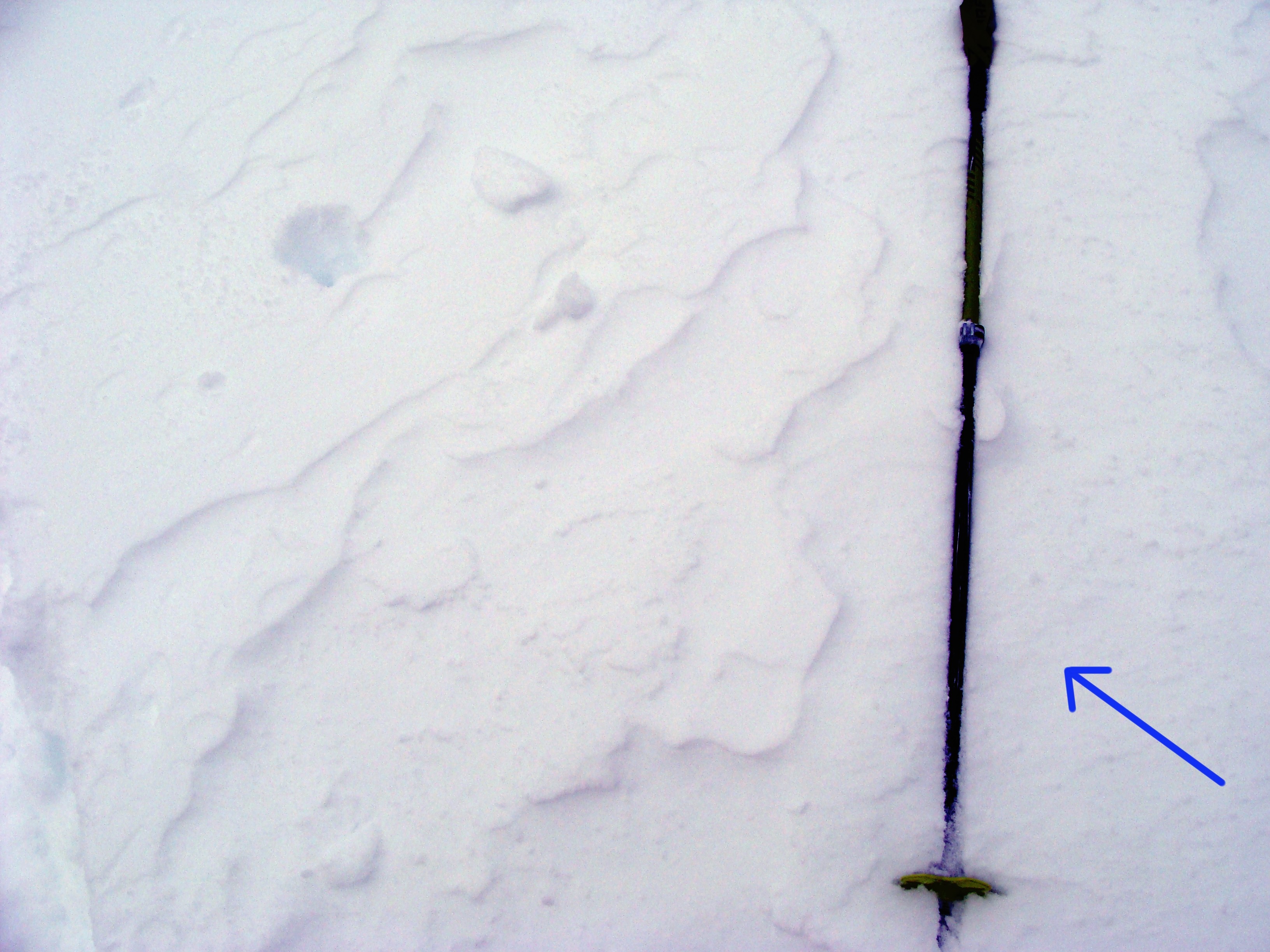
- There were plenty of signs of previous wind effects, but we could not find anything recent. Stiff pressed wind board was found beneath ridgelines on north aspects, with scoured areas beneath ridgelines on south aspects.
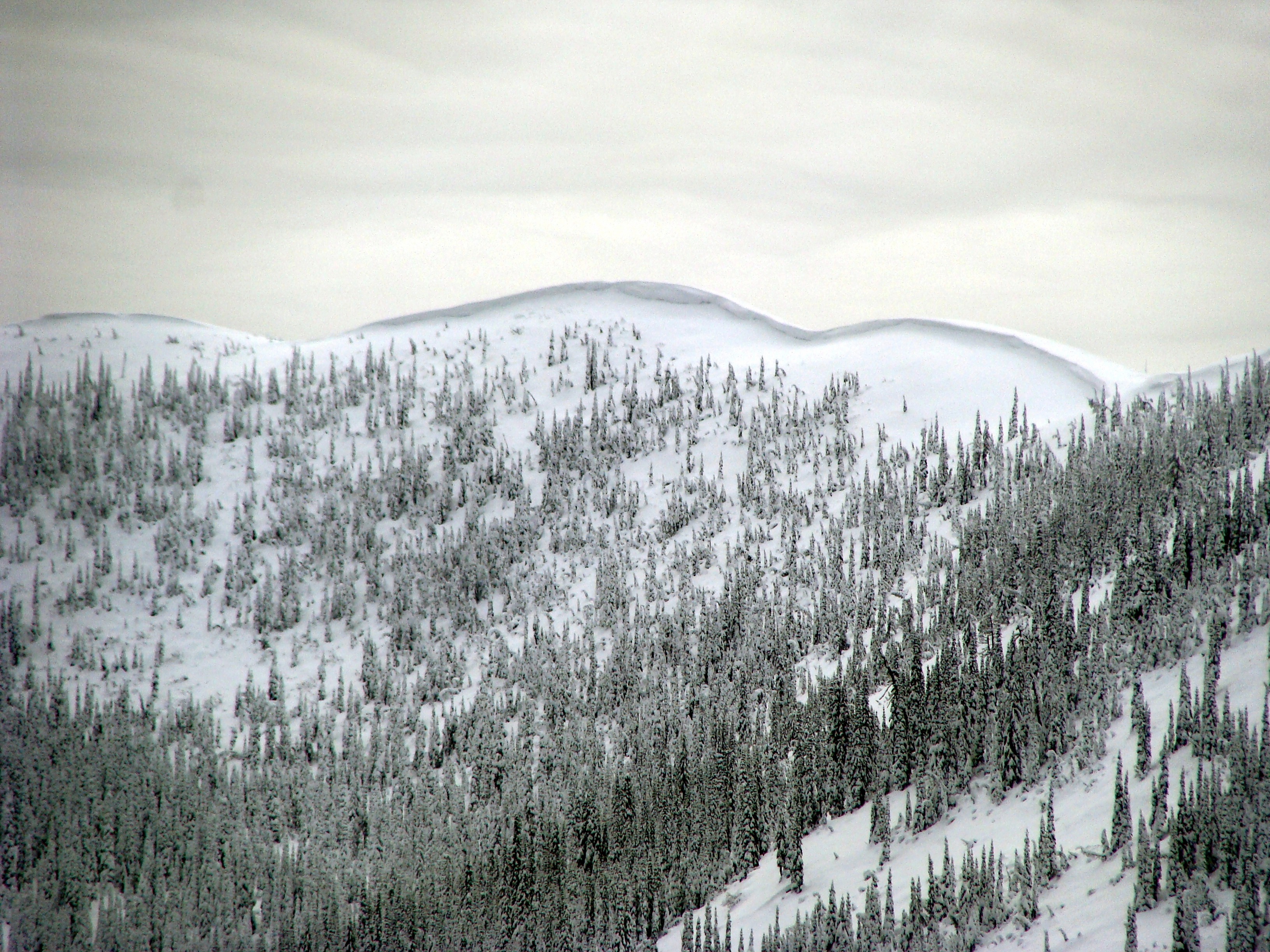
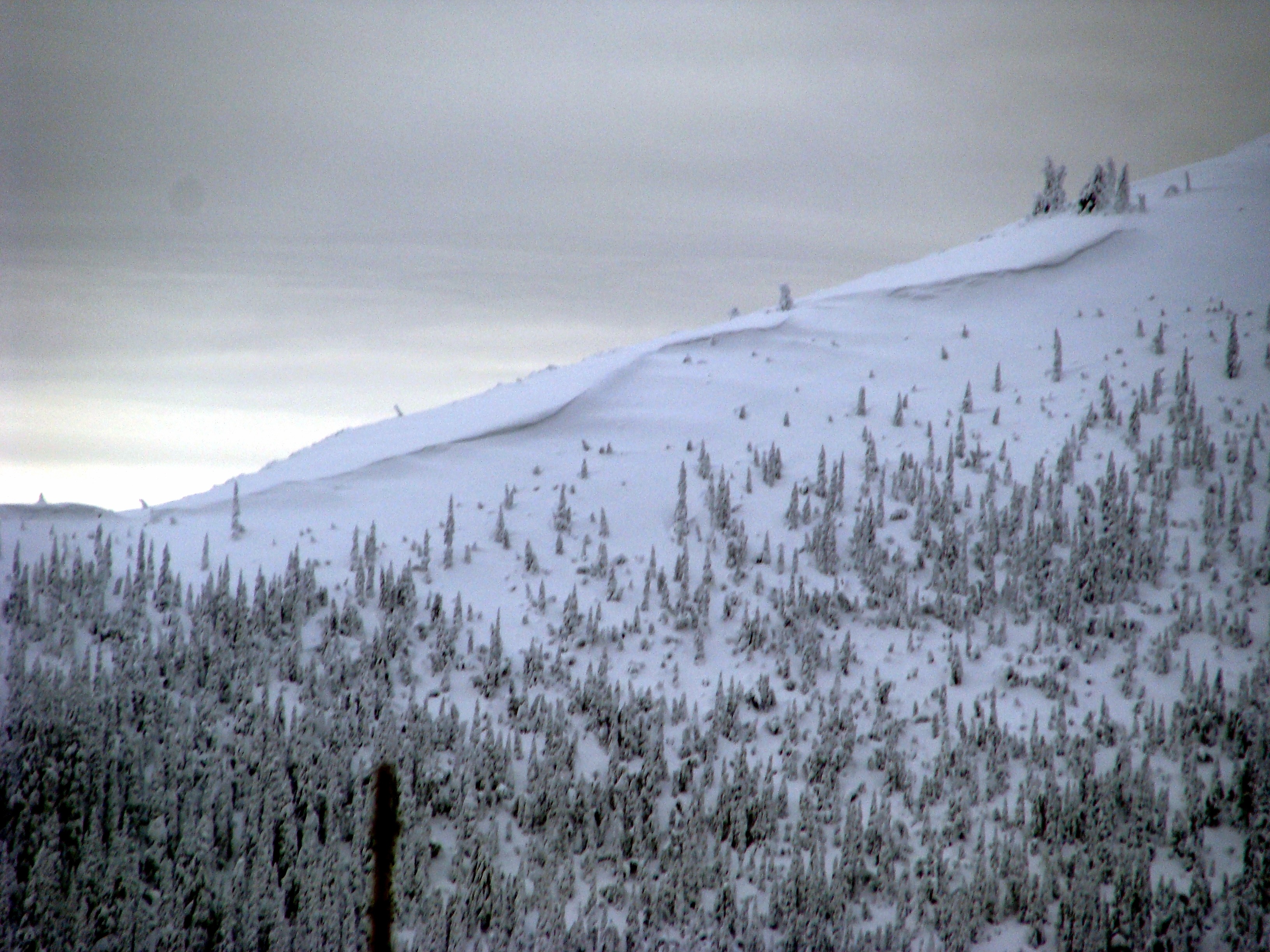
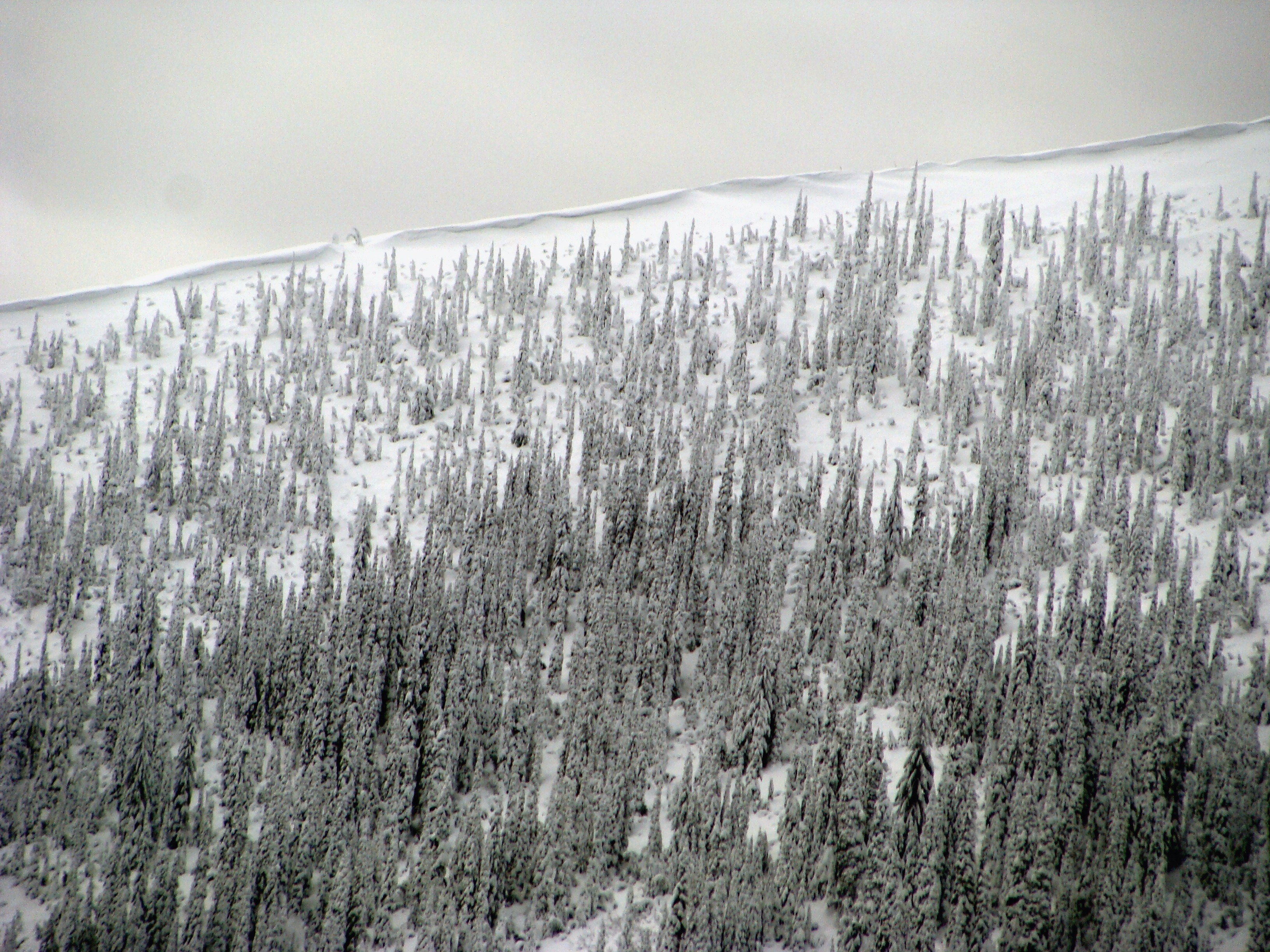
- Cornices were massive for December 1. South, southwest, and west winds have been hard at work building these features.
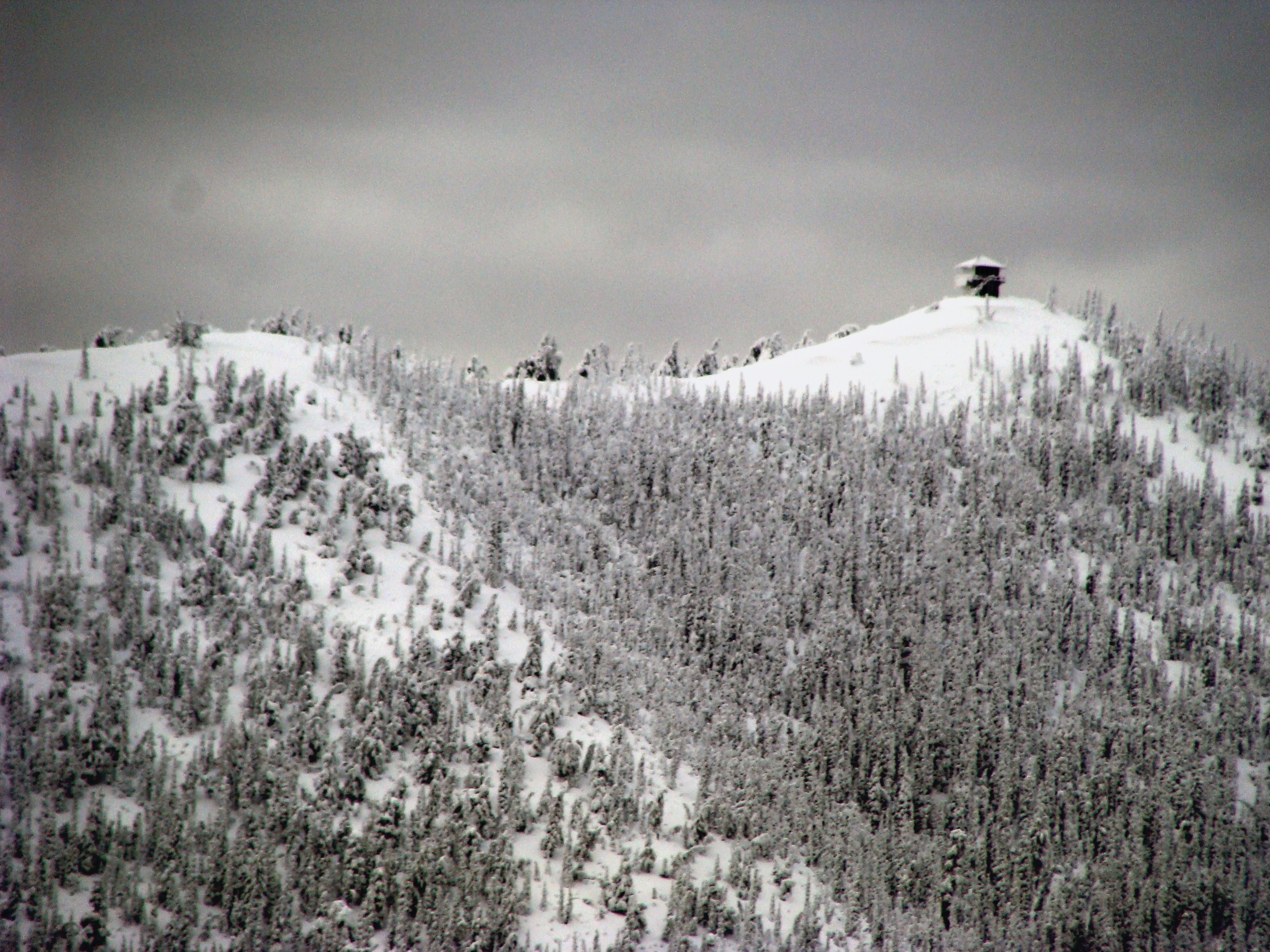
- Warming temperatures initiated tree bombs, but the thick, high layer of clouds limited loose slides. Plenty of snow remains in the trees for the sun to work over the next few days.
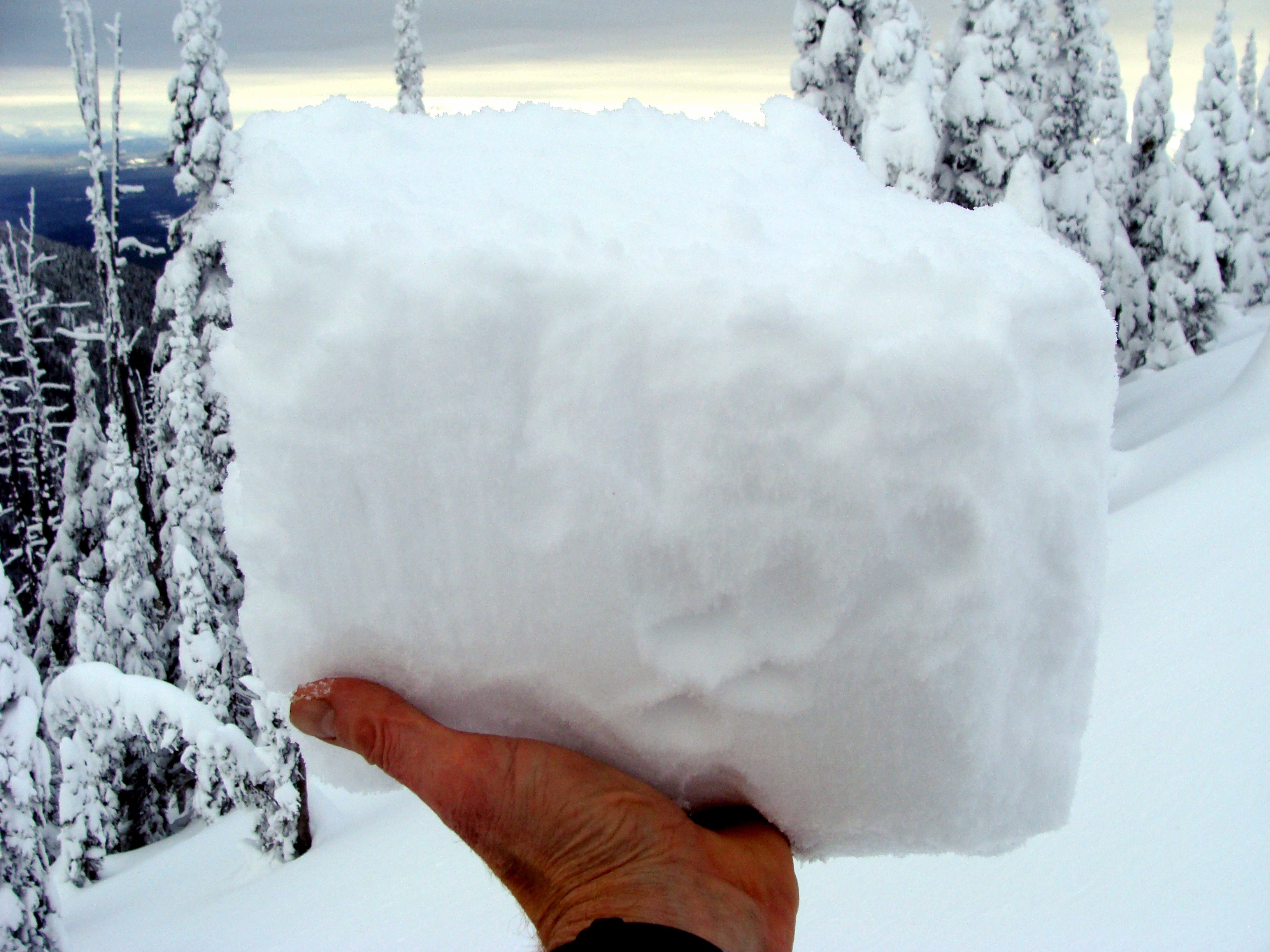
- Despite the slight warm-up, the top few inches of surface snow remained dry and fluffy.
- Coverage was good throughout our tour, including at the 3900-foot trailhead.
- The skiing was surprisingly good.
No instabilities were noted in the surface snow. However, we did not stomp on any cornices.
Weather
- Air Temp
- Upper 20s
- Cloud Cover
- broken
- Wind Loading
- none
- Rain Elevation
- 2500
- Recent Snowfall
- 0
- Snow Avail For Transport
- moderate amounts
High-stratus clouds limited solar input at our location. Southern areas of Glacier Park looked to receive more sunshine. The winds were essentially non-existent at all locations on our tour. This is unusual for this windy spot.
Snowpack
I dug one pit on a southeast aspect in a wind-sheltered location at 6050'. The height of the snow was around 100 cm. The snowpack was generally strong and right-side-up. Around 25 cm down was a 3 cm thick rain crust from the Atmospheric River event with a 2 cm thick layer of small-grained facets beneath. Stability tests failed with moderate force in Compression Tests (CT 14, CT 16) in the facets, but there was no propagation across the column in large column tests due to the very soft snow capping the crust (ECTN 16, ECTN 18).