
Quick report
I utilized the easy access provided by WMR, one of the FAC's operational partners, to observe how the snowpack is responding to the current heat wave.
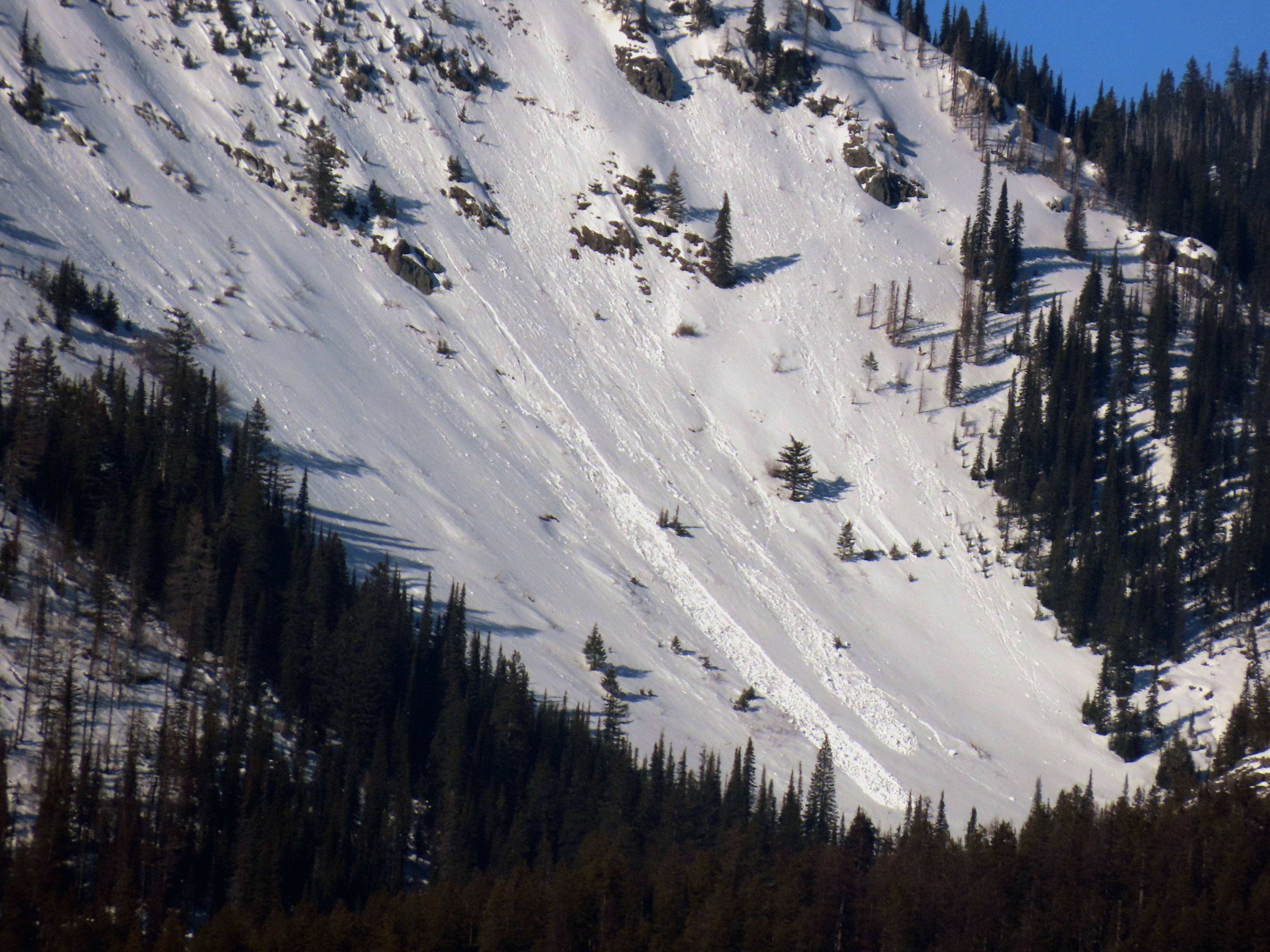
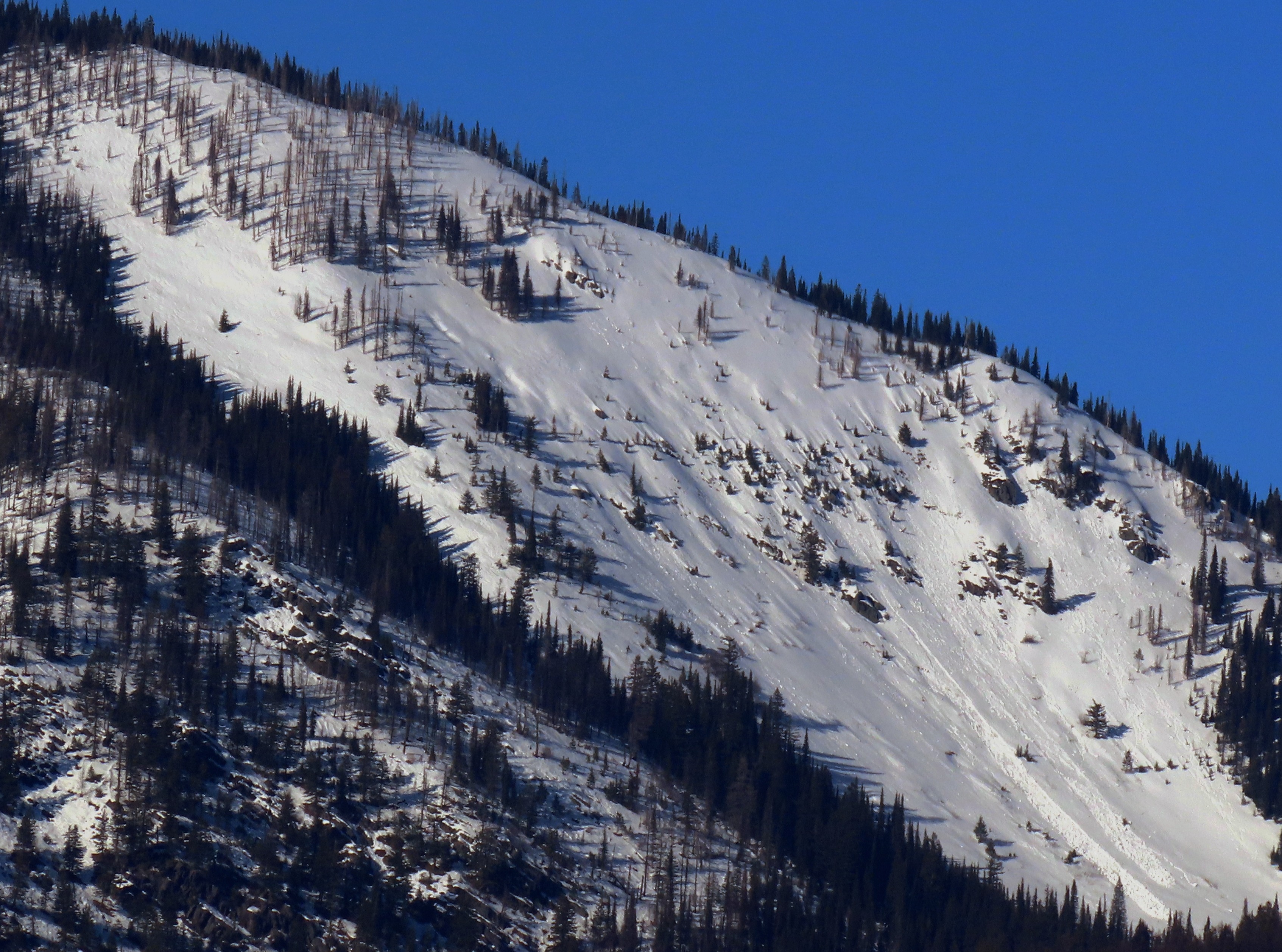
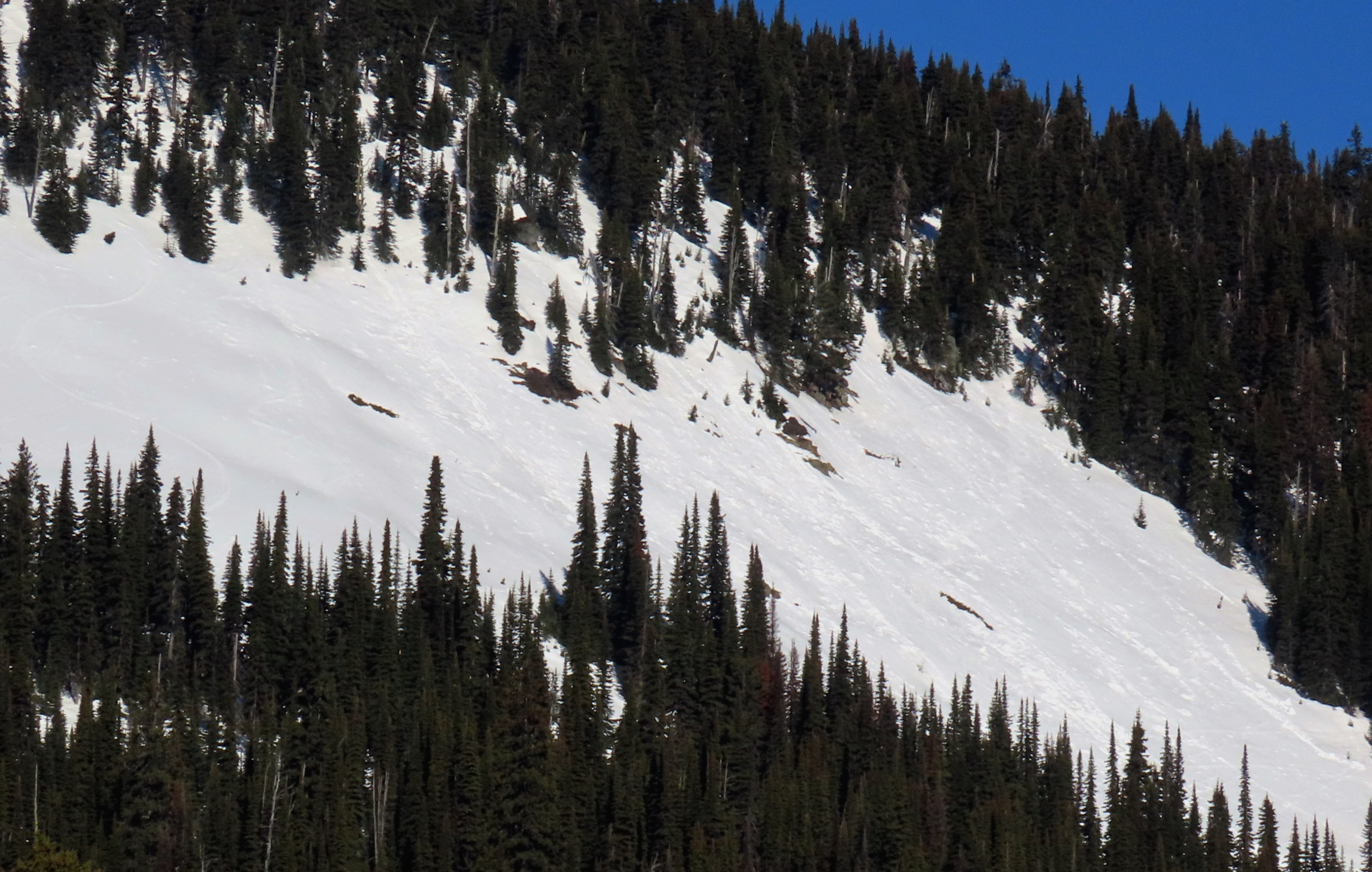
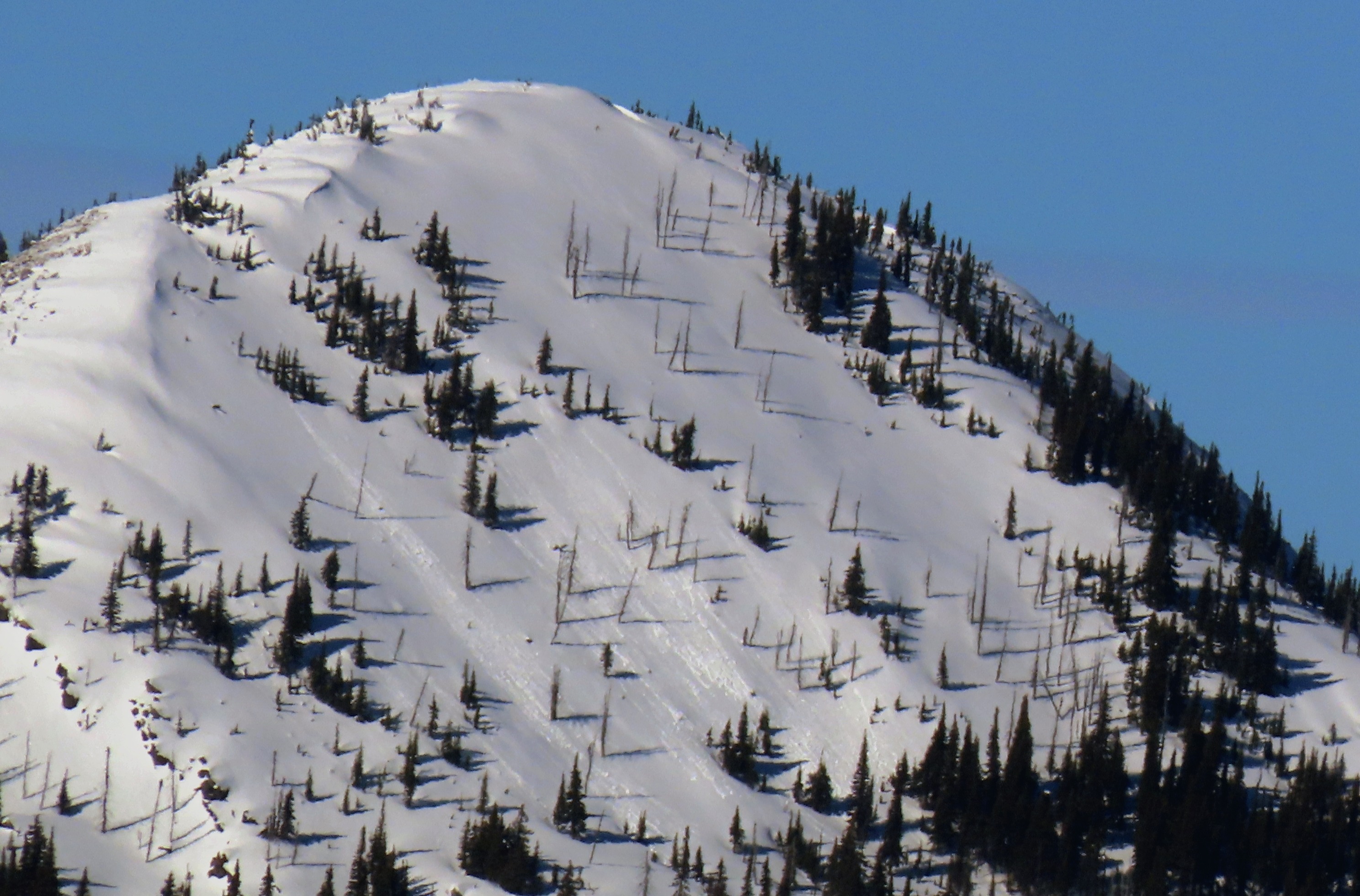
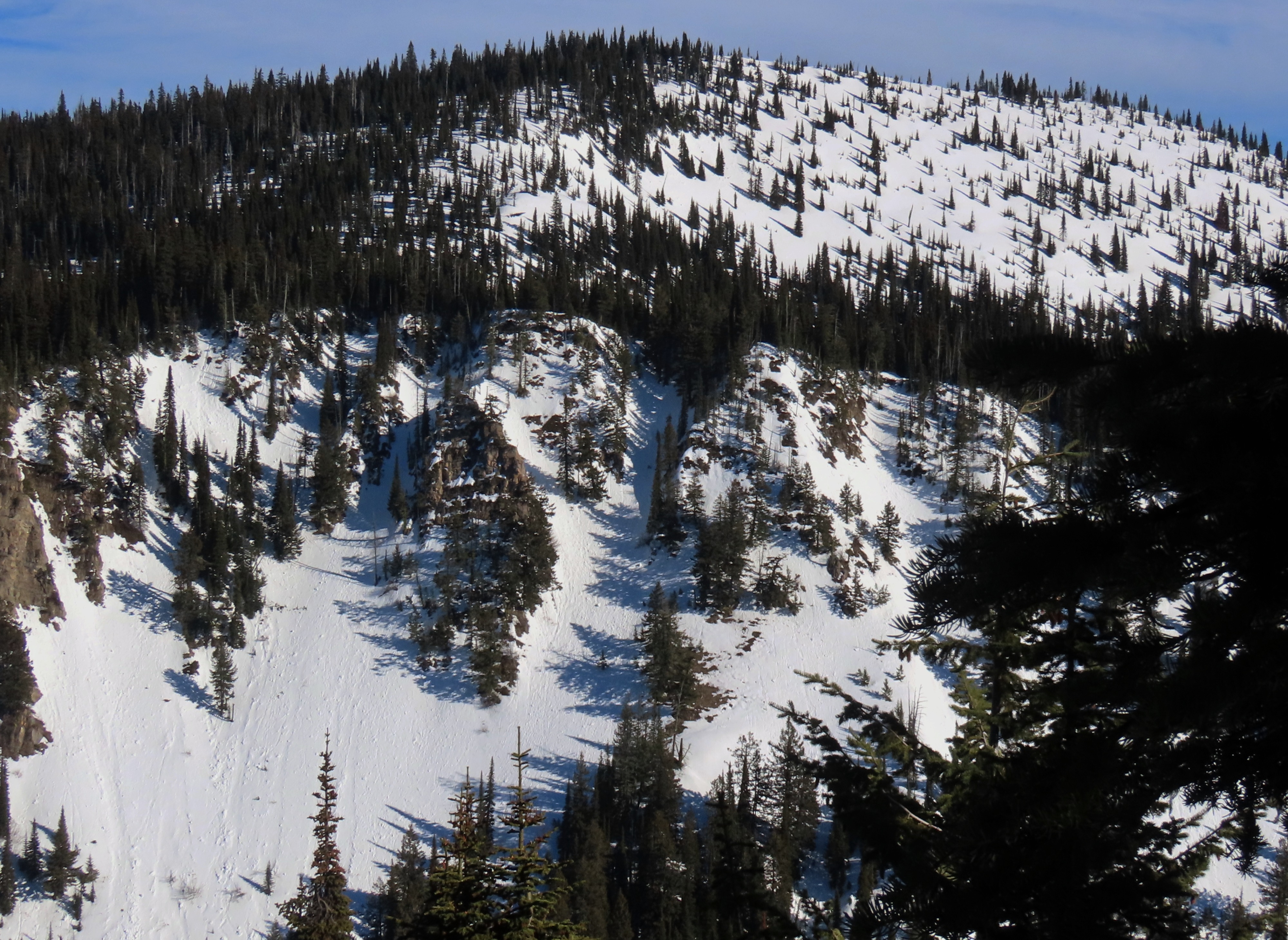
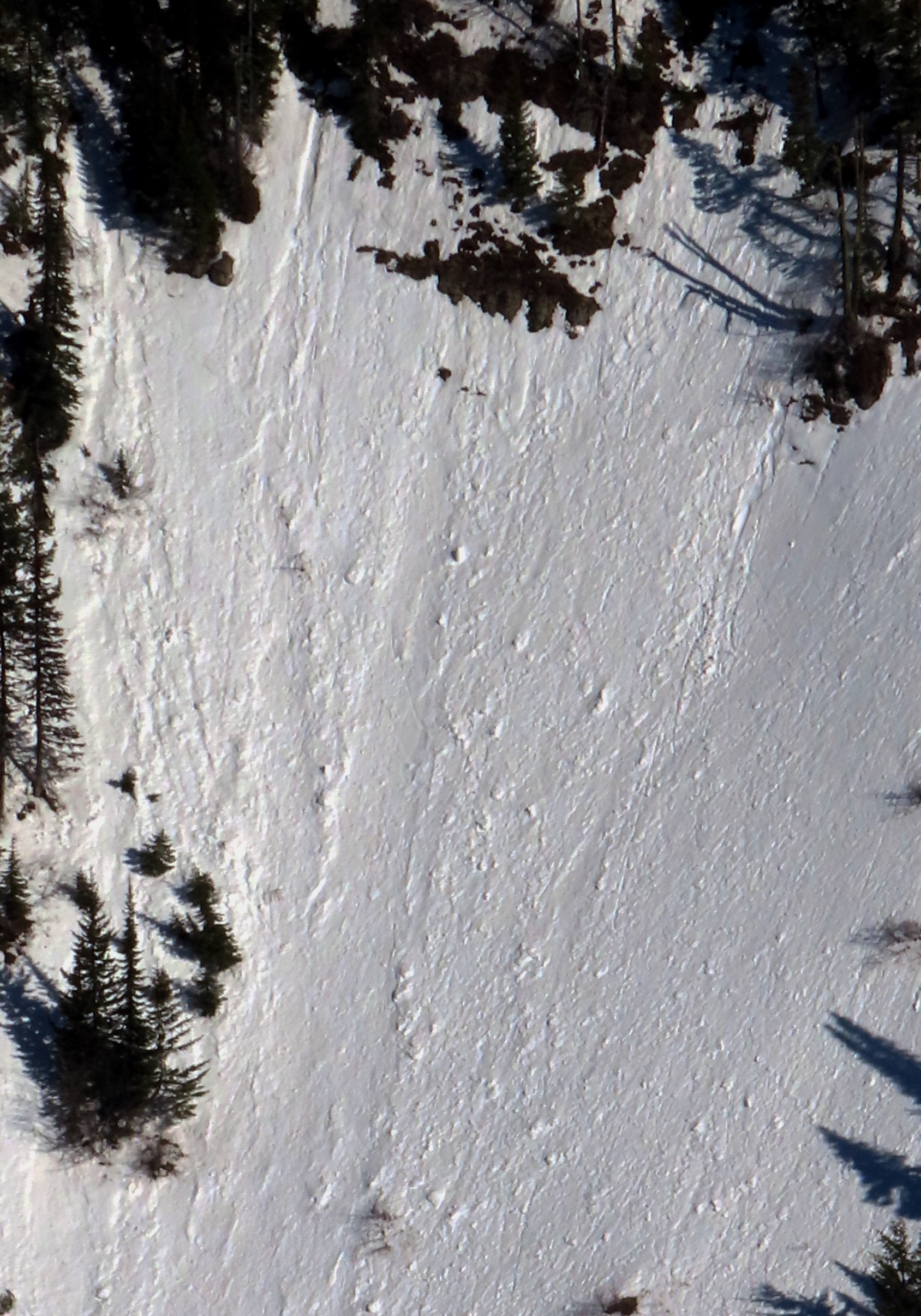
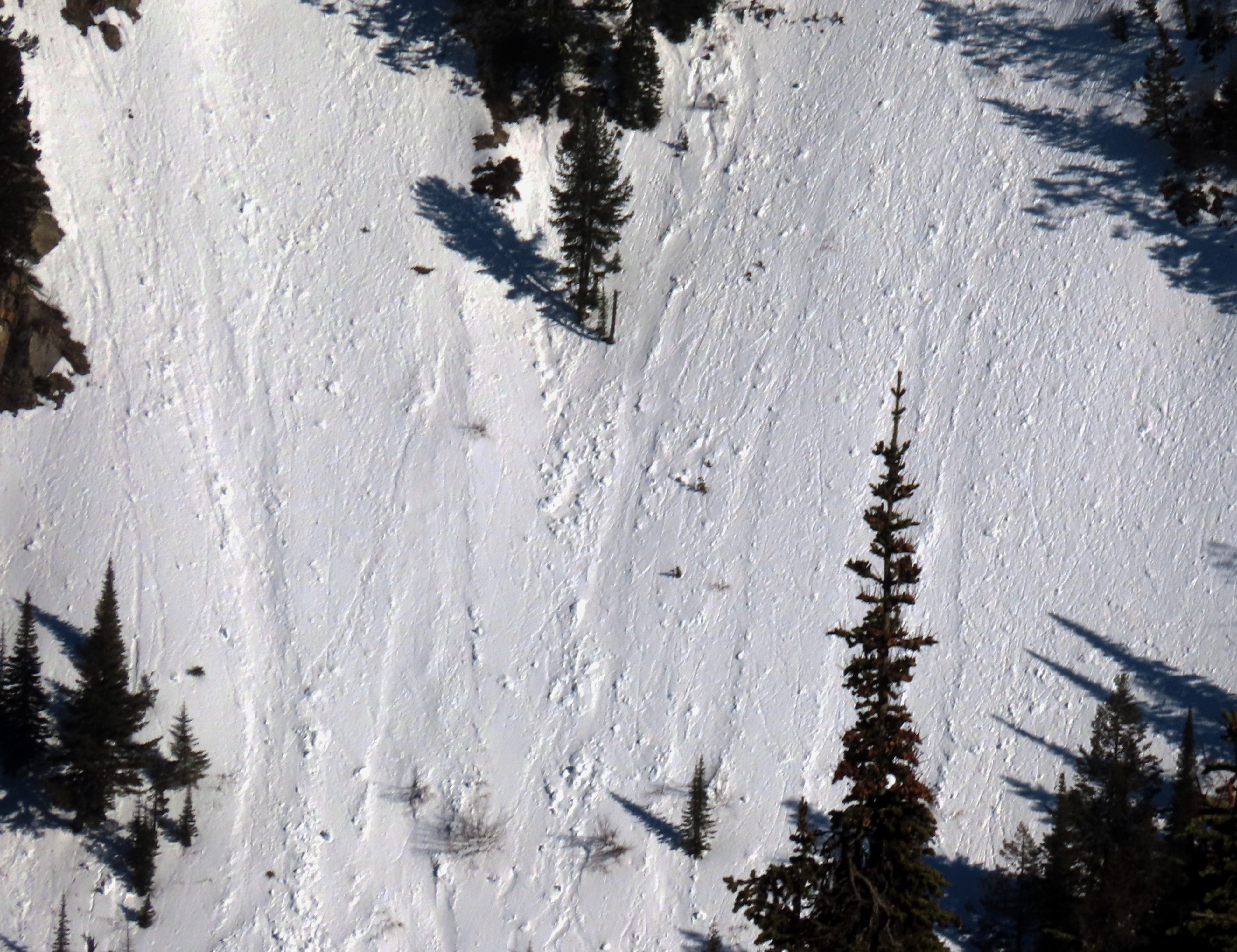
- Observed wet avalanche activity was small and unimpressive. Slides were noted on various aspects, but all were D1-1.5 in size. Observations included Big Slide, Half Moon slide, Skook Chutes, Looker's Left Skook Face, Werner Peak, and other nearby steep slopes.
- The lack of wet avalanches is attributable to a warming period from last weekend that worked over the snowpack, along with the minimal fresh snowfall since then.
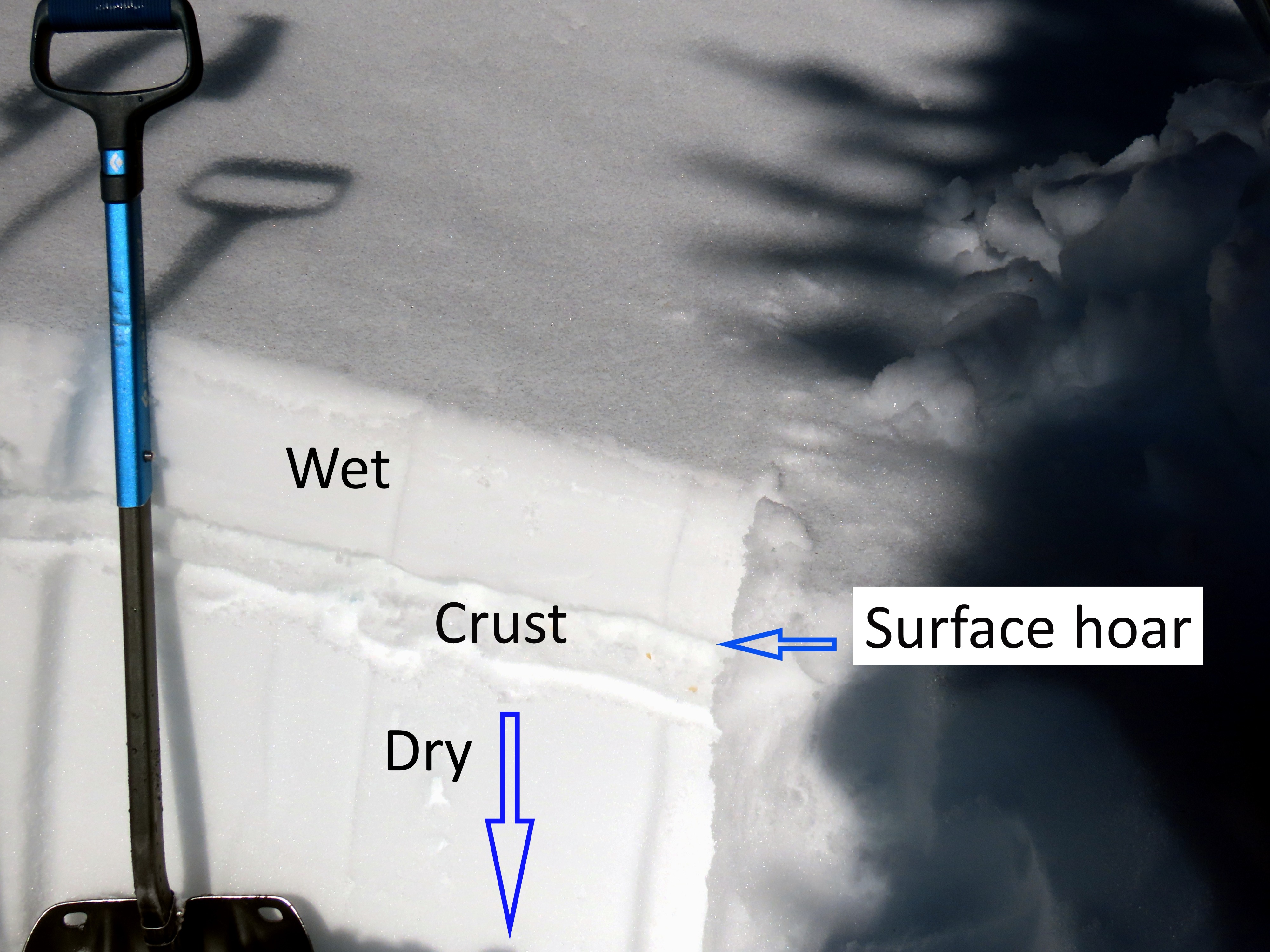
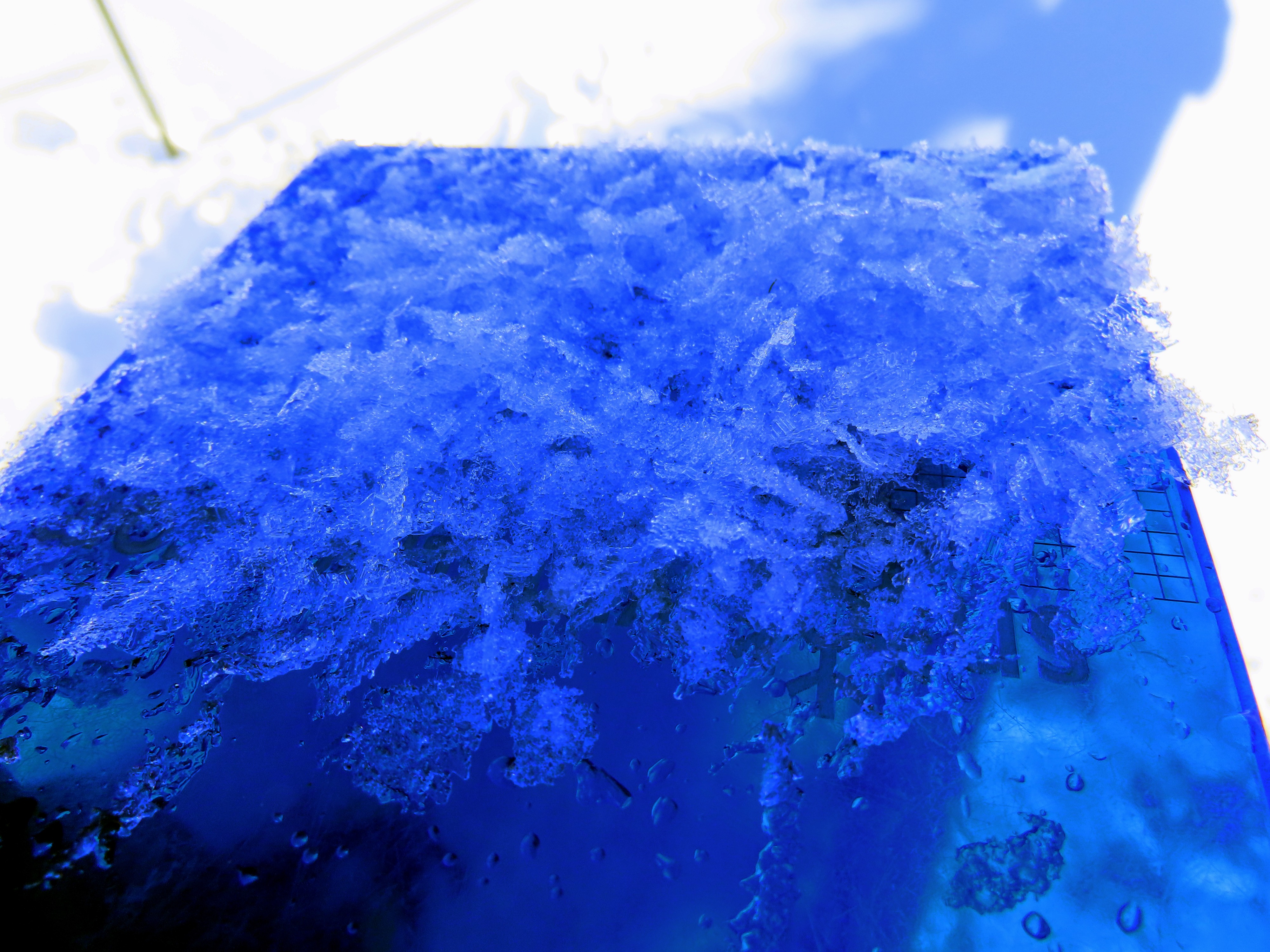
- The Persistent Slab problem is still obvious in the multiple hand pit tests I performed on various aspects. The buried surface hoar layer responsible for recent avalanche activity is found 4-5" (10-12 cm) beneath the surface. On wind-loaded slopes, this layer is found about twice as deep.
- On sunny slopes, meltwater has left the top 10-12 cm wet, down to a crust. Shady slopes still harbor mostly dry snow beneath a thin breakable surface crust.
No cracking or collapsing noted today.
Weather
- Air Temp
- Above freezing
- Cloud Cover
- few
- Wind Loading
- none
- Rain Elevation
- 5000
- Recent Snowfall
- 0
- Snow Avail For Transport
- none
Snowpack
On sun-exposed slopes, the top 10-12cm is wet snow resting on a thin layer of surface hoar above a 2 cm pencil-hard crust.
Shady aspects have a 1 cm knife-hard crust capping moist to dry snow. The buried surface hoar layer is around 12-15 cm below the surface.
Multiple hand pit tests revealed easy, clean shears in the surface hoar layer. An ECT on a southeastern slope resulted in ECTN11 due to the slab's soft nature.
Avalanche
Small wet loose slides were noted on both the solar and polar aspects. This tab will be filled out in the morning.