
Quick report
Another outing with a MWAC forecaster up to the traverse on the Lion Head Summer trail. We went to look at the crown of the February 4th avalanche and assess the interface on which it slid.
Weather
- Cloud Cover
- obscured
- Wind Loading
- light
- Rain Elevation
- N/O
- Snow Avail For Transport
- large amounts
Snowpack
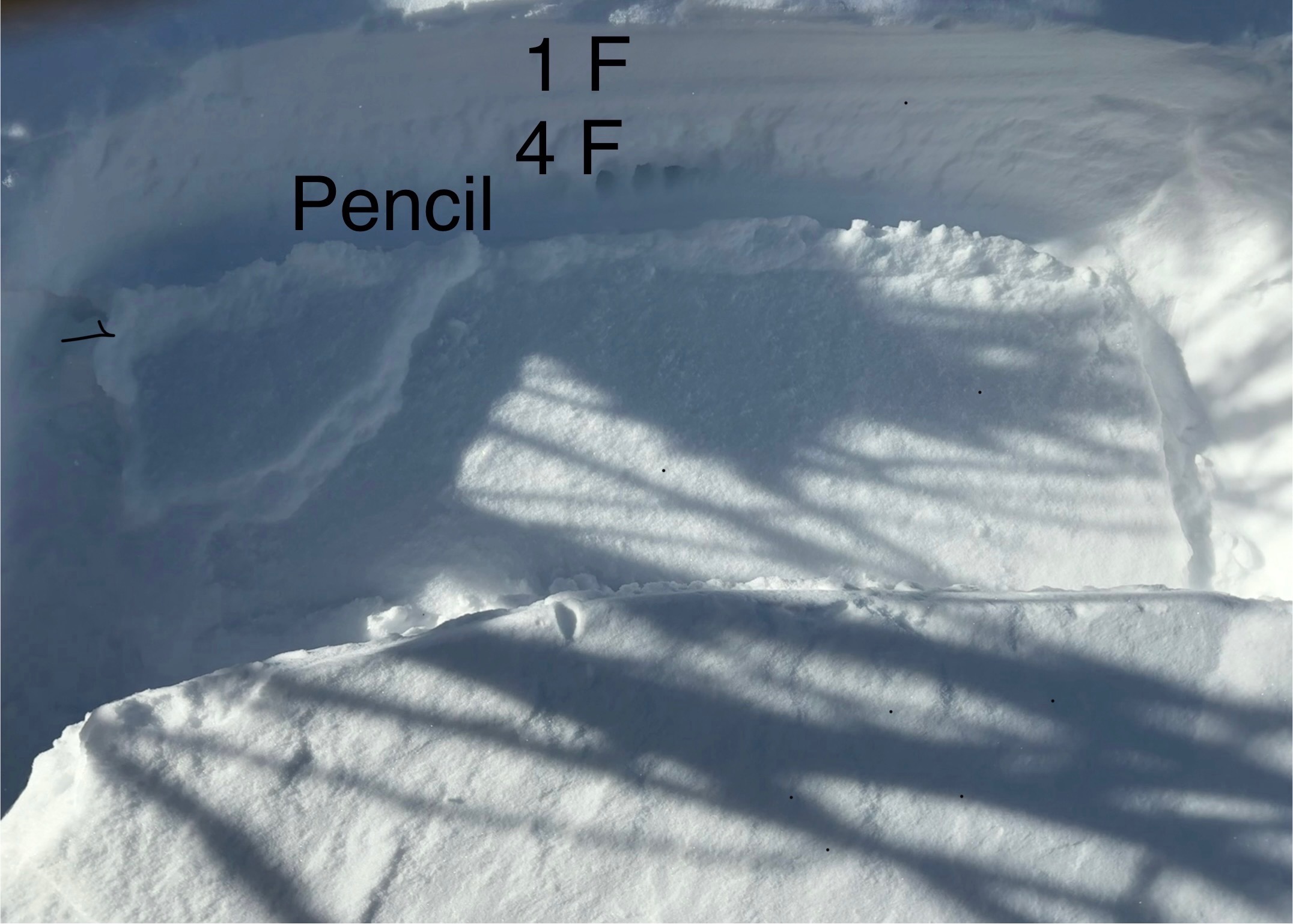
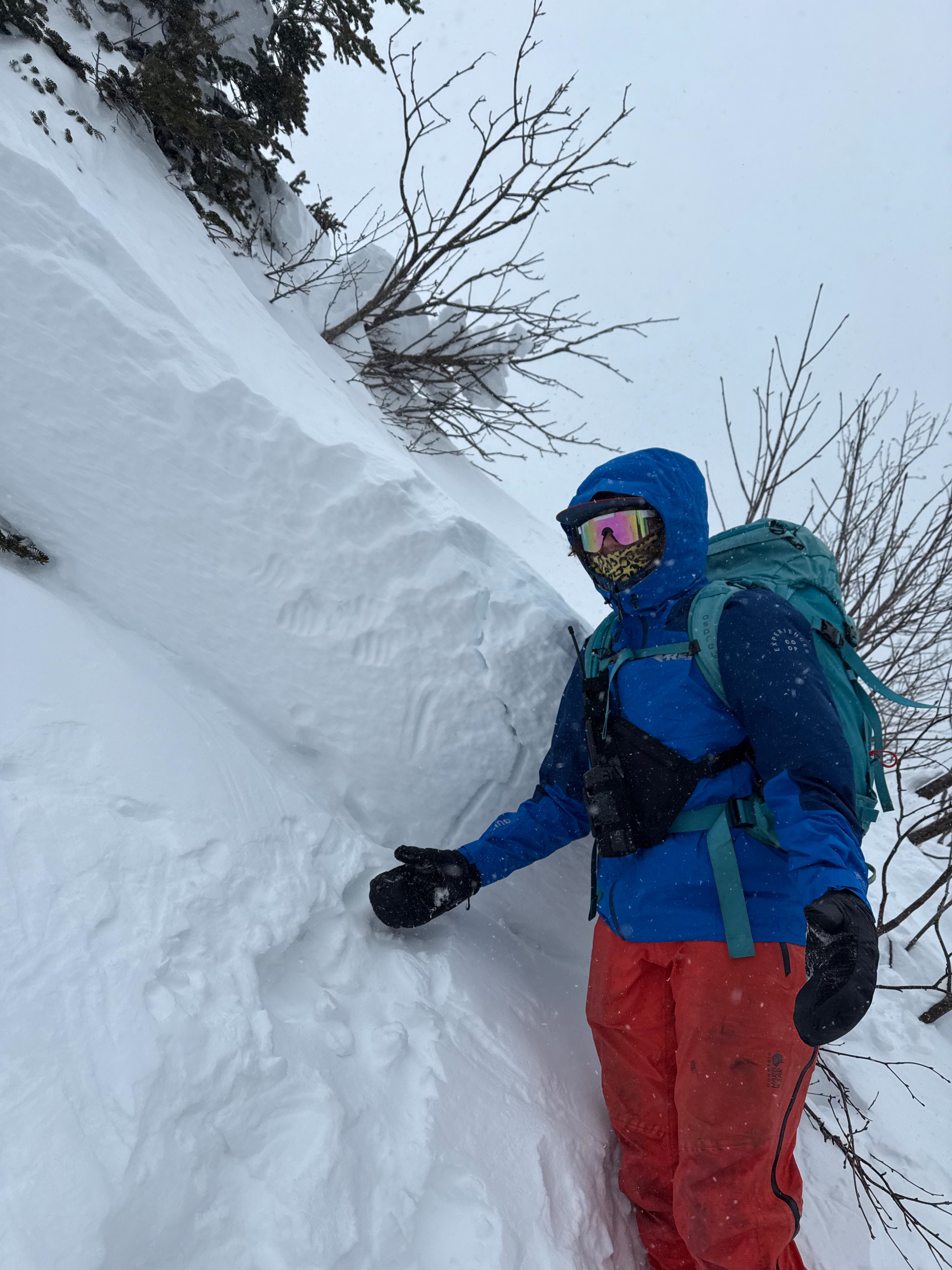
The trail up to the slide which sat at 4,250’ on a SE aspect, consisted of knee to thigh deep drifts, some which were soft and others that had a more consolidated surface. As we came to the traverse, a short rocky section which normally is the ‘crux’ of the hike was covered in avalanche debris from the February 4th slide. We walked across the bed surface to a portion of the crown on the lookers right. The edges of the crown were roughly 18” thick with the top being a third of that or smaller. Judging by the height of the small trees and shrubs near the crown we looked at, we came to the conclusion that the bed surface of the slide was the pencil hard layer I found when I dug a hasty pit on 1/23.
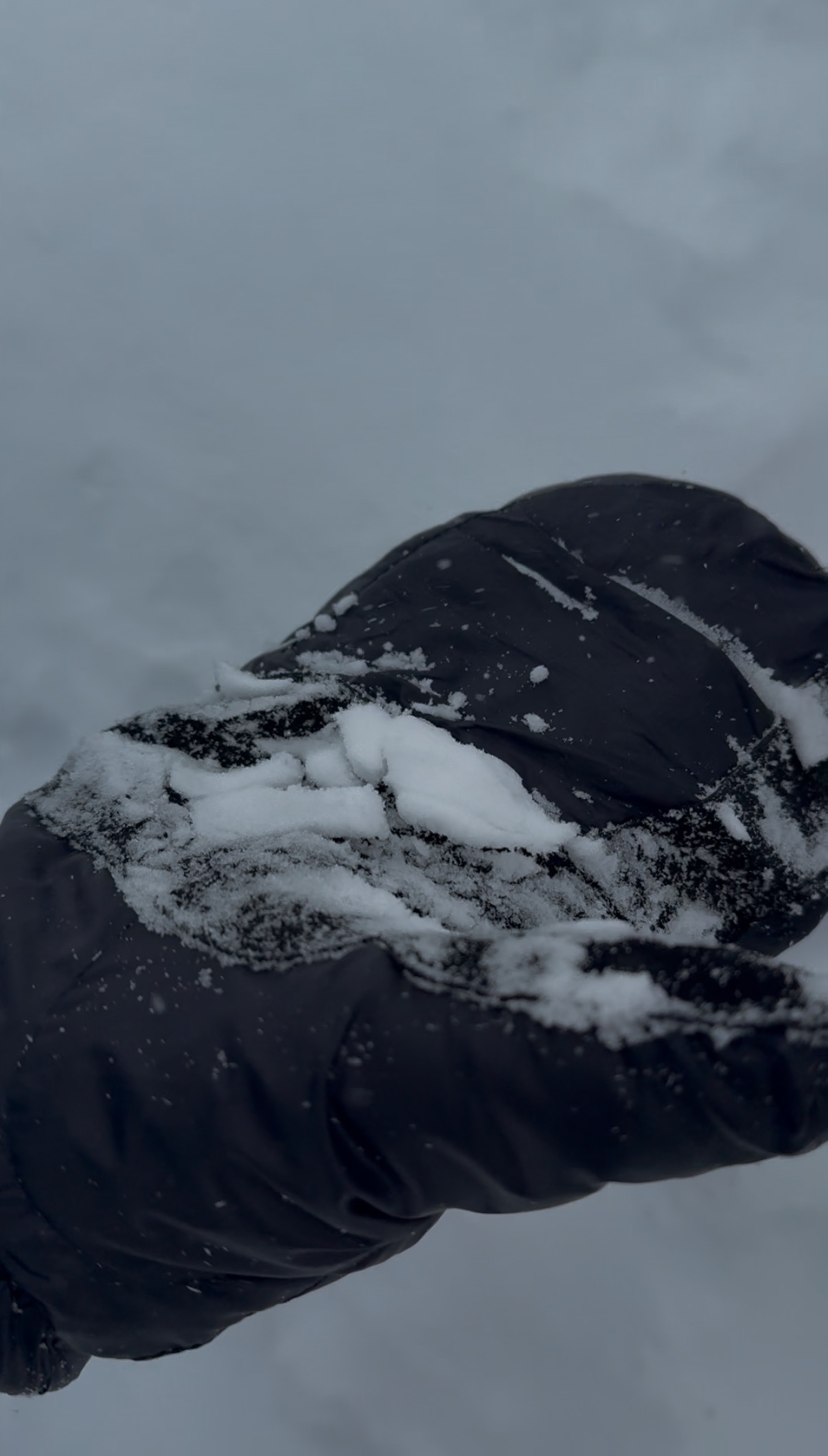
We discussed the weak layer on which the slab failed, believing it was the unconsolidated 4F storm snow that sat on a pencil hard layer from 1/30. On 1/30, we found a new wind slab forming, with a stiffening 3-inch 1F slab over 2 inches of unconsolidated 4F storm snow on a pencil-hard layer. Hand shears showed moderate reactivity on 1/30 and 1/31, a team from MWAC forecasters crossed the traverse and found the same structure, though it was unreactive to hand shears. As new snow accumulated throughout the week, this weak layer was gradually stressed until it reached its critical failure point, causing the slide. We considered whether this was another avalanche on a persistent weak layer but found no evidence of that. High winds prevented the use of a loop, and the weak layer balled up in gloves, which is not typical for faceted grains. The remaining slab sat on a large and slightly convex, smooth slope. It showed texture from the wind and was very firm. Even though we did not dig we determined the structure was there. I tapped on the edge of the crown, and it took a lot of convincing to break off a chunk. Beyond the crown was not fully investigated as it was over high-consequence terrain and adjacent to the recent avalanche.
Within 15 minutes or so, our tracks across the bed surface had begun to fill in with soft snow, and similar to last Thursday (1/30) wind-transported snow would occasionally sluff down the slope.
On our descent, we found very specific and small sections that would crack and pop an inconsequential slab, although these were intentional were also informal tests. This feedback could refer to the newly forming and reactive wind slabs in sheltered areas. During our ascent, we didn't encounter this sensitivity in the snow, but the winds had picked up, along with falling and blowing snow.
Avalanche
- Size
- D1 R1
- Type
- HS
- Aspect
- SE
- Elevation
- 4400 ft