
Quick report
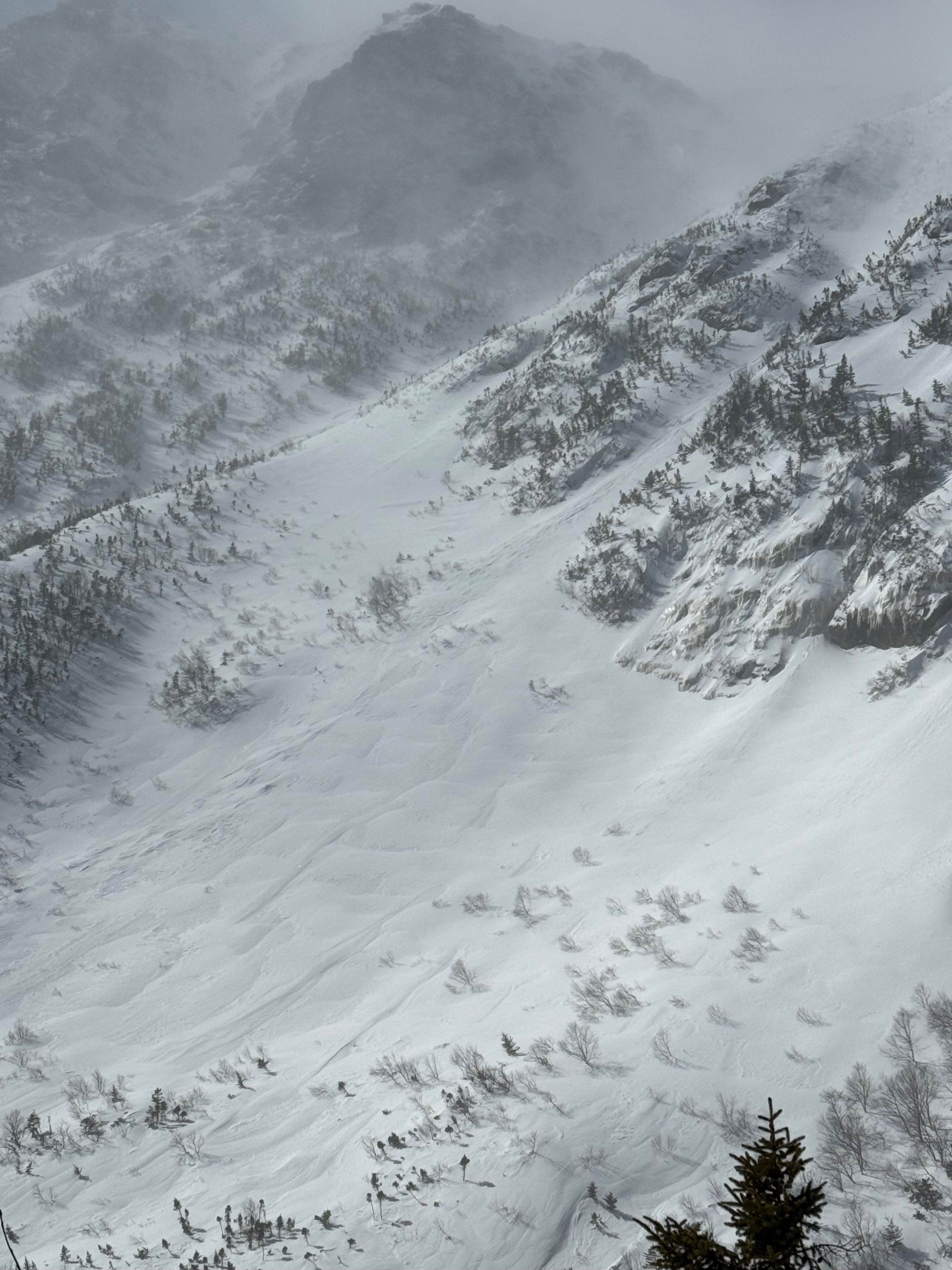
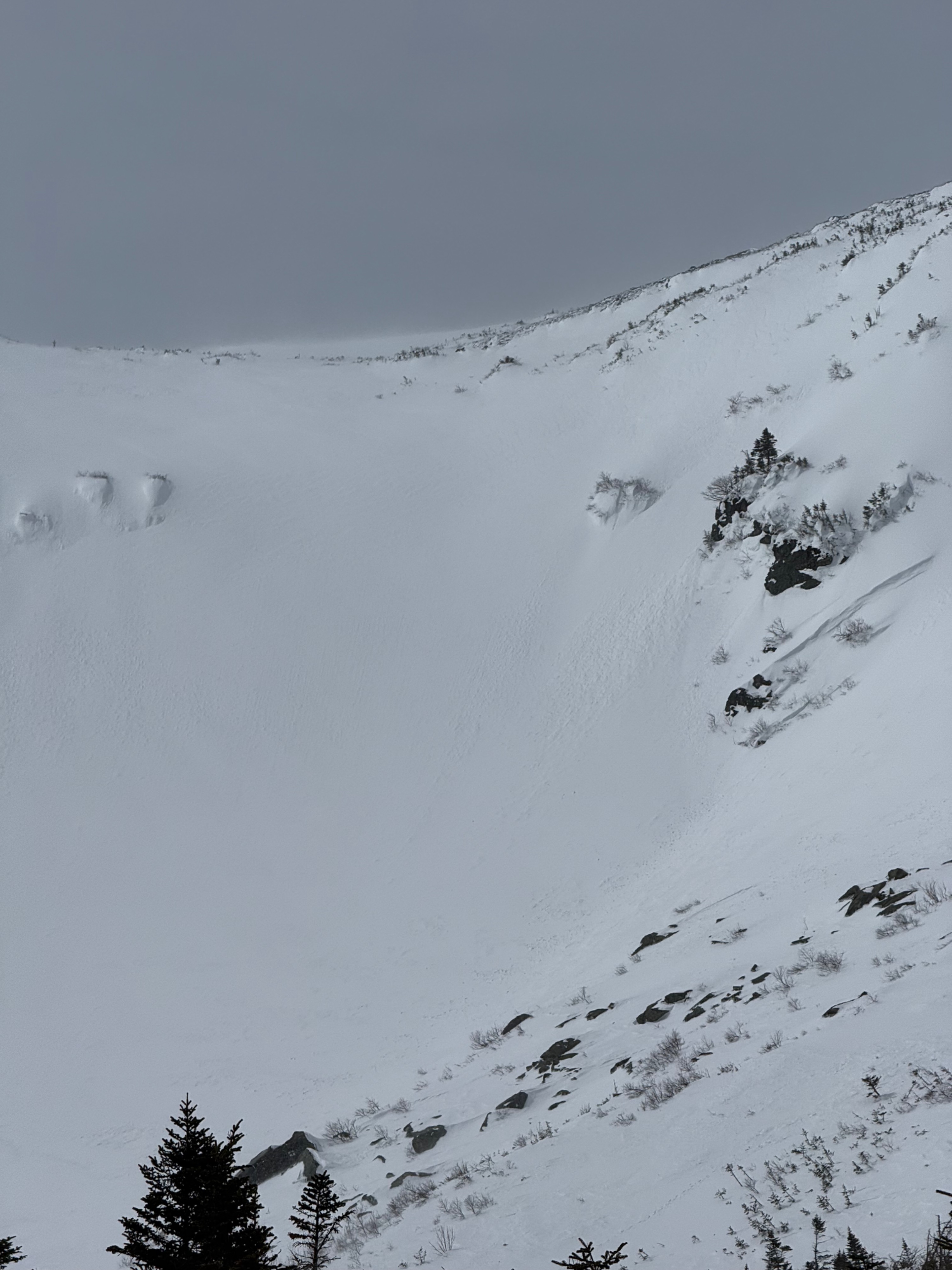
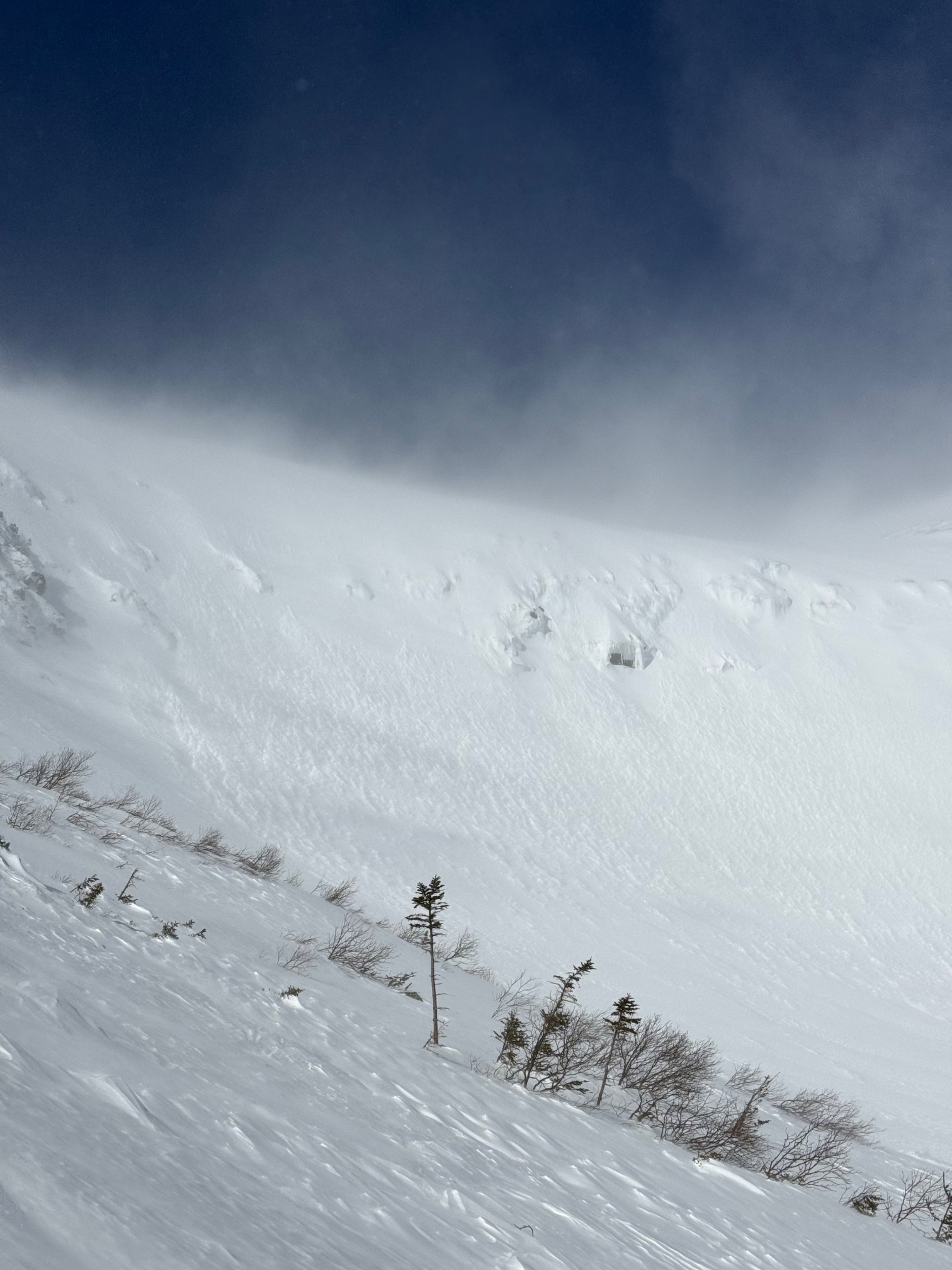
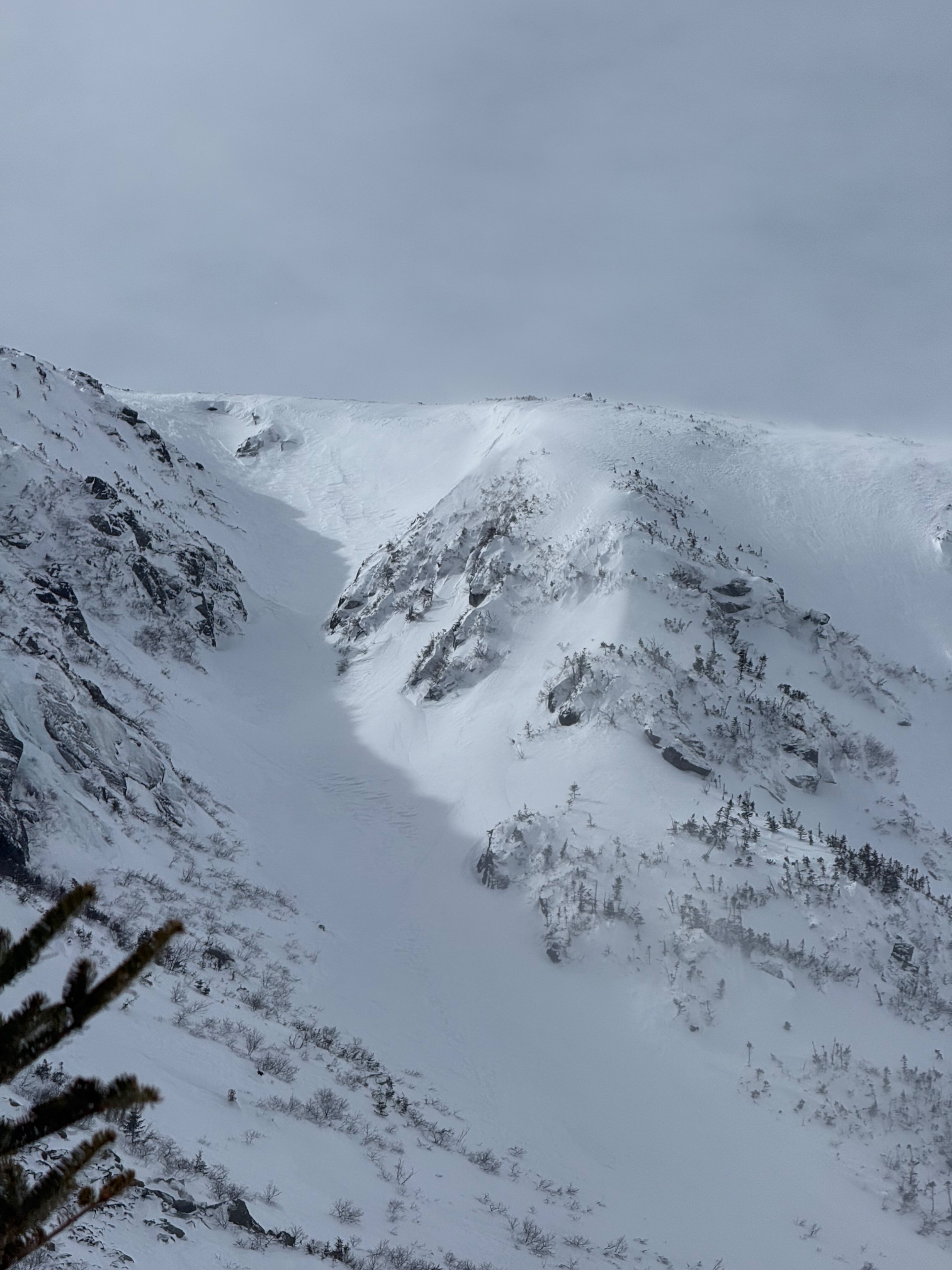
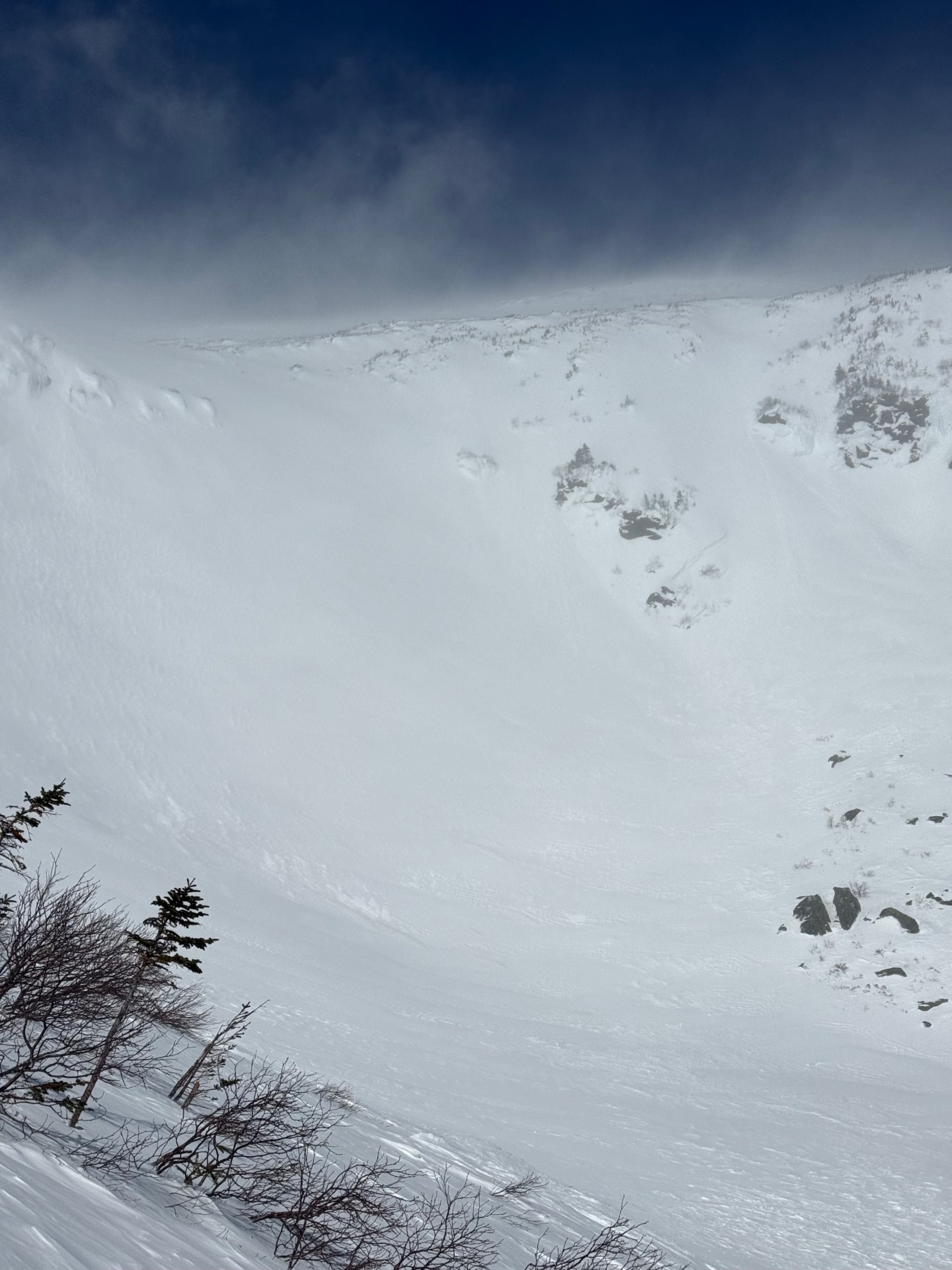
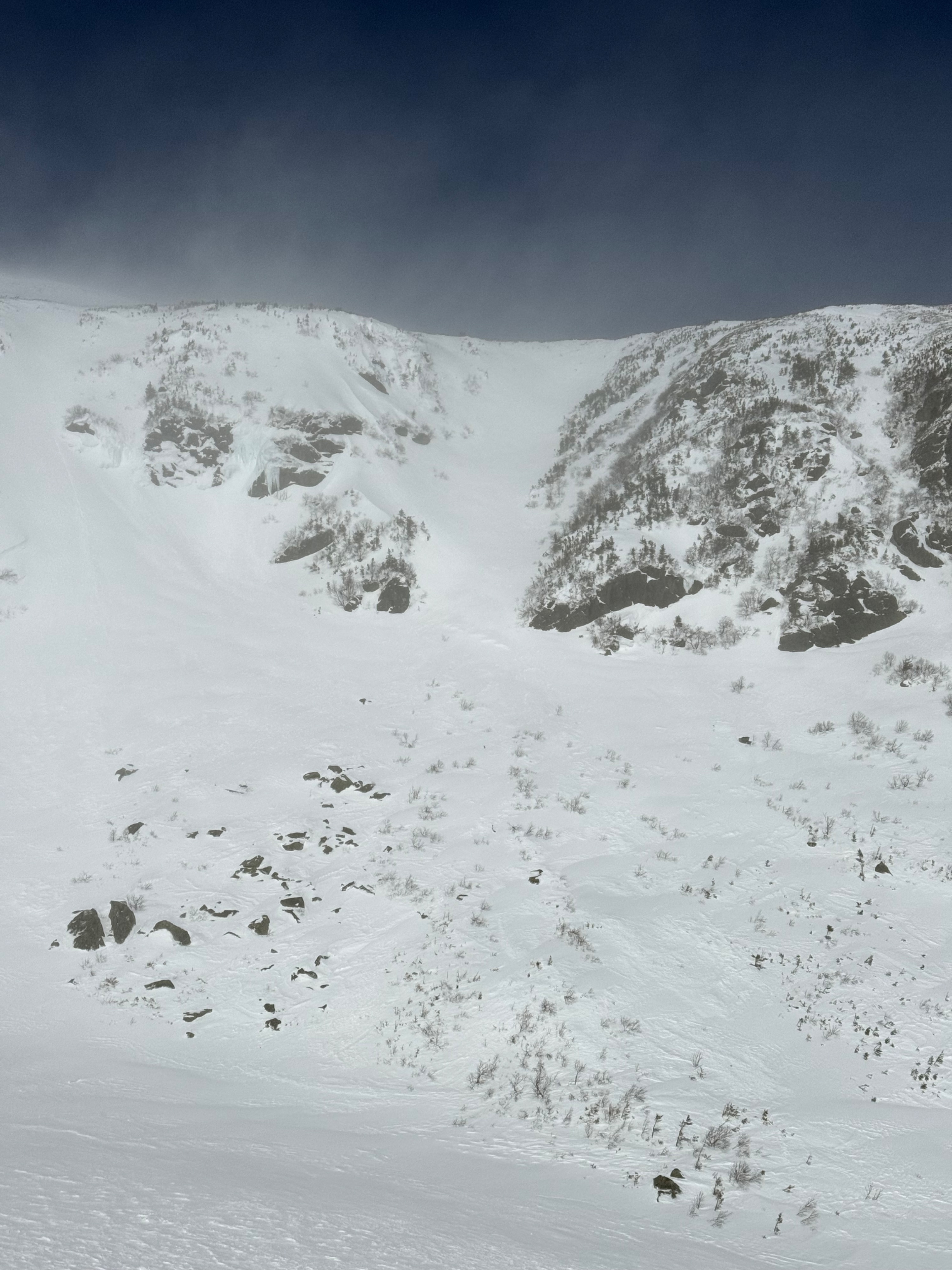
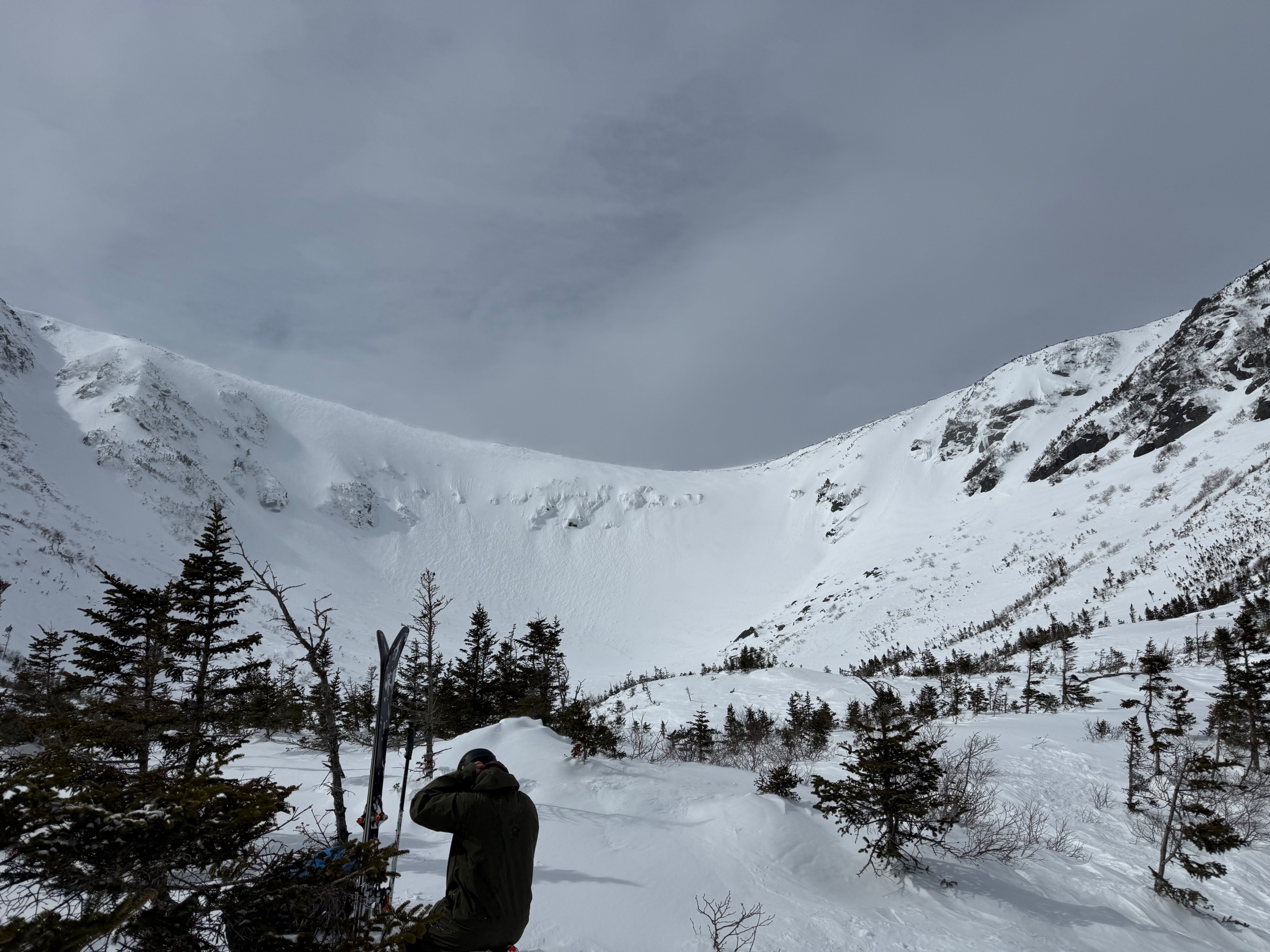
Found variable surface conditions in Tuckerman Ravine with areas of soft, unreactive wind slab and hard textured old snow surfaces. The new slabs were easy to find across eastern and south-facing terrain features and were observed to be small and generally unreactive. It is possible to find more sensitive slabs higher in terrain that is protected by the wind, and the most concerning areas would be in steep, unsupported terrain features.
Continued strong winds and mild temperatures likely helped with settlement throughout the day. The winds seemed to limit some solar gain, but it is possible that a thin sun crust formed on some southerly terrain features.
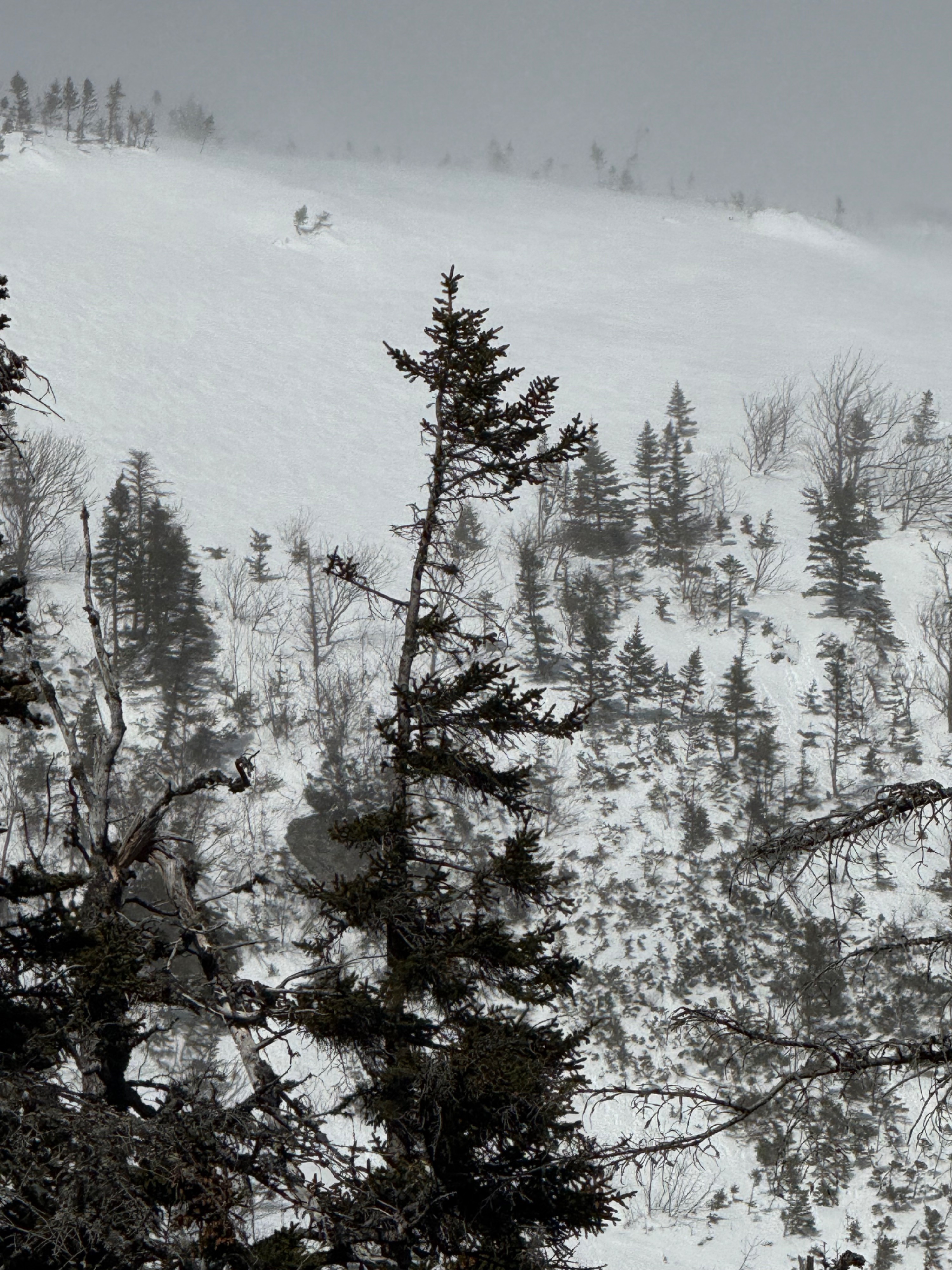
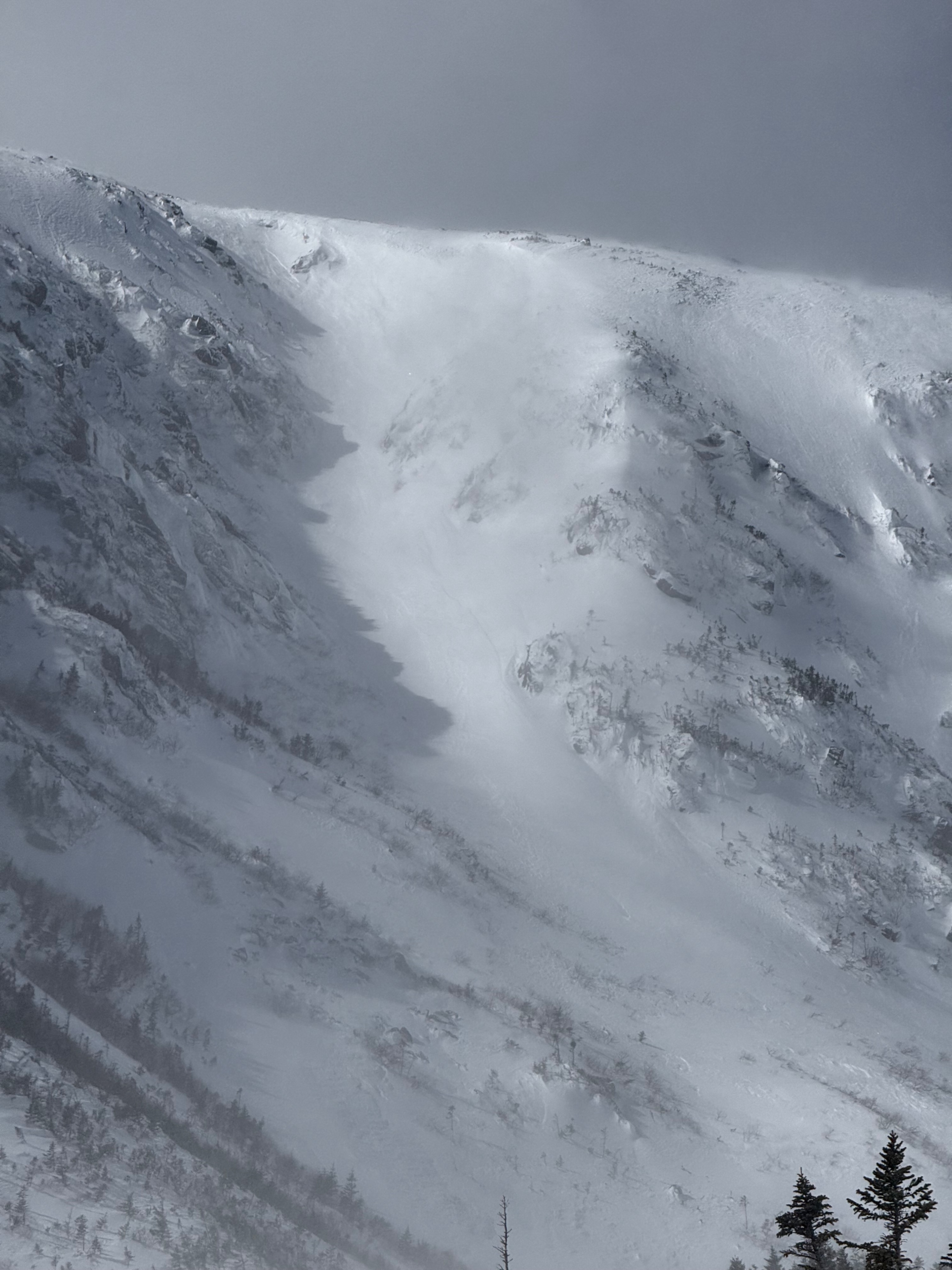
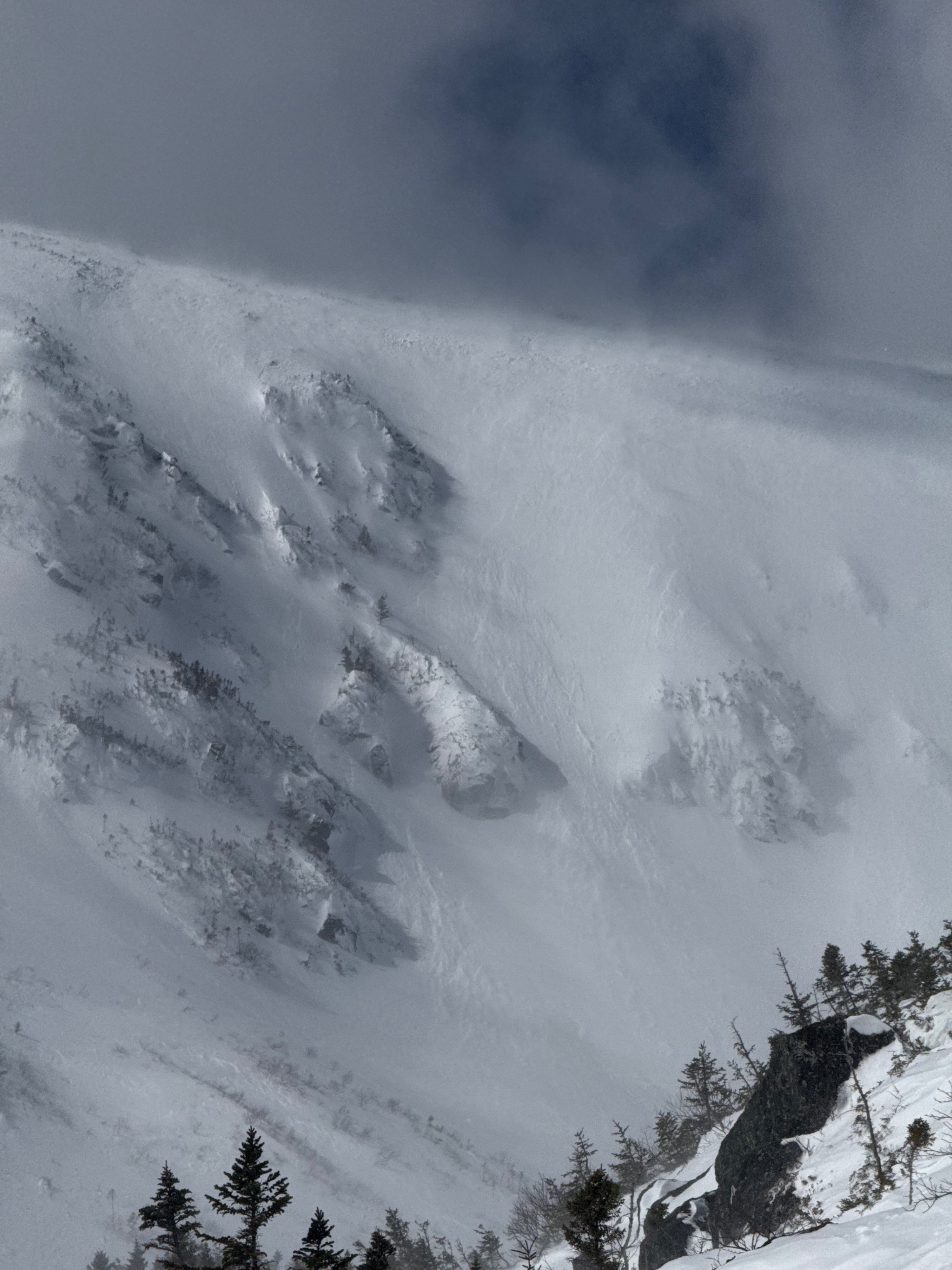
Snow continued to move throughout the day, but generally seemed to pour down the firm terrain rather than collecting. It quickly filled in skin tracks as well as boot tracks, but generally seemed to be collecting in the trees.
Weather
- Air Temp
- 28
- Cloud Cover
- few
- Wind Loading
- moderate
- Recent Snowfall
- 4 cm
- Snow Avail For Transport
- none
Skies were generally clear with light cloud coverage, cloud coverage increased around 1200 to overcast. Winds were consistently strong, with snow being blown around.
Snowpack
At Hermit Lake (3800 ft) snow surfaces were wetting at 1000. Skinning into the ravine, some snow surfaces were softening, strong winds may have helped to keep snow surfaces cool, but steep terrain more exposed to the sun (especially solar aspects) may form a thin sun crust. We did not see roller balls or other evidence of in steep avalanche terrain (though we did see this in some areas in the trees).
Increasingly overcast skies may have limited the solar gain into the afternoon. The warming that we observed seemed to help promote bonding and settlement, and at that time, was not driving increasing hazard.
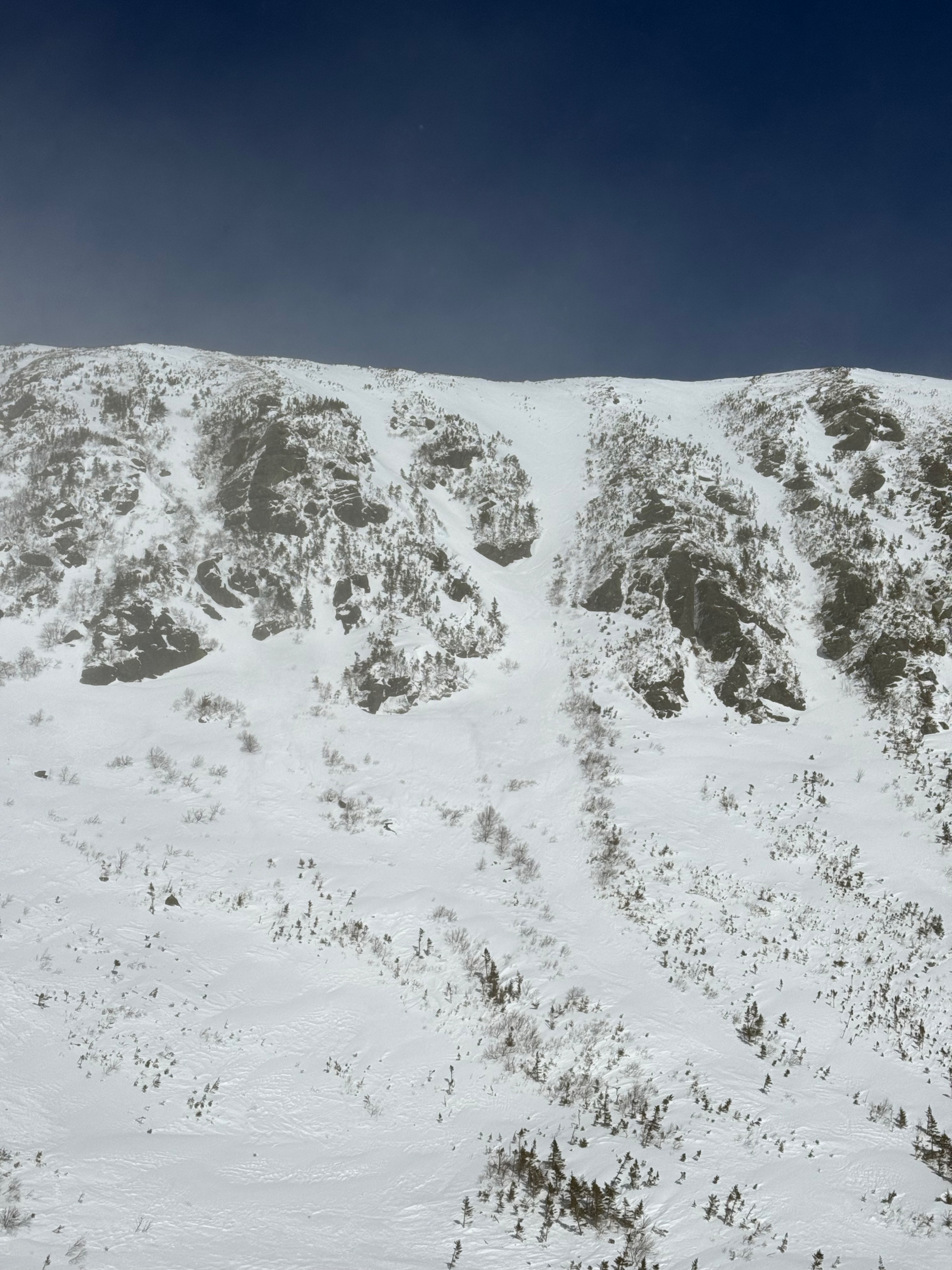
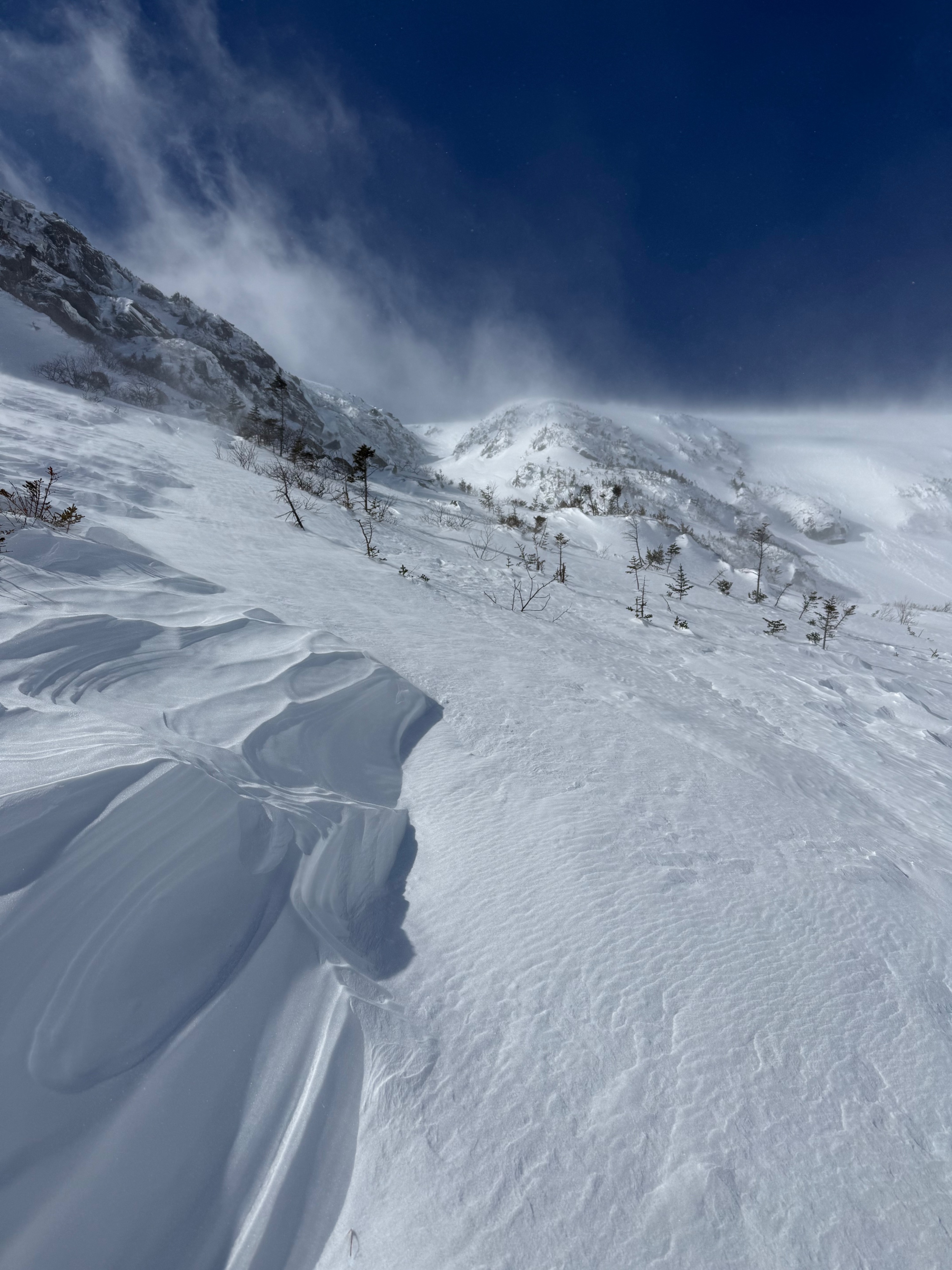
We found new thin wind slabs in a lot of areas across northeast, east, and south-facing terrain. These generally were 2-25 cm thick and in most areas the slabs were found to be unreactive and well bonded to the old snow surface. Looking across the terrain, we could make out variable surfaces of new thin wind slabs, the old snow hard surface, and areas of soft sastrugi and wind textured snow. We encountered no signs of instabilities, but noted a few areas isolated in steep, unsupported terrain where we would have taken more time to assess.
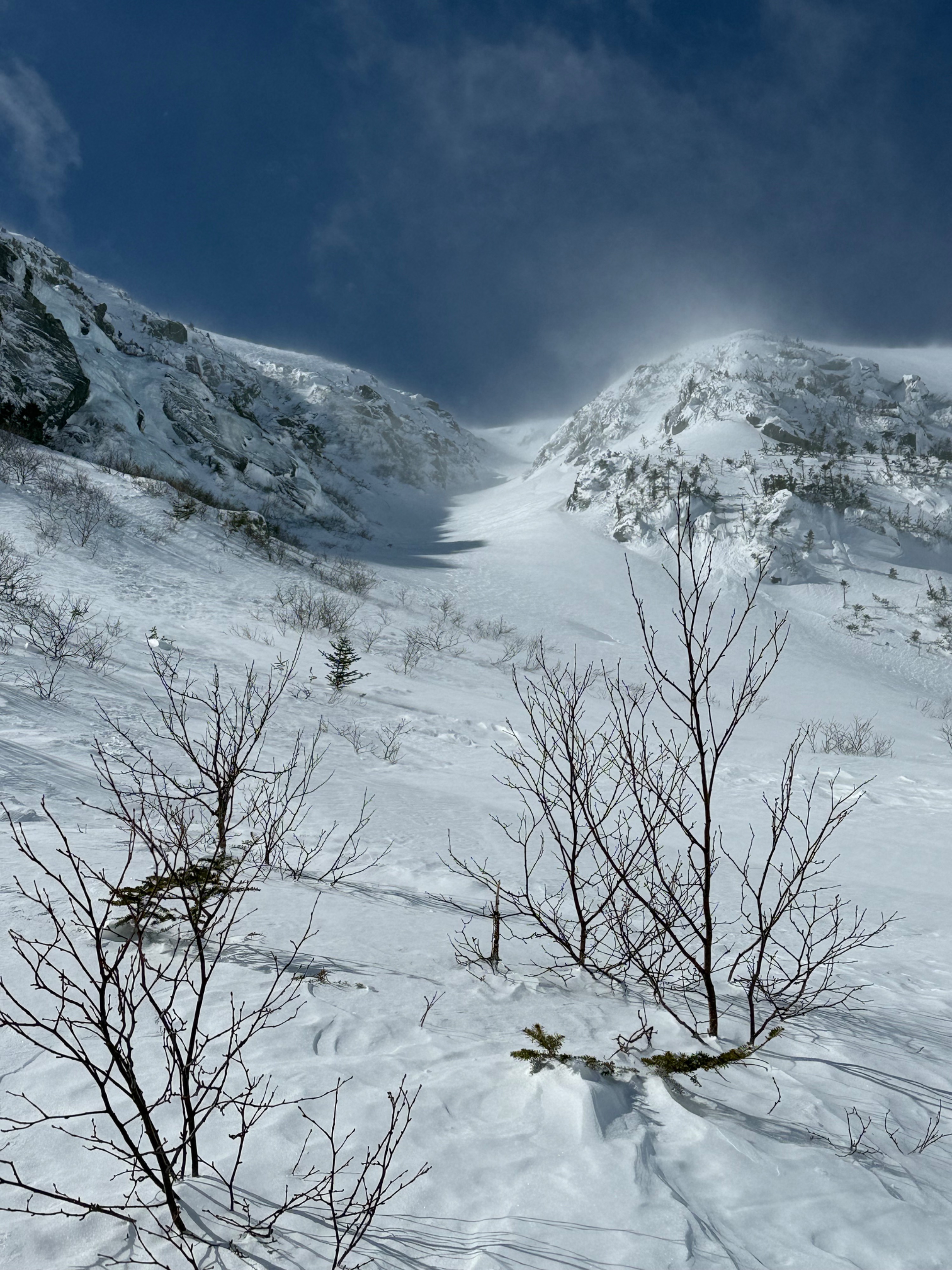
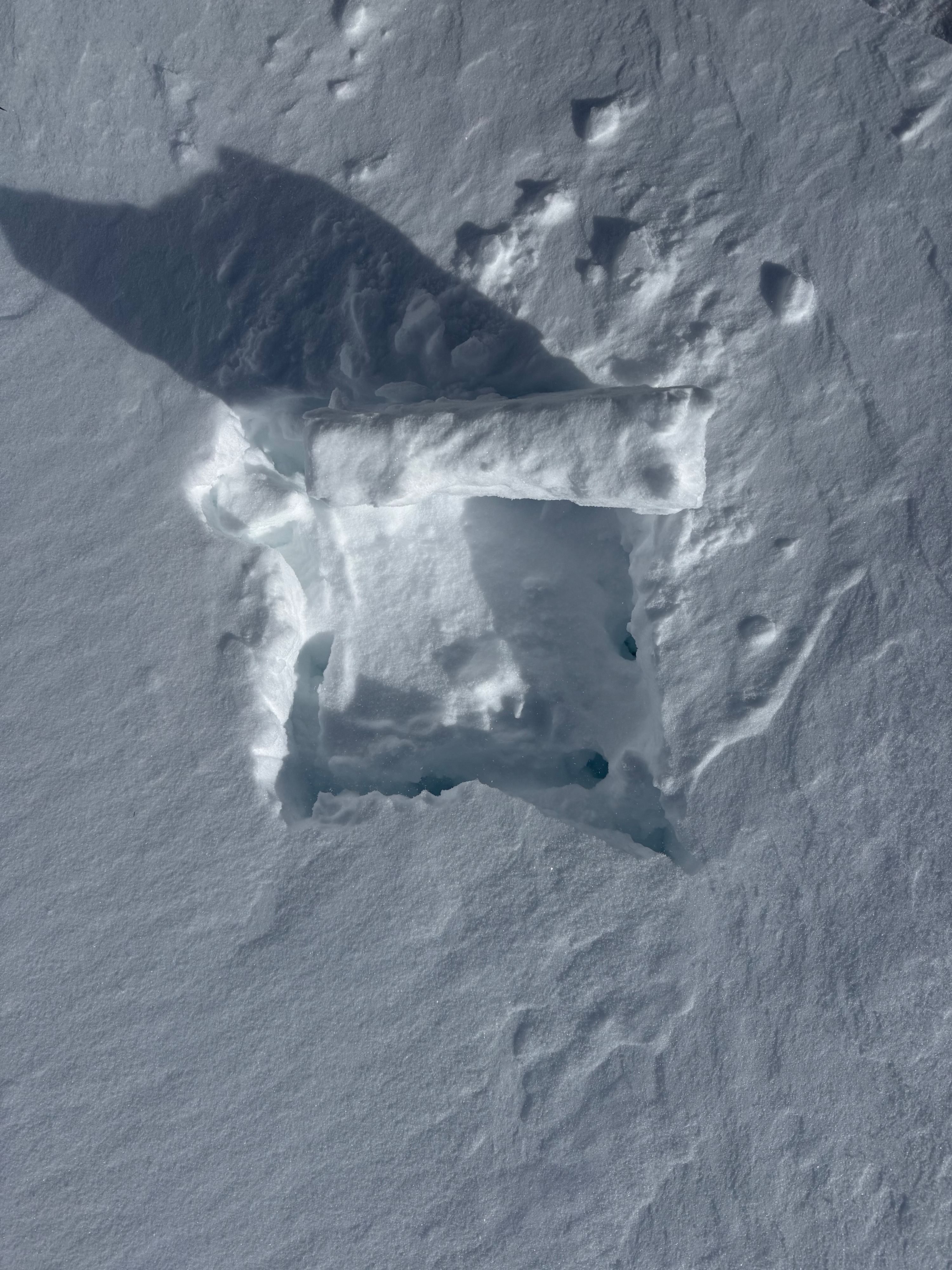
In Left Gully, we found a thin (2-inch) wind crust that was on top of the new wind slab in some areas. This would crack underneath kickturns and in handshears could fail on isolation. However, it was generally supoortable and cracks were limited to underneath skis when the slab was unsupported and seemed to lack propagation potential.
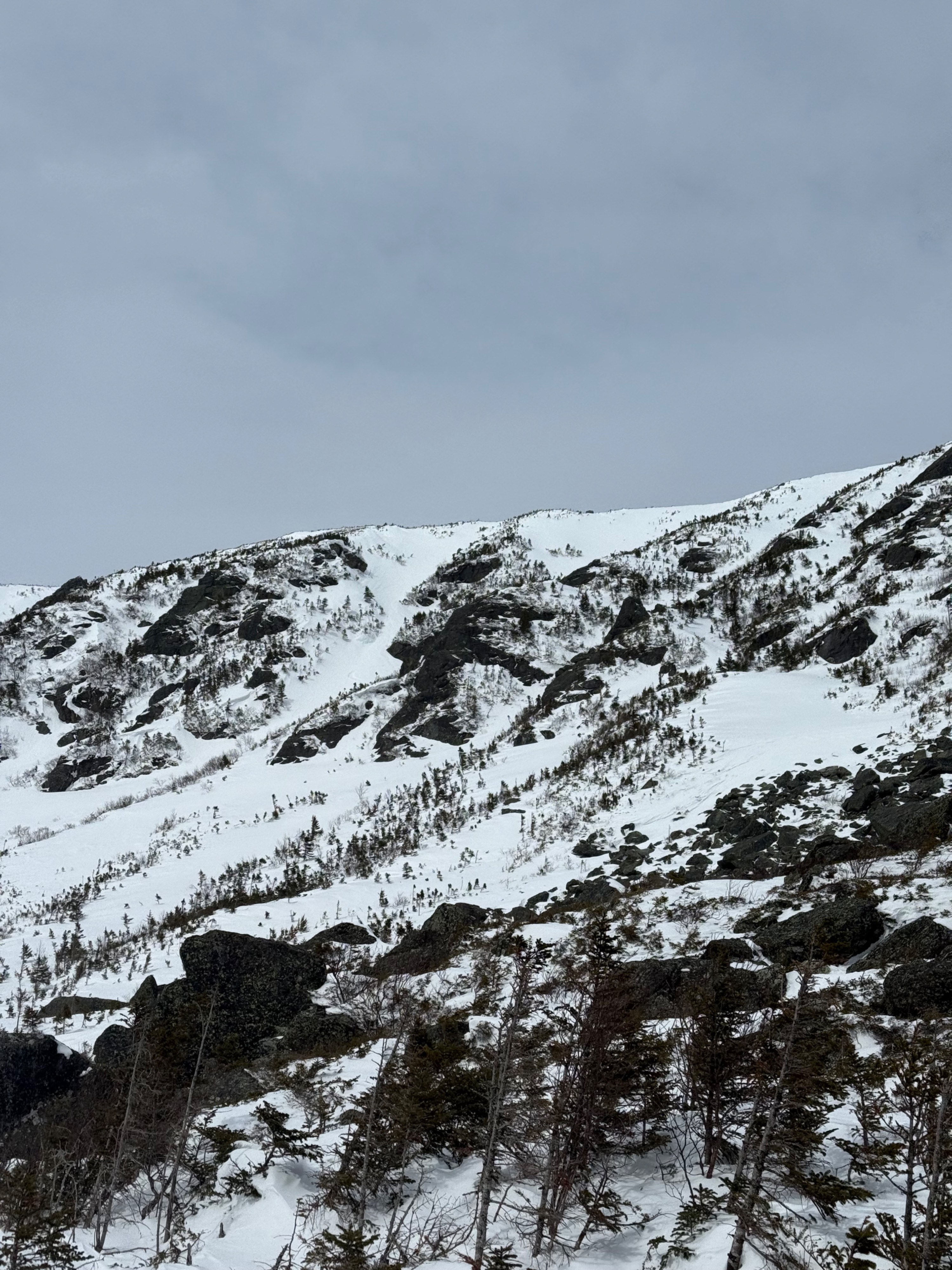
There were observations that skiers found slabby conditions higher in terrain in Hillman's Highway; this was also found higher in terrain in the morning in Lobster Claw (likely before solar inputs).
The distribution of wind slabs with changing winds was the real driver of the hazard in this morning's forecast. The small size was in line, however, the sensitivity was generally unreactive. It is possible to find smaller isolated pockets of more reactive snow, but the bulk of new wind slabs formed were observed to be unreactive.
Areas that were exposed to the wind were scoured to the old hard snow layer, this was found low on the ravine floor and low in the south side of Tuckerman Ravine. Areas that were protected had previously loaded slabs, The snow that was blowing around was hard to tell if it was productively loading in some areas, as it seemed to pour down firm new wind slabs in steep terrain. Skin tracks were quickly refilled by blowing snow.
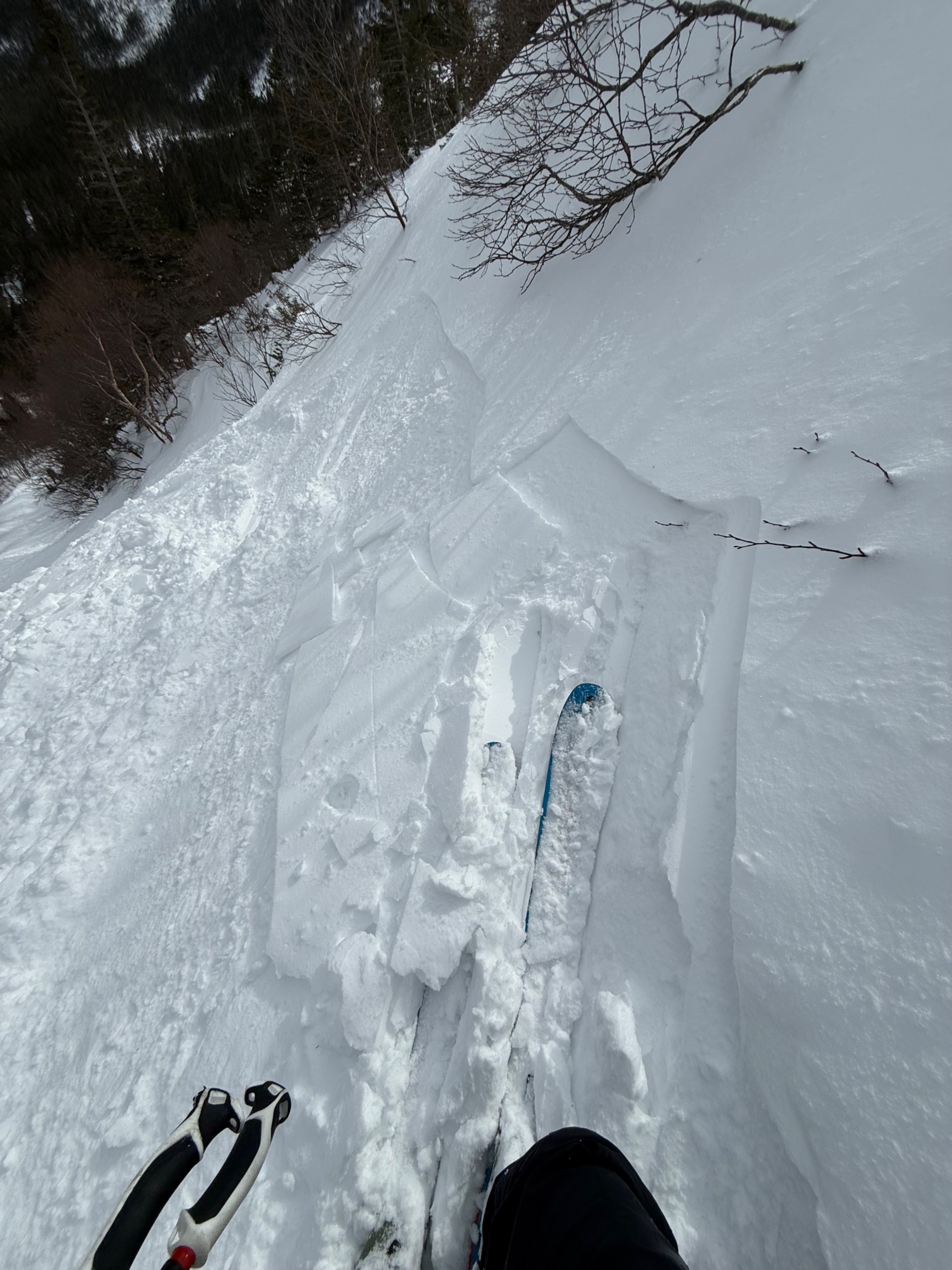
Found a really thin (less than 1 inch thick) slab on Little Headwall in the steeper section. Due to previous skier traffic it was disconnected and broken up, and also slightly undercut. It was slightly more reactive than other slabs observed, but isolated, small, and unsupported.