

Quick report
I went out with the goal of covering a lot of ground to gather surface condition information before the long-awaited storm rolls in tonight. Unsurprisingly, surface conditions are quite variable. With thick melt-freeze crusts on sunny slopes, weak surfaces with surface hoar on shady slopes, and everything in between. The aforementioned "in-between" didn't seem to have a distinct distribution pattern but consisted of a mixed bag of breakable melt-freeze crusts of variable thicknesses and stiff, wind-affected surfaces.
Travel was actually better than anticipated. Although the refreeze in forested areas was poor, the surfaces were soft enough to avoid using ski crampons. Southern terrain in open areas re-froze overnight and softened into nice corn skiing during the day. While the forested areas didn't get a solid overnight re-freeze, they weren't soft enough to warrent wet, loose avalanche concerns. Northern aspects held nice, soft, dry, recycled snow.
Weather
It was a cold start to the day below the inversion with clear skies. By 3700ft, I had climbed out of the cold air pool and into the warmer air mass and hot sun. The direct sun was a bit short-lived with high clouds and wind picking up around 11 am. But overall, a lovely, mild day in the mountains.
Snowpack
I prioritized travel on different aspects in both sheltered and unsheltered terrain, monitoring surface conditions for the incoming storm.
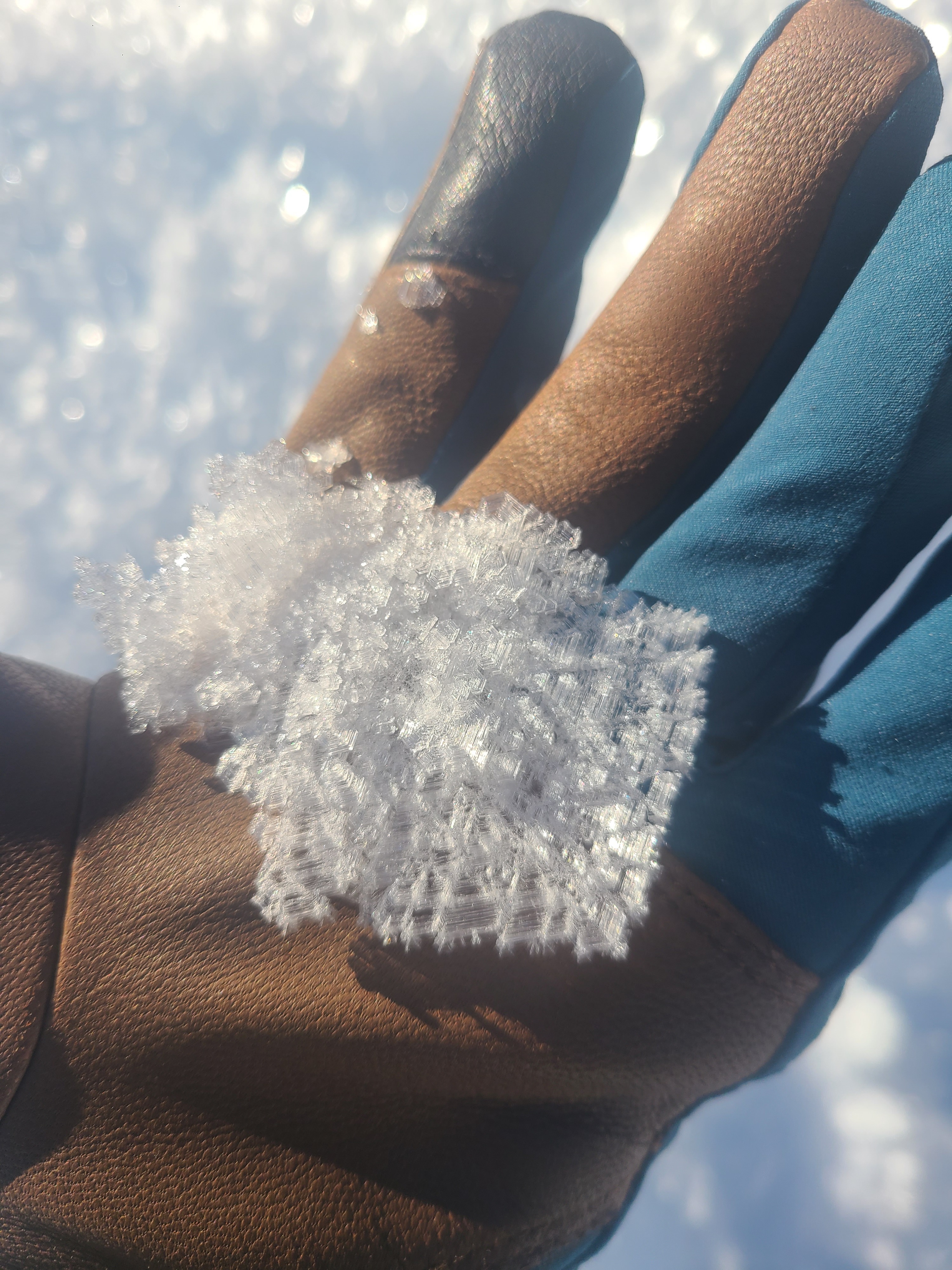
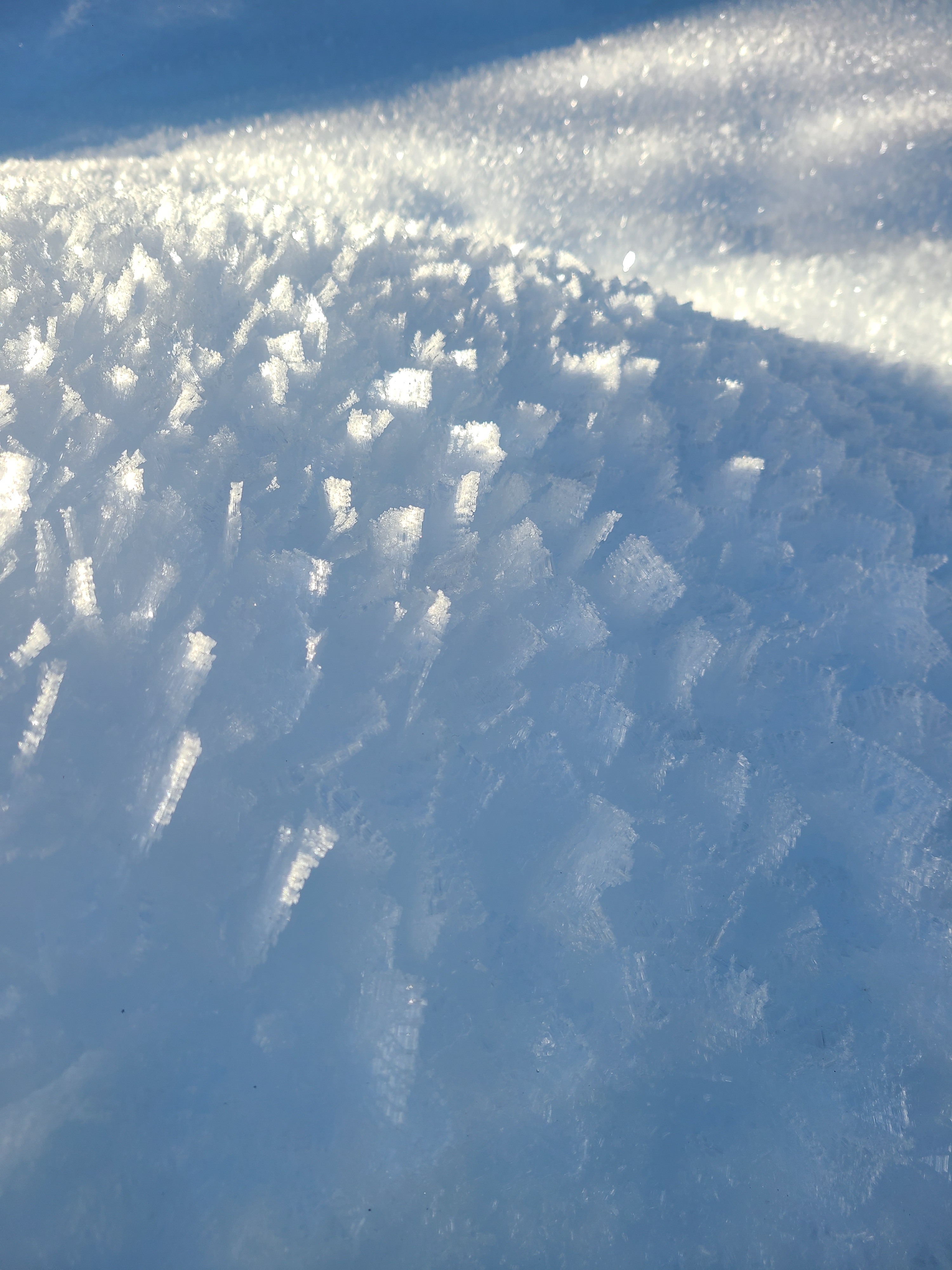
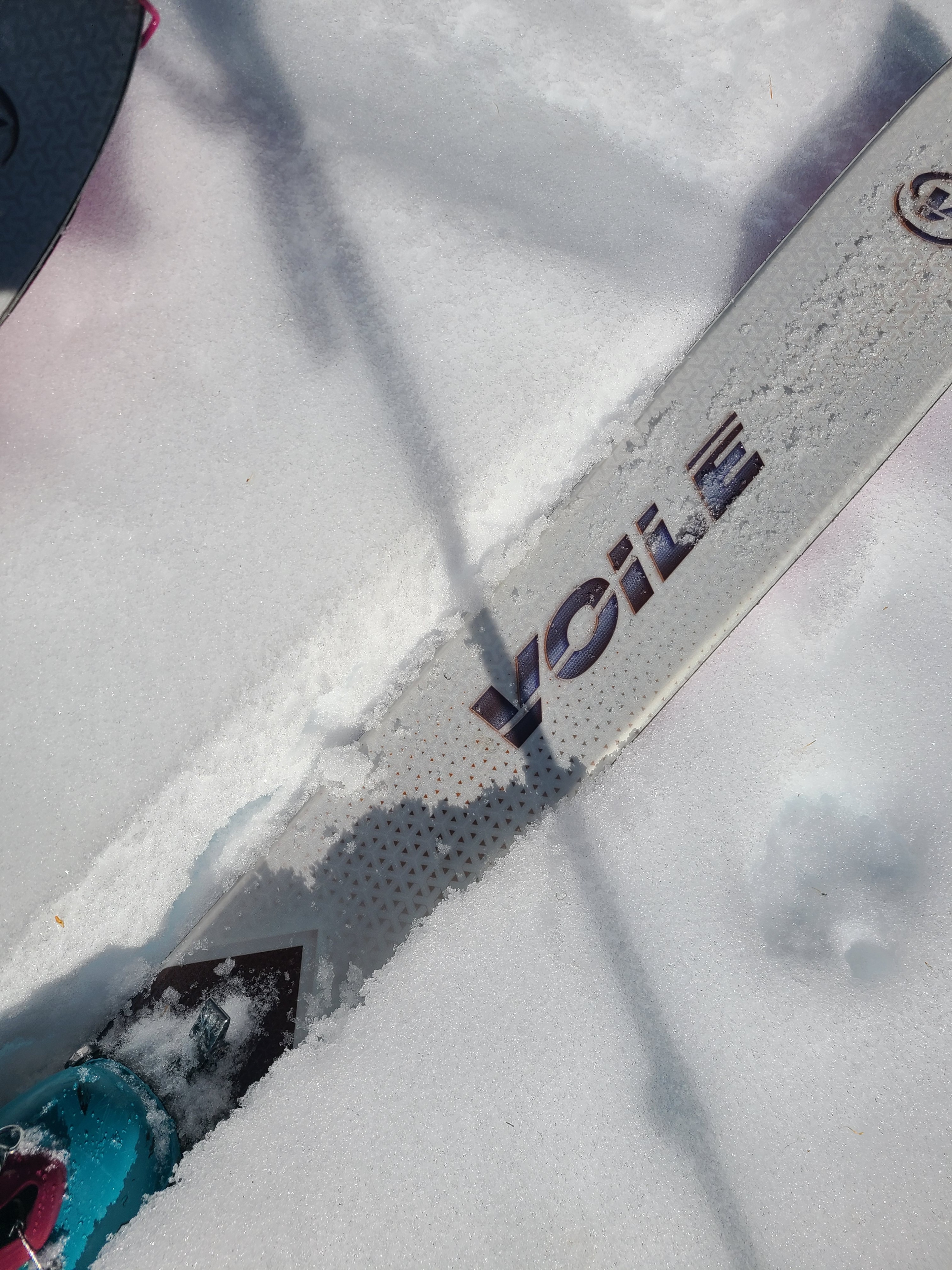
Surface Conditions Summary: The best word to summarize current conditions is "variable." South, east, and west aspects have surface crusts. These crusts vary from 15-20cm thick and supportable on steep south aspects to thin and breakable with weak snow below on east and west aspects. Northern slopes hold cold, dry, weak snow surfaces. Surface hoar and faceted snow are widespread. The largest surface hoar grains (5-6cm) are confined to valley bottoms and creek drainages. The surface hoar at mid-elevations is between 1-2cm. While the distribution of surface hoar is widespread on these shady slopes, the condition of the grains is variable. In more wind-exposed locations, the grains are leaned over or flattened, and they look to have been warmed by the recent temperatures before refreezing again. In truly wind-sheltered terrain the surface hoar is still upright and intact.
I dug two pits on opposing aspects, S and N.
South aspect, 5000ft
Height of snow: 190cm
Snowpack Summary: The snowpack on these south aspects looks more like spring than later January. The surface crust was 15-20cm thick and supportable, resting over well-consolidated, moist, rounded grains. With this strong snowpack structure and thick surface crust, we probably can consider this surface the new "ground" moving forward.
North aspect, 5300ft
Height of snow: 264cm
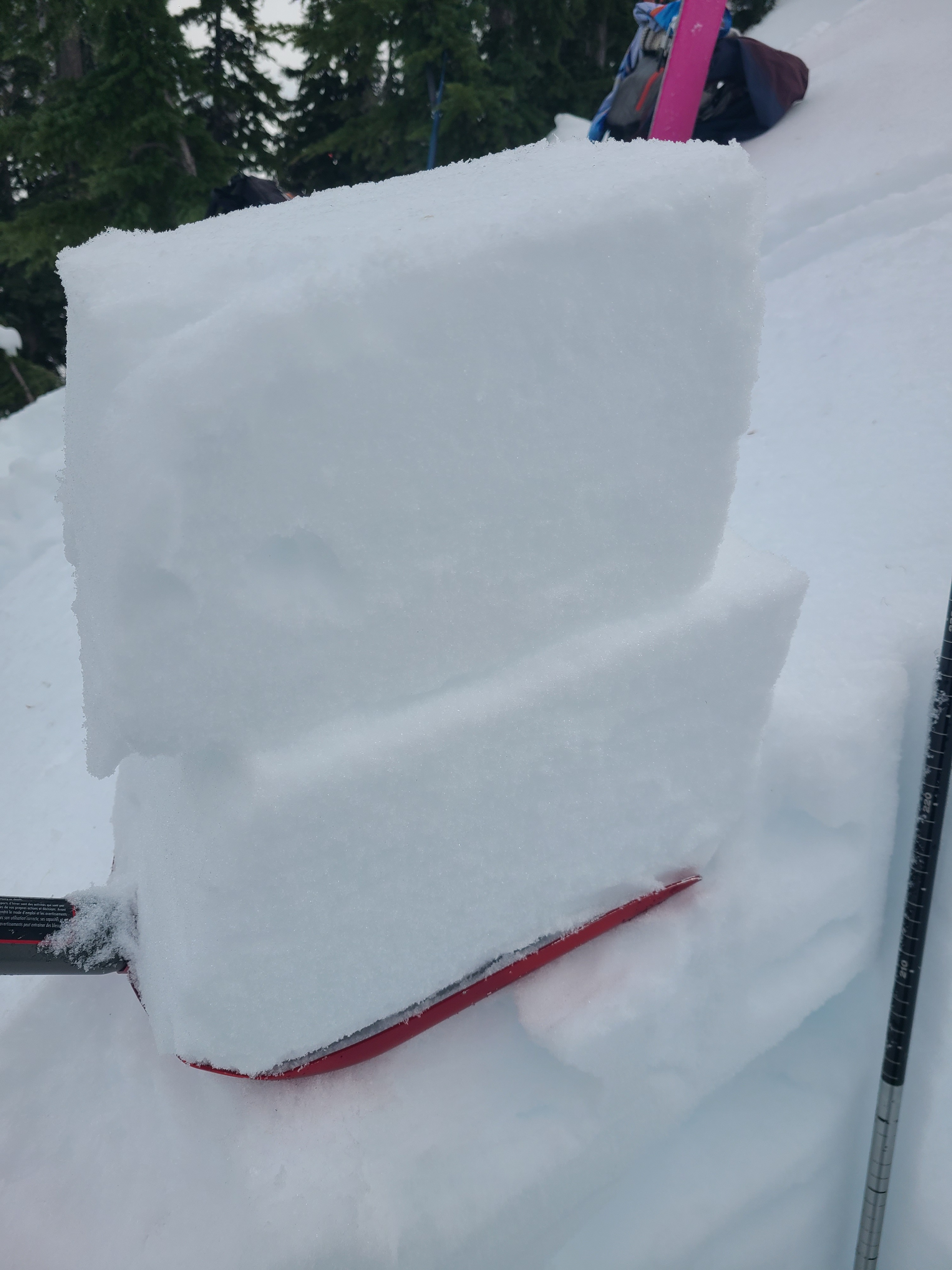
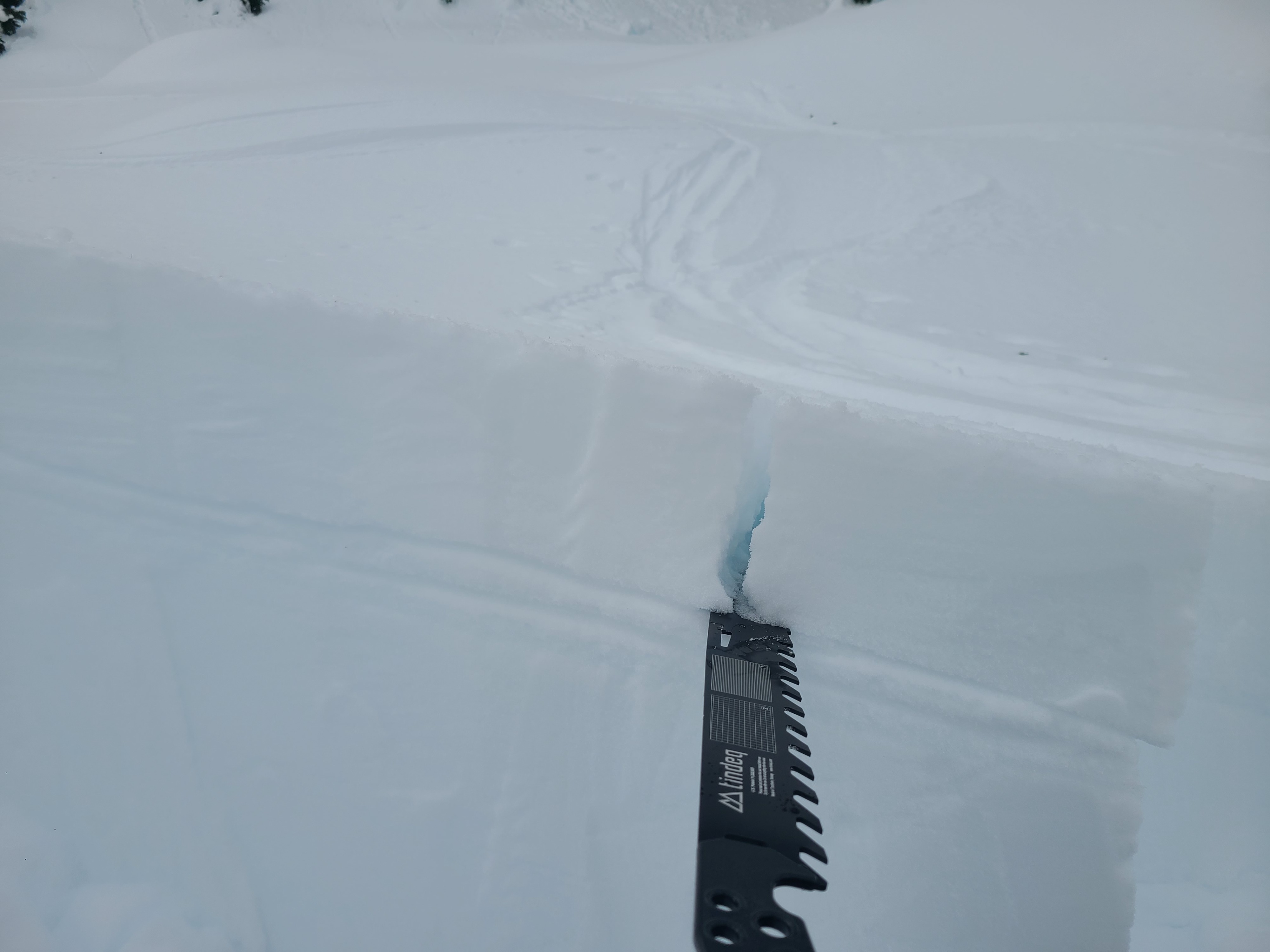
Snowpack Summary: These shady aspects have a more complex and significantly weaker snowpack. Just below the surface hoar layer is 20cm of weak faceted snow resting over the 1/10 melt-freeze crust. This faceted layer is weakest just below the surface and directly above the 1/10 interface. Although stability tests produced moderate results, the overlaying snow/slab doesn't have much structure or cohesion to it. Below the 1/10 interface, the mid-pack is gaining strength and is a mixture of rounding facets, decomposing fragments, and rounded grains of varying hardness. Below 60cm, the snowpack is strong, small rounded grains down to the Solstice Crust, buried 120cm.
Stability Test Results
ECTN25 ↓ 20cm
STM ↓ 20cm
PST 26/100 SF @20cm