
Quick report
- Cracking
- isolated
Today was a fun and interesting day in the mountains! The main goal was to look for buried surface hoar and assess wind slab instability. I found a variety of snowpack layers, some of which I wasn't expecting to encounter, yet overall stable conditions. The buried surface hoar I found was between 2-4mm. The skiing and sledding conditions were pretty decent at all elevations as well, which always helps make the day enjoyable too :)
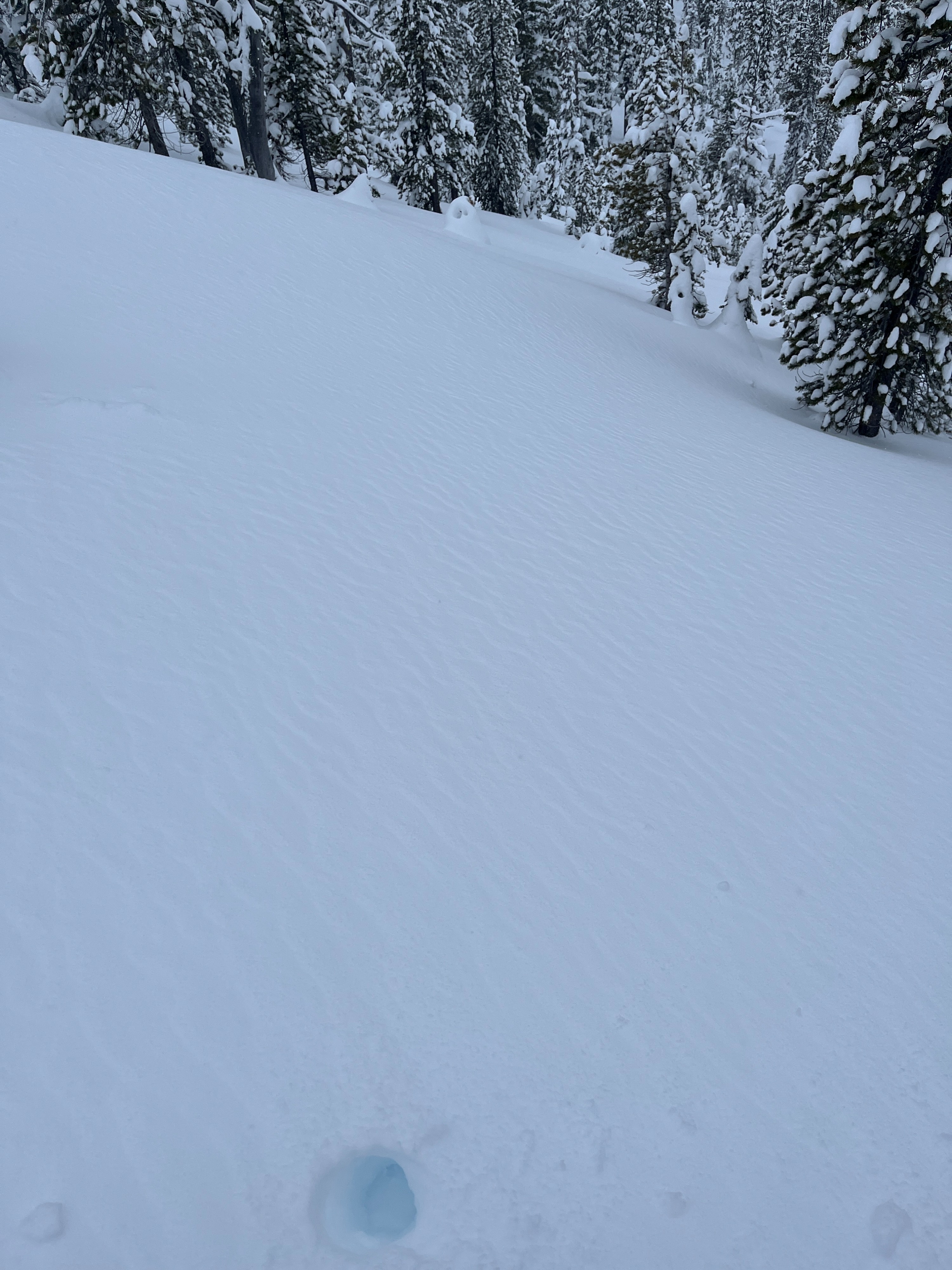
We observed quite a bit of cracking around our skis in both sheltered and wind blown snow, however none of the cracks were shooting. Other than some interesting pit test results, we encountered no other signs of instability.Weather
- Cloud Cover
- overcast
- Wind Loading
- light
- Recent Snowfall
- 15
- Snow Avail For Transport
- small smounts
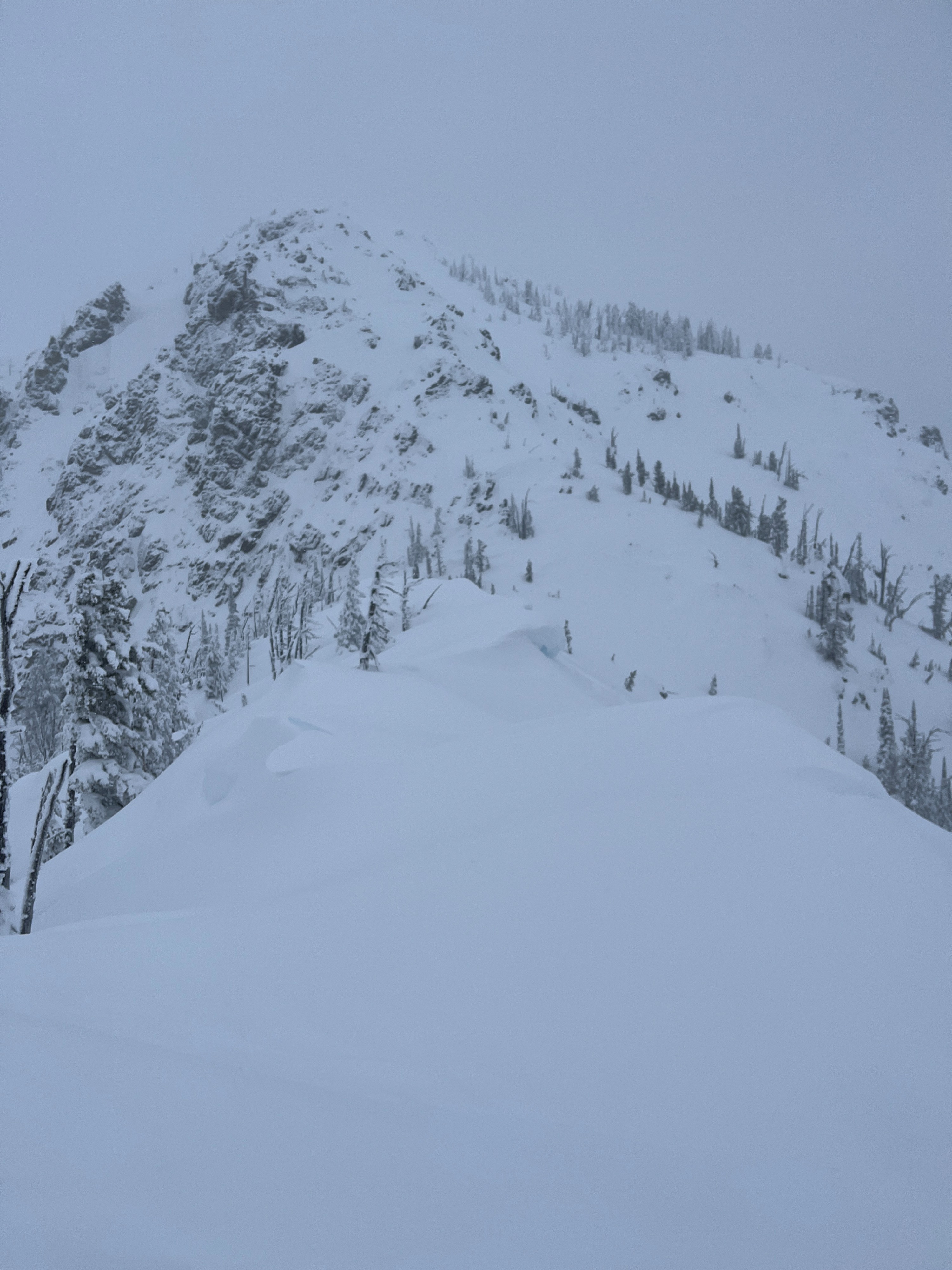
The sky was overcast throughout the day. From the start of our day to around 10am, the snowfall was light. It became very light after that for the remainder of the day. The wind was calm or light and from the east. We observed small amounts of blowing snow at ridgeline when light gusts blew. Temperatures were cool, but had warmed up significantly at lower elevations by the afternoon.
Snowpack
The robust lower elevation crust that we have previously observed continues to exist up to around 4500 ft. There was about 5in/13cm of new snow at lower elevations. In the afternoon, we observed small rollerballs that had released within the day down near the sled road.
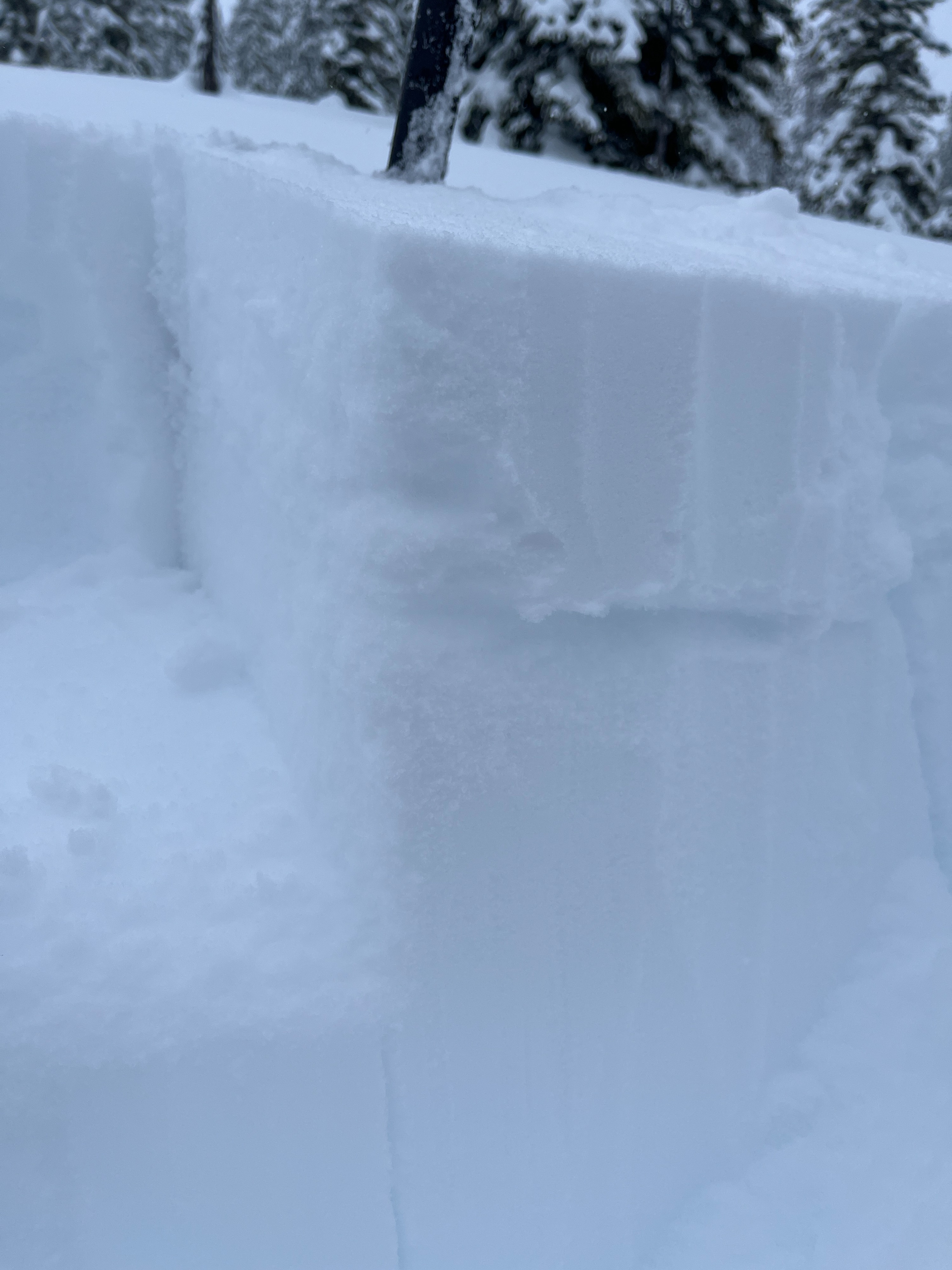
I dug several small pits as we worked our way up to Eldorado Pass. In my first pit on a SW aspect at 4400 ft, I did not find buried surface hoar. Shovel tilt tests yielded easy results in the top 10-15cm of new snow (STE).
On a westerly aspect at 4900', the depth of the snowpack was 170cm. I found buried surface hoar under 5in/13cm of new snow. Shovel tilt tests yielded easy results (STE) and a compression test gave a moderate sudden collapse result (CT12, SC(Q1)) on this layer.
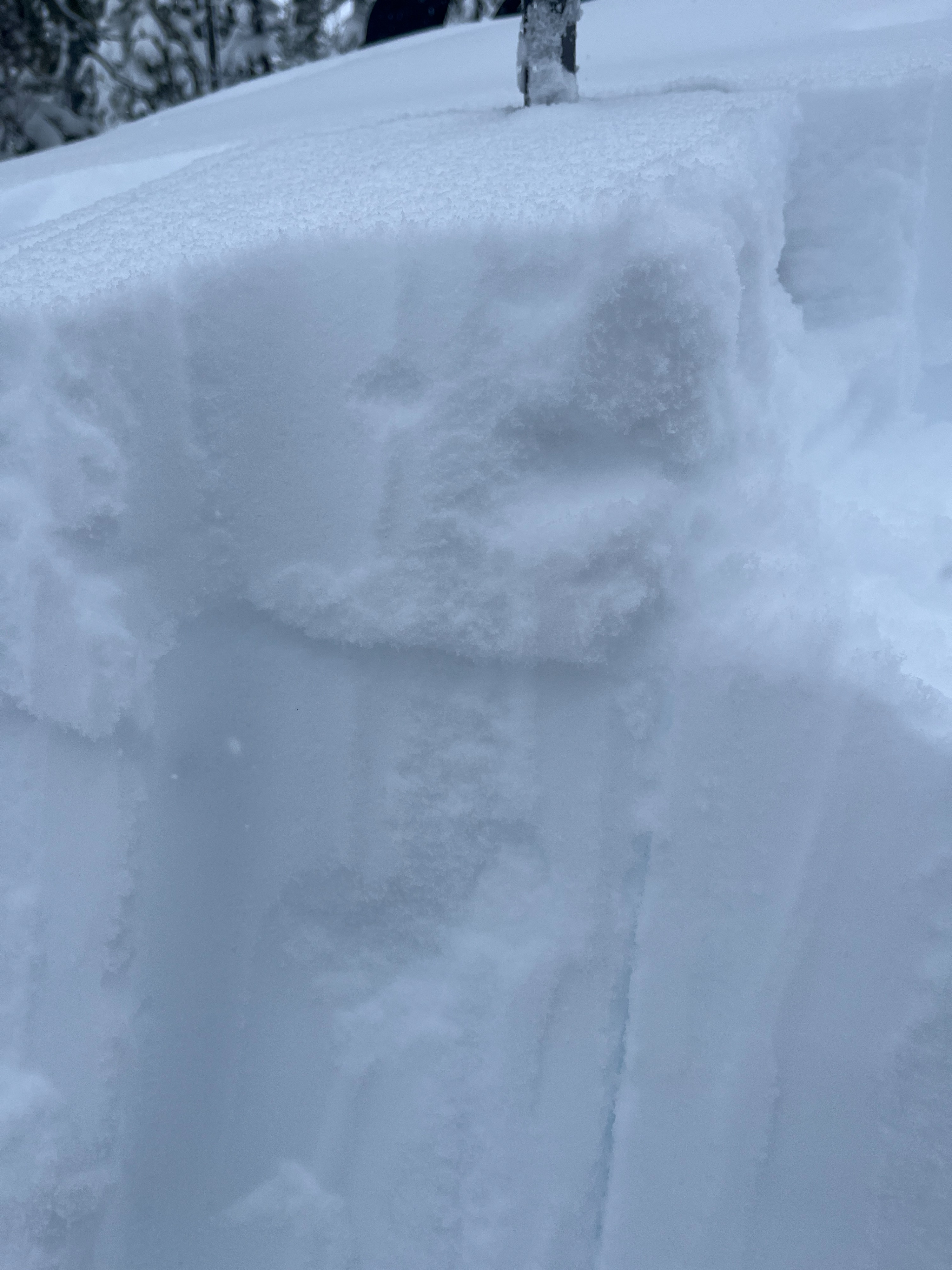
On a W aspect at 5700 ft, the depth of the snowpack was 85in/216cm. I once again found buried surface hoar, but I also found a thin crust layer that I am not quite sure how it formed. It may have been formed by either freezing rain, rain, or freezing fog. Either way, it was very thin, breakable, and under 1.5in/4cm of soft new snow. I found the buried surface hoar down 6in/15cm down. Below this, I found decomposing fragments that consolidated from fist to four finger hard. An extended column test yielded a moderate non-propagating result on the layer of buried surface hoar (ECTN13). When I pulled the block away from the pit wall, it broke away at the crust layer in a very jagged, uneven fashion.
My next pit was again on a W aspect at 6200 ft. The depth of the snowpack here on a wind loaded slope was 116in/294cm. The strange crust layer I'd found earlier was a bit more pronounced here and under 5in/14cm of snow and was also very uneven laid out. The buried surface hoar was again, a bit below the crust and the decomposing fragments below it increased in consolidation from fist to one finger hard. I performed an extended column test and got moderate propagating results on the crust layer (ECTP11) and then a hard non-propagating result on the buried surface hoar (ECTN29).
My last quick pit was over on the other side of the ridge on an E aspect at 6200 ft. Due to an easterly wind, there was no new snow at the surface, so the crust was at the top. I once again found buried surface hoar in this pit and got easy shovel tilt tests to release on it (STE).