
Quick report
Widespread weak snow near the ground on shaded aspects still looks bad. Triggering an avalanche on these layers is most likely on steep slopes in areas sculpted by the wind. There, locally thinner portions of the slab increase the odds that you can impact them.
No obvious signs of instability.Weather
- Cloud Cover
- broken
- Wind Loading
- none
- Recent Snowfall
- <2 cm from last night and today
- Snow Avail For Transport
- moderate amounts
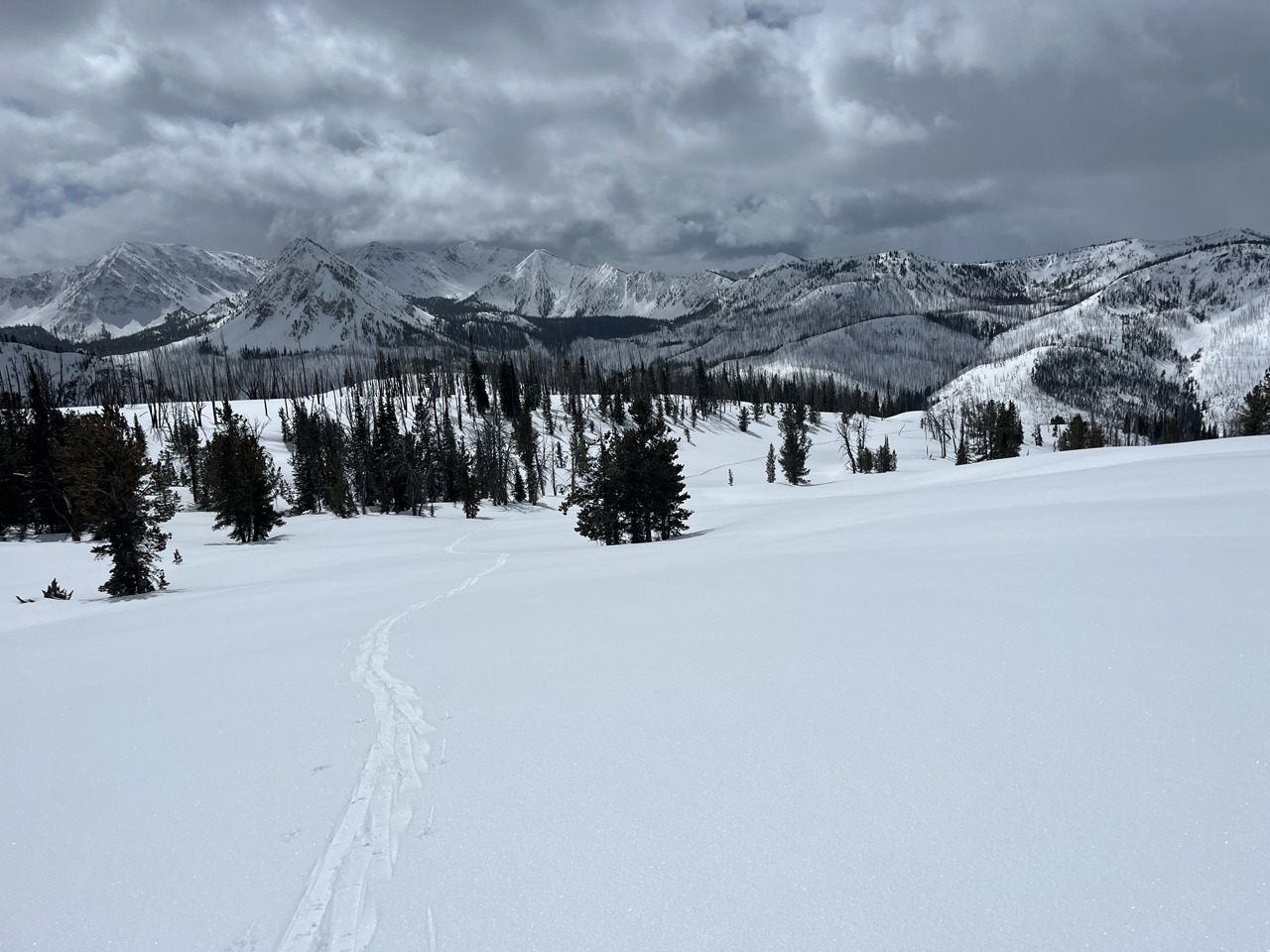
Today's sky was roughly equally split between clouds and sun. It snowed, but accumulations were less than an inch. The wind blew light from a variety of directions while in the drainage. At the ridgeline, it blew light from the NW. Some intermittent, light wind-loading was observed during short squalls. It was cool, but even short windows of sun were enough to moisten steep SW and S faces at middle elevations on exit.
Snowpack
Surfaces:
It was lightly snowing today, but accumulations were less than an inch (by 1400). I found 14 cm of settled new snow on shaded, upper elevation slopes since 3/23, which seemed well bonded. On sunny slopes, it's been baked into the mega crust from the mid-March warm-up. There were some thin, sunny margins where Saturday's snow was capped with a crust. This will make a DF/MFcr layer cake that could be interesting when loaded.
Sunny Slopes:
All sunny slopes up to 9,600' had a formidable and supportive surface crust. A lot of meltwater has made its way through the snowpack here, and avalanches seemed very unlikely.
Shaded Slopes:
Snowpack depths ranged from ~130-170 cm. February weak layers were unreactive in snowpack tests and generally looked good here. The most obvious weak layers were (1/6) and (11/30) buried 90-130 cm deep. I observed them at 9,000' and 9,500' on NW and NNW aspects. These thick facet stacks retained a weak interval near the center, with healing and stronger facets above and below. The grains were 3 mm and rounding but still F/F+ in hardness. They returned ECTXs, but additional non-standard loading steps produced clean shears. I observed them where the pack is uniformly thick and strong. There, you'd be unlucky to trigger an avalanche. In areas sculpted by the wind, the thinner slabs increase the odds that you can impact them.
Avalanche
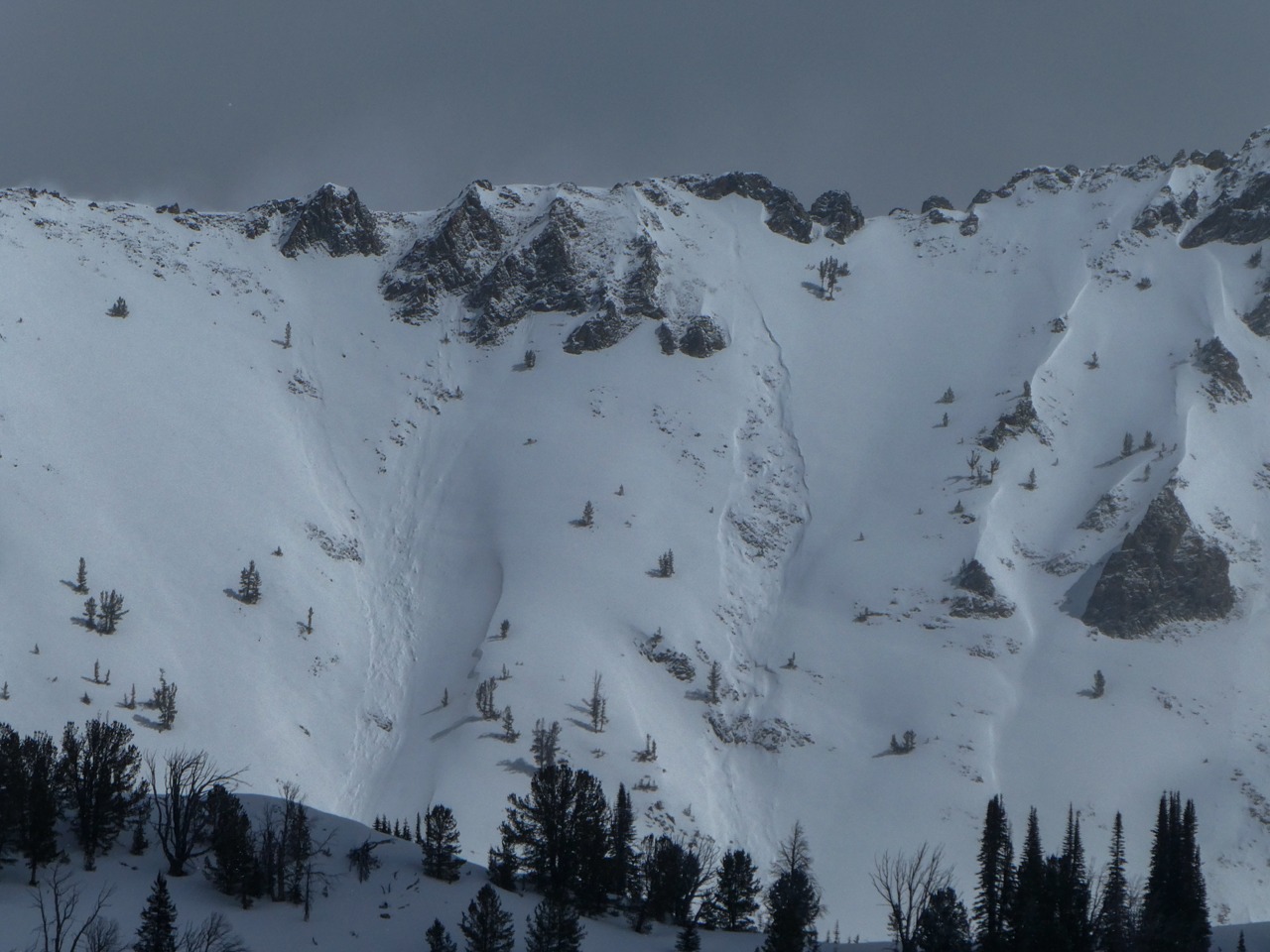
No recent (post-warming) avalanches were observed. Looking South toward Washington Pk, I observed some debris piles below steep cirques, but they would all be very hard to date, and no obvious crowns were visible.