
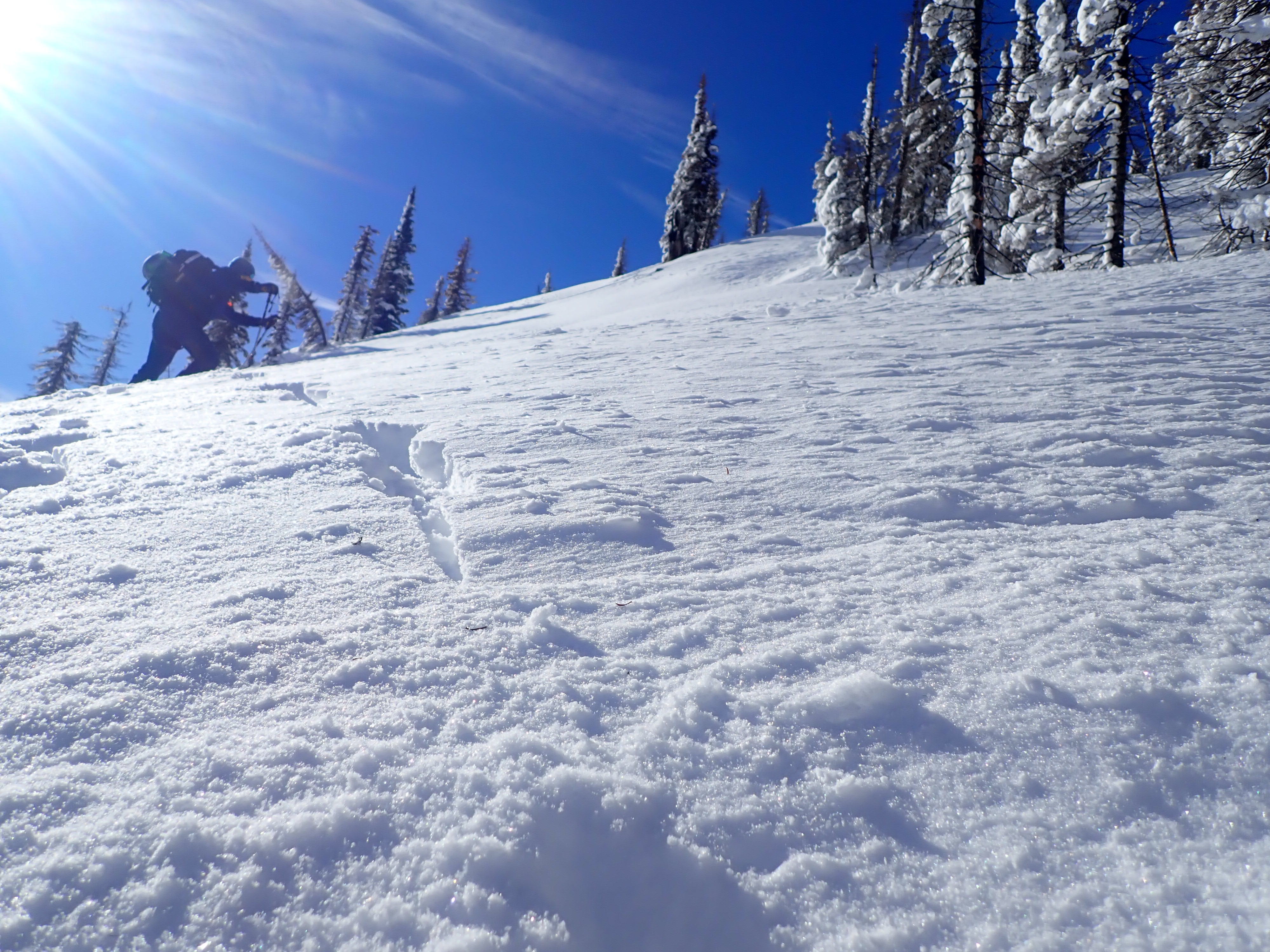
Quick report
- Collapsing
- isolated
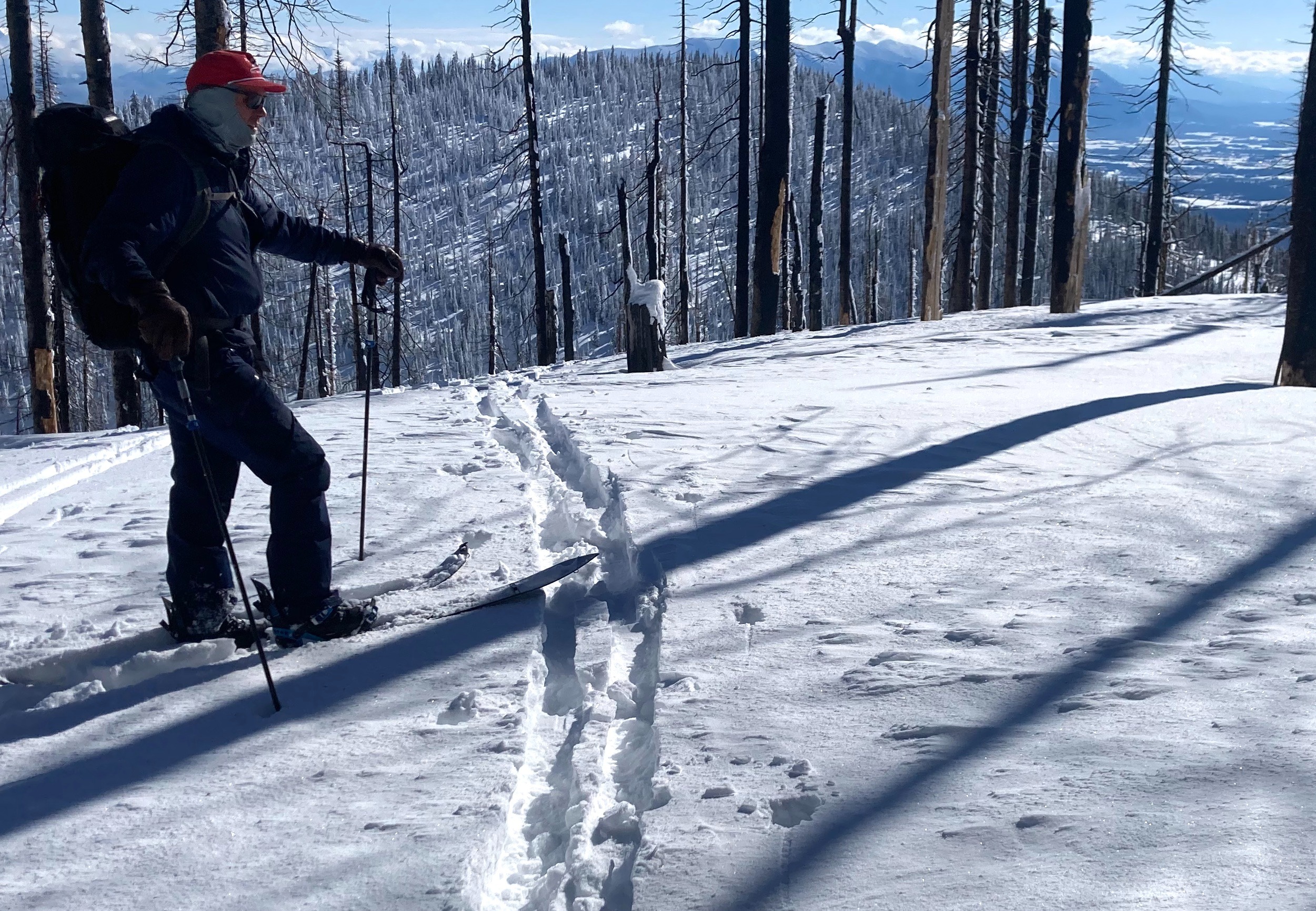
We investigated mid-elevation slopes east of WMR for wind slabs deposited by northerly winds late yesterday (2/13) and overnight, and for persistent weak layers buried by recent storms.
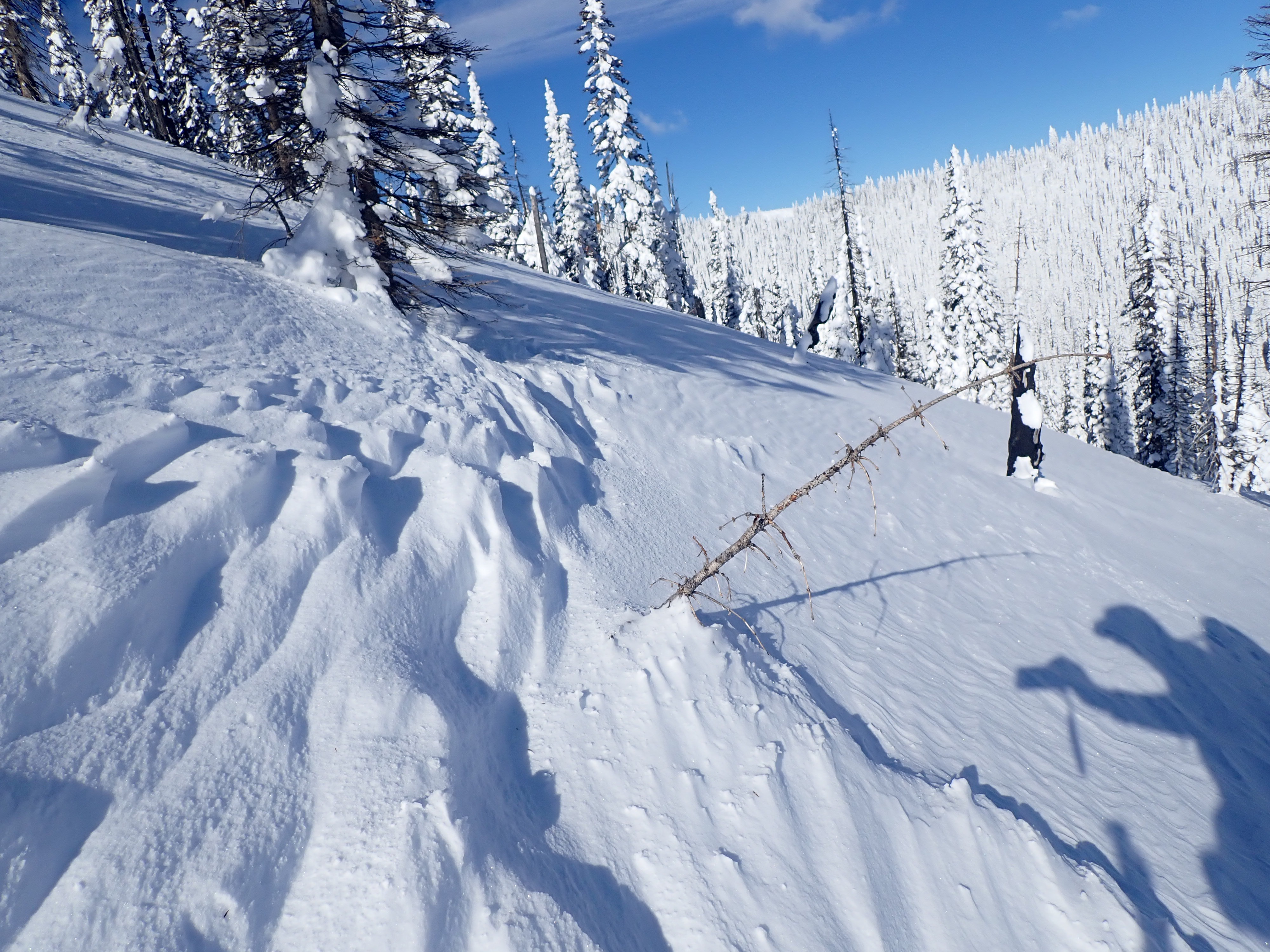
- No evidence that the northerly winds left more than small, thin, isolated slabs, though the snow surface on NE and E facing slopes was often wind-textured and slightly denser than on other aspects.
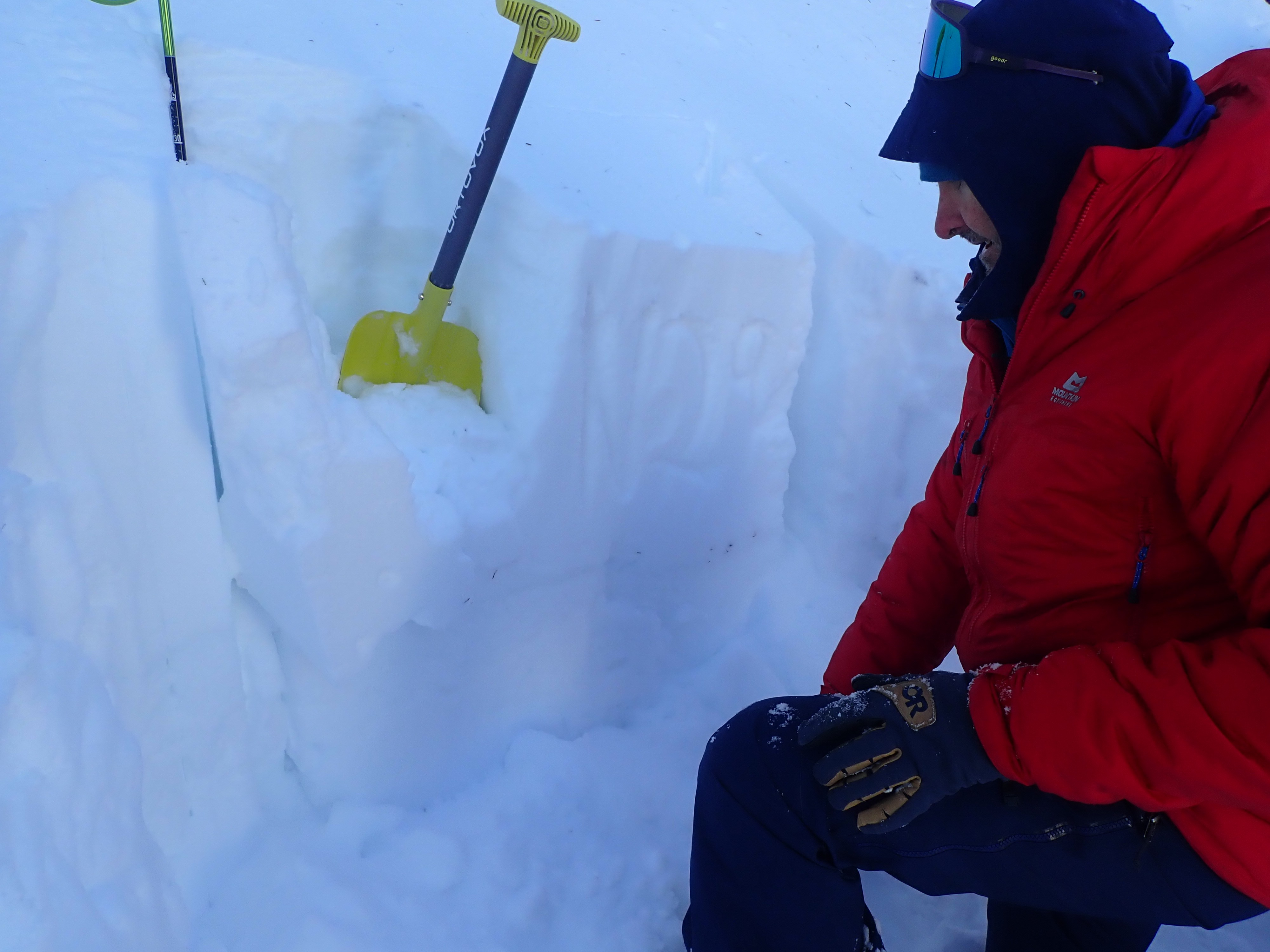
- We found persistent weak layers in 3 snow profiles (NE, E, and SE. These did not propagate in large column tests. We experienced one whumpf and no other signs of instability.
We had a stepping out mindset, which meant we were comfortable skiing and riding one at a time on slopes up to 35 degrees clear of likely trigger points (convexities, rocks, shallow spots) and terrain traps.
The sun was glorious, and only the top inch or so of snow on open, southerly slopes got moist.
One distinct whumpf on the shadowed side of a tree at about 6000 ft on a SE-facing slope. Shook some snow off trees 20-25 feet away. My guess is that this spot lacked the sun crust found in our profile on a SE slope.Weather
- Air Temp
- 15
- Cloud Cover
- few
- Wind Loading
- previous
- Recent Snowfall
- 0
- Snow Avail For Transport
- small smounts
Cold, bluebird morning! Pleasant in the sun, but noticeably cold in the shade. Light northerly winds on ridgetops. Some clouds moved over the valley early afternoon.
Snowpack
HS 190 - 205 on SE, E and NE- facing mid elevation slopes where we dug.
Snowpack structure similar in all 3 profiles, with some important differences.
Similarities:
- ~ 50 cm thick slab comprised of snow since 2/3. Progressively harder with depth (F to 4F or 1F). Some easy to moderate failures in compression and extended column tests, on a storm interface (stellars) 25-30 cm down. No propagation or sudden results on this interface.
- K-hard melt-freeze crust left by late January/ early February warming and rain. Harder at the top, though not the ice obvious in the Swan Range. Thinner on NE aspect (< 10 cm).
Differences:
- On NE, the base of the slab was 4F hard rounding facets - about 1 step softer than the slab above. The facets are best developed right at surface of the melt-freeze crust. CTH in these facets, but ECTN.
- On E, a thin layer of decomposing surface hoar and maybe small facets exists about 10 cm above the base of the slab. This did not propagate in an ECT.
- On SE, a sun crust sits about 5 cm above the 2/3 crust. Between them is a layer of F+ hard, small, rounding FC. ECTN 26.
Some denser snow at surface in areas exposed to northerly winds last night, with some scalloping and other signs of drifting. We didn't encounter any wind slabs.