
Quick report
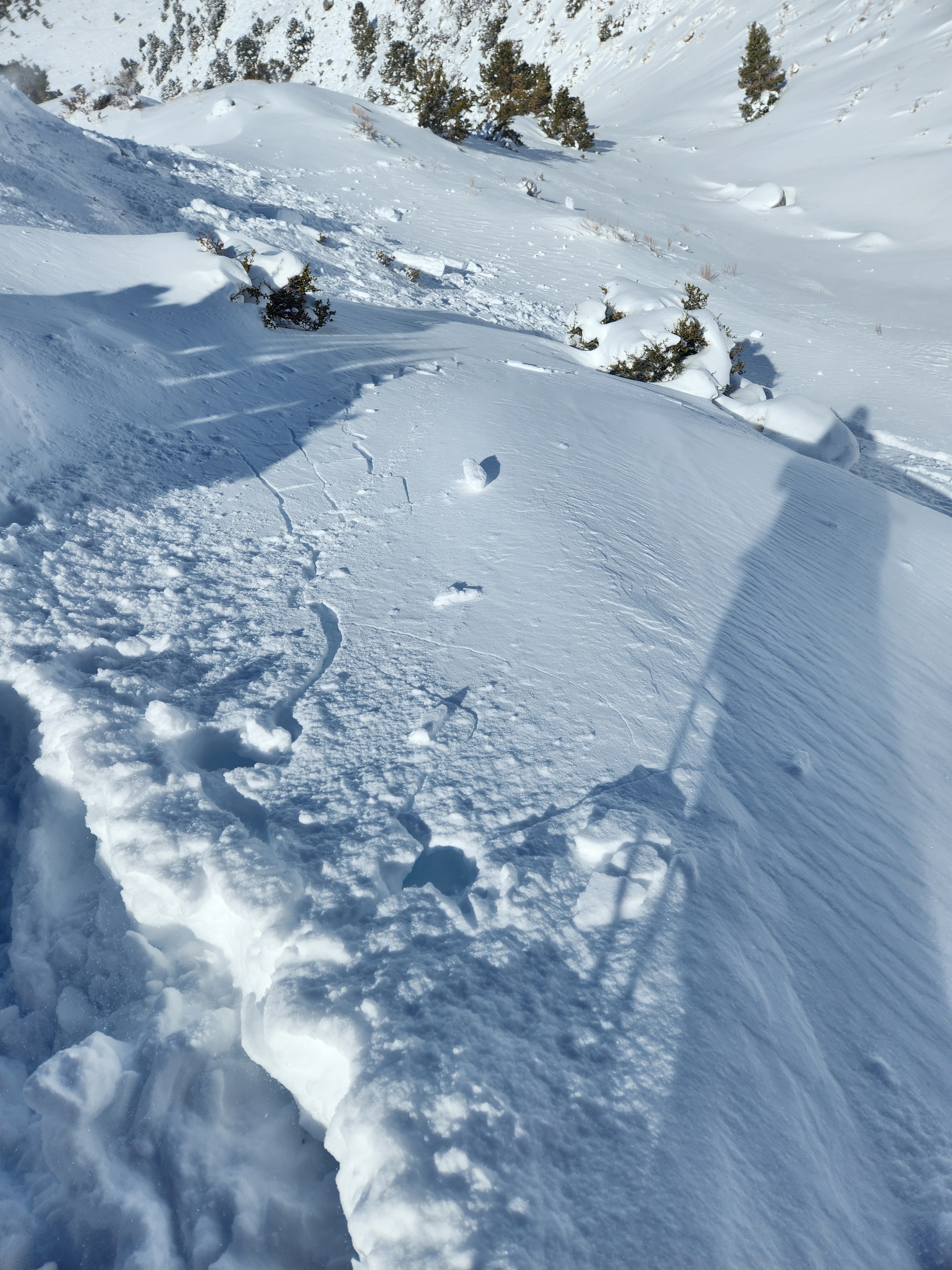
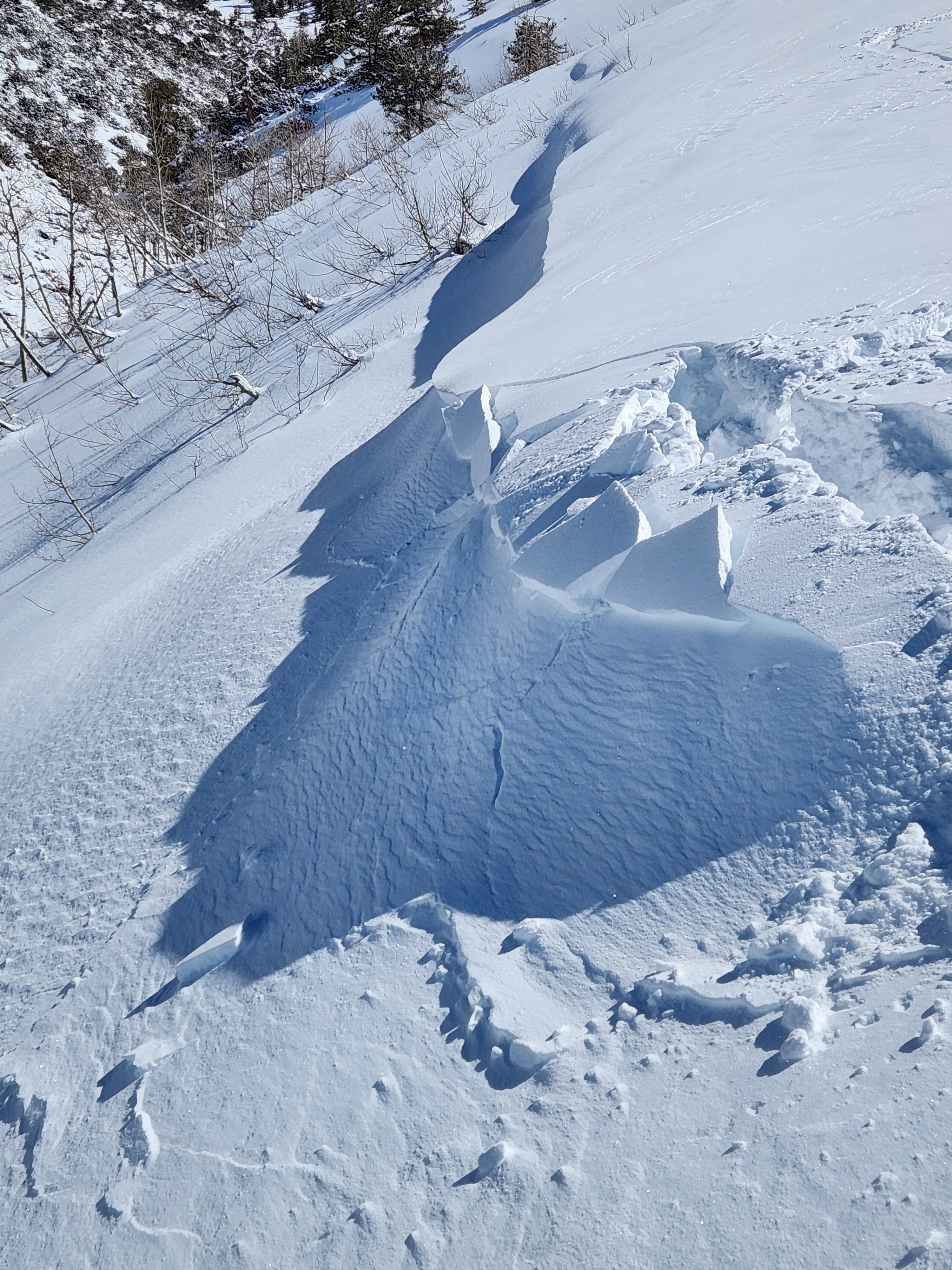
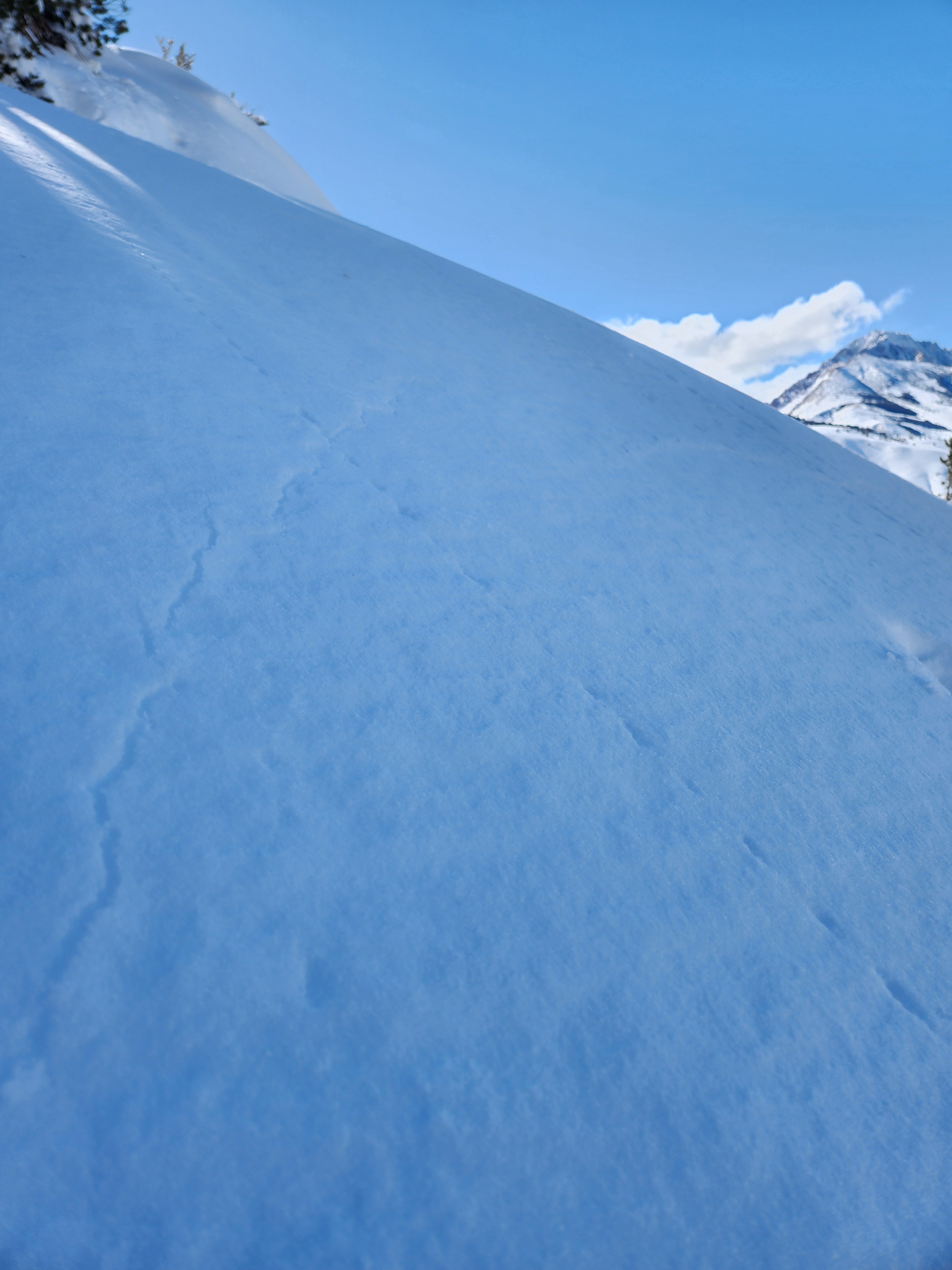
- Cracking
- specific
- Collapsing
- isolated
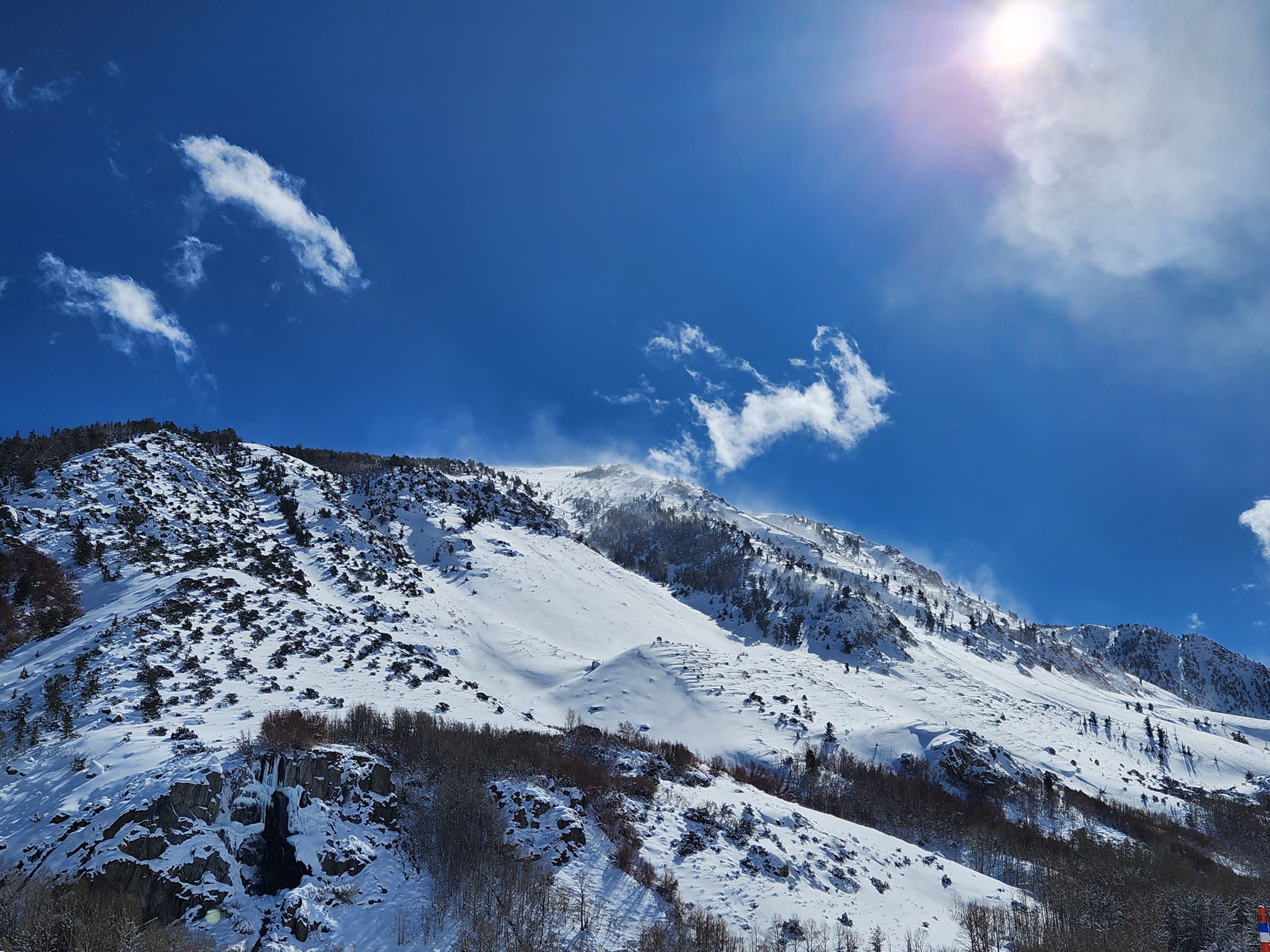
I went to the southern tip of the forecast area to see if enough recent snow had blown around to make wind slabs sensitive and to look for persistent slab structures where we have most recently seen signs of instability. I found what I was looking for.
- Test slopes that face northeast were easy targets for triggering soft wind slabs and small cornices. Almost every single one I walked up to produced results.
- There are two layers of concern in this area: improving depth hoar near the ground, and a facet crust combo about a foot below the surface. I experienced isolated collapsing and shooting cracks on the crust.
Weather
- Air Temp
- 23
- Cloud Cover
- scattered
- Wind Loading
- moderate
- Rain Elevation
- below 8000
- Recent Snowfall
- 25
- Snow Avail For Transport
- large amounts
Increasing clouds and decreasing winds. Moderate to intense blowing snow near and above treeline died down midday. Another round of precip moved in quickly over the Sierra Crest around 2:30 pm.
Snowpack
Before Valentine's Day, warm sunny weather and a north wind event left 2 primary surfaces in exposed terrain: a melt-freeze crust on slopes that get sun and a thin hard wind board on the north and northeast sides of ridgelines. I noted these surfaces on my last visit to Mt. Warren on the 12th. Light snow on the 14th buried these crusts and has since faceted. The crusts have acted as vapor barriers, allowing for faceting underneath as well. They are now buried around a foot under the most recent storm snow in this drainage. I found these facet/crust combos on southwest-facing slopes where I got sudden small column test results and a single propagating extended column test result in facets under the thick crust. On northerly slopes, there were facets above and below the crust and I experienced localized collapses on that layer in 2 instances. Because, on northerly slopes, the crust is the result of wind-hardening, it peters out about 80 feet below ridgelines. I got concerning test results in those facets in a snow pit at 9700 ft. While the December depth hoar has shown improvements: some rounding and settlement into the underlying brush, I still got propagation in that layer on the last tap of an ECT. Where I got collapsing and shooting cracks on the Valentine's Day crust, additional stomping broke shooting cracks down to the depth hoar.
Avalanche
See highway avalanche observations.