
Quick report
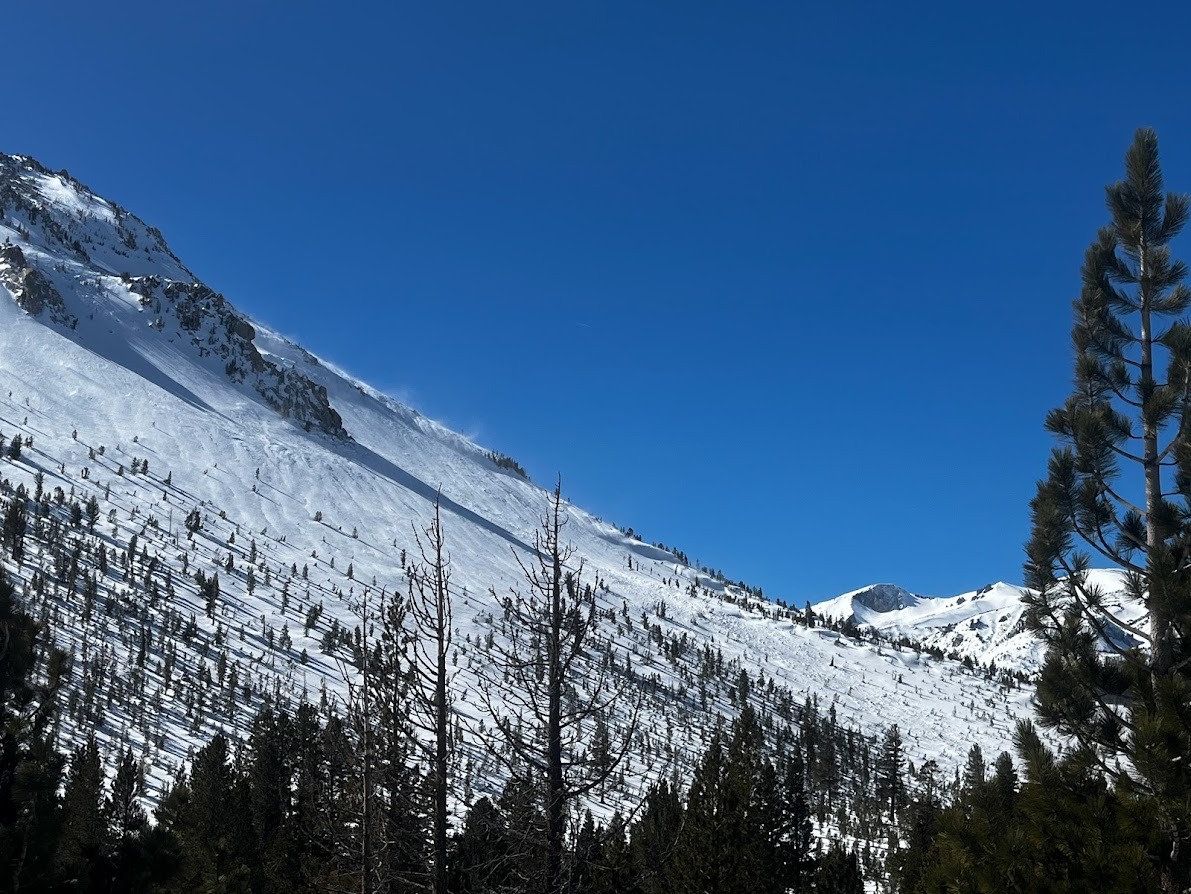
This field visit focused on an in-depth examination of a recent avalanche. The updated avalanche observation is linked to this observation.
Weather
- Cloud Cover
- few
- Wind Loading
- moderate
- Recent Snowfall
- trace
- Snow Avail For Transport
- small smounts
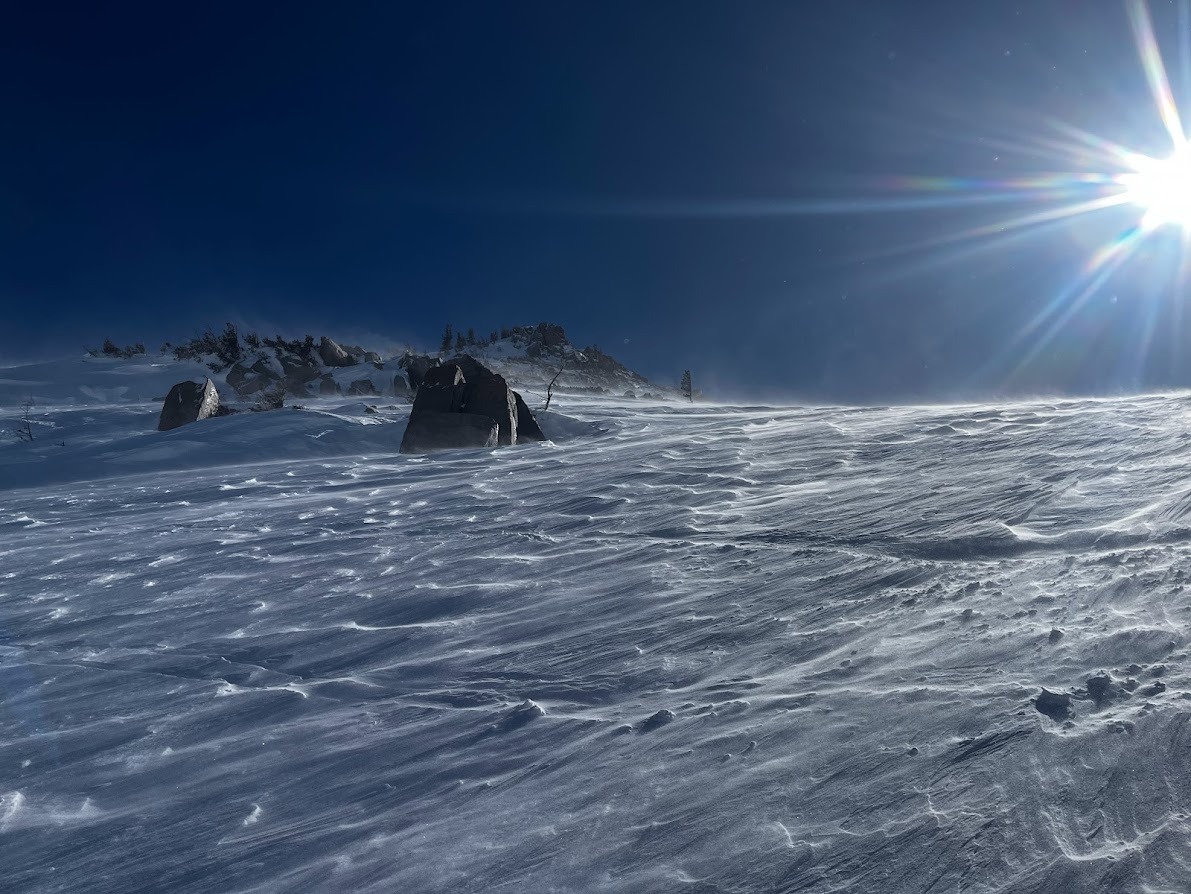
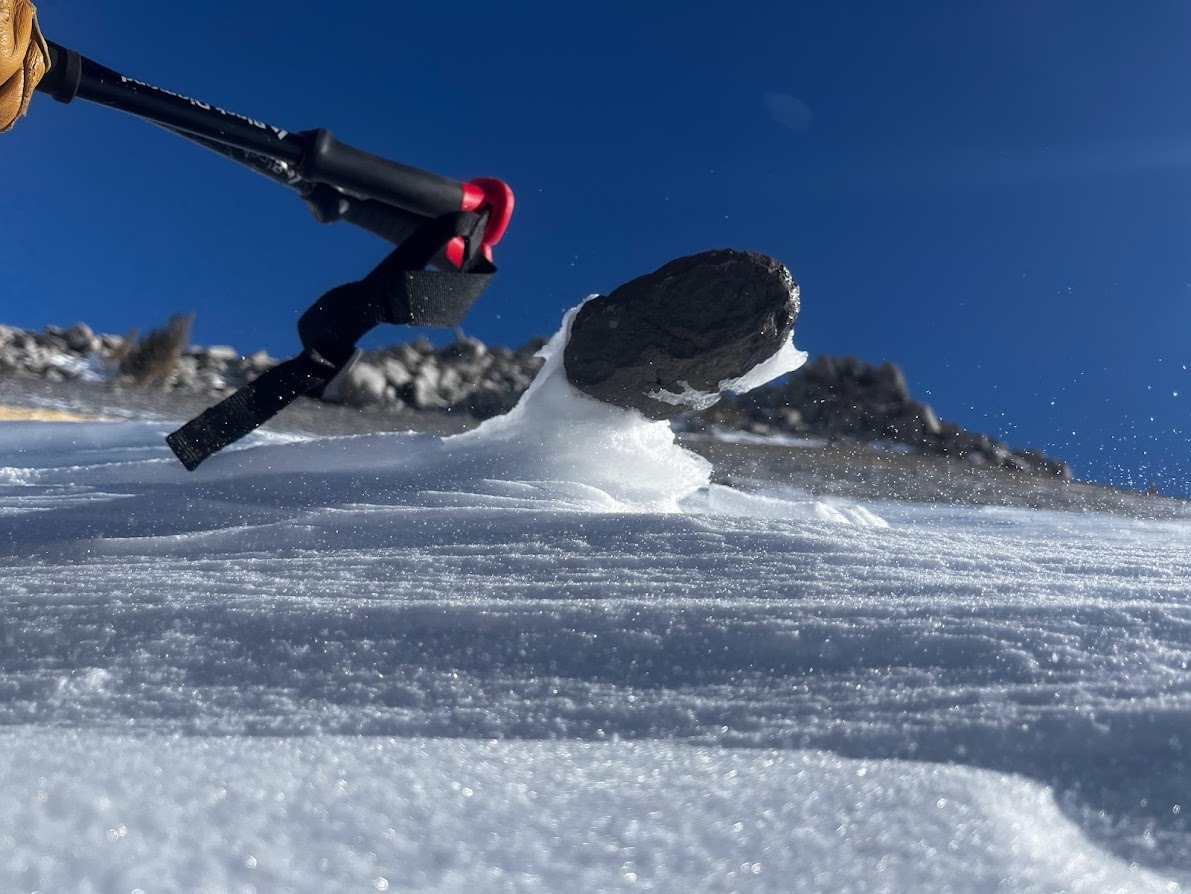
Blue skies and blowing snow at the snow surface.
Snowpack
Below treeline: HS 80 to 120cm. The basal weak layer was undiscernible with ski pole probing. The skis sank in about 6 " deep (ski pen 10 -20cm). Boots sank in up to a foot (Boot pen 15 to 30cm). Wet snow on southerly aspects and soft well well-settled surface snow on northerlies.
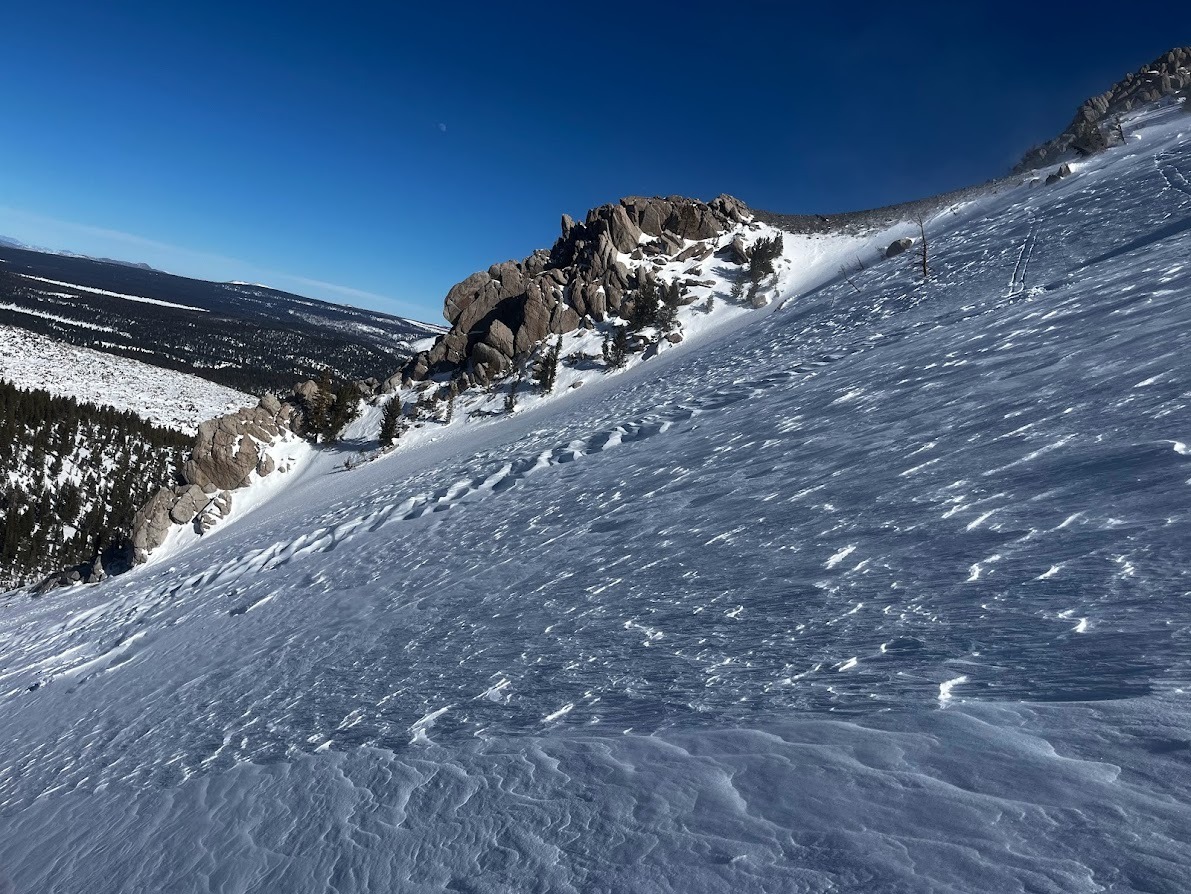
Near treeline: HS 0 to 300cm. Ski pen 0 to 25cm. Boot pen 0 to 30cm. On a 45-degree N-facing slope at 9600', the basal weak layer was found ~ 6 feet below the surface in a 7-foot thick snowpack. Blowing snow just above the snow surface was drifting into shallow deposits. Wind-deposited snow was mostly loading NE-facing slopes. Very little snow left for transport. Surfaces vary from bare ground to impenetrable sastrugi to smooth wind-buffed snow. No persistent grains were observed in the upper meter of the snowpack.
Avalanche
- Size
- D2 R3
- Type
- HS
- Aspect
- N
- Trigger
- N
- Elevation
- 9600 ft
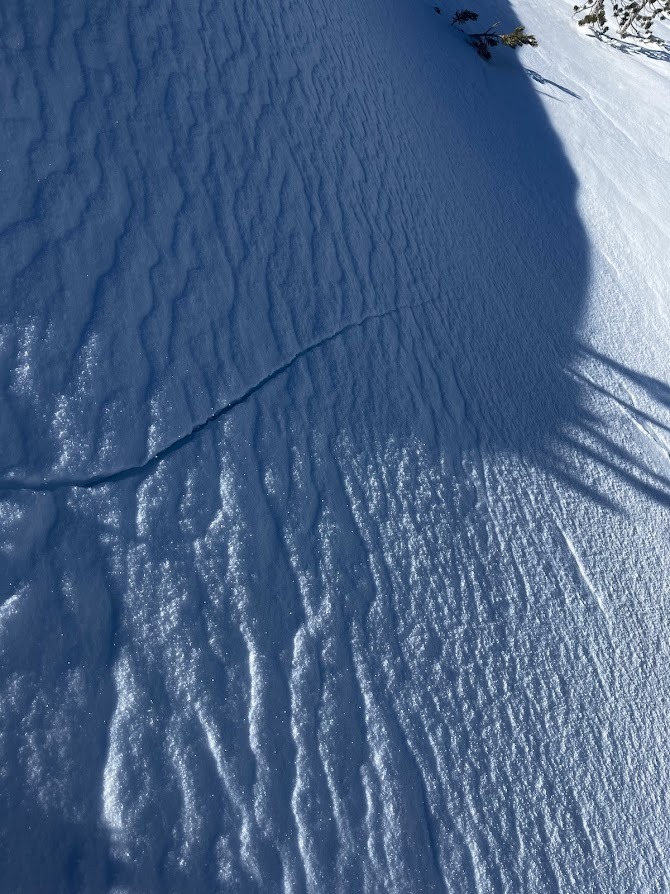
ESAC forecasters visited the site of an avalanche that was reported on 2/17. This avalanche occurred naturally on the north face of White Wing in the Glass Creek drainage. This was a D2 Wind slab avalanche that ran approximately 1000 vertical feet, terminating in Glass Creek. Probing the debris we noted depths ranging from 140cm to 200 cm. Wind loading over the past couple of days made collecting precise details of the crown width a bit difficult. Estimates based on photos from 2/17 would put the width at approximately 400 feet with a depth measured around 100cm. We were able to dig in at the crown on one of the flanks and found the height of snow in this location was approximately 230 cm and largely 1 f to K hard with about 10 cm of basal facets on the ground. There was no obvious weak layer at the failure plane but the largely strong snowpack was broken by occasional density changes. In evaluating recent weather patterns our best guess is that this avalanche likely occurred during a period of strong southerly winds on 2/15. Probing the debris we noted depths ranging from 140cm to 200 cm.