
Quick report
Cooler temps at the higher elevations have solidified the upper snowpack on N aspects, but surface layers S aspects and lower elevations have not yet refrozen. The new snow coming down did not initally adhere all that well to the crust below it, creating potential for wind slabs on the windloaded aspects; although adhesion improved throughout the day with increasing temps and moisture content of precip, wind slabs could still be a concern in some locations. Below the crust layers, the snow below remains weak and unconsolidated; although the problem is currently isolated by the surface crust at the elevations observed, those layers could become more problematic at different elevations or with increased temps. New precip from the incoming storm will likely vary in density/moisture content, and it will be stacking more weight onto these variable crusts with their temperature- and moisture-susceptible weaker layers below. It will be important to pay attention to differences in snowpack by elevation and aspect, and consider changing temps throughout the day.
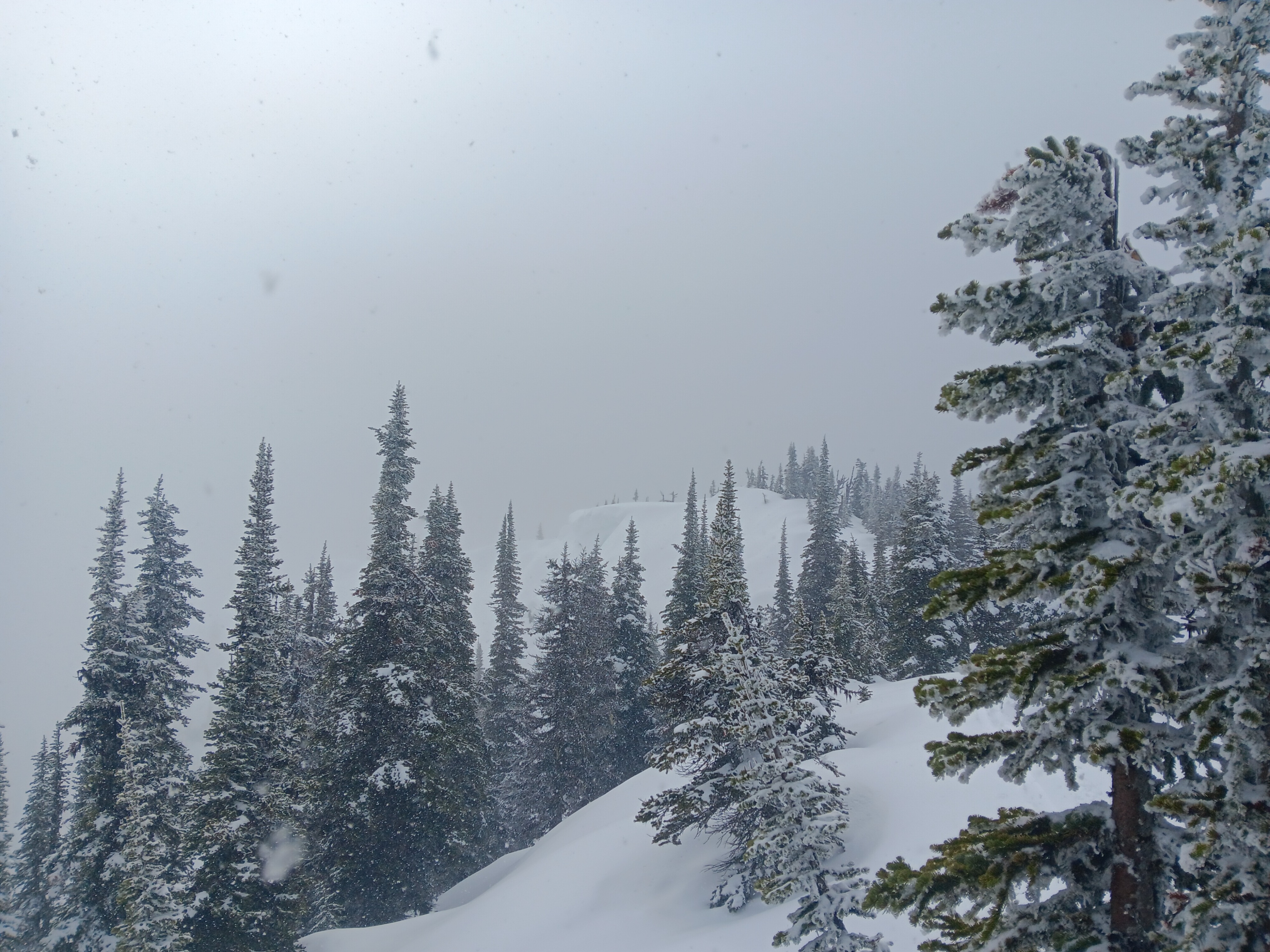
No signs of instability on slopes traveled. Unfortunately visibility was generally <300' so observations were limited.Weather
- Air Temp
- 30
- Cloud Cover
- obscured
- Wind Loading
- moderate
- Rain Elevation
- 5000
- Recent Snowfall
- 6
- Snow Avail For Transport
- small smounts
Overcast and foggy with variable precip at the higher elevations, increasing from light snow/mist in the morning and becoming heavier snow by early afternoon. Moist, heavy snow. Light westerly winds, but increased somewhat throughout the day.
Snowpack
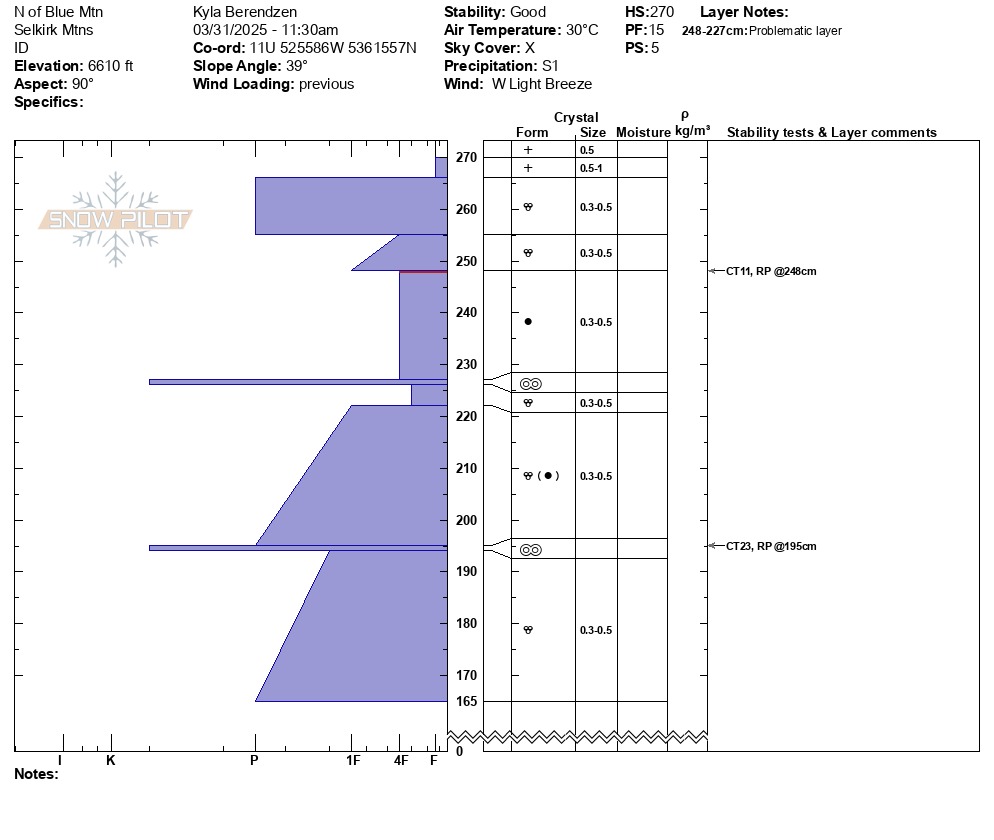
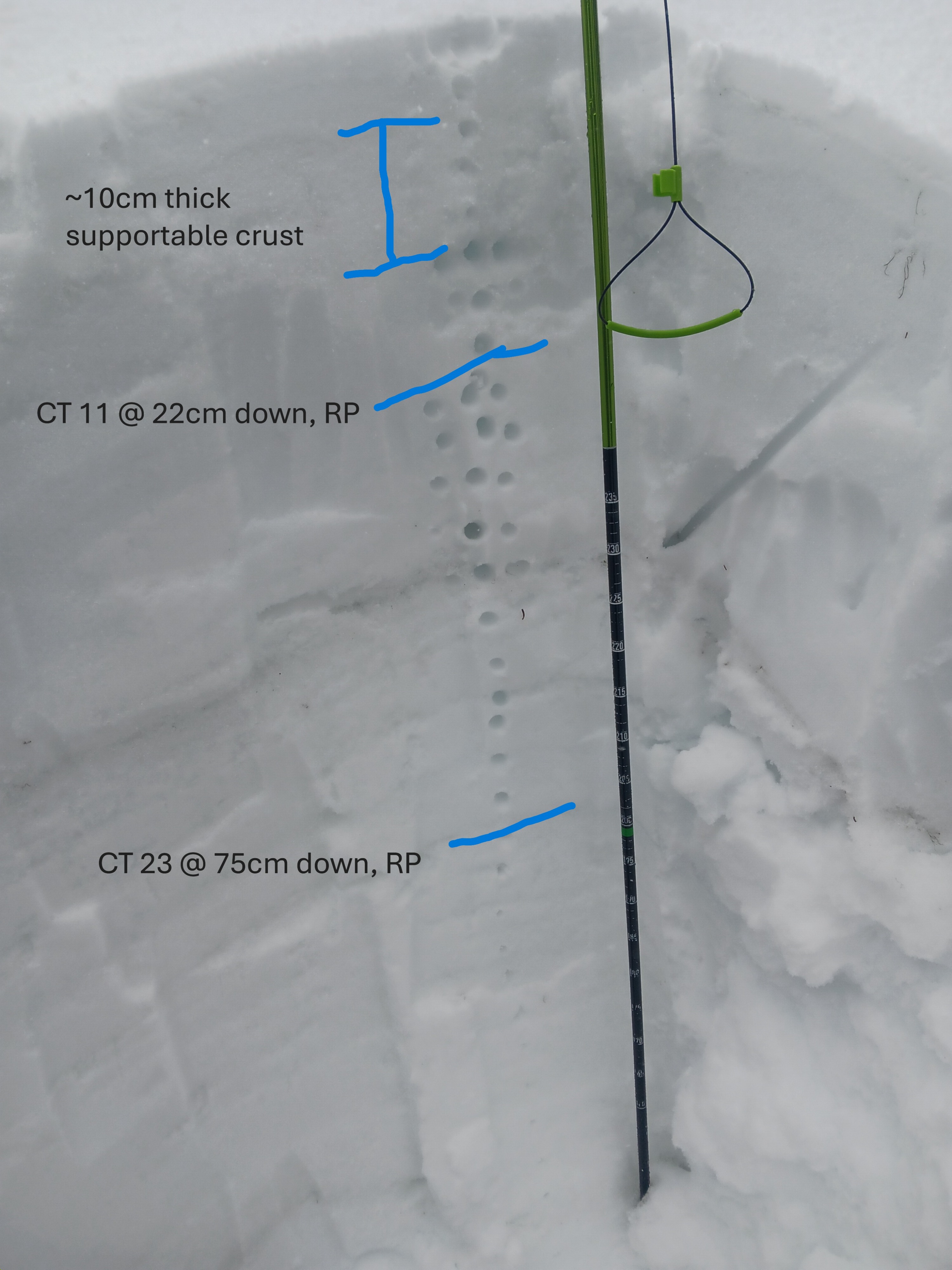
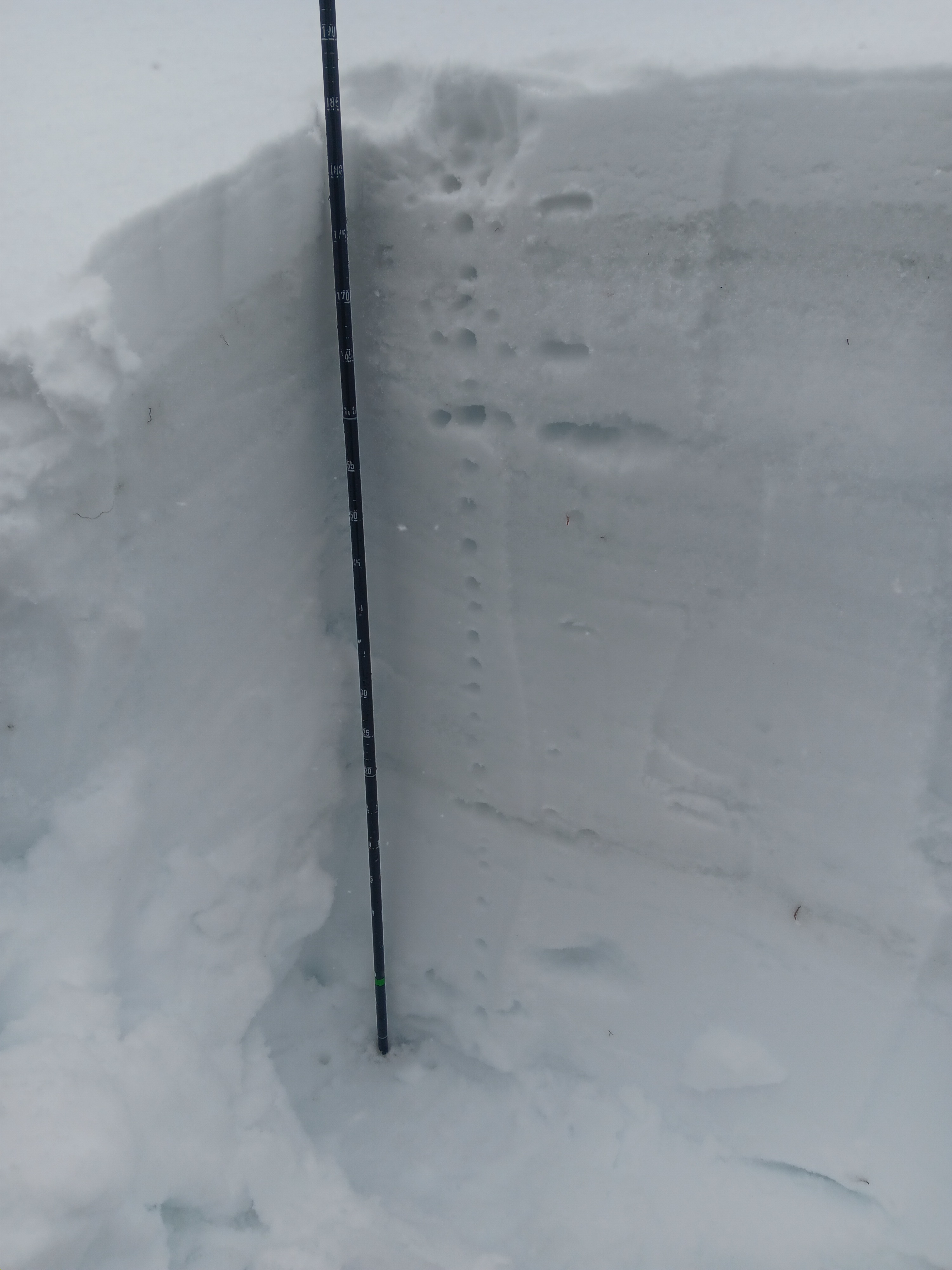
Approximately 5 cm of new snow deposited on top of the rough, grainy melt freeze crust layer that resulted from last weeks' warm temps. This ~10cm thick crusty layer easily supported skis, and on the N aspects, even boots in most places at the higher elevations where temps dropped lower. The 30cm snow beneath the surface crust layer is softer, moister, and less consolidated; in compression tests, failure occurred in a particularly rotten layer within it (CT11 @ 22cm down) on both north and south aspects. There was also some reactivity further down on an old melt-freeze crust (CT23 @ 75cm down on N aspect).