
Quick report
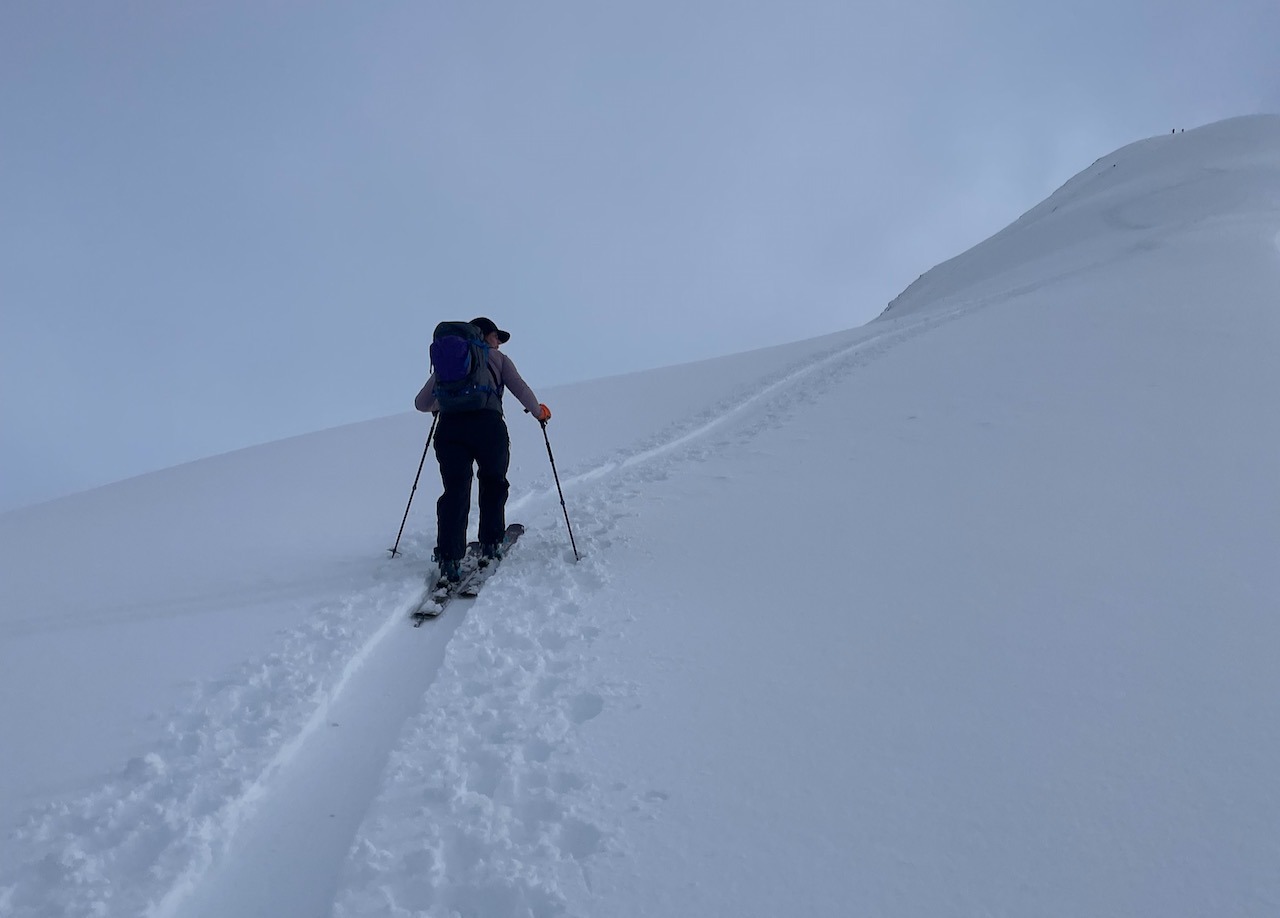
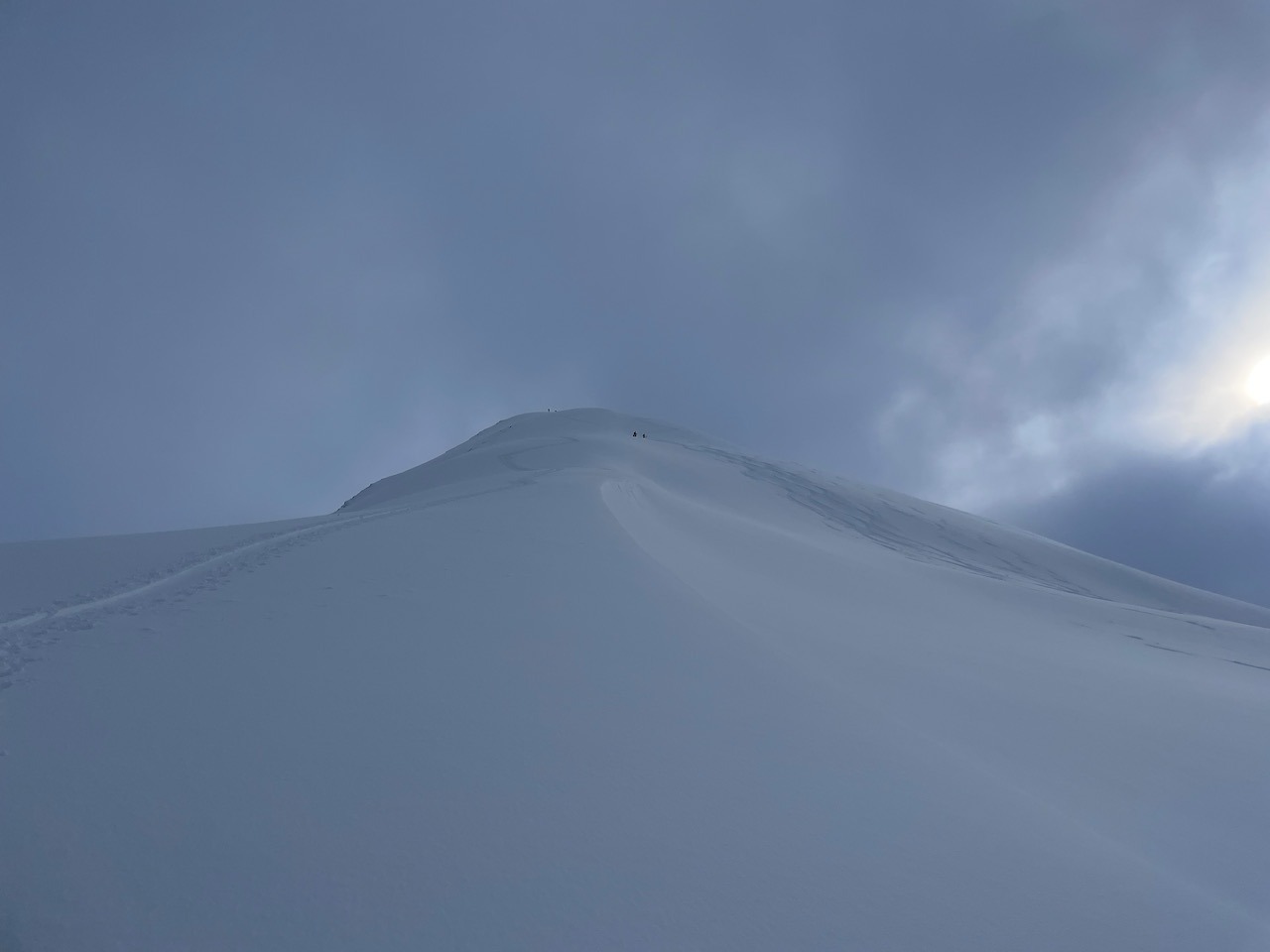
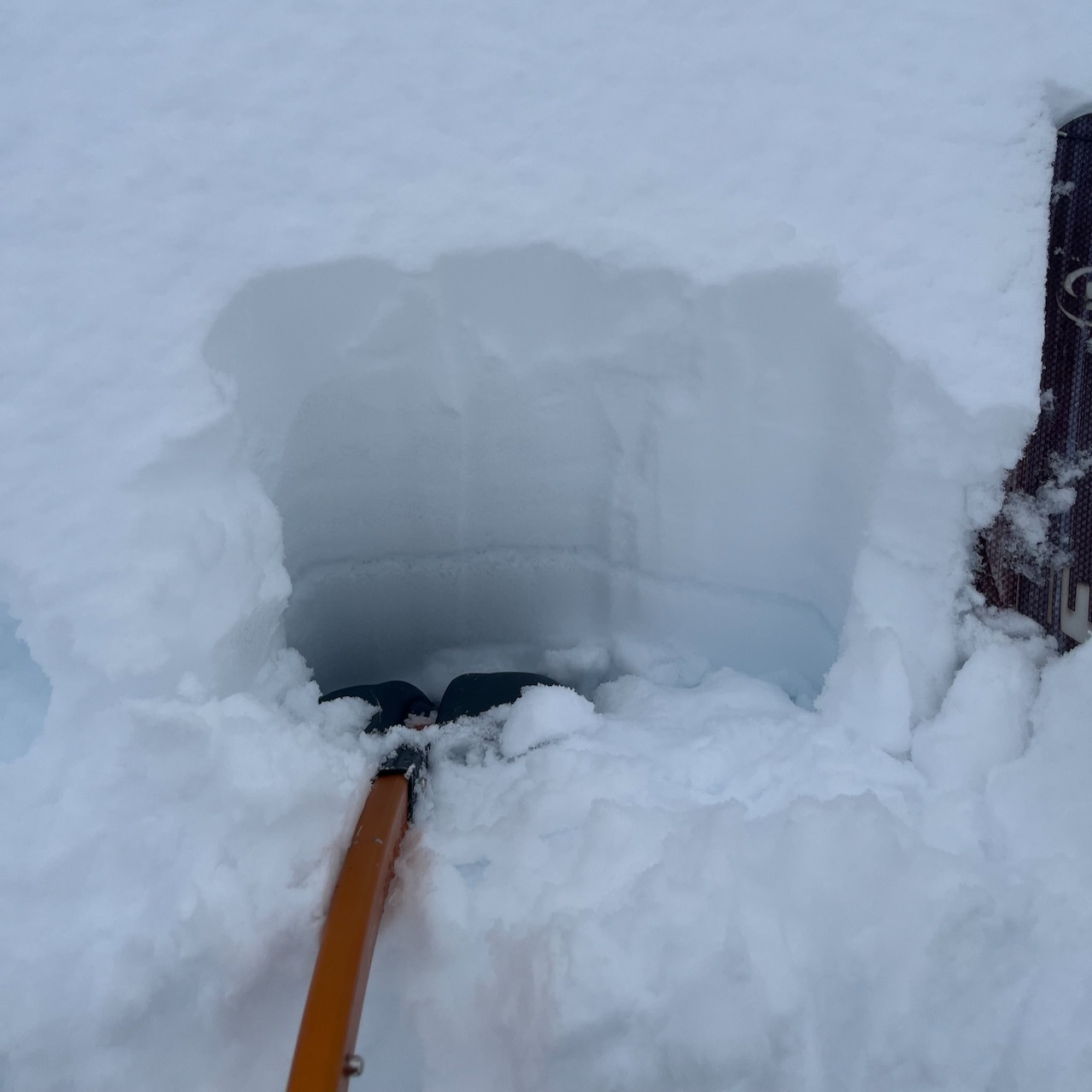
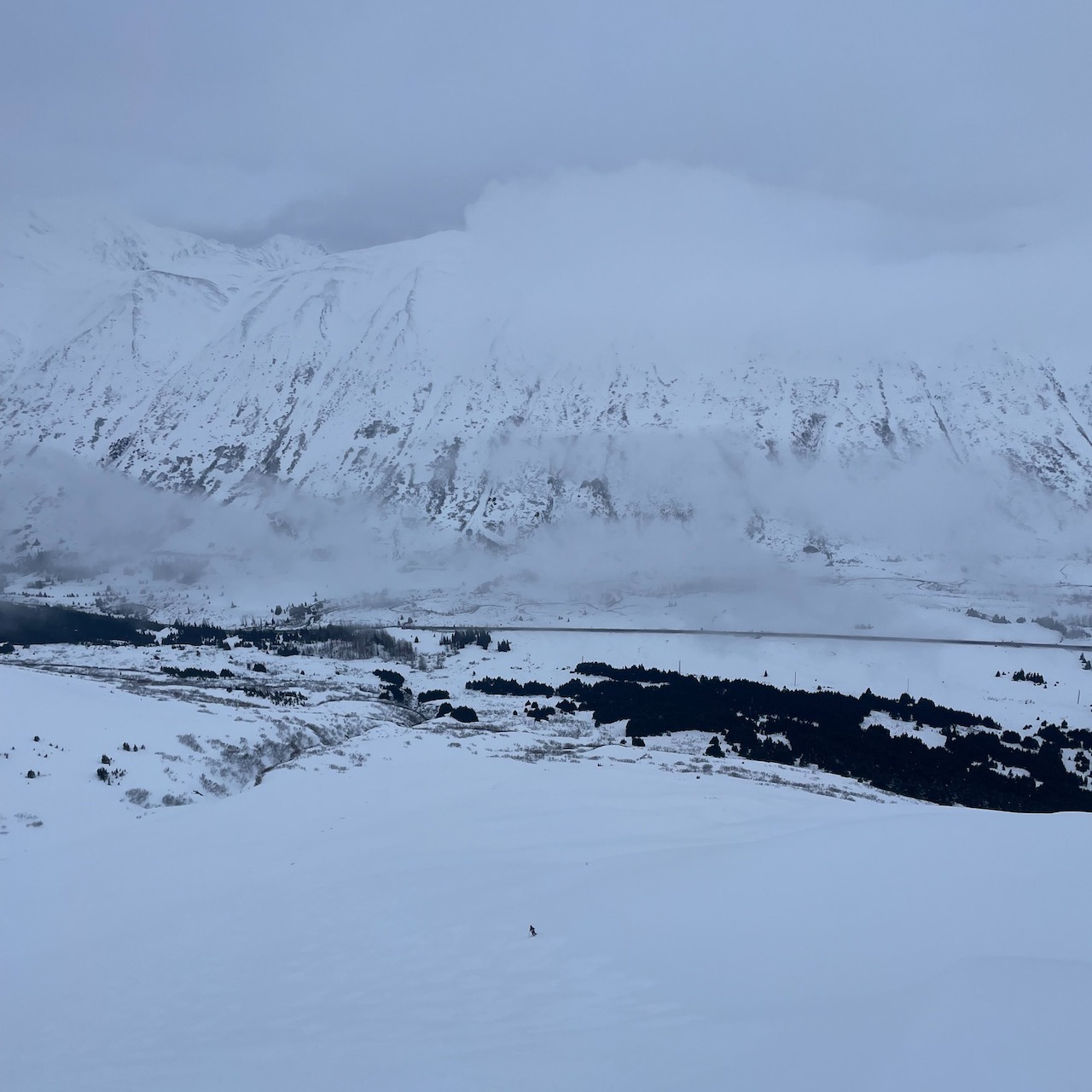
No red flags observed today. Moderate in quantity skier initiated roller balls below 2000' by midafternoon. Weather: Calm winds, with generally overcast skies and scattered low clouds near the valley bottom. The sun would occasionally almost poke through the thick clouds, producing some greenhouse effect made it feel real warm, with impacts to the snow surface. Temps right around or above freezing, especially down low. Snow Surface (mid-afternoon): 800 - 1000': 4-8 cm of very wet to wet large melt forms sitting on a supportable crust 1000 - 1400': 1-2cm of wet melt forms over 6-10cm of moist new snow, sitting on a supportable crust. 1500 - 2000': A thin layer of wet melt forms over moist recent snow. 2000' - 3200': A moist snow surface; just the very surface of the snow was almost moist at our high point at 3200'. Snowpack: The layer we looked for today was the 2/14 buried surface hoar, and the facets below it that formed during the clear weather in early February. Around 1500' this surface hoar could be seen in quick hand pits, but was surrounded by moist to wet snow and was well bonded to layers above and below. From 1500' - 2200' in wind sheltered locations, the buried surface hoar was visible in quick pits, but at treeline and above we often couldn't see any signs of it until finding the new/old snow interface from 2/14. At these higher elevation areas where some prior winds likely accompanied storm snow, hand shear tests would generally fail with moderate force, leaving unclean breaks in the facets below the buried surface hoar. At our high point, buried surface hoar was visually "patchy" in a pit wall down 30cm where we dug at 3200' on a WSW aspect, 20 degree slope about 100' the south of the Sunburst ridge line. Height of snow = 250cm at this slightly wind protected location. In three compression tests, only one failed in the buried surface hoar layer, and an ECT had no results in the 2/14 buried surface hoar layer or the facets below. At close inspection after tests, the surface hoar fragments - still quite large (5-10mm) - were laid over (not vertical) at the 2/14 interface. Test results were CT 10, 11, 12 RP and ECTN 11 down 20cm in a layer of decomposing snow/stellars from recent days, and CTN x2, CT 27 RP, ECTX down 30cm in the 2/14 BSH.