
Quick report
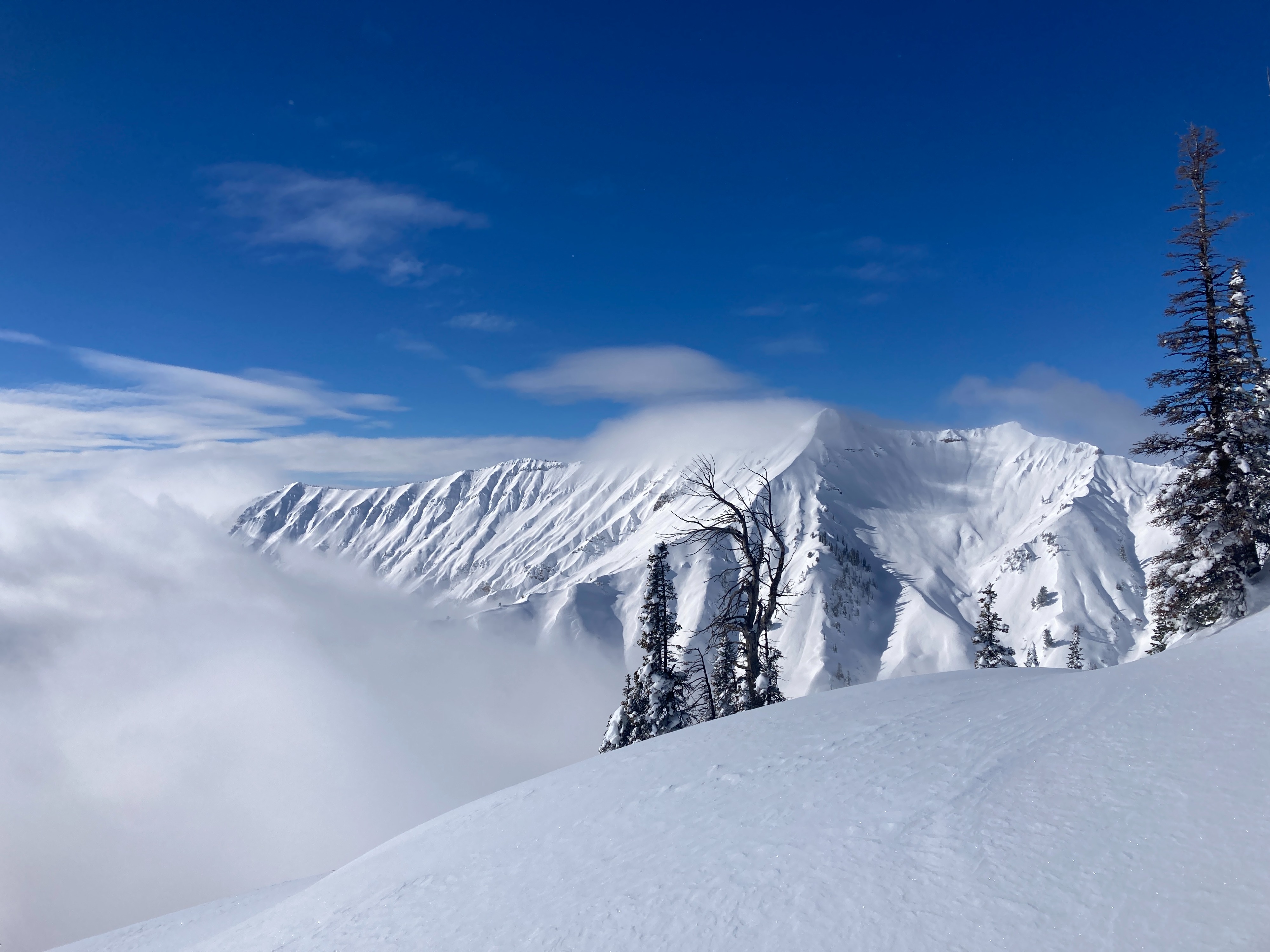
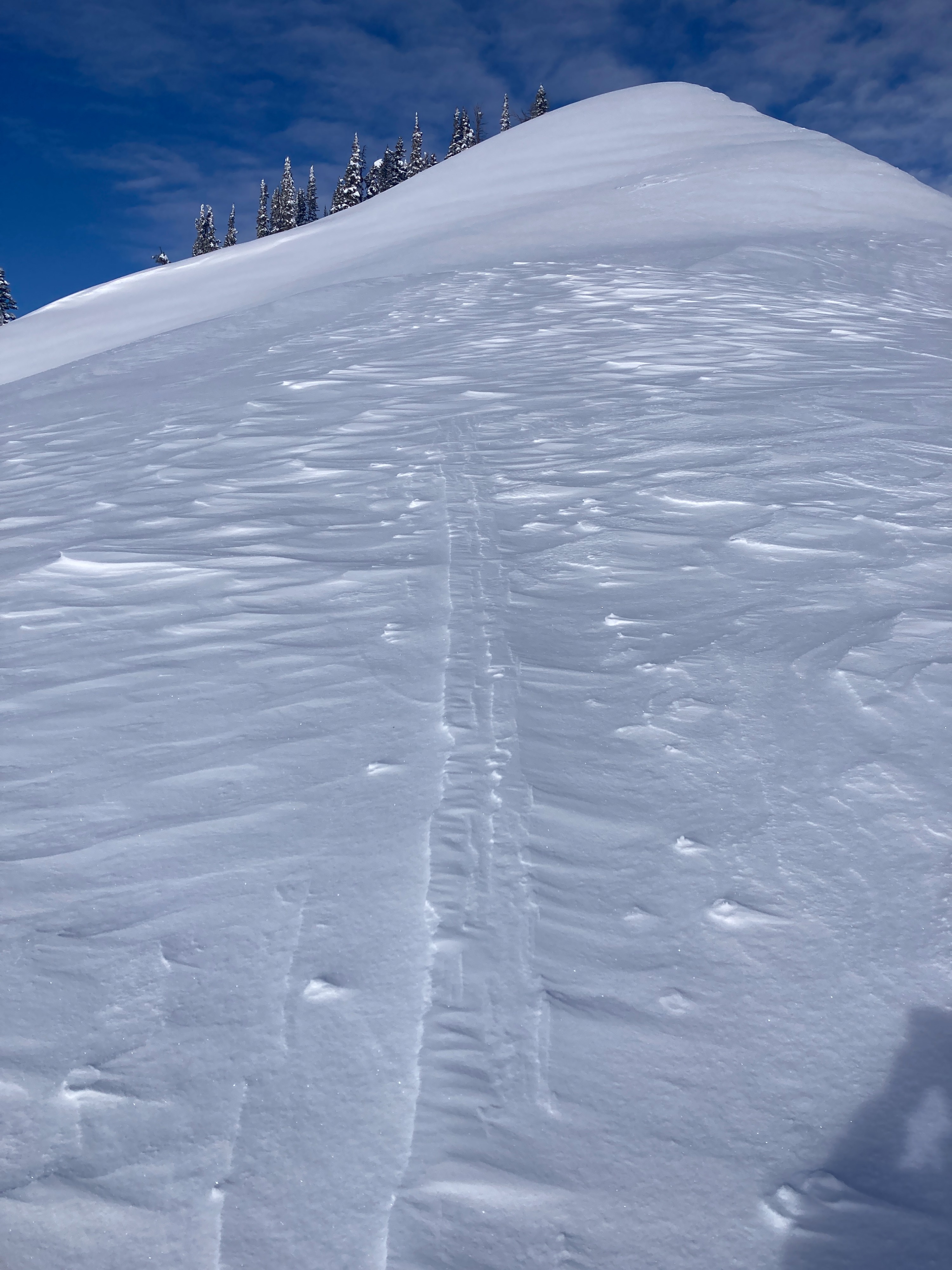
Toured from 5,800’ to 9,000’ in the Red Creek drainage. Here, 8-12” of low-density new snow has fallen in the past 36 hours. Visibility was good, and we did not observe any significant avalanches or other signs of instability across a wide variety of steep terrain. Steep test slopes did not produce any moving snow. In general, the new snow appears to be bonding well to old surfaces. Wind slab formation was isolated and limited to terrain within 100’ of ridgelines above 9,000’ (cross loading included). The new snow has not settled into a cohesive slab elsewhere.
Weather
- Air Temp
- 10
- Cloud Cover
- few
- Wind Loading
- light
- Recent Snowfall
- 8-12"
- Snow Avail For Transport
- small smounts
The cloud ceiling was hanging out around 8,000’. Clear skies above that. Cool temperatures and calm winds on the ridge tops.
Snowpack
Overall, the snowpack is relatively deep and “right side up” in this part of the Snake. Snow depths on south facing slopes from 7,000’- 8000’ are around 100-120cm. The existence of basal facets on south faces is spotty and the facets are small, round, and moist where they exist. Basal facets are buried anywhere from 160cm to over 200cm (6.5ft) on east through north facing slopes at the same elevation band. Slabs are 4F – 1F+ in hardness. A melt freeze crust is present below the new snow on south facing slopes up to 7,000.
We dug two pits at 8,200’. One on the NE facing side of a ridge (HS = 230cm) and the other on the SE facing side (HS = 115cm). Overall, both pits showed high strength, moderate to good structure, and no potential for propagation. Wind stripping and loading along the ridge likely accounted for the large difference in observed depths.
SE @ 8100’ = ECTN 29, down 65cm from the surface
NE @ 8,200’ = ECTN 17, down 45cm on graupel
Avalanche
We observed one or two small loose snow avalanches that initiated in south facing cliff bands around noon. No other significant avalanches were observed.