
Quick report
- Cracking
- isolated
- Collapsing
- isolated
A large collapse and shooting cracks in steep terrain were the most notable observations from the day. The slab that formed post-Christmas is 2 to 3 feet thick in sheltered areas and up to 1 finger hard. I suspect feedback like collapsing would be relatively infrequent before a large avalanche is triggered. We kept to relatively conservative terrain, less than 35 degrees, and found the best riding conditions of the year.
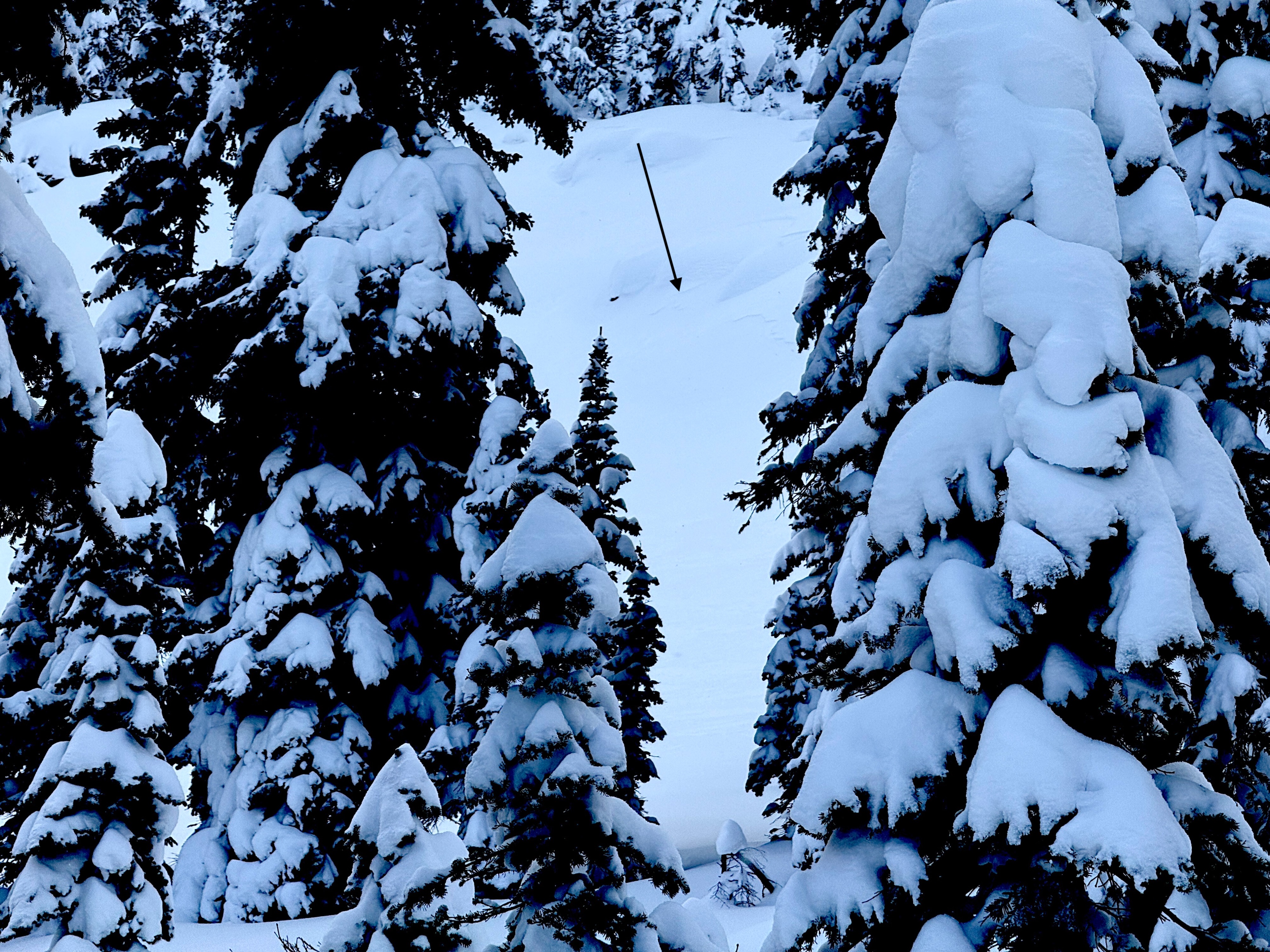
We saw a few tiny Storm Slabs on very steep northerly terrain. Crowns were just a few inches thick and covered by an inch of new snow. By the time we moved through similar terrain, we didn't experience any cracking. We experienced a single booming collapse and shooting cracks on east terrain near 11,200 feet.Weather
- Cloud Cover
- broken
- Wind Loading
- light
- Recent Snowfall
- 17
- Snow Avail For Transport
- moderate amounts
Around 6 to 7 inches of new snow by 10:30 am. No snow from 10:30 through 2:30. Light winds at ridgetop with minimal amounts of drifting.
Snowpack
We dug a test profile (northeast slope, 10,600 feet) adjacent to a profile from 1/1 to see how the weak layer is behaving with a larger slab. Test results produced an ECTP 17 below the Christmas crust with a 75 cm slab up to 1 finger hard above (see image). We walked around in a few undisturbed areas looking for feedback and collapsing; we produced a single large collapse and shooting cracks at the entrance to East Bowl, but the slope did not slide.
Poking around on the sunny side of the ridge revealed a stack of soft, lightly faceted snow and melt/freeze crusts. I didn't encounter a slab so no profile. There certainly is enough weak snow and soft crusts to be problematic if a slab were encountered, but it doesn't seem to fit a 'most likely' place to find a problem.
Avalanche
A few tiny natural Storm Slab avalanches. Debris piles so small they don't warrant coding.