
Quick report
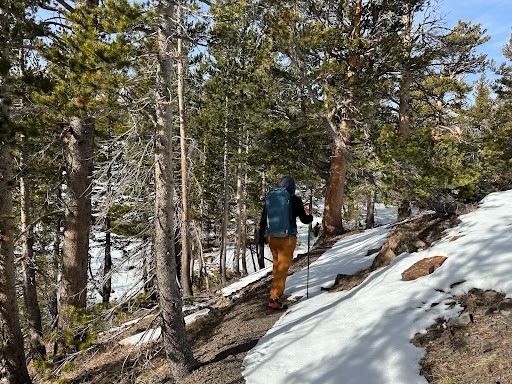
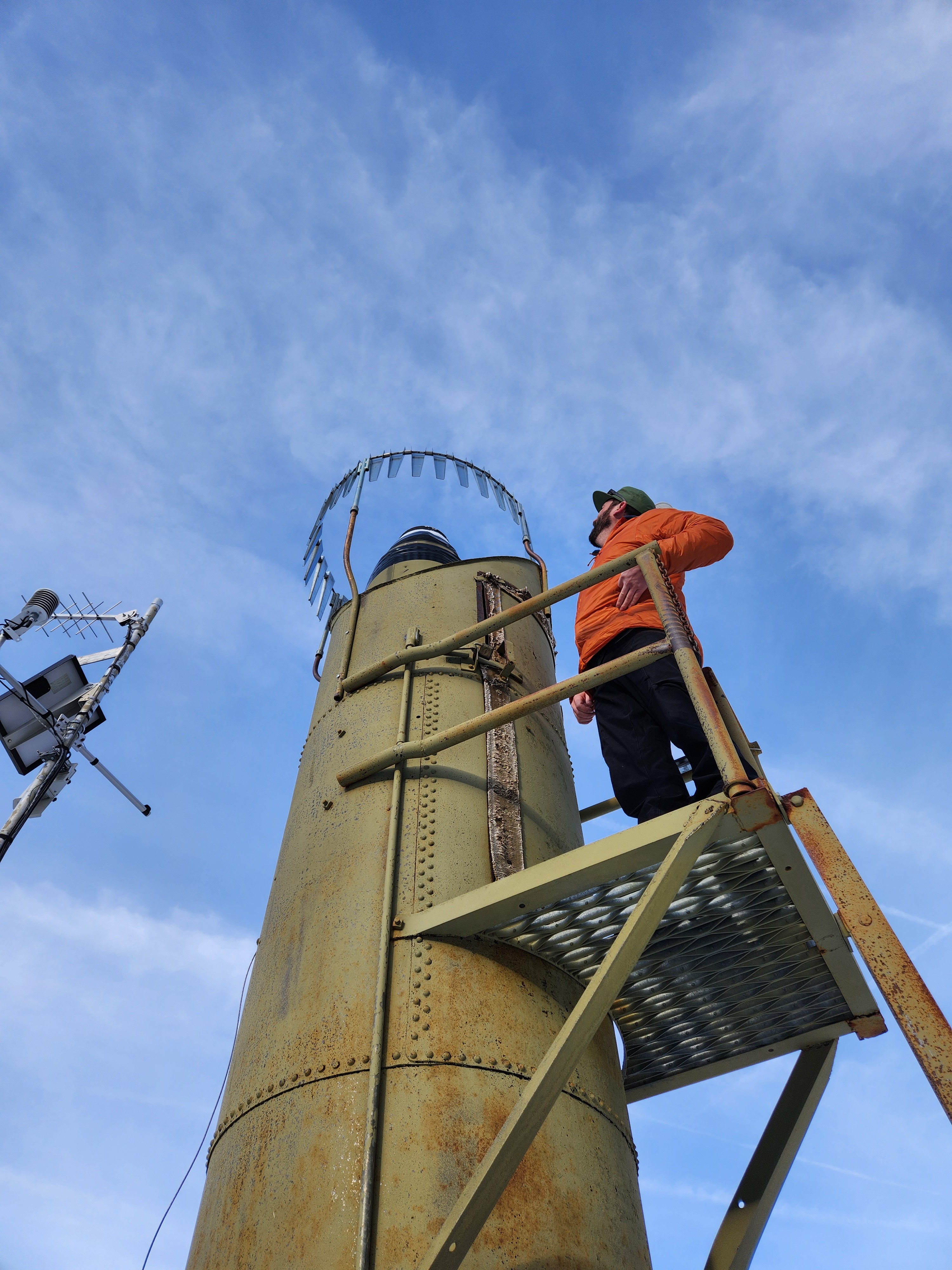
We went to Tioga Pass to do a welfare check on the area weather stations, verify snow depth, and look at the early-season snow cover and snow structure.
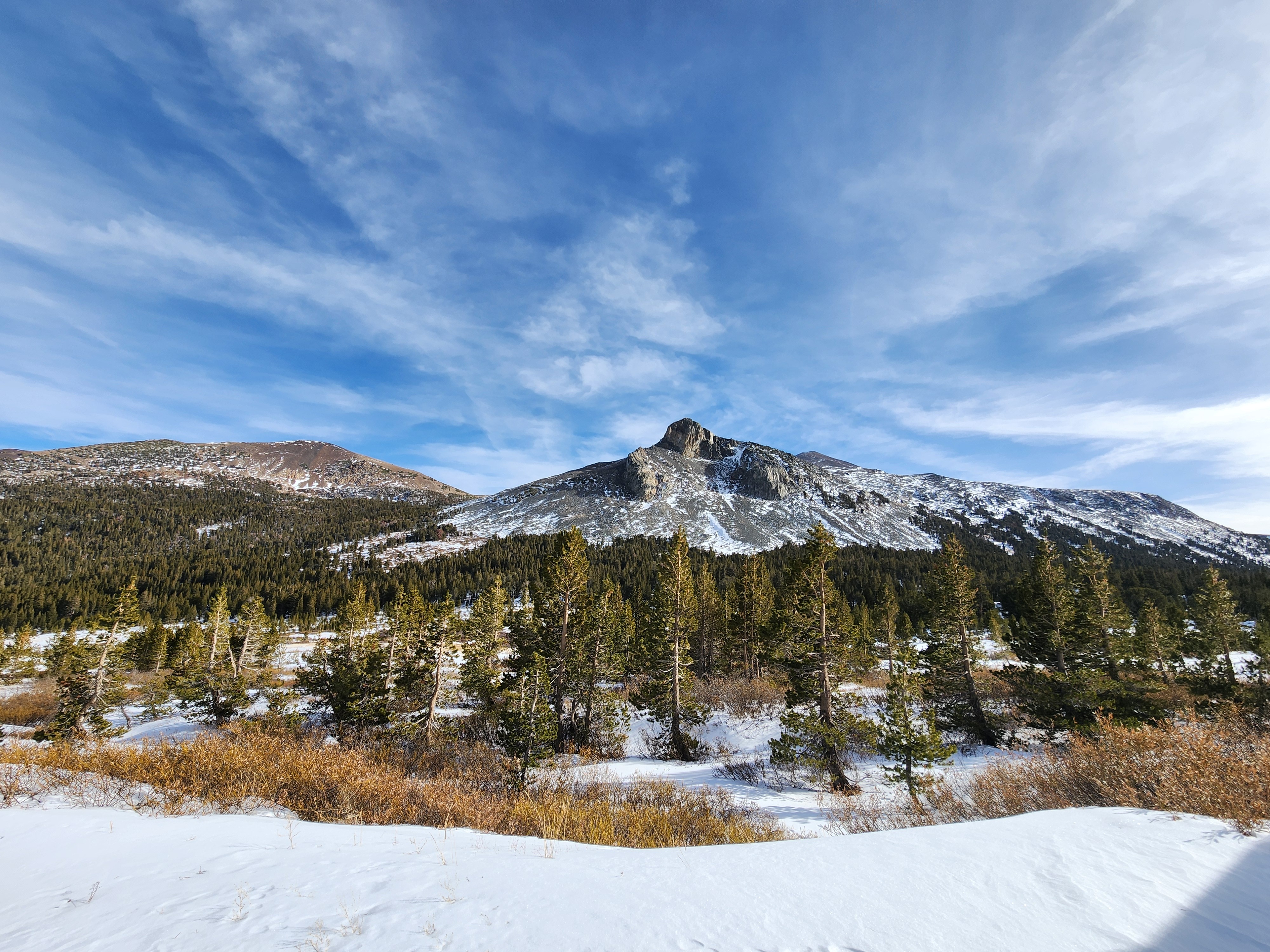
- Sheltered, near treeline slopes on the northern half of the compass are holding continuous snow in this area. The snowpack on these slopes is thin, and almost entirely made up of persistent weak grains.
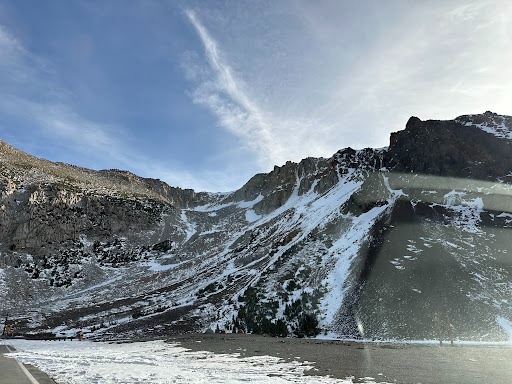
- Shaded alpine features like chutes and bowls (avalanche starting zones) also have uninterrupted snow cover. The snow here is a complex layering of hard crusts and sugary facets.
- On west and east-facing slopes snow fields are much patchier. The sun is thawing the surface and it was occasionally sticky.
- South-facing terrain is mostly snow-free.
When we get significant snowfall, the avalanche hazard will be higher on slopes that currently have coverage.
Weather
- Air Temp
- 40
- Cloud Cover
- broken
- Recent Snowfall
- 0
Continued calm, clear, and dry weather. Shaded, north-facing slopes were cold despite above-freezing temps and warm sunshine.
Snowpack
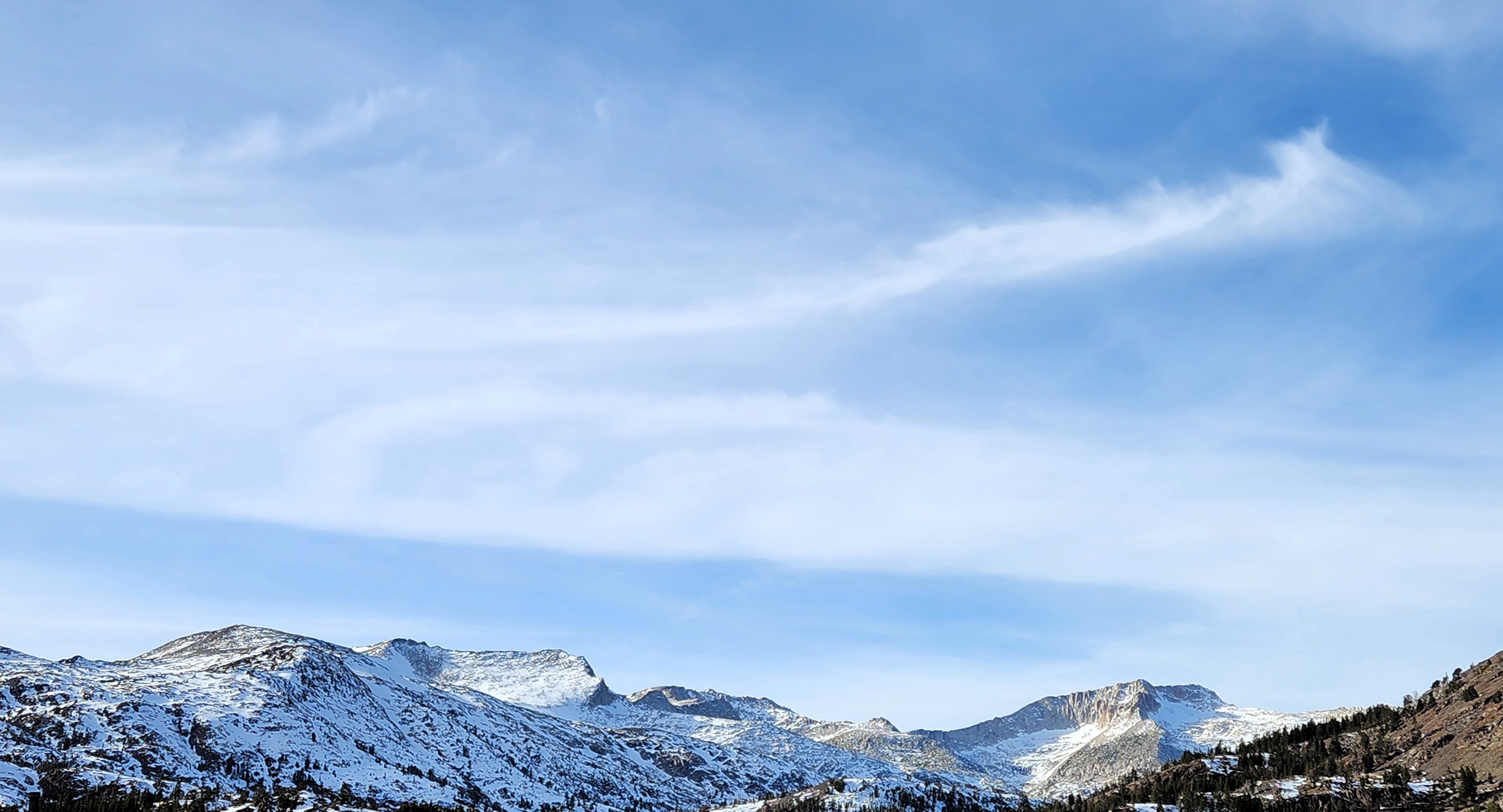
There is better coverage under the peaks on the Sierra Crest than in the rain shadow further east. Sheltered slopes near treeline that face north have continuous coverage in this area. Above treeline, continuous snow cover is mostly confined to north-facing alpine start zones and chutes. High-elevation slopes that look white with snow actually have thin coverage with many rocks and anchors poking through the surface.
Where there is continuous coverage, the snowpack is exceptionally weak. The snowpack near treeline consists almost entirely of well-developed facets and large depth hoar. On alpine features that typically see wind loading, the snowpack is a complex layer cake of hard wind-packed crusts sandwiched between weak, sugary grains.