
Quick report
- Cracking
- isolated
- Collapsing
- isolated
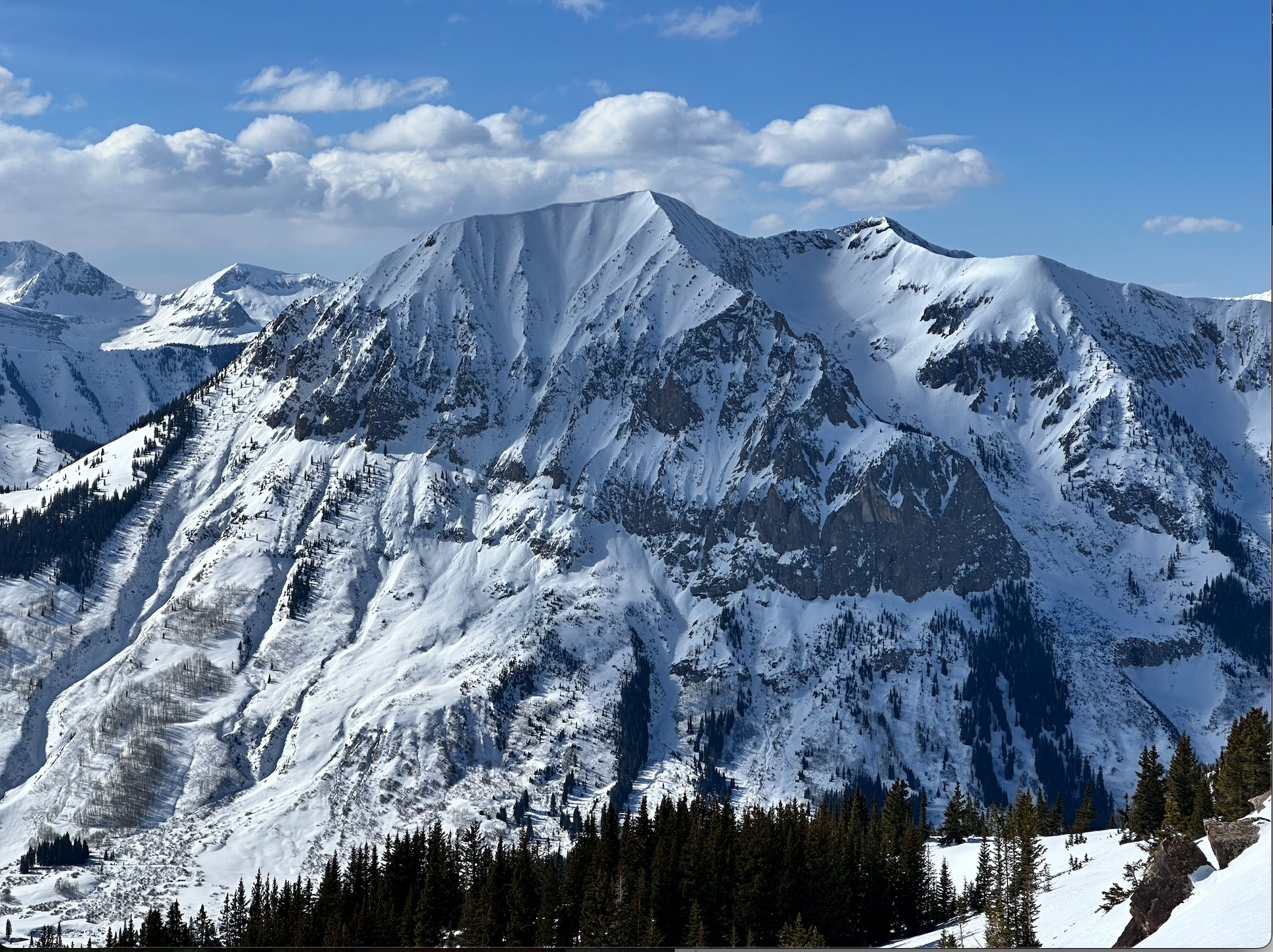
The goal of today's tour was to find wind drifts from previous winds on sunny slopes at upper elevations. Unfortunately, we did not find many at the upper elevations in the terrain we traveled; there were just small isolated drifts tucked behind trees or right below the breaks in the terrain. Much of this sunny terrain has been blown off, leaving a shallow snowpack with stiff, supportive snow surfaces. I suspect a few concave features held drifts that were hard to identify from a distance, but overall, alpine sunny slopes in our vicinity were eroded. Our tour plan was to avoid drifts in consequential terrain and make observations of sensitivity. These drifts exist out there, but we didn't find many on today's tour.
We did get a handful of collapses in low-angle terrain radiating up to 40 feet. Most occurred above 10,000 feet in sheltered areas. The small amount of stiffness in the Holiday slab was collapsing on the December drought layer. I'm not convinced many features have this structure in steep terrain, but the possibility of a slab in shaletered terrain lingers,Weather
- Cloud Cover
- few
- Wind Loading
- light
- Snow Avail For Transport
- small smounts
Clear skies in the morning with cloud cover increasing in the afternoon from the south. Moderate winds at upper elevations with some transport visible but little effective loading. I am surprised that the wind continues to find transportable snow to move around in the alpine. We did not see any transport near valley bottom.
Snowpack
We traveled through mostly southerly aspects to 12,000 feet with a few smaller shady features along the way. The snowpack is either a mix of crusts and facets on steep sunny slopes, all facets on wind-protected shady slopes, or wind-stiffened snow. We traveled across a handful of drifts on small features without signs of instability but planned to avoid riding on any consequential terrain with drifting. A few quick obs of steep sunny slopes near treeline revealed two soft-ish melt/freeze crusts in the upper snowpack with well-developed facets between and below. It is not a problem without a slab, but it is a poor structure if a slab is encountered above from wind loading.
We descended westerly facing terrain and encountered a weak snowpack with occasional wind skins. Sluffs seemed less likely as the wind stiffened the surface just enough. I found a couple of previously drifted features at low elevations that showed poor structure through pole probing but did not collapse as we descended.
Avalanche
- Size
- D1 R1
- Aspect
- NE
- Trigger
- N
- Elevation
- 9500 ft
Date is a best guess. Avalanche likely failed some time last week during a windy period. Another example wind loaded terrain being the most likely place to trigger a slab avalanche.